
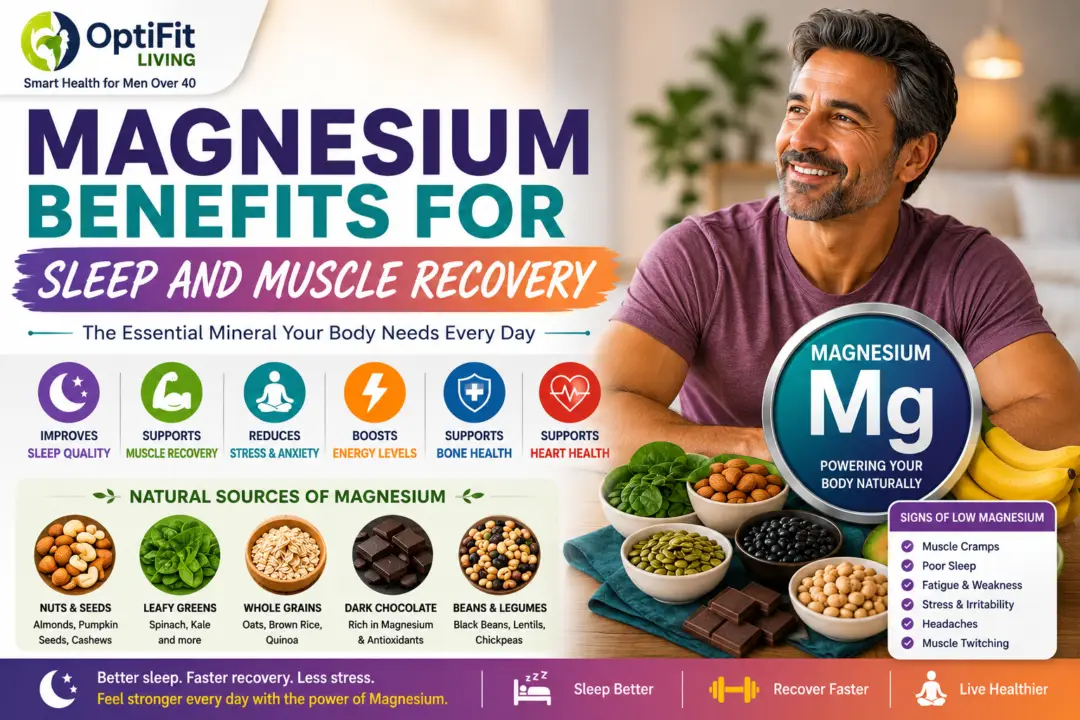
Magnesium is one of the most important minerals in the human body, yet many people do not realize how essential it is for everyday health. From sleep quality and muscle recovery to stress management and energy production, magnesium supports hundreds of vital bodily functions.
Many adults over 40 experience symptoms like poor sleep, muscle cramps, fatigue, stress, or body aches without realizing that low magnesium levels may be part of the problem.
Modern Lifestyle Factors That Deplete Magnesium:
Chronic everyday stress
Diets high in processed foods
Lack of regular physical activity
Irregular sleep schedules
In this article, we explore magnesium benefits for sleep and muscle recovery, key signs of deficiency, natural food sources, and simple daily habits to optimize your levels.
What Is Magnesium and Why Is It Essential?
Magnesium is a vital mineral involved in over 300 enzymatic reactions. The body cannot function efficiently without adequate levels.
Muscle Function: Regulates contractions and relaxation.
Nerve Health: Calms overactive nerve signals.
Cellular Energy: Essential for producing ATP (energy).
Structural Support: Helps build strong bones and teeth.
Why Magnesium Becomes Vital After 40
As we age, natural recovery rates slow down and sleep patterns change. Adults over 40 frequently experience:
Persistent muscle tightness and night cramps
Reduced recovery speed after physical exercise
Daytime fatigue and lower stamina
Higher sensitivity to stress
How Magnesium Enhances Sleep and Relaxation
Magnesium plays a central role in regulating the central nervous system, preparing your body for restful sleep.
1. Calming the Mind & Body
Magnesium binds to GABA receptors, the neurotransmitters responsible for quieting nerve activity, allowing your mind to unwind.
2. Preventing Sleep Disturbances
Low magnesium levels are directly linked to nighttime restlessness and painful leg cramps that disrupt deep sleep cycles.
Key Takeaway: Good sleep is essential for hormone balance, weight management, mental clarity, and post-workout recovery.
Magnesium Benefits for Muscle Recovery
For active adults, walkers, and fitness enthusiasts, magnesium is indispensable for muscle health.
Reduces Muscle Spasms: Prevents involuntary twitches and cramps by regulating calcium movement in muscle cells.
Speeds Up Tissue Repair: Helps muscles recover faster after workouts or long walks.
Supports Muscle Relaxation: Allows tight muscle fibers to relax fully after tension.
Stress Management and Energy Production
Stress Control: Magnesium supports adrenal function, helping the body manage stress hormones like cortisol.
Cellular Energy: Magnesium helps convert the food you eat into usable cellular energy, combating daily exhaustion and sluggishness.
Common Signs of Low Magnesium
If you experience several of the following symptoms, low magnesium levels may be a factor:
Frequent muscle cramps or eye twitches
Difficulty falling or staying asleep
Unexplained fatigue and low physical stamina
High irritability and stress sensitivity
Recurring tension headaches
Best Natural Food Sources of Magnesium
The most effective way to maintain healthy levels is through a nutrient-dense diet:
| Food Category | Top Sources | Main Health Benefit |
| Nuts & Seeds | Almonds, Pumpkin Seeds, Cashews | High in magnesium & healthy fats |
| Leafy Greens | Spinach, Swiss Chard, Kale | Nutrient-dense & easy to digest |
| Whole Grains | Oats, Quinoa, Brown Rice | Provides steady energy & fiber |
| Legumes | Black Beans, Lentils, Chickpeas | Great plant-based protein & minerals |
| Treats | Dark Chocolate (70%+ Cacao) | Rich in antioxidants & magnesium |
Magnesium Supplements: Usage & Timing
When diet alone isn’t enough, supplementation can help bridge the gap.
Best Time to Take: Evening or 30–60 minutes before bedtime to maximize its relaxing properties.
Smart Usage: Avoid excessive dosages, as taking too much at once can cause digestive upset.
Essential Habits to Complement Magnesium
Supplements work best alongside healthy lifestyle practices:
Walk daily or engage in moderate strength training
Maintain a consistent sleep schedule
Stay hydrated throughout the day
Practice active stress management
Common Mistakes to Avoid
Relying solely on supplements instead of improving overall diet.
Ignoring sleep hygiene (like late-night screen time) and expecting magnesium to fix it alone.
Taking high doses without testing or professional guidance.
Final Thoughts
Understanding magnesium benefits for sleep and muscle recovery gives you a simple, natural strategy to boost your daily quality of life—especially for adults over 40. By combining magnesium-rich foods with healthy routines, you can support muscle recovery, sleep deeper, and sustain better daily energy.
Frequently Asked Questions
Q: How does magnesium help with sleep?
A: It calms the nervous system by supporting GABA function and relaxes muscle tension, making it easier to fall asleep naturally.
Q: Can magnesium reduce nighttime leg cramps?
A: Yes. Magnesium regulates muscle contractions, significantly reducing painful cramps and twitches.
Q: What are the best food sources of magnesium?
A: Pumpkin seeds, almonds, spinach, black beans, whole grains, and dark chocolate are excellent choices.
Q: Is magnesium safe to take every night?
A: Yes, when taken in appropriate recommended doses. Always consult a healthcare