There are some health topics men avoid discussing, even when the issue is affecting their confidence, mood, marriage, and peace of mind. Erectile dysfunction after 40 is one of those topics. Many men keep it private, search quietly online, or wait for the problem to disappear on its own.
In real life, this issue is more common than most men admit. It does not always mean a man is weak, old, or unhealthy. Sometimes it is connected to stress, poor sleep, belly fat, blood sugar, blood pressure, medicines, smoking, low activity, or emotional pressure.
The problem becomes more important after 40 because the body starts giving signals more clearly. Energy changes. Recovery slows down. Weight gain becomes easier. Blood sugar may rise silently. Stress builds up. Sleep quality often drops. All of these can affect male sexual performance.
The good news is that erectile dysfunction after 40 can often be understood, managed, and improved with the right approach. The first step is not panic. The first step is awareness.
This guide explains what erectile dysfunction means, why it happens after 40, what signs men should watch for, which habits can make it worse, what lifestyle changes may help, and when it is important to speak to a qualified doctor.
What Is Erectile Dysfunction After 40?
Erectile dysfunction means difficulty getting or keeping an erection firm enough for satisfactory sexual activity. It may happen occasionally, or it may become a repeated problem.
An occasional problem is not unusual. Stress, tiredness, lack of sleep, emotional pressure, heavy meals, alcohol, or anxiety can affect performance sometimes. But when the issue keeps happening, becomes worse, or starts suddenly, it should not be ignored.
Erectile dysfunction after 40 is not only a sexual issue. It can be connected with overall health. Blood flow, nerves, hormones, heart health, blood sugar, weight, stress, sleep, and mental wellness can all play a role.
This is why a mature and practical approach is important. A man should not immediately blame age, and he should not depend only on quick fixes. He should look at the full picture of his health.
Why Erectile Dysfunction Matters After 40
After 40, the body often becomes less forgiving. Poor habits that were manageable in younger years may start showing results more clearly.
A man may sit for long hours, sleep late, eat heavy dinners, gain belly fat, ignore blood sugar, avoid exercise, and carry stress silently. For some time, the body may adjust. But eventually, signs may appear.
Erectile dysfunction can sometimes be one of those signs.
It may point toward poor blood flow, uncontrolled blood sugar, high blood pressure, low testosterone, medicine side effects, stress, anxiety, depression, or lifestyle imbalance.
This does not mean every man with ED has a serious disease. But it does mean the issue deserves attention.
Ignoring it can delay important care. Understanding it can help a man protect his health, confidence, and quality of life.
Common Signs Men May Notice
Erectile dysfunction does not always appear the same way for every man. Some men notice mild changes. Others notice sudden difficulty.
Common signs may include:
- Difficulty getting an erection
- Difficulty maintaining an erection
- Reduced firmness
- Lower sexual confidence
- Less morning erection than before
- Lower desire
- More performance anxiety
- Reduced stamina
- Tiredness during intimacy
- Avoiding intimacy due to fear of failure
Sometimes the problem happens only during stressful periods. Sometimes it continues even when the man feels calm. Sometimes desire is present, but performance is difficult. Other times, desire itself becomes low.
These differences matter because causes can be physical, emotional, lifestyle-related, or a combination of many factors.
Why Erectile Dysfunction Happens After 40
Erectile function depends on several body systems working together. Blood vessels, nerves, hormones, brain signals, emotions, muscles, and energy levels all matter.
After 40, small weaknesses in these systems can become more noticeable.
Poor Blood Flow
Good blood flow is very important for normal erectile function. If blood flow is reduced, erections may become weaker or harder to maintain.
Poor circulation can be linked with high blood pressure, high cholesterol, smoking, diabetes, lack of exercise, obesity, and heart-related problems.
This is one reason ED should not be treated only as a private bedroom issue. It can sometimes be related to vascular health, which means the health of blood vessels.
High Blood Sugar
Blood sugar problems can quietly affect male sexual health. High blood sugar may damage blood vessels and nerves over time. It can also reduce energy, affect mood, and increase belly fat.
Men with prediabetes, diabetes, insulin resistance, or high fasting sugar should take ED seriously. The issue may be connected with metabolic health.
This does not mean blood sugar is always the cause, but it is one of the most important areas to check after 40.
If you are also working on blood sugar and fitness, you may find this guide on Best Exercises for Prediabetes and Diabetes helpful.
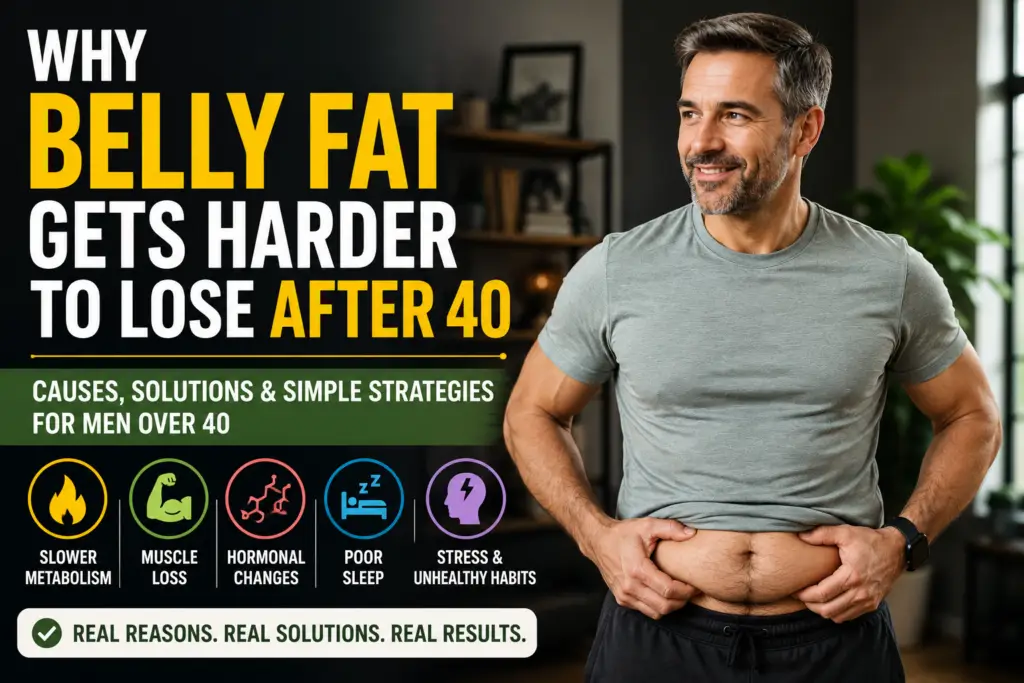
Belly Fat and Weight Gain
Belly fat is not only about appearance. It can affect hormones, insulin sensitivity, inflammation, energy, and confidence.
Many men over 40 gain fat around the waist due to long sitting hours, poor sleep, large food portions, stress eating, and reduced activity.
A growing waistline may slowly affect testosterone, stamina, and circulation. That is why weight management is often an important part of improving male health.
Low Physical Activity
A body that does not move regularly loses stamina, circulation, strength, and metabolic flexibility.
Men who sit for long hours and do not exercise may feel tired, heavy, and less confident. Over time, low activity can affect heart health, blood sugar, mood, sleep, and performance.
The solution does not need to be extreme. Walking, light strength training, stretching, and daily movement can make a real difference when done consistently.
Stress and Mental Pressure
Many men over 40 carry stress quietly. Work pressure, family responsibilities, financial matters, relationship concerns, and health worries can build up.
Stress can affect desire, focus, sleep, mood, and confidence. It can also create performance anxiety. Once a man experiences one or two difficult moments, he may start worrying before intimacy. That worry itself can make the problem worse.
In real life, ED is not always only physical. Sometimes the body is capable, but the mind is overloaded.
Poor Sleep
Sleep affects energy, mood, hormones, blood sugar, recovery, and mental calmness.
A man who sleeps poorly for weeks or months may feel tired, irritable, less motivated, and less sexually confident.
Sleep problems can also increase cravings, belly fat, and stress. Over time, this can affect overall health and sexual performance.
If sleep is part of your concern, our article on Why Sleep Becomes Important After 40 may also support your next step.
Testosterone Changes
Testosterone may gradually decline with age, but lifestyle also plays a major role.
Poor sleep, obesity, chronic stress, alcohol, inactivity, and some medical conditions can affect testosterone levels.
Low testosterone can affect desire, mood, energy, muscle strength, and body composition. However, not every erection problem is caused by low testosterone. Guessing can create confusion.
If symptoms continue, proper medical evaluation is better than self-diagnosis.
Medicines and Health Conditions
Some medicines may affect sexual performance. Conditions such as high blood pressure, diabetes, heart disease, nerve problems, hormonal issues, depression, anxiety, and prostate-related concerns may also play a role.
A man should not stop any prescribed medicine on his own. Instead, he should speak to a qualified doctor and explain the issue clearly.
Sometimes the solution is adjusting treatment safely, checking health markers, or treating the underlying cause.
Who Is More Likely to Be Affected?
Erectile dysfunction after 40 can affect different types of men, but some men may have higher risk.
This may include men who:
- Have diabetes or prediabetes
- Have high blood pressure
- Have heart or circulation problems
- Smoke or use tobacco
- Are overweight
- Have belly fat
- Sleep poorly
- Sit for long hours
- Drink too much alcohol
- Have chronic stress
- Take certain medicines
- Have low physical activity
- Feel anxious or depressed
- Have relationship stress
Even fit-looking men can experience ED if stress, sleep, emotional pressure, or hidden health issues are present.
This is why the solution should not be based on shame. It should be based on understanding.
Daily Habits That Can Make ED Worse
Many men look for one major cause, but the real problem often comes from repeated daily habits.
Sitting Too Much
Long sitting can reduce movement, circulation, calorie burning, and energy. Office work, driving, and screen time can quietly damage health over time.
A man who sits most of the day should add short walking breaks, even if he cannot do long workouts.
Eating Heavy Meals at Night
Heavy dinners, fried foods, sugary desserts, and late-night snacks can affect digestion, sleep, blood sugar, and belly fat.
A lighter dinner and better portion control can support energy and weight management.
Ignoring Sleep
Late nights, poor sleep routines, and screen use before bed can reduce recovery.
For men over 40, sleep is not just rest. It is part of hormonal health, mental health, and physical recovery.
Depending on Supplements
Many men buy supplements because they want a private and fast solution. Some products may be unsafe, poor quality, or exaggerated in their claims.
Supplements should never replace medical advice, movement, sleep, nutrition, and blood sugar control.
Avoiding Health Checks
Some men avoid checkups because they do not want to hear bad news. But early awareness is better than late regret.
Checking blood pressure, blood sugar, cholesterol, weight, waist size, and hormone-related concerns when needed can help identify the real issue.
Smoking and Excess Alcohol
Smoking can affect blood vessels and circulation. Too much alcohol can affect hormones, mood, sleep, liver health, and performance.
Reducing these habits can support overall health and sexual confidence.
Practical Lifestyle Steps That May Help
Improving ED after 40 often starts with improving the body’s foundation. This does not mean every man can fix ED with lifestyle alone, but lifestyle changes can support better health and may improve contributing factors.
Walk Most Days
Walking supports blood flow, blood sugar control, weight loss, mood, heart health, and stress reduction.
A realistic starting point is 20 to 30 minutes most days. If you are inactive, begin with 10 minutes and increase slowly.
Walking after meals can also support blood sugar control.
Add Strength Training
Strength training helps preserve muscle, support metabolism, improve confidence, and maintain healthy body composition.
You do not need a complicated gym plan. Bodyweight exercises, resistance bands, dumbbells, or basic machine workouts can help.
Two or three sessions per week can be a good start.
Improve Food Quality
A better diet supports weight, blood sugar, energy, and heart health.
Focus on:
- More protein
- More vegetables
- More fiber
- Less sugar
- Fewer fried foods
- Better portion control
- Less late-night eating
- More whole foods
The goal is not perfection. The goal is better daily choices.
Reduce Belly Fat Slowly
Extreme dieting is usually not sustainable.
A slow and steady approach works better for many men over 40. Combine walking, strength training, smaller portions, better sleep, and less sugar.
Even modest waist reduction can improve confidence and overall health.
Improve Sleep Routine
Start with simple changes:
- Sleep at a regular time
- Avoid heavy meals late at night
- Reduce screen time before bed
- Limit late caffeine
- Keep the room comfortable
- Create a calm bedtime routine
Better sleep can improve mood, energy, appetite control, and motivation.
Manage Stress
Stress management is not a luxury. It is part of health discipline.
Helpful habits include:
- Daily walking
- Deep breathing
- Prayer or reflection
- Reducing unnecessary arguments
- Taking screen breaks
- Planning your day
- Talking honestly with your spouse or trusted person
- Getting support when stress feels too heavy
A calmer mind often supports better confidence and better relationships.
When to See a Doctor
A man should speak to a qualified doctor if ED is ongoing, sudden, getting worse, or affecting confidence and relationship health.
It is especially important to seek medical advice if ED happens with:
- Chest pain
- Shortness of breath
- Diabetes
- High blood pressure
- Heart disease
- High cholesterol
- Sudden loss of sexual function
- Pain
- Low mood or anxiety
- New medication use
- Severe fatigue
- Loss of desire with other symptoms
There is no need to feel embarrassed. Doctors handle these issues regularly. Explaining the problem clearly can help identify whether it is related to blood flow, nerves, hormones, medicine, stress, or another health condition.
How to Talk to a Doctor Without Embarrassment
Many men delay help because they do not know how to start the conversation.
You can keep it simple:
“I am having difficulty getting or maintaining an erection, and it has been happening for some time. I want to understand if it is related to blood pressure, blood sugar, stress, hormones, or medication.”
This is clear, mature, and responsible.
You can also mention:
- When it started
- Whether it happens sometimes or always
- Whether desire has changed
- Any new medicine
- Sleep problems
- Stress level
- Blood sugar or blood pressure history
- Smoking or alcohol use
- Any pain or other symptoms
The more honest you are, the easier it is to find the right direction.
Common Mistakes People Make
Looking for Quick Fixes
Many men want an instant solution. Quick fixes may hide the real cause and delay proper care.
Correction: Look at lifestyle, health checks, stress, sleep, and medical advice when needed.
Ignoring the Problem
Some men hope the issue will disappear by itself. Occasional problems may pass, but ongoing ED should not be ignored.
Correction: If it continues for several weeks or becomes worse, speak to a doctor.
Depending Only on Supplements
Supplements are heavily marketed, but they do not fix poor sleep, high blood sugar, belly fat, smoking, stress, or poor circulation.
Correction: Focus on health basics first and ask a doctor before taking anything.
Not Checking Blood Sugar and Blood Pressure
ED may be connected with metabolic and circulation problems.
Correction: Men over 40 should monitor important health markers, especially if they have belly fat, fatigue, family history, or low activity.
Ignoring Mental Stress
Performance pressure, anxiety, and emotional stress can make ED worse.
Correction: Reduce stress, communicate better, and seek help if anxiety or low mood is affecting daily life.
Comparing Yourself With Younger Men
A man over 40 should not judge himself by his younger body.
Correction: Focus on becoming healthier and stronger at your current stage of life.
Giving Up Too Early
Lifestyle changes take time. One week is not enough to judge results.
Correction: Stay consistent for several weeks and track energy, waist size, sleep, mood, and stamina.
Avoiding Communication
Silence can create distance in a relationship.
Correction: A calm and respectful conversation with your spouse or partner can reduce pressure and misunderstanding.
Simple Action Plan to Start
Today
- Take a 15 to 20-minute walk.
- Avoid a heavy late dinner.
- Drink more water.
- Sleep 30 minutes earlier if possible.
- Stop blaming yourself and start observing your health habits.
This Week
- Walk at least 5 days.
- Reduce sugary drinks.
- Add protein and vegetables to meals.
- Take short breaks from sitting.
- Write down sleep quality, stress level, energy, and symptoms.
- Avoid buying random supplements without guidance.
This Month
- Build a 30-minute walking routine most days.
- Add two basic strength-training sessions weekly.
- Check blood pressure and blood sugar if you have risk factors.
- Reduce belly fat through steady food and movement habits.
- Speak to a qualified doctor if ED continues, appears suddenly, or worries you.
A realistic plan is better than an extreme plan that lasts only three days.
Safety Advice
Erectile dysfunction can be linked with lifestyle, stress, blood sugar, blood pressure, heart health, hormones, nerves, medicines, or emotional health.
Do not diagnose yourself only through online reading.
Speak to a qualified doctor if the problem is ongoing, sudden, or linked with other symptoms. This is especially important if you have diabetes, high blood pressure, heart disease, chest pain, shortness of breath, severe anxiety, depression, pain, or are taking prescription medicine.
Do not stop prescribed medicines without medical advice.
Do not mix ED medicines, supplements, or herbal products with heart or blood pressure medicines unless your doctor says it is safe.
Lifestyle changes can support health, but they do not replace proper medical care when medical care is needed.
Frequently Asked Questions
Is erectile dysfunction common after 40?
Yes, erectile dysfunction becomes more common with age, but it is not something men should simply accept without understanding the cause. It may be linked with blood flow, stress, sleep, blood sugar, medicines, hormones, or lifestyle habits.
Does ED mean low testosterone?
Not always. Low testosterone can affect desire and energy, but ED can also be caused by blood flow problems, diabetes, high blood pressure, stress, anxiety, poor sleep, or medication side effects.
Can walking help erectile dysfunction after 40?
Walking can support blood flow, weight control, blood sugar, heart health, mood, and stress reduction. These benefits may help some men, especially when ED is connected with lifestyle and metabolic health.
When should I see a doctor for ED?
See a doctor if ED continues for several weeks, appears suddenly, becomes worse, or happens with chest pain, shortness of breath, diabetes, high blood pressure, low mood, pain, or new medication use.
Can stress cause erectile dysfunction?
Yes, stress can affect desire, confidence, sleep, mood, and performance. Stress-related ED can become worse when a man starts worrying about performance before intimacy.
Can belly fat make ED worse?
Belly fat can affect blood sugar, circulation, hormones, energy, and confidence. Reducing waist size through walking, strength training, better food, and sleep may support better overall male health.
Are ED supplements safe?
Not always. Some supplements may be poor quality, unsafe, or may interact with medicines. Men taking heart, blood pressure, diabetes, or mood-related medication should speak to a doctor before using supplements.
Can ED be improved naturally?
Some men may improve by addressing sleep, stress, weight, blood sugar, exercise, smoking, alcohol, and diet. However, ongoing or serious ED needs proper medical evaluation.
Conclusion
One thing that becomes clear with age is that the body speaks through signals. Erectile dysfunction after 40 is not a reason for shame, but it is also not something to ignore.
It may be connected with blood flow, blood sugar, stress, sleep, weight, hormones, medicines, or emotional pressure. The right response is not fear. The right response is maturity, awareness, and action.
Start with simple steps. Walk more. Sleep better. Reduce belly fat slowly. Eat cleaner. Check your blood pressure and blood sugar when needed. Manage stress. Speak to a qualified doctor if the problem continues or feels worrying.
A man over 40 does not need to chase his younger self. He needs to build a stronger, healthier, more disciplined version of himself today.
Better health brings better confidence. And confidence often begins with taking the first honest step.
Helpful Resources