
As men cross the threshold of 40, the body undergoes noticeable physiological shifts. You might notice that energy levels aren’t what they used to be, muscle recovery takes longer, sleep patterns shift, and joint stiffness becomes more frequent.
After 40, prioritizing nutrition is no longer optional—it is essential for long-term health, physical performance, and vitality. While a balanced diet is the cornerstone of wellness, identifying the best vitamins for men over 40 can help bridge dietary gaps and optimize daily health.
Why Nutritional Needs Change After Age 40

With age, nutrient absorption efficiency naturally declines due to changes in stomach acid production and metabolic rate. Modern lifestyle factors further increase nutritional demands:
Chronic stress and elevated cortisol
Inadequate or disrupted sleep
Sedentary routines and long sitting hours
Diets high in processed foods
Targeted supplementation helps support metabolic rate, joint integrity, cardiovascular endurance, immune defense, and cognitive health.
Top 8 Nutrients and Best Vitamins for Men Over 40

┌─────────────────────────┬───────────────────────────────────┬────────────────────────────────────────┐
│ Nutrient                │ Key Health Benefits               │ Primary Food Sources                   │
├─────────────────────────┼───────────────────────────────────┼────────────────────────────────────────┤
│ Vitamin D3              │ Bone density, test support, mood  │ Sunlight, fatty fish, egg yolks        │
│ Magnesium               │ Muscle recovery, sleep quality    │ Leafy greens, nuts, seeds, dark cocoa  │
│ Vitamin B12             │ Energy metabolism, brain function │ Meat, fish, eggs, dairy                │
│ Omega-3 Fatty Acids     │ Heart health, joint mobility      │ Salmon, sardines, chia seeds, walnuts  │
│ Zinc                    │ Immune strength, hormone balance  │ Oysters, red meat, pumpkin seeds       │
│ Calcium                 │ Bone integrity, nerve signaling   │ Yogurt, cheese, leafy greens           │
│ Vitamin C               │ Collagen synthesis, immunity      │ Citrus fruits, bell peppers, berries   │
│ Quality Protein         │ Muscle retention, satiety         │ Chicken, eggs, fish, whey protein      │
└─────────────────────────┴───────────────────────────────────┴────────────────────────────────────────┘
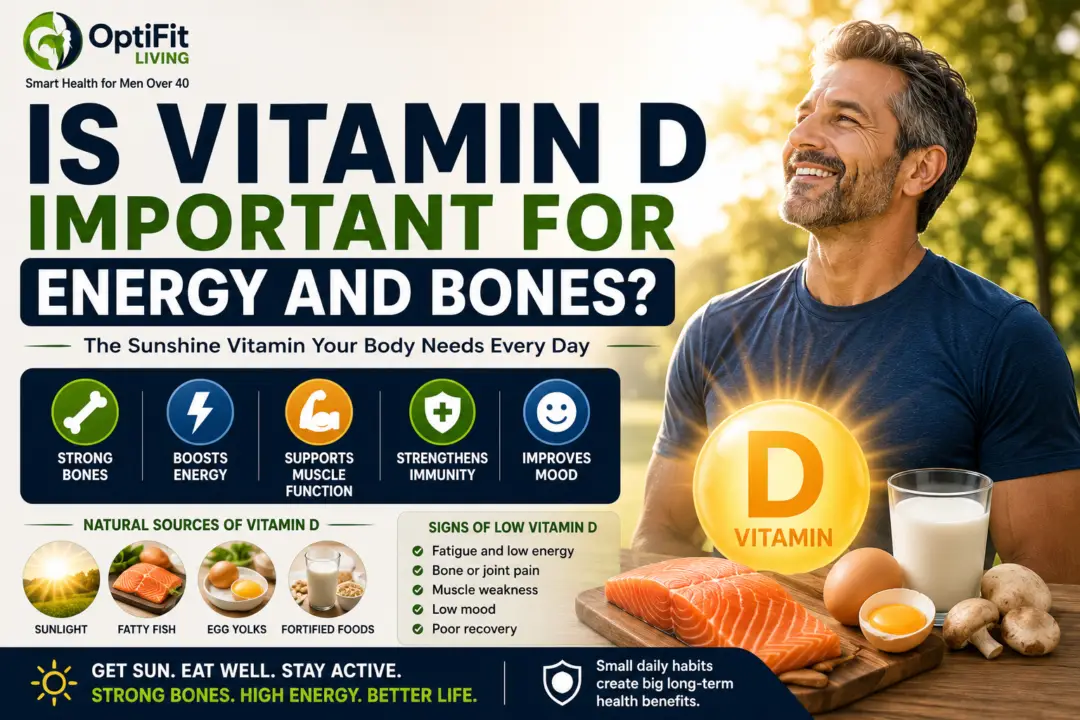
1. Vitamin D3 (The Sunshine Hormone)
Vitamin D deficiency is exceptionally common in men over 40. Technically functioning as a precursor hormone, Vitamin D plays a fundamental role in maintaining serum testosterone levels, bone density, and immune defense.
Key Benefits: Enhances bone mineral density, supports testosterone production, improves mood, and aids muscle recovery.
Top Sources: Direct sunlight exposure, fatty fish (salmon, mackerel), egg yolks, and fortified foods.
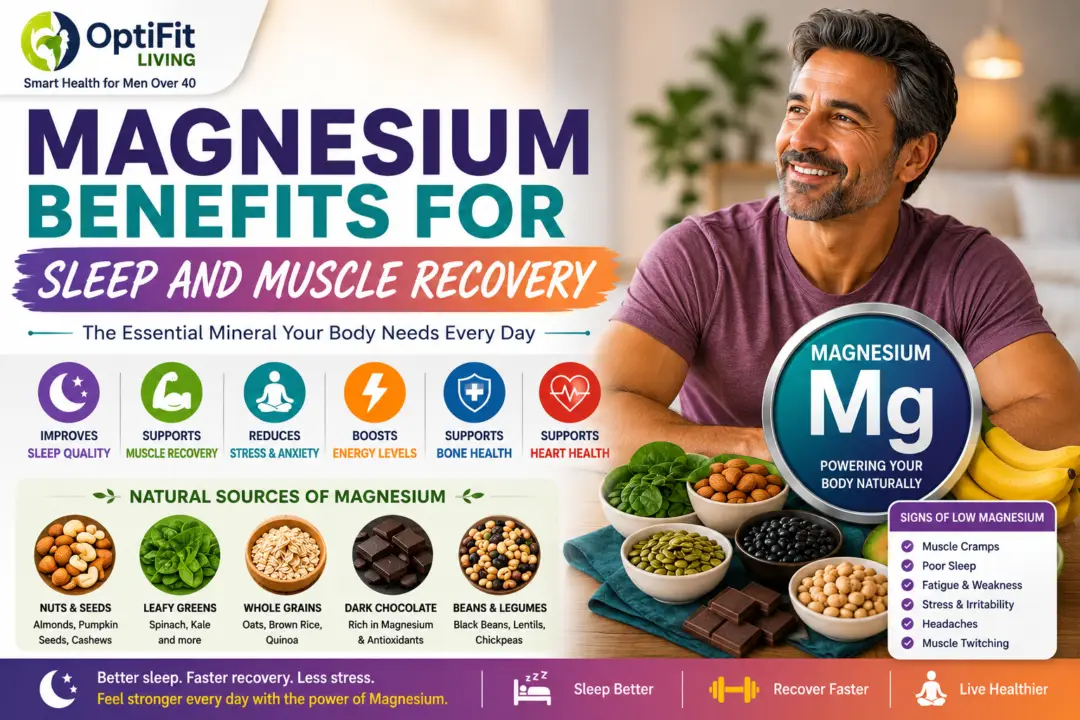
2. Magnesium
Magnesium is involved in over 300 enzymatic reactions in the human body. Active men often lose magnesium through sweat, making replenishment vital for muscle relaxation and nervous system regulation.
Key Benefits: Promotes deep restorative sleep, reduces nocturnal muscle cramps, lowers stress levels, and supports heart health.
Top Sources: Pumpkin seeds, almonds, spinach, dark chocolate, and whole grains.
3. Vitamin B12
Vitamin B12 supports red blood cell formation and cellular energy production. Because gastric acid levels decline with age, absorbing dietary B12 becomes harder, leading to unexplained fatigue and brain fog.
Key Benefits: Sustains daily energy, maintains healthy nerve cells, and sharpens cognitive focus.
Top Sources: Lean meats, fish, eggs, dairy, and fortified plant milks.
4. Omega-3 Fatty Acids (EPA & DHA)
Omega-3 essential fatty acids combat systemic inflammation—the root cause of joint discomfort and cardiovascular strain in aging adults.
Key Benefits: Supports cardiovascular health, maintains cognitive sharpness, improves joint flexibility, and speeds up post-workout recovery.
Top Sources: Wild salmon, sardines, flaxseeds, chia seeds, and high-purity fish oil supplements.
5. Zinc
Zinc is a essential trace mineral vital for immune system efficiency and male reproductive health.
Key Benefits: Supports healthy testosterone synthesis, speeds cellular repair, and strengthens immune response.
Top Sources: Shellfish, beef, pumpkin seeds, and lentils.
6. Calcium
Calcium works synergistically with Vitamin D to preserve bone architecture and prevent progressive bone density loss.
Key Benefits: Preserves structural bone strength, supports muscle contraction, and aids healthy nerve signaling.
Top Sources: Grass-fed dairy, yogurt, kefir, and dark leafy green vegetables.
7. Vitamin C
As a potent antioxidant, Vitamin C protects cells from oxidative stress and plays an indispensable role in collagen synthesis for healthy skin and connective tissue.
Key Benefits: Boosts immune function, neutralizes free radicals, and supports joint and skin elasticity.
Top Sources: Oranges, bell peppers, strawberries, broccoli, and lemons.
8. Protein (Essential Amino Acids)
Sarcopenia (age-related muscle loss) begins around age 30 and accelerates after 40. Adequate protein intake combined with resistance training is essential to preserve lean muscle mass.
Key Benefits: Supports muscle synthesis, accelerates workout recovery, and enhances metabolic health.
Top Sources: Chicken breast, eggs, fish, Greek yogurt, and high-quality whey or plant protein powders.While daily vitamins cover essential micros, pairing them with the best supplements for workout recovery ensures faster muscle repair and less post-exercise soreness.
Multivitamins vs. Targeted Supplements: What Do You Need?
While a high-quality daily multivitamin serves as a reliable insurance policy against general nutritional gaps, targeted supplementation based on individual lab testing is often more effective.
Common Supplement Mistakes to Avoid:
Megadosing: Taking excessively high doses without medical supervision can cause nutrient imbalances or liver toxicity.
Ignoring Whole Foods: Supplements are meant to supplement a poor diet, not replace real food.
Choosing Low-Quality Formulas: Cheap supplements often contain low-bioavailability ingredients (e.g., Magnesium Oxide instead of Magnesium Glycinate).
Expecting Instant Results: Micronutrient replenishment takes weeks or months of consistent intake.
Lifestyle Habits That Amplify Nutrient Absorption

Supplements yield maximum benefits when paired with proactive health practices:
Resistance Training: Lifting weights 3–4 times a week preserves lean muscle mass and bone density.
Prioritizing Sleep: Aim for 7–8 hours of quality sleep to maximize tissue repair and hormonal balance.
Hydration: Proper water intake improves nutrient transport and joint lubrication.
Stress Management: High stress drains body reserves of magnesium and Vitamin C.
Frequently Asked Questions (FAQs)
What are the absolute best vitamins for men over 40 to take daily?
Most men benefit from supplementing with Vitamin D3, Magnesium, Omega-3 fatty acids, and Vitamin B12. However, precise needs depend on individual diet, blood test results, and health goals.
Can vitamins help increase energy levels in men over 40?
Yes. Addressing specific deficiencies—such as low Vitamin B12, Iron, or Vitamin D—can significantly reduce fatigue, improve metabolic efficiency, and restore overall energy levels.
How do I know which supplements my body actually needs?
The most accurate method is to get a comprehensive blood test checking Vitamin D (25-hydroxy), B12, lipid panels, hormone markers, and basic metabolic panels before starting a supplement regimen.
Should men over 40 take protein powder every day?
If you struggle to meet your daily protein targets (approximately 1.2 to 2.0 grams per kilogram of body weight) through whole foods, a clean protein powder is a safe and efficient way to support muscle retention.
Summary
Selecting the best vitamins for men over 40 requires a focused, quality-driven approach rather than taking random pills. Prioritize key nutrients like Vitamin D3, Magnesium, B12, Omega-3s, and Zinc, and pair them with strength training, whole foods, and solid sleep for lasting vitality.
Helpful Resources
NIH Vitamin and Mineral Fact Sheets — Evidence-based information about vitamin D, magnesium, vitamin B12, zinc, calcium, and vitamin C.
NIH Multivitamin and Mineral Supplement Guide — Research covering the possible benefits and limitations of multivitamins.
National Institute on Aging: Dietary Supplements — Guidance on supplement safety, dosage concerns, and interactions.
FDA Dietary Supplement Information — Explains supplement regulation, labels, benefits, and potential risks.
FDA: Mixing Medicines and Supplements — Important information for men who take prescription medicines alongside vitamins or supplements.
CDC Physical Activity Guidelines for Adults — Current recommendations for aerobic activity and muscle-strengthening exercise.