This guide to healthy living after 40 is built on one idea: small habits you can repeat beat big plans you drop in two weeks. If you do only five things, make them these: walk most days, lift something twice a week, sleep seven hours or more, eat real food most of the time, and book a basic health check.
This guide to healthy living after 40 is written for men who feel the change but do not want a gym obsession. Nothing here is a cure or a quick fix, and I did not test any program myself. The numbers come from public health sources, and where a figure is shaky I say so.
What actually changes after 40
Most men do not wake up on their fortieth birthday feeling different. The change is slow. Recovery takes longer, belly fat is easier to gain, and sleep gets lighter. Three things drive most of it.
- Muscle slowly shrinks. Many sources say adults lose some muscle each decade from about age 30, often quoted at roughly 3 to 5 percent, and faster if you sit a lot and never lift. The exact figure varies by study, so treat it as a rough guide.
- Activity drops. Desk jobs, long commutes and screens cut daily movement, so you burn fewer calories without noticing.
- Stress and sleep slip. Work, money and family pile up, and short sleep makes hunger, mood and recovery worse.
None of this is a one-way street. Muscle, fitness and sleep all respond to better habits at any age. That is the point of this guide to healthy living after 40.

Habit 1: Move every day
Movement is the base of the whole plan. The U.S. CDC recommends at least 150 minutes of moderate activity a week for adults, plus muscle-strengthening work on two days. Brisk walking counts as moderate activity.
If 150 minutes sounds like a lot in a guide to healthy living after 40, break it down: 30 minutes on five days, or three 10 minute walks a day. If you are starting from nothing, begin with 10 to 15 minutes and add a little each week. Our guide on how daily walking changes your health has a four-week plan, and how much exercise per week you need shows how to spread it out.
- Take a short walk after your biggest meal.
- Stand up and move for two minutes every hour you sit.
- Park far from the door or get off one stop early.
- Pick one activity you actually enjoy, such as cycling, swimming or hiking.
Habit 2: Lift something twice a week
Walking is great for your heart, but it does little to protect muscle. That is why the CDC lists strength work separately, at least two days a week. You do not need a barbell. Push-ups, bodyweight squats, resistance bands, dumbbells or a kettlebell all work.
A simple starter session takes about 25 minutes:
- Bodyweight squats, 2 sets of 8 to 12.
- Push-ups against a wall, bench or the floor, 2 sets of 6 to 10.
- Dumbbell or backpack rows, 2 sets of 8 to 12 per arm.
- Glute bridges, 2 sets of 10 to 15.
- Plank on knees or toes, 2 sets of 20 to 30 seconds.
Stop each set with a couple of reps left in the tank. Add weight or reps slowly, and take a rest day between sessions. Our beginner workout plan for men over 40 gives a full weekly schedule, and how to stay strong and active after 40 covers joints and recovery.

Habit 3: Protect your sleep
Sleep is where your body repairs itself. Sleep groups such as the American Academy of Sleep Medicine and the Sleep Research Society recommend at least seven hours a night for adults. Many men run on six or less and wonder why they feel flat.
- Keep a regular bedtime and wake time, even on weekends.
- Stop caffeine by early afternoon.
- Keep your room dark, cool and quiet.
- Put screens away 30 to 60 minutes before bed.
- Go easy on alcohol, which can break up sleep later in the night.
If you snore loudly, stop breathing at night or feel tired all day even after enough hours, talk to your doctor. Sleep apnea is common in men and it is treatable. For more, read how sleep affects testosterone levels and magnesium benefits for sleep.
Habit 4: Eat simple food most of the time
You do not need a strict diet to follow a guide to healthy living after 40. Aim for plain, repeatable meals. The official Dietary Guidelines for Americans suggest keeping sodium under 2,300 mg a day and keeping added sugar and saturated fat each under 10 percent of calories. Those are limits worth knowing, since processed food is where most of them come from.
| Part of the plate | What to aim for | Easy examples |
|---|---|---|
| Protein | A palm-sized portion at each meal | Eggs, fish, chicken, beans, Greek yogurt |
| Vegetables and fruit | Half the plate at lunch and dinner | Salad, frozen vegetables, berries, apples |
| Whole grains | A fist-sized portion | Oats, brown rice, whole wheat bread |
| Healthy fats | A thumb-sized portion | Olive oil, nuts, avocado |
| Limit | Sugary drinks, fast food, heavy alcohol | Soda, chips, takeaway most nights |
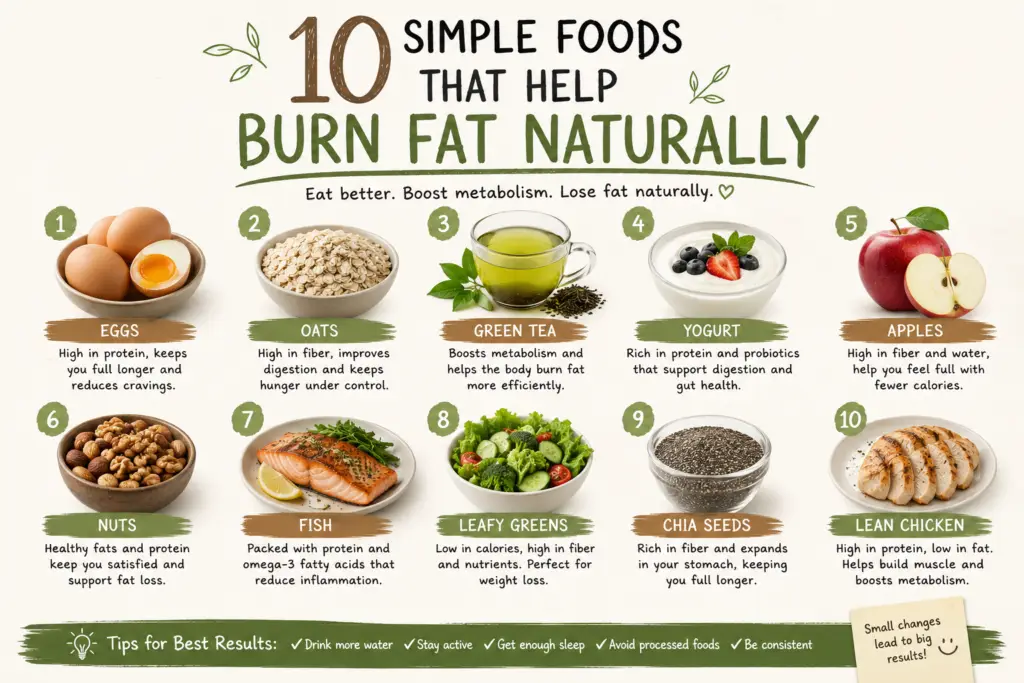
These are rough portion guides, not medical diet plans. Calorie needs vary by size and activity, so check the official guidelines or a dietitian if you want exact numbers. For ideas, see 10 simple foods that help burn fat and best foods to support testosterone naturally. If you struggle to hit your protein, our whey protein guide for beginners explains when a powder helps.

Habit 5: Manage stress before it manages you
Chronic stress affects sleep, appetite, blood pressure and mood. You cannot remove it, but you can give it somewhere to go. A daily walk, a few slow breaths, time with friends and a hard stop on work emails all help.
- Try 5 minutes of slow breathing: in for 4 seconds, out for 6.
- Spend 20 minutes outside most days.
- Talk to a friend or your partner instead of holding it in.
- Say no to one commitment that drains you.
Low mood that lasts more than two weeks, or any thoughts of harming yourself, is a reason to see a doctor or call a crisis line. Healthy habits help, but they are not a replacement for treatment. If tiredness is your main complaint, read why men feel tired all the time after 40.
Habit 6: Get a basic health check
Many problems after 40 show no symptoms at first. High blood pressure, high blood sugar and high cholesterol are the usual ones. A yearly check lets you catch them early.
- Blood pressure: at least yearly for men in their 40s and older.
- Blood sugar (diabetes): often starts around 35 to 40 if you are overweight or have risk factors.
- Cholesterol: ask your doctor how often, based on your risks.
- Colorectal cancer: screening usually starts at age 45.
Ages and timing differ between sources and between people, so use this as a list of questions for your doctor, not a schedule. MedlinePlus has a plain-language list of screenings for men by age.
A simple weekly routine you can copy
| Day | What to do |
|---|---|
| Monday | 30 minute brisk walk |
| Tuesday | 25 minute strength session |
| Wednesday | Easy walk after dinner |
| Thursday | 25 minute strength session |
| Friday | 30 minute brisk walk |
| Saturday | Something fun: hike, bike or sport |
| Sunday | Rest, prep meals, plan the week |
Miss a day and move on. Hitting this plan four weeks out of five still counts. The best guide to healthy living after 40 is the one you can follow in a normal week, not a perfect one.

Common mistakes men make after 40
- Going too hard, too fast. Sore joints and burnout end more plans than laziness does.
- Skipping strength work. Cardio alone will not protect muscle.
- Cutting food too much. Very low calories cost muscle and energy.
- Ignoring pain or chest symptoms. Chest pressure, fainting or severe shortness of breath need urgent care.
- Trusting supplement hype. A pill will not replace sleep, food and exercise.
- Waiting for motivation. Build a routine so you do not need it.
A realistic first 30 days
- Week 1: walk 15 minutes a day and fix your bedtime.
- Week 2: add two short strength sessions and one extra vegetable a day.
- Week 3: walk 25 to 30 minutes and cut sugary drinks.
- Week 4: book your health check and review what is working.
That is already more than most men do. Each piece builds on the last, which is why this guide to healthy living after 40 starts with habits, not diets.
A sample day of eating
Here is what a normal day can look like if you follow this guide to healthy living after 40. It is an example, not a prescription, so adjust the portions to your size and activity.
- Breakfast: two eggs, a slice of whole grain toast and fruit, or oats with Greek yogurt and berries.
- Lunch: grilled chicken or tuna, a big salad with olive oil, and a small portion of rice or potatoes.
- Snack: a handful of nuts, an apple or cottage cheese.
- Dinner: baked fish or lean meat, vegetables and beans or whole grains.
- Drinks: water most of the day, coffee or tea in the morning, and alcohol kept to a minimum.
Cook extra at dinner so lunch is ready the next day. Keep frozen vegetables and canned fish in the cupboard for the nights you do not feel like cooking. Planning ahead beats willpower every time.
Alcohol, caffeine and other habits to review
Small daily habits add up. Two drinks a night may feel normal, but alcohol cuts sleep quality, adds calories and raises blood pressure over time. Many health agencies suggest men who drink should limit it to two drinks a day or fewer, and less is better. Caffeine late in the day can quietly wreck sleep, so move your last coffee earlier. If you smoke, quitting is the single biggest thing you can do for your heart and lungs, and your doctor can help with medicine and support.
How to track progress without obsessing
The scale tells only part of the story. Use a few simple markers instead, and check them monthly rather than daily.
- Your walking time or step count per week.
- The weights or reps you use in your strength sessions.
- Your waist measurement at the belly button.
- How you feel when you wake up and how steady your energy is at 3 pm.
- Your blood pressure and blood tests from your doctor.
If three of these five are moving the right way, your guide to healthy living after 40 is working, even if the scale is slow.
When to talk to a doctor first
See a doctor before starting if you have heart disease, chest pain, uncontrolled blood pressure, diabetes on medicine, joint problems or any condition that worries you. Stop and get help if exercise brings on chest pressure, dizziness or severe breathlessness.
Why you can trust this guide
- Nothing here was personally tested. The advice comes from CDC activity guidance, the Dietary Guidelines for Americans, sleep-medicine recommendations and MedlinePlus screening lists.
- Source order: federal health agencies first, then professional sleep groups.
- Corrections: the old version spoke of personal experience that I could not verify, so I removed it and added numbers and sources.
- Limits: where sources disagree, such as muscle loss rates and screening ages, I give a range and say so. This is general information, not medical advice.
- Last checked: 31 October 2026.
Questions people ask about healthy living after 40
Is it too late to start getting healthy at 40?
No. Muscle, fitness and sleep all respond to better habits at any age. Starting small and staying consistent works better than a big start.
How much exercise do I need after 40?
The CDC suggests 150 minutes of moderate activity a week plus strength work on two days. Start lower if you are new, and build up.
What is the best exercise for men over 40?
A mix works best: brisk walking for your heart and basic strength training for muscle and bones. The best one is also the one you will keep doing.
How can I lose belly fat after 40?
Combine daily walking, two strength sessions, enough protein, less sugary drink and alcohol, and good sleep. Spot reduction does not work, and results take weeks.
Do I need supplements?
Most men do not need many. Food, sleep and exercise come first. Ask your doctor about vitamin D or others if you have a reason.
Final thoughts on your guide to healthy living after 40
Pick one habit from this guide to healthy living after 40 and start this week. A 15 minute walk is enough. Add the next habit when the first feels normal. In a few months you will have a base that lasts for decades.