

Determining how much exercise per week you actually need becomes a critical question as your body changes. Many adults after 40 fall into two extremes: exercising too little or pushing themselves into total exhaustion.
Over time, it becomes clear that workouts after 40 require a dynamic balance between active movement and deliberate recovery. Here is a practical, sustainable approach to setting up a weekly routine that builds energy, supports fat loss, and protects long-term health without causing burnout.
Why Daily Movement Beats Extreme Workouts

Consistent weekly activity yields far better physical and mental rewards than occasional, punishing workout sessions. Prioritizing regular movement over intensity improves overall stamina, mood, and sleep quality naturally.
The Benefits of Daily Walking
Walking is one of the most effective and sustainable forms of exercise. Integrating regular walks into your day delivers key health advantages:
-
Enhanced Digestion & Metabolism: Promotes smoother digestive processes and baseline calorie burning.
-
Stress Reduction: Lowers cortisol levels and clears mental fatigue.
-
Joint Mobility: Keeps muscles supple while reducing stiffness associated with aging. for more information Exercises for Men
The Core Rule: 4–5 Workouts Weekly Plus Recovery
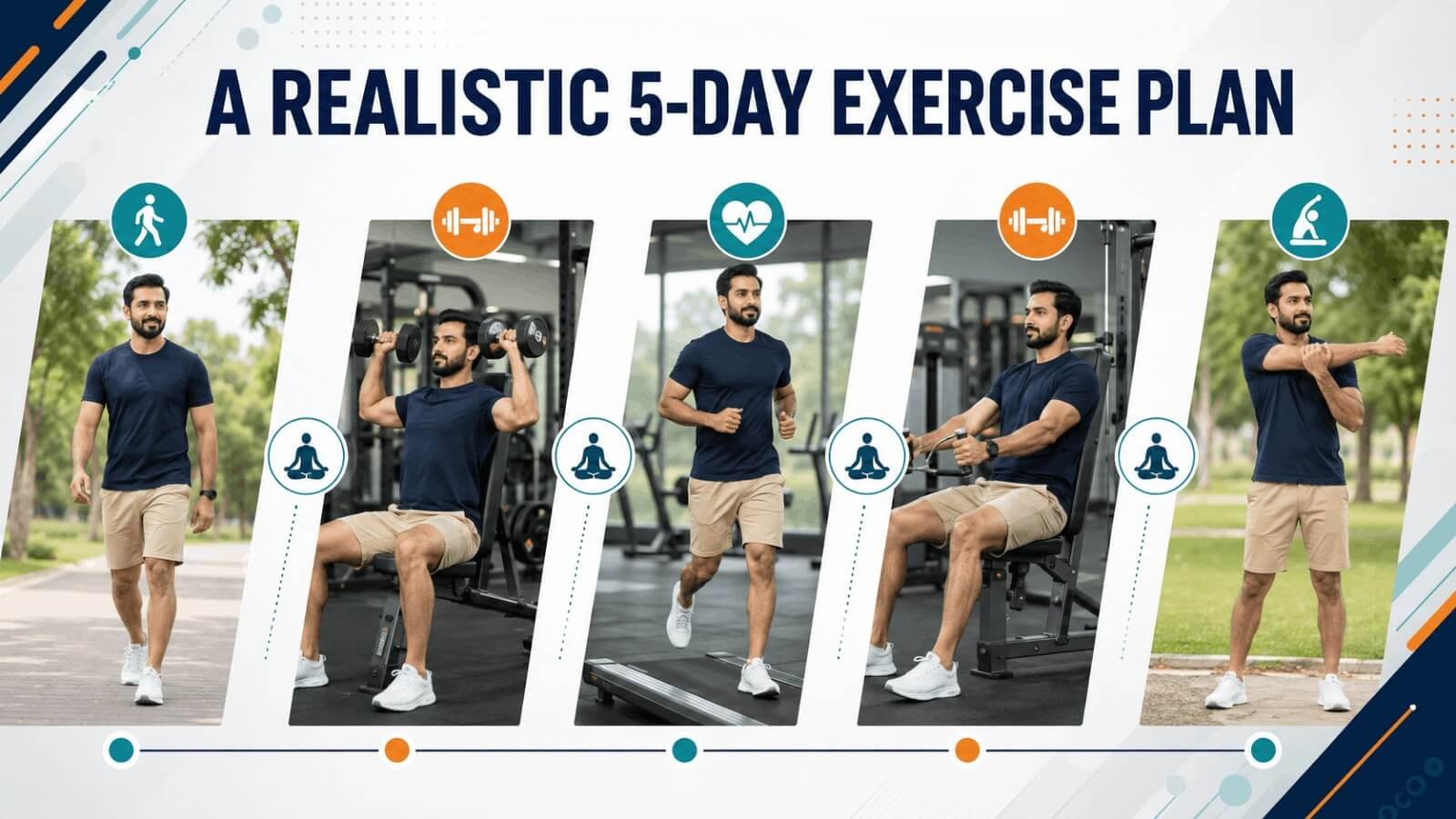
Exercising moderately 4 to 5 times per week provides the ideal balance for most adults over 40. This frequency allows enough volume to trigger fitness adaptations while preserving energy for bodily repair.
       WEEKLY ROUTINE BALANCE
┌───────────────────────────────────┐
│  4-5 Days: Moderate Exercise      │ ──► Building Strength & Cardio
├───────────────────────────────────┤
│  2-3 Days: Rest & Recovery        │ ──► Tissue Repair & Hormonal Balance
├───────────────────────────────────┤
│  Daily: Light Movement (Walking)  │ ──► Joint Health & Circulation
└───────────────────────────────────┘
Why Recovery Becomes Essential With Age

As the body ages, cellular repair slows down. Excessive workouts without adequate rest lead to persistent fatigue, prolonged soreness, and lower motivation. A comprehensive recovery strategy includes:
-
Hydration & Nutrition: Replenishing lost fluids and essential nutrients.
-
Quality Sleep: Allowing 7–9 hours for deep tissue repair.
-
Active Rest: Engaging in light stretching or leisure walking on non-workout days.
Key Components of a Balanced Weekly Routine

To optimize how much exercise per week you perform, structure your schedule around three primary pillars:
1. Strength Training
Muscle loss naturally accelerates after age 40. Incorporating resistance exercises using body weight, bands, or weights builds joint stability, improves functional confidence, and promotes active aging.
2. Cardiovascular Exercise
Cardio activities—such as brisk walking, cycling, or light jogging—bolster stamina while lowering emotional heaviness and daily stress. Morning cardio in particular enhances mental clarity and metabolic rate for hours afterward.
Optimizing Workouts for Busy Schedules
You do not need hours in the gym to see measurable improvements. Short, focused sessions lasting 20 to 30 minutes offer substantial gains in cardiovascular health, mood, and circulation.
Maximize Results with Proper Rest and Sleep
Workout quality relies directly on recovery quality. Poor sleep reduces physical stamina, slows reaction times, and weakens long-term motivation. Sleep and exercise operate synergistically: better sleep fuels stronger workouts, while regular activity drives deeper sleep.
Frequently Asked Questions
How much exercise per week is ideal after 40?
Most adults thrive on 150 to 300 minutes of moderate activity per week, typically split into 4–5 structured workout days combined with daily light walking and regular rest days.
Is daily intense exercise necessary?
No. Daily high-intensity workouts can overload your nervous system and increase the risk of injury or burnout. Active recovery days are vital for long-term progress.
Can short workouts still improve health?
Yes. Short, consistent sessions of 15 to 25 minutes effectively boost cardiovascular health, support mental clarity, and maintain active metabolic rates.
Rethinking Fitness After 40

Fitness after 40 shifts away from extreme transformations or showing off. It becomes focused on staying active, protecting joint health, sustaining daily energy, and aging gracefully. By building a routine rooted in consistency, recovery, and realistic goals, you create a healthy lifestyle that lasts for decades.


Excellent article with helpful insights. The writing style is simple and engaging which makes learning easy. Thank you for creating such informative content that benefits readers looking for reliable health advice.
Pingback: Why Energy Levels Drop With Age - OptiFit Living – Smart Health & Fitness for Men Over 40