Many men in midlife share a similar concern: “I haven’t changed much, but my waist keeps growing.” Long work hours, quick meals, and exercise pushed to the weekend can gradually change a person’s routine. When the scale rises, it is tempting to search for a strict diet or a supplement that promises fast results.
A more useful way to think about How to Jump-Start Weight Loss After 40 is to look at the habits shaping your week rather than blame your age or expect a quick fix. Weight loss is possible after 40, but a plan that supports strength, fits your responsibilities, and can be repeated is more practical than an extreme approach.
This guide explains why weight loss can feel different in midlife, how to make a practical start, and how to track progress without letting the scale dominate the process. It draws on public guidance from the National Institute of Diabetes and Digestive and Kidney Diseases (NIDDK) and the National Institute on Aging (NIA). It is general educational information, not a personal medical plan. That is the starting point for how to jump-start weight loss after 40.
What “jump-starting” weight loss really means
Jump-starting weight loss does not mean forcing rapid changes through starvation, punishing workouts, or cutting out entire food groups. It means choosing a few changes that create a steady, manageable pattern: eating in a way that supports a modest calorie deficit, moving more, keeping muscle active, and allowing enough time for recovery. Keep this in mind when planning how to jump-start weight loss after 40.
A calorie deficit means that, over time, your body uses more energy than it gets from food and drink. This does not require counting every bite forever. For many people, noticing portions, drinks, snacks, and meal timing is a useful first step. Individual needs vary, and progress can be affected by sleep, health conditions, medicines, stress, and daily activity. NIDDK explains the role of eating patterns and physical activity in weight management in its guidance for adults. It is one reason how to jump-start weight loss after 40 looks different for every man.
The first goal is not to make every day perfect. It is to make your normal week a little more supportive of your health.
Why weight loss may feel different after 40
Age alone does not make weight loss impossible. But the way daily life changes in midlife can make weight gain easier and healthy routines harder to maintain.
A typical workday may involve long periods of sitting, a rushed lunch, a late dinner, and little time to exercise. Family responsibilities can fill the evenings. An old sports injury or stiff joints may make you cautious about activity. These pressures can gradually reduce daily movement and make convenient, high-calorie food a regular choice. This matters whenever you think about how to jump-start weight loss after 40.
There can also be gradual changes in muscle and activity. Muscle helps you do everyday tasks and contributes to the energy your body uses. If you become less active and lose strength over time, maintaining your previous weight may become harder. That is one reason weight loss plans should include some form of muscle-strengthening activity rather than focusing only on the scale. Use it as a guide to how to jump-start weight loss after 40 in your own week.
Changes in sleep and stress matter too. A poor night does not cause weight gain by itself, but a repeated pattern of short or disrupted sleep can leave you tired, less active, and more likely to reach for convenient food. Stress can also make planning meals and exercise feel like one more task. It helps explain how to jump-start weight loss after 40 without extremes.
These are practical challenges, not proof that your body is “broken.” The NIA also notes that body composition and activity can change with age, but people can still take steps to support a healthy weight. Look at what changed in your routine and what you can reasonably adjust. Remember it when deciding how to jump-start weight loss after 40.
Start by finding the habits that matter most

Before changing everything, spend a few days observing your routine. You do not need to judge yourself or follow a strict diet. Note roughly when you eat, what you drink, how much you move, and how well you sleep.
Look for patterns that repeat. Perhaps you skip breakfast, then arrive at lunch very hungry. Maybe sweet drinks or large coffees are easy to overlook. Perhaps dinner is balanced, but evenings bring several snacks while watching television. Or you are active on Saturday but sit for most of the workweek. This detail shapes how to jump-start weight loss after 40 in everyday life.
This short review can point to changes with a good chance of lasting. If portions are consistently large, adjusting the plate may help. If you drink calories without feeling full, replacing some sweet drinks with water or unsweetened options may be an easier start. If your workday is sedentary, short walking breaks may be more realistic than trying to fit in an hour-long workout every evening. Think about it as part of how to jump-start weight loss after 40.
For a wider look at sustainable weight habits, read our guide to long-term weight loss. Use it as a companion, not a reason to add more rules than you can follow.
Build meals that support fullness and strength

A useful meal is not just low in calories. It should also help you feel satisfied and give your body the nutrients it needs. A simple starting point is to include a source of protein, vegetables or fruit, and a sensible portion of a higher-fibre carbohydrate or other filling food. It is another piece of how to jump-start weight loss after 40 that lasts.
Include protein regularly
Foods such as eggs, fish, chicken, lentils, beans, plain yogurt, and tofu can contribute protein. Including a protein source in meals can make them more satisfying and supports the body’s muscle tissue, especially when you are also doing strength activity. That is why how to jump-start weight loss after 40 depends on habits, not hacks.
You do not need to rely on expensive powders or eat unusually large portions. If you have kidney disease or have been given specific dietary advice, speak with a qualified clinician before making a major change to protein intake.
Make vegetables and fruit easy to reach
Vegetables and fruit add colour, fibre, and variety. Keeping washed fruit visible or adding vegetables to a familiar lunch can make the helpful choice easier. Frozen vegetables can be practical, too, especially when time is short.
Fibre-rich foods such as beans, lentils, oats, vegetables, and whole grains can help make meals more filling. Increase fibre gradually and drink enough fluids, since a sudden large increase may cause discomfort for some people.
Pay attention to portions without banning favourite foods
A weight-loss plan does not have to make ordinary family meals off-limits. You can begin by serving a little less of calorie-dense foods, eating slowly, and noticing whether you are comfortably satisfied before taking more. Use a plate, bowl, or serving spoon that helps you see portions clearly. Apply it when working out how to jump-start weight loss after 40 safely.
If you enjoy a favourite food, plan for it rather than treating it as a failure. A flexible approach is often easier to keep than a rule that makes you feel you have “broken” the plan whenever you eat something different. This is central to how to jump-start weight loss after 40 realistically.
Move more, and keep strength in the plan

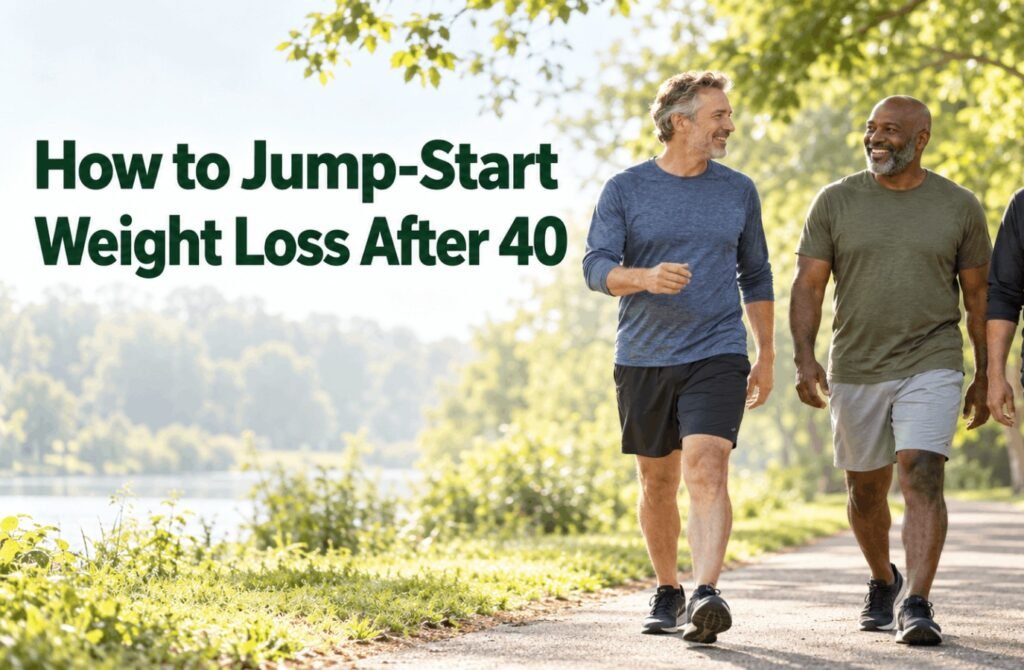
Walking is a practical way to add activity for many men. It needs little equipment, can be divided into shorter sessions, and can fit around a busy schedule. If you currently do very little, start with a manageable walk and build gradually. The best starting amount is one you can repeat without pain or leaving you exhausted for the rest of the day. For context, U.S. physical activity guidance for adults recommends at least 150 minutes of moderate-intensity aerobic activity each week and muscle-strengthening activity on two days; this is a longer-term target, not a requirement for your first week. See the CDC adult activity guidelines. Factor it in when learning how to jump-start weight loss after 40.
Strength activity matters as well. It may include body-weight movements, resistance bands, weights, or exercises adapted to your ability. Begin with movements you can perform with good control, increase difficulty gradually, and allow time to recover between challenging sessions. NIDDK recommends combining healthy eating with regular physical activity as part of weight management; your starting routine should match your current fitness and health. It also affects how to jump-start weight loss after 40 around a busy schedule.
You do not need to chase a dramatic calorie burn from exercise. Regular movement can support fitness, mobility, mood, and long-term weight management. Pairing it with manageable food changes is more realistic than expecting workouts alone to undo every eating habit. In short, how to jump-start weight loss after 40 is about steady, repeatable steps.
If you are new to exercise, have joint or back pain, or have been inactive for a long time, choose a gentle starting point and ask a qualified professional for guidance when needed.
Look beyond the gym for daily movement
Planned workouts help, but ordinary movement also adds up. Take a brief walk during a break, stand while making a phone call, use the stairs when practical, or park a little farther away if that is safe and comfortable.
For men with long office hours, these small decisions can help break up long periods of sitting. They may not seem like formal exercise, but they make an inactive day less inactive. A routine that includes a few short walks may be easier to sustain than waiting for a free hour that rarely appears. That keeps how to jump-start weight loss after 40 practical.
Choose opportunities that fit your setting and health. If your work is physically demanding, the priority may be recovery and safe movement rather than adding more activity for its own sake.
Protect sleep and plan around stress

Weight loss plans often focus on food and exercise, but sleep and stress influence how easy those habits feel. If you are regularly tired, cooking a balanced meal or going for a walk can seem much harder. Stress may also affect appetite or lead to unplanned eating, although people respond to stress in different ways.
Start with a repeatable bedtime routine. Keep a reasonably regular sleep and wake time where possible, give yourself time to wind down, and avoid letting late-night screens or work repeatedly crowd out sleep. If you snore heavily, wake unrefreshed, or feel unusually sleepy during the day, discuss it with a qualified doctor; sleep problems can have several causes.
For stress, try to identify the moment when your plan usually slips. If you tend to snack after a difficult commute, have a filling planned snack available or take a few minutes to decompress before dinner. The aim is not to eliminate stress. It is to make a better choice easier at a predictable pressure point.
Track progress in more than one way

Body weight can move up and down from day to day due to fluid, food, and other normal changes. One measurement cannot tell you exactly what is happening with body fat or fitness.
If weighing yourself is comfortable for you, use a consistent routine and look at the general trend rather than reacting to every change. NIDDK’s weight-management guidance also emphasizes ongoing habits and a plan that can be maintained. You can also track waist measurement, how your clothes fit, walking stamina, strength, sleep, or how regularly you complete your planned habits.
Progress may include being able to walk farther, feeling less winded on stairs, or preparing weekday lunches more often. These changes are meaningful even before the scale shows a clear downward trend.
If tracking weight or food makes you anxious or leads to restrictive behaviour, step back from it and seek appropriate support. You can focus on habits and health markers with guidance from a qualified professional.
Common Weight-Loss Mistakes to Avoid
Trying to lose weight as fast as possible
Very restrictive plans can be difficult to maintain and may leave you tired or preoccupied with food. Choose a pace and routine that allow you to work, care for your family, and keep up your normal responsibilities.
Doing too much too soon
A sudden jump in exercise can leave you sore or discouraged. Start at a level you can manage, then build gradually. Consistency matters more than making the first week exhausting.
Cutting out entire food groups without a reason
Unnecessary restrictions can make meals harder to plan and reduce variety. Instead, focus on portions, meal balance, and the foods you can regularly include.
Ignoring sleep and recovery
More exercise is not always the answer if you are exhausted or dealing with pain. Make sleep and rest part of the plan, and adjust activity if your body is not recovering well.
Depending on supplements or online trends
A product or trend cannot replace a sustainable eating and activity routine. Be especially cautious of claims that promise fast fat loss or suggest you can ignore medical advice.
Tracking only the scale
Daily weight changes can hide improvements in fitness and routine. Use other signs of progress and look at trends over time.
Giving up after one difficult day
A meal out or missed workout does not undo your effort. Return to your usual plan at the next meal or opportunity instead of waiting for a new week or month.
A Simple Two-Week Weight-Loss Action Plan
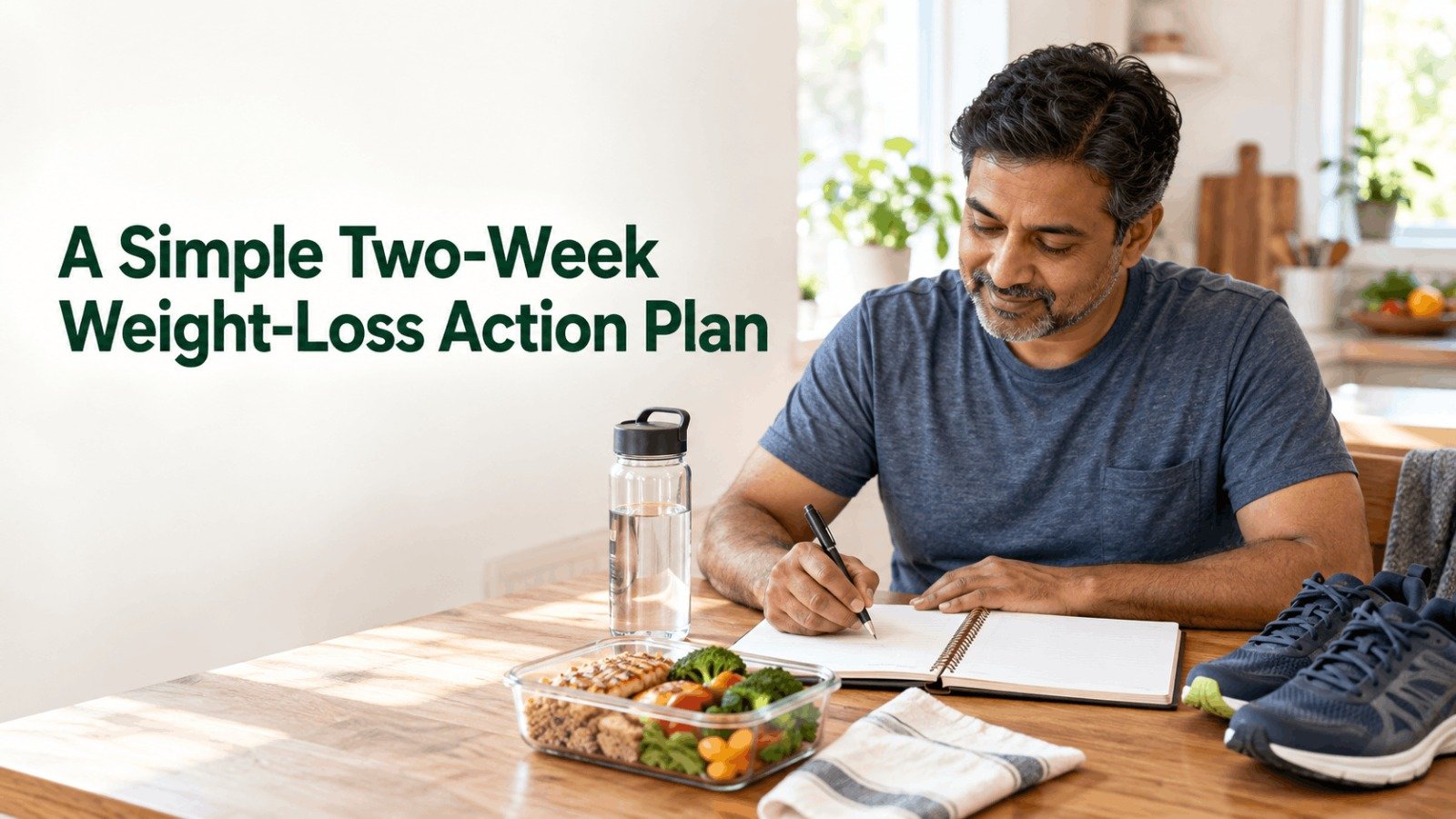
Use this two-week plan as a gentle beginning. Adjust it to your health, schedule, and current fitness.
- Days 1–3: Observe your routine. Notice your meals, drinks, movement, sleep, and the times when you tend to snack. Look for one or two repeated patterns.
- Days 4–7: Choose two manageable changes. For example, add a short walk on workdays and include a protein-rich food at lunch. Keep the changes specific enough that you know whether you did them.
- Week 2: Add one more helpful habit. You might plan a few weekday meals, add vegetables to dinner, or include a beginner-friendly strength session if it is suitable for you. Avoid adding several new demands at once.
- At the end of two weeks: Review and adjust. Ask yourself which habits felt realistic, what got in the way, and what you can keep doing. If a change repeatedly fails because your schedule is too tight, make it smaller rather than blaming yourself.
This plan is a starting framework, not a medical prescription. Men with health conditions, mobility limitations, or specific dietary needs may benefit from individual guidance.
When to Seek Professional Advice
Speak with a qualified doctor before starting a new exercise or weight-loss routine if you have a serious health condition, take regular medication, have significant pain, or are unsure what activity is appropriate for you. Ask for prompt care for serious or unusual symptoms during activity, such as chest pain, fainting, or severe breathlessness.
If your weight changes unexpectedly, you feel persistently unwell, or you are considering a restrictive diet, medication, or supplement, get individual advice. Lifestyle changes can support health, but they do not replace medical care or prescribed treatment.
Frequently Asked Questions
Can men lose weight after 40?
Yes. Weight loss is possible after 40. A realistic plan usually focuses on food portions and quality, regular movement, strength activity where appropriate, sleep, and habits you can maintain.
What is the first step if I want to lose weight?
Start by observing your routine for a few days. Identify one repeated habit that may be affecting your eating or activity, then choose one manageable change to work on first.
Should I stop eating carbohydrates to lose weight?
Not necessarily. Many people can include carbohydrates such as oats, fruit, beans, potatoes, and whole grains in a balanced eating pattern. Portion size and overall food choices matter, and individual needs vary.
Is walking enough to start?
Walking can be a useful starting activity, particularly if you are currently inactive. Gradually increasing movement and adding suitable strength activity can support a broader fitness plan.
Why is my weight not changing even though I exercise?
Exercise is valuable, but it may not offset changes in food portions, drinks, or other daily habits. Weight can also fluctuate naturally. Review your routine over time, and seek professional guidance if you are concerned.
Do I need to take a supplement to lose weight?
No supplement is required for everyone. Products marketed for weight loss can have risks or interact with medication. Ask a qualified doctor or pharmacist before using one, especially if you have a health condition or take medicine.
How often should I weigh myself?
There is no single schedule that suits everyone. Some people find occasional consistent measurements useful; others prefer tracking habits, waist measurement, or fitness. Avoid weighing if it causes distress or unhealthy restriction.
Final Thoughts
Sustainable progress rarely depends on starting with the harshest rules. It is more practical to choose a few changes that fit your real week and return to them after busy days, travel, or setbacks.
If you are considering How to Jump-Start Weight Loss After 40, choose one practical step today: plan a balanced lunch, take a short walk, or set a regular time to wind down. Keep it simple enough to repeat. Your next decade of health can be shaped by steady choices rather than a perfect first week.
Editorial and medical note
This article offers general information for adult men and does not diagnose or treat a health condition. The recommendations are aligned with the public weight-management resources linked below. Because medicines, medical history, mobility, and individual nutrition needs can change what is appropriate, consult a qualified healthcare professional for personal advice.
Helpful Resources
- Eating and Physical Activity to Lose or Maintain Weight — NIDDK
- Healthy Eating and Physical Activity for Life — NIDDK
- Factors Affecting Weight and Health — NIDDK
- Maintaining a Healthy Weight — National Institute on Aging
- Weight Control — National Center for Complementary and Integrative Health
- Adult Activity: An Overview — CDC