
Standing in front of a shelf of men’s vitamins, it can feel as though every bottle promises the same things: energy, strength, confidence, and healthy aging. When you already feel stretched between work and family, those promises are easy to understand.
But choosing the best men’s multivitamin for testosterone takes more than finding the boldest label. A multivitamin can help cover nutritional gaps. It should not be expected to treat low testosterone or reliably raise normal levels.
For men over 40, the better purchase starts with a clearer question: do you need general nutritional support, help with a specific deficiency, or an assessment of symptoms?
Here is how to tell the difference, compare ingredients, and make a sensible decision without paying for promises your body may not need.
Quick answer: No multivitamin has been proven to be the best testosterone treatment for every man. The most appropriate product is one that addresses a real dietary gap, uses clearly disclosed amounts, avoids unnecessary high doses, and is compatible with your medicines and health conditions.
What Is the Best Men’s Multivitamin for Testosterone?
There is no universal brand or formula. A man with a varied diet may not need a multivitamin, while someone with a restricted eating pattern may benefit from nutritional advice and an appropriate product. A diagnosed deficiency may require targeted treatment rather than a general multivitamin.
A sensible choice has appropriate ingredients, transparent amounts, a traceable manufacturer, manageable cost, and a clear reason for use. A familiar brand name or a “testosterone support” label does not make every formula suitable.
How Nutrition and Testosterone Fit Together
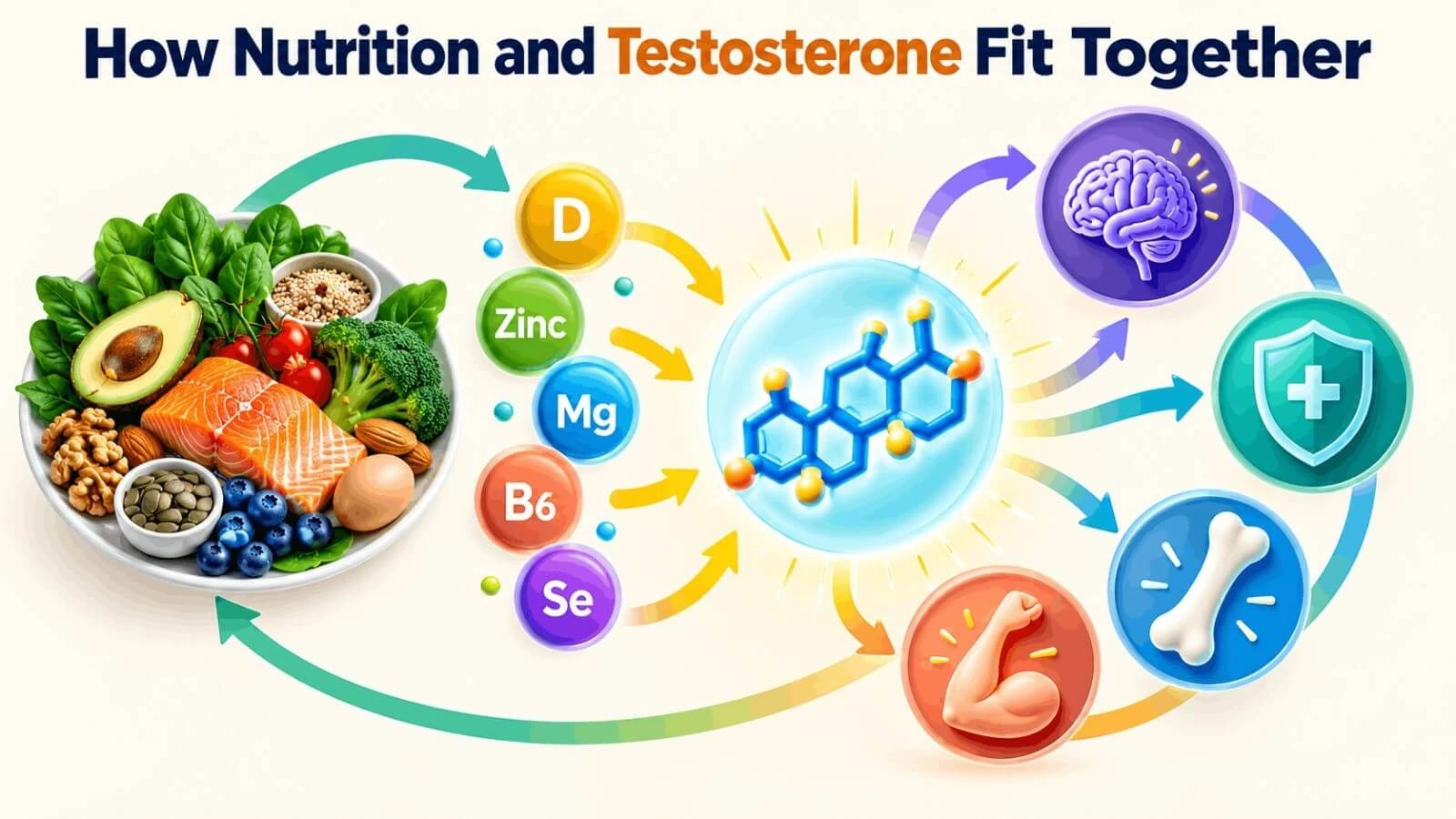
Testosterone is a hormone produced mainly in the testicles, under signals from the brain. It contributes to sexual desire, muscle, and bone health.
Vitamins and minerals support normal body processes, but a multivitamin does not take over this hormone-control system. A nutrient being necessary for health does not prove that taking extra will improve hormone levels.
Correcting a shortage is different from adding a surplus
Imagine your diet is missing something your body needs. Correcting that gap has a sensible purpose. Once intake is adequate, however, adding more is a different intervention with different potential benefits and risks.
This distinction is easily lost in advertising. “Contains nutrients involved in normal function” can sound like “will improve your function,” even though the second claim requires additional evidence.
A link in research is not always a treatment effect
Two measurements can be related without one causing the other. For example, finding low vitamin D and low testosterone together does not prove that vitamin D tablets will fix testosterone.
Research findings are mixed. In one randomized controlled trial, vitamin D supplementation did not raise testosterone in healthy middle-aged men whose testosterone was within the normal range. The practical conclusion is to address vitamin D needs for bone and general health reasons, not as a guaranteed hormone treatment.
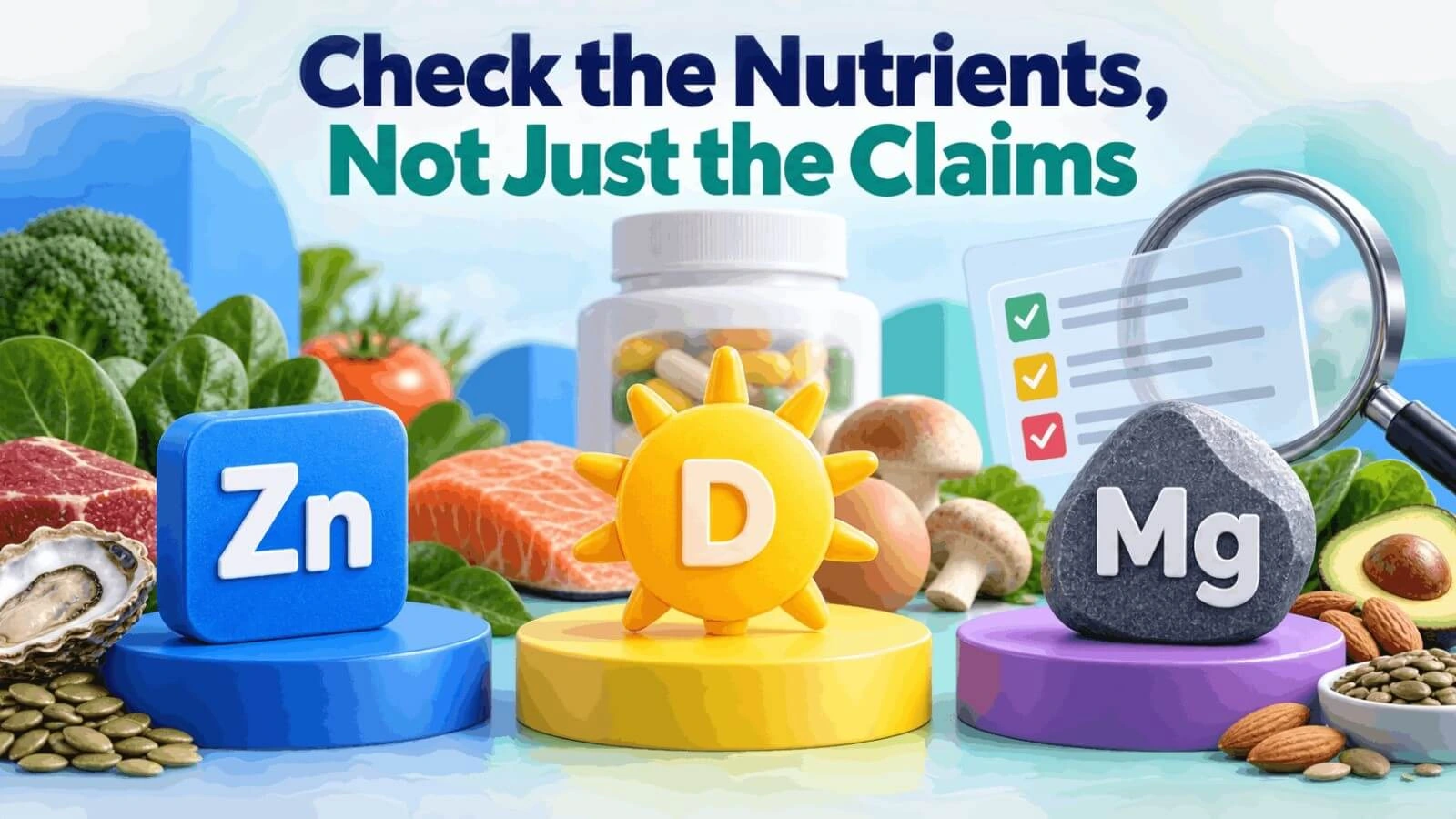
Check the Nutrients, Not Just the Men’s Health Claims
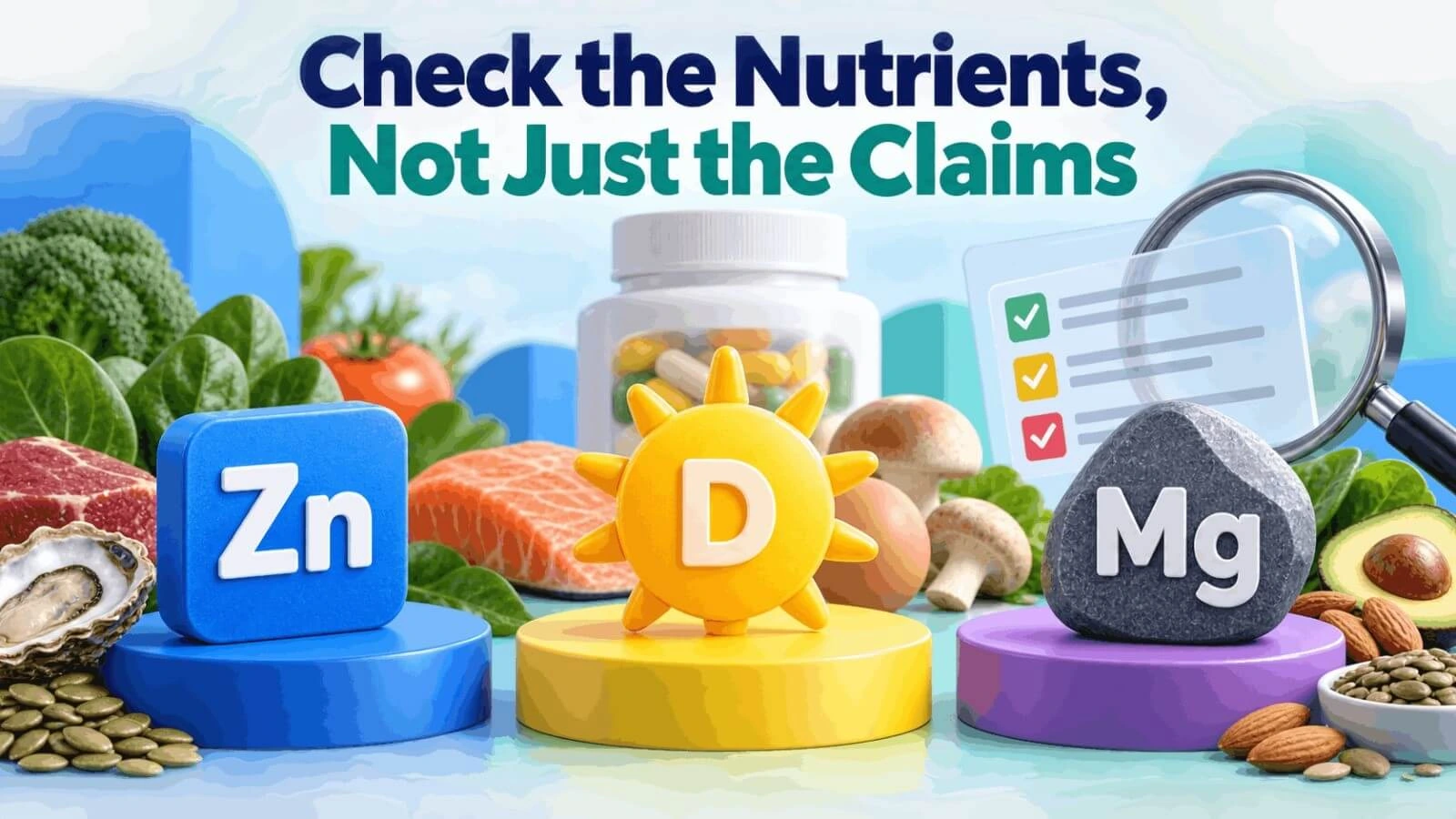
A useful formula should make nutritional sense before you consider words such as “power,” “vitality,” or “testosterone support.”
Zinc: meet your needs without chasing high doses
Adult men generally need 11 mg of zinc daily from food and supplements combined. The adult upper limit is 40 mg daily unless a clinician directs otherwise; that limit is not a target.
Meat, seafood, dairy, beans, nuts, and whole grains can contribute zinc. Plant sources differ in how readily their zinc is absorbed, which matters when reviewing a restricted diet.
Excessive zinc over time can interfere with copper and cause health problems. It can also interact with some antibiotics.
A simple label calculation
If one product supplies 15 mg and another supplies 25 mg, you already have 40 mg from supplements before counting food. The example shows why combining apparently ordinary products deserves attention.
Vitamin D: support bone health, not a guaranteed hormone rise
Vitamin D helps your body absorb calcium and supports bone health. For adults aged 19–70, the recommended intake is 600 IU, or 15 micrograms, daily. Above 70, it rises to 800 IU, or 20 micrograms.
These are general nutritional reference amounts, not instructions for treating a deficiency. A clinician may recommend a different plan for a specific reason.
For adults, the general upper limit is 4,000 IU daily from all sources unless medically directed. Excessive supplemental vitamin D can cause high calcium levels and kidney problems. Do not add a high-dose product simply because a multivitamin already contains some vitamin D.
Magnesium: understand the food and supplement difference
Men aged 31 and older generally need 420 mg of magnesium daily from all sources. Nuts, seeds, legumes, whole grains, and leafy vegetables can help meet that need.
Many multivitamins contain only a small amount. That does not automatically make them poor products; meals are part of the total.
The adult upper limit of 350 mg applies specifically to magnesium from supplements and medicines, not magnesium naturally present in food. Higher supplemental amounts commonly cause diarrhea. Kidney disease increases the risk of magnesium toxicity.
Check the declared magnesium amount rather than the weight of the whole magnesium compound. Do not assume a larger number on the front means more usable magnesium per serving.
The rest of the formula deserves attention too
Do not focus so strongly on three popular ingredients that you ignore everything else. Read every row, including nutrients already present in your other products.
You do not need to understand every chemical name immediately. Mark unfamiliar ingredients and ask a pharmacist what they contribute, whether their amount is appropriate, and whether they complicate your medication schedule.
How to Compare Two Multivitamins Fairly
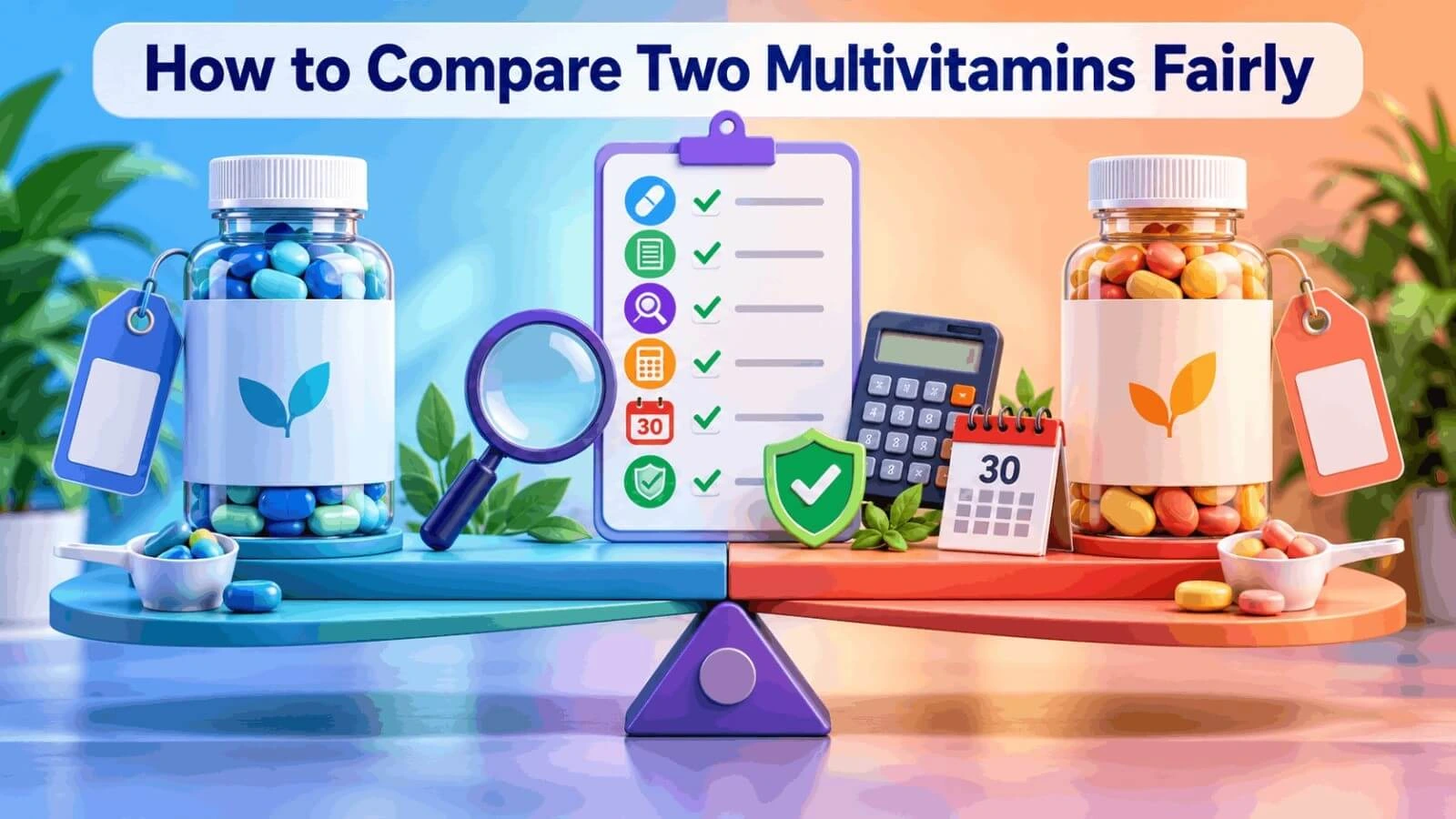
Finding the best men’s multivitamin for testosterone comes down to reading the label details carefully rather than relying on marketing slogans. When comparing formulas, look at the full daily serving, exact mineral forms, and total nutrient doses to ensure the product meets your actual health goals.
Put the labels next to each other and compare the same full daily serving. A bottle containing 90 capsules may provide only 30 days if the serving is three capsules.
| What to compare | Useful question | Why it matters |
| Daily serving | How many tablets or capsules make one serving? | Prevents misleading bottle-count comparisons |
| Nutrient amounts | Does the formula address an actual dietary gap? | Connects the product to a clear purpose |
| Other ingredients | Are herbs, stimulants, or blends included? | Introduces additional evidence, interaction, and safety questions |
| Quality information | Can the testing claim be verified for this exact product? | Separates useful quality controls from decorative wording |
| Cost | What is the cost for 30 full daily servings? | Makes different bottle sizes comparable |
| Practical fit | Can I follow the directions consistently? | A complicated formula offers little value if it is not used correctly |
Treat percentages as information, not a score
A label showing a very high percentage is not automatically better. Daily Value percentages are reference figures used on labels; they are not a personal prescription or a prediction of benefit.
Ask what the amount adds to your existing diet. Comparing numbers without that context can turn shopping into a contest for the highest dose.
Check the meaning of testing claims
Ask who tested the product, what was checked, and whether the claim applies to that exact formula. Independent testing for contents or contaminants does not prove a testosterone benefit.
A research reference should also match the claim. A study of one isolated nutrient is not a clinical trial of a finished multivitamin containing many ingredients.
Choose a traceable source
Look for clear manufacturer details, a batch number, expiry information, and intact packaging. Keep the receipt and photograph the ingredient panel. Those details help if you later need to ask a question or report a problem.
Who Should Look Beyond a Multivitamin?
Ongoing low sexual desire, reduced spontaneous erections, or unexplained loss of muscle can warrant assessment. Fatigue by itself has many possible explanations and does not diagnose a hormone problem.
Obesity, type 2 diabetes, sleep disorders, certain medicines, and problems involving the testicles or hormone signals can be associated with low testosterone. A vitamin cannot be assumed to address these causes.
The Endocrine Society recommends diagnosing hypogonadism only when compatible symptoms occur with consistently low testosterone, confirmed by repeating a morning fasting measurement. Your clinician decides which tests are appropriate and how to interpret them.
Bring a short symptom timeline rather than requesting treatment based on a home checklist. Mention changes in sleep, medication, exercise, and sexual function honestly.
For a closer look at one part of this picture, read our guide to stress, poor sleep, and male sexual health.
Common Mistakes People Make
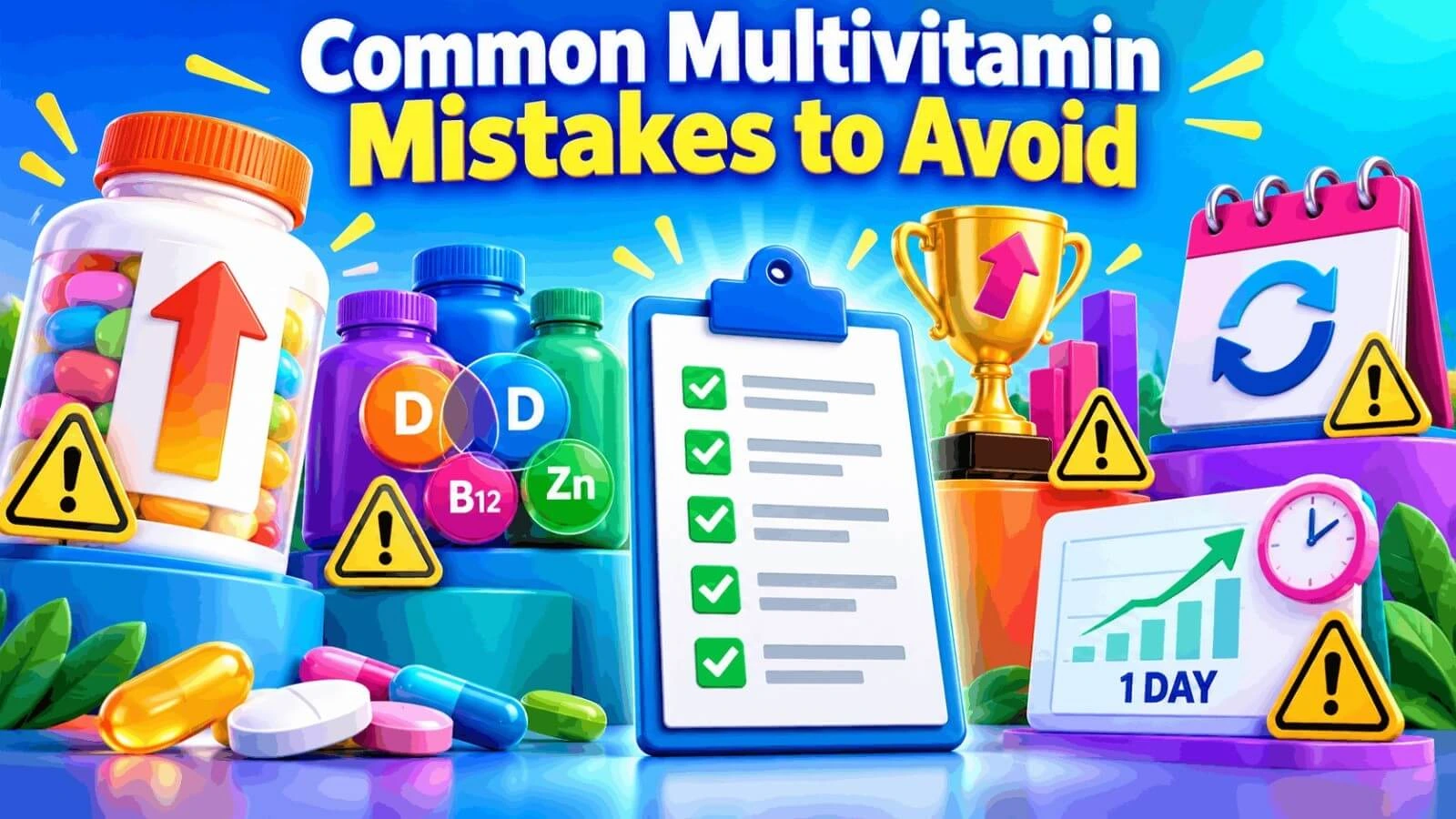
Expecting a multivitamin to act like hormone treatment
A nutrient formula and prescribed hormone treatment serve different purposes. Correct the expectation before judging the product: ask what nutritional need it addresses, rather than how much testosterone it promises.
Choosing the largest dose
More can mean unnecessary exposure rather than extra benefit. Compare amounts with your food intake and other supplements, and ask for help when the totals are unclear.
Combining products with different marketing names
An immunity tablet, men’s multivitamin, and gym supplement may repeat ingredients. List them together instead of assuming each belongs to a separate health category.
Judging results too quickly
Sleep, workload, meals, and exercise can change how you feel from one day to the next. Keep a brief record over a suitable review period instead of crediting one good day to a tablet. Avoid a long subscription until you know the formula is appropriate.
Ignoring persistent symptoms while changing brands
Moving from bottle to bottle can postpone a useful conversation. If symptoms continue, take your notes and labels to a qualified clinician rather than treating another purchase as an investigation.
A Five-Step Buying and Review Plan
Before buying the best men’s multivitamin for testosterone, gather all your current medication and supplement labels. Checking for duplicated ingredients and proper daily dosages prevents unnecessary high intake while ensuring your chosen formula supports your daily dietary needs effectively.
-
Define the reason. Separate a dietary concern from a symptom needing investigation. “I eat very few food groups” and “my sexual desire has changed” require different responses.
-
Collect the information. Record several ordinary days of meals and gather every medicine and supplement label, including occasional products.
-
Compare a small shortlist. Use the table above to compare two or three formulas by full daily serving and 30-day cost.
-
Check safety. Ask a pharmacist about interactions, duplicated nutrients, and whether a simpler product would meet the same need.
-
Set a review point. Record unwanted effects and decide whether to continue, change the plan with professional advice, or stop an unnecessary product.
Safety Before Starting
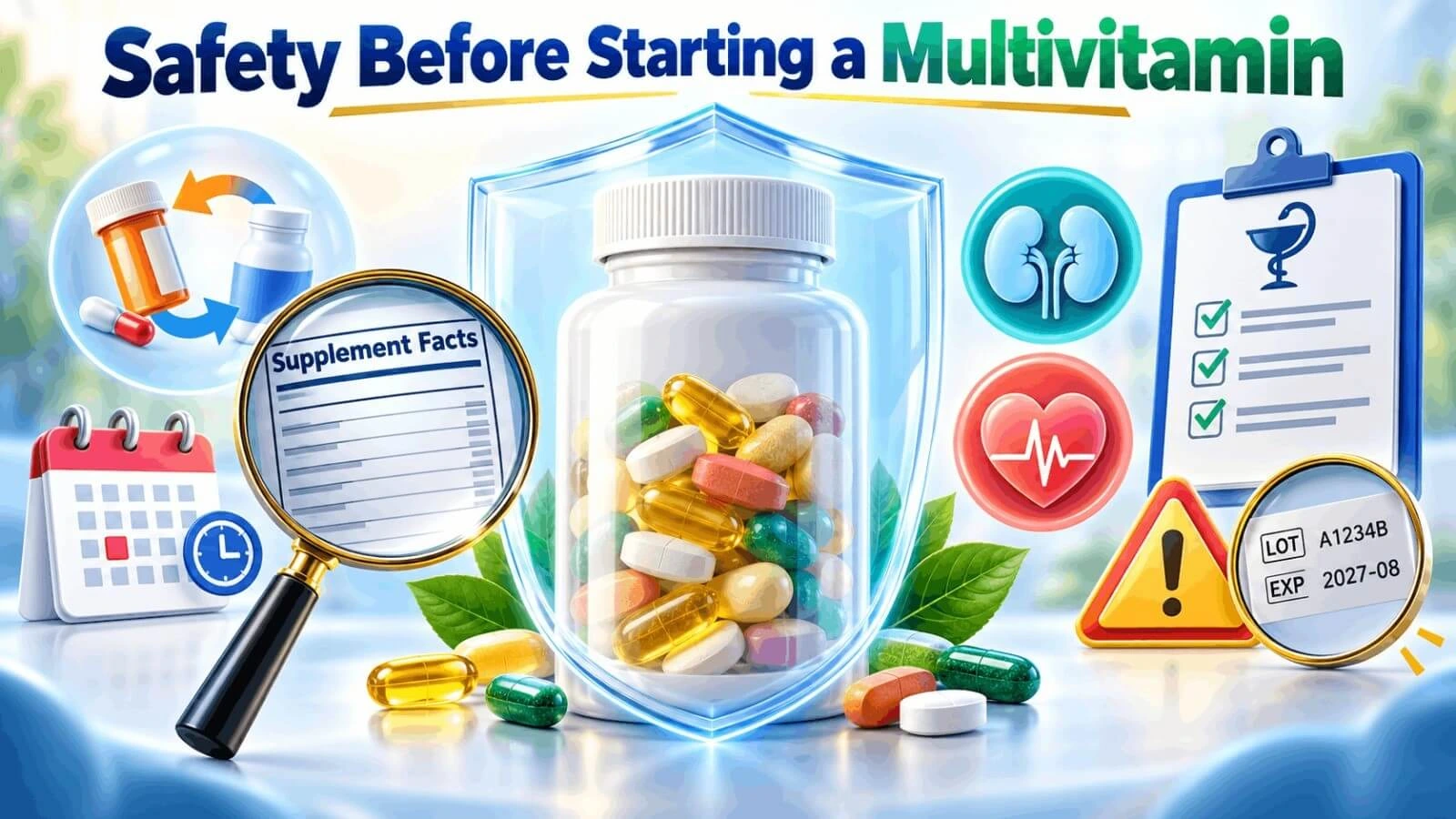
This article provides general information, not a diagnosis or personal treatment plan. Speak with a qualified doctor if you have persistent symptoms, an existing medical condition, take medicines, or are unsure about starting a supplement.
Minerals can affect the absorption of some medicines. Ask a pharmacist whether your particular products need different timing; do not use one spacing rule for every medicine or stop prescribed treatment yourself.
Seek urgent help for severe symptoms such as chest pain, fainting, severe breathlessness, or a serious allergic reaction. A multivitamin trial should never delay care for an urgent problem.
Frequently Asked Questions
Does a men’s multivitamin contain testosterone?
An ordinary vitamin-and-mineral formula does not contain testosterone. “Testosterone support” describes a marketing claim, not the presence of a prescribed hormone. Read the ingredient panel rather than relying on the product name.
Is a men’s 50+ formula automatically better after 40?
No. Age labels can reflect different formulations, but your needs do not change simply because you choose an older age category. Compare the actual contents with your diet and medical advice.
Can I use a multivitamin instead of prescribed deficiency treatment?
Do not substitute it without checking. The nutrient amount, form, or schedule may differ from the treatment you were given. Bring the proposed label to your clinician or pharmacist before changing the plan.
Are gummies as effective as tablets?
The format alone cannot answer that. Compare ingredients, amounts, serving size, and any ingredients you need to avoid. A convenient format only helps if the actual formula is suitable.
Will I feel a difference if my nutrition is already adequate?
You may not notice any change. Taking a supplement is not a reliable way to create extra energy or higher testosterone when no relevant gap exists. Lack of a noticeable effect is not a reason to keep increasing the dose.
Is an expensive multivitamin worth the extra money?
Only if it offers something relevant that you can verify, such as appropriate contents, useful quality testing, or a format you need. Premium packaging and a longer ingredient list do not establish better hormone outcomes.
Final Thoughts: Choose for a Need, Not a Promise
Ultimately, the best men’s multivitamin for testosterone is one that fills a genuine nutritional gap without overpromising results. Focus on high-quality ingredients, safety guidelines, and consistent daily habits rather than chasing high-dose supplements.
In everyday life, the most attractive health product is often the one that seems to ask the least of an already busy man. It is understandable to want a simple answer.
The best men’s multivitamin for testosterone is not a universal bottle or a substitute for diagnosis. Choose nutritional support for a real need, and seek an explanation when symptoms suggest something more.
Start by reviewing one label alongside your actual diet. That small, informed step is more useful than an expensive promise, and it puts you in a better position to care for your health with confidence.
Helpful Resource
- National Institutes of Health: Zinc Requirements, Food Sources, and Safety
- National Institutes of Health: Vitamin D Intake and Safety
- National Institutes of Health: Magnesium Intake and Medicine Interactions
- PubMed: Vitamin D and Testosterone in Healthy Men — Randomized Trial
- Endocrine Society: Low Testosterone Symptoms and Diagnosis
Editorial and medical standards: This article was prepared by Team OptiFit Living using reputable health sources and reviewed for clarity, accuracy, safety, and practical value. Where applicable, medical-review details and the latest review date should be displayed only after a real qualified review. Content is updated when important guidance or safety information changes, and any affiliate relationship must be disclosed clearly. Learn more about our authors, healthcare contributors, reviewers, and content standards in our Editorial Policy.