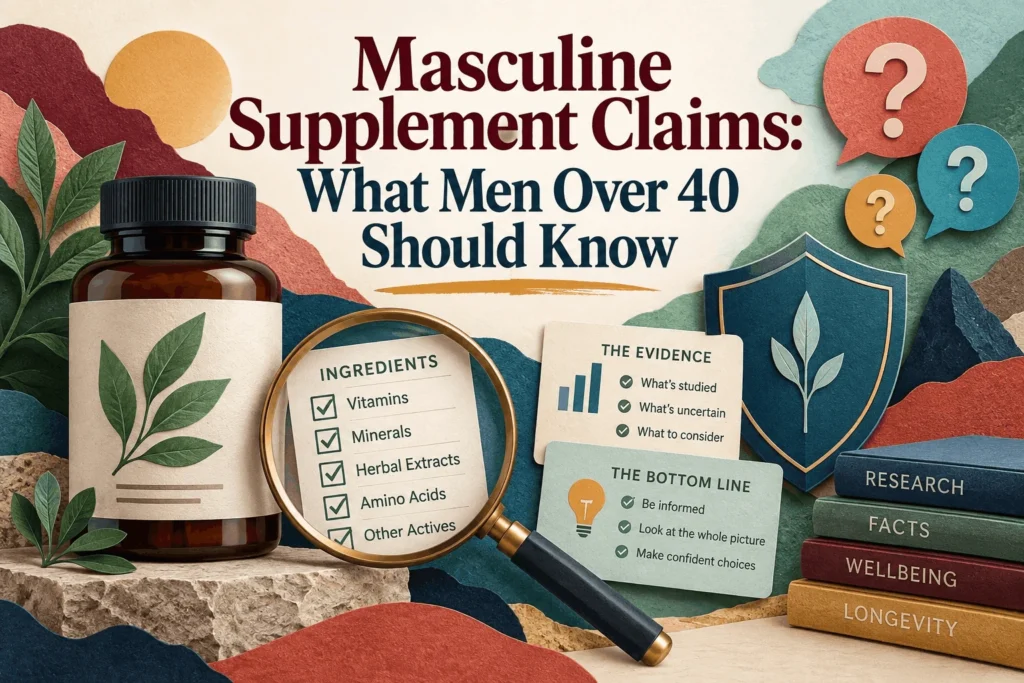
An advertisement that says you have “lost your edge” can turn tiredness, reduced exercise, or a change in sexual confidence into a personal judgment. Before buying a masculine supplement, separate the health concern from the story being sold around it. This guide explains how to assess claims, recognize risks, and decide when professional advice is more useful than a purchase.
Quick answer: “Masculine supplement” is a marketing label, not a recognized medical category. Evaluate the exact ingredients, doses, evidence, quality controls, and interaction risks—not the product name. A supplement should not be used to diagnose or treat low testosterone, erectile dysfunction, or persistent fatigue without appropriate medical assessment.
What Does “Masculine Supplement” Actually Mean?
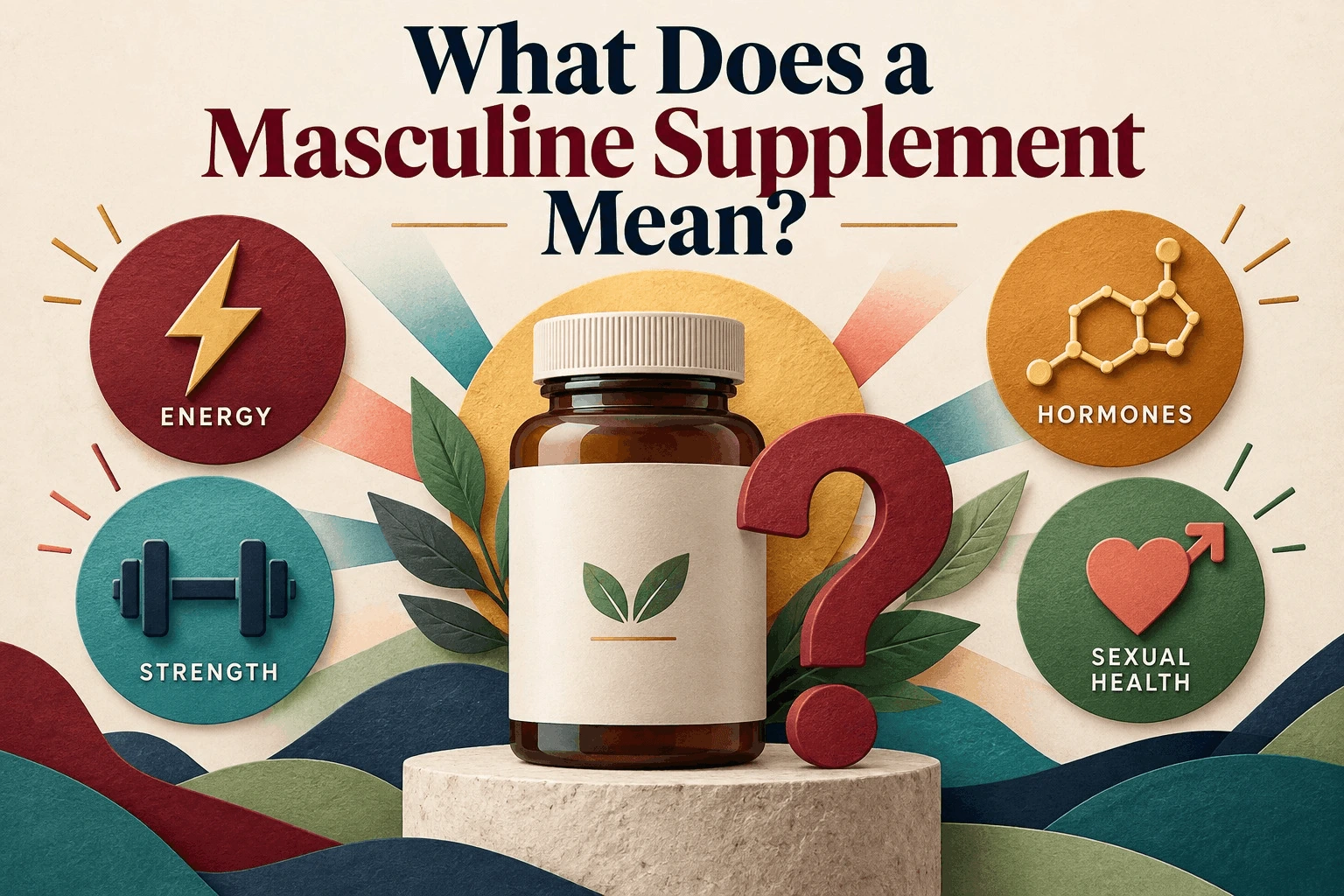
A masculine supplement is a broad marketing description for products promoted for men’s energy muscle, sexual performance, or hormone support. It does not identify one standard formula, ingredient, or proven benefit.
The contents may include vitamins, minerals, herbs, amino acids, stimulants, or combinations of these. The meaningful information is the actual formula and its evidence, not the masculine wording on the package.
No product can be judged effective or safe from this category name alone. A useful assessment must identify the exact product, the intended outcome, the evidence, and the person who would take it.
Start by Translating the Promise Into a Real Question
Advertising often combines several hopes in one sentence. Break that sentence apart before deciding whether a product is relevant.
| Marketing phrase | A more useful question |
| Restore your masculine edge | What specific symptom or ability is supposed to improve? |
| Support healthy testosterone | Was testosterone measured, and in whom? |
| Improve male performance | Does this mean exercise, sexual desire, or erection quality? |
| Clinically studied ingredients | Was the finished product studied at its listed serving? |
| Natural energy without limits | Which ingredients are responsible, and what risks were assessed? |
| Feel younger again | What measurable outcome supports that description? |
These questions do not require scientific training. They require the seller to turn a broad promise into something you can examine.
Separate your concern from the advertisement
Before reading more sales copy, write down what bothered you first. Was it a new symptom, reduced exercise capacity, or simply comparison with an image online?
If the advertisement introduced the concern, give yourself time to think. A buying decision made to escape a feeling of inadequacy may not solve a health need.
Five Ways a Masculine Supplement Claim Can Mislead
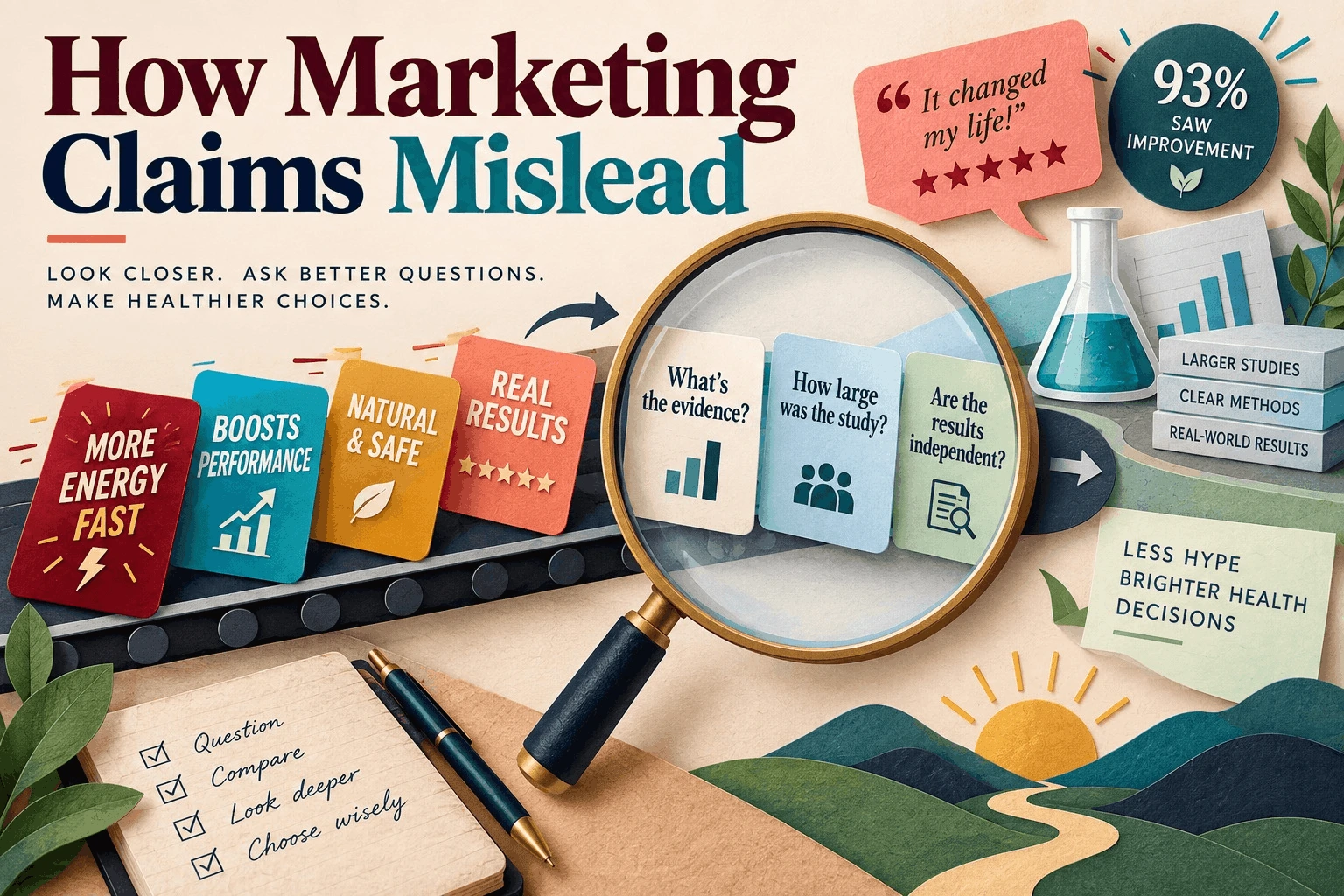
1. A body process is presented as a proven benefit
An ingredient may take part in a process related to circulation or energy. That does not establish that swallowing more will improve how you feel.
“Before buying any masculine supplement, research must examine the relevant outcome in people using an appropriate preparation
2. Research on one ingredient is applied to the whole bottle
A finished blend may use different amounts, forms, or combinations from those tested. You cannot assume the results transfer unchanged.
Ask for a fair match
Check four things: the ingredient form, amount, study participants, and outcome. If any differ substantially, the seller should explain the limitation rather than present the study as a direct product test.
3. A percentage sounds more meaningful than it is
“Improved by 30%” leaves important questions unanswered: 30% of what, compared with what, and was the difference meaningful in everyday life? Ask for the actual measurement and context.
4. A testimonial is treated as medical evidence
A customer’s account can describe taste, delivery, or personal satisfaction. It cannot reliably isolate the effect of a supplement from everything else that changed.
Better sleep, a new exercise routine, changing medication, or simple variation can affect a person’s experience. A persuasive story is still different from a controlled comparison.
5. Quality language is used to imply effectiveness
Manufacturing standards, testing, and accurate labeling matter. They answer questions about production and contents.
They do not establish that a formula improves testosterone, erections, or strength. A well-made product can still have uncertain usefulness for your goal.
Hidden Ingredients: Why the Risk Deserves Attention
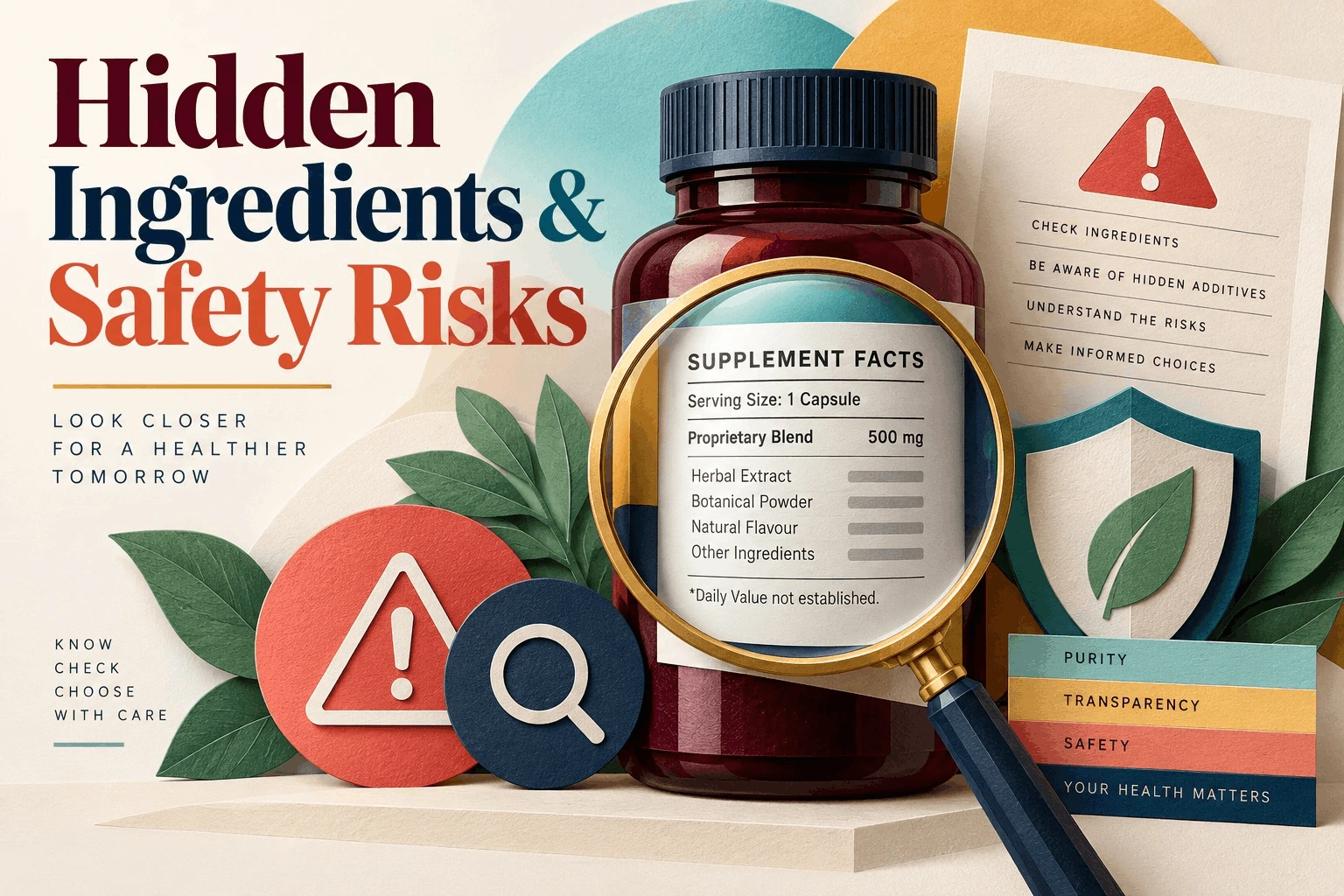
Some products sold for sexual enhancement and energy have been found to contain undeclared drug ingredients. The FDA maintains notifications for products with hidden ingredients, while emphasizing that its list covers only a small fraction of potentially contaminated products. These products can be sold online or in shops and may have positive reviews.
The concern is not merely an exaggerated promise. An undisclosed substance prevents you and your clinician from knowing what you are taking.
A product missing from a public warning list is not automatically safe. Such lists cover only a portion of contaminated products, and a search cannot replace proper quality assessment.
Do not assume every men’s supplement is contaminated. Equally, do not treat a polished website or reassuring label as proof that hidden ingredients are impossible.
Why nitrate medicines make this especially important
Some undeclared erection-drug ingredients can interact with nitrate medicines used for chest pain, causing a dangerous fall in blood pressure. The NCCIH sexual-enhancement guidance also warns that products promoted as herbal alternatives to prescription erection medicines may be unsafe.
“If you use nitrates, avoid self-prescribing any masculine supplement or sexual enhancement product.”
Rapid sexual promises should prompt caution
Products offering prescription-like sexual effects within minutes deserve careful scrutiny. A strong immediate effect does not prove that an herbal formula is safe or that your hormones needed support.
A seller should not use the possibility of a noticeable effect to avoid questions about what is actually inside.
Medicine Interactions Are About the Whole Formula
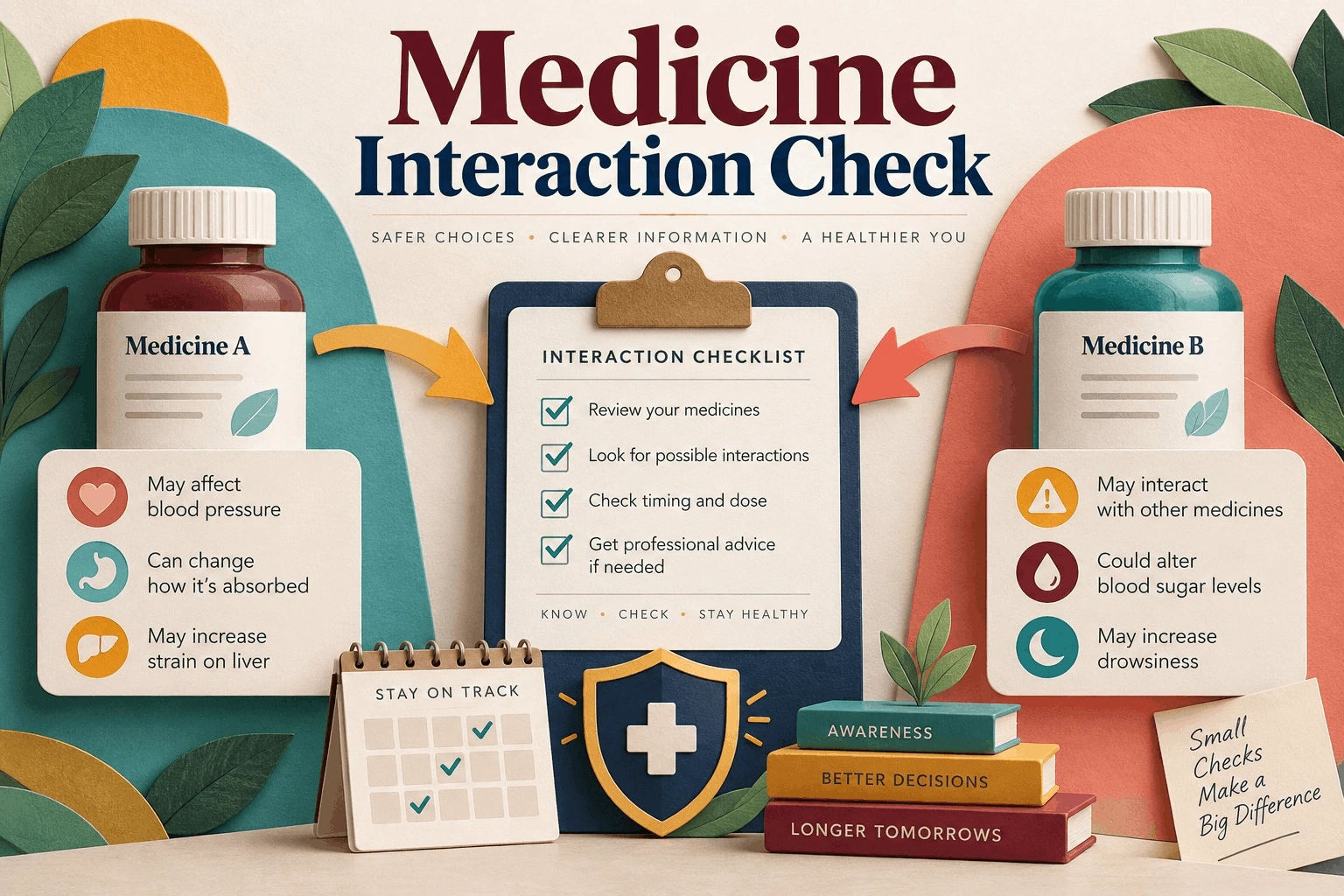
“Can I take it with my medicine?” cannot be answered without the exact formula and a complete list of prescription medicines, over-the-counter products, powders, and herbs. Interactions may change how a medicine works or increase unwanted effects. Medical conditions and upcoming surgery can also change the assessment.
Make the discussion specific
Instead of asking whether all natural supplements are safe, ask: “Does anything in this exact formula conflict with my medicines or condition?”
If the answer is uncertain because amounts, formulation details, or safety evidence are missing, avoid guessing or experimenting on your own.
Symptoms That Deserve More Than a Shopping Search
Repeated erection difficulties can be associated with underlying health problems, including blood-vessel disease or nerve damage related to diabetes. A persistent change deserves medical attention even when an advertisement offers an easy explanation.
Low sexual desire and erection difficulty are not identical. Nor does tiredness alone establish low testosterone. A clinician considers symptoms, medical history, and appropriately timed testing when needed.
Testosterone changes during the day. The Endocrine Society recommends diagnosing testosterone deficiency only when compatible symptoms occur with consistently low levels, confirmed with repeat morning testing. A result should be interpreted with symptoms rather than used alone to choose treatment.
Our guide to stress, poor sleep, and male sexual health can help you describe that part of your experience. It should support a better conversation, not supply a diagnosis.
When a Supplement May Have a Clearer Purpose
Some supplements have evidence for specific uses. Protein products can help meet protein needs, and creatine can support repeated high-intensity exercise, as discussed in the NIH exercise-performance fact sheet. Those uses should not be extended into claims about masculinity or sexual performance.
Before choosing a masculine supplement, let the need guide the decision: define the goal, consider whether food or another approach already meets it, and assess product suitability. A narrow benefit is easier to evaluate than one formula promising energy, muscle, libido, confidence, and hormone support.
Check the Product and Seller
Before paying for a masculine supplement, confirm the responsible company, exact product name, complete Supplement Facts panel, ingredient amounts, serving size, contact details, lot or batch information, and independent quality-testing details. A third-party certification may help verify identity or contamination controls, but it does not prove that the claimed health benefit works.
Also calculate the cost per daily serving, including shipping and subscriptions. Read cancellation and refund conditions before ordering. Countdowns, bundles, and claims that your health will decline unless you act today are sales pressure—not clinical evidence.
Common Mistakes to Avoid
-
Equating “natural” with safe: Natural ingredients can cause adverse effects and interact with medicines.
-
Stacking similar formulas: A gym powder, energy drink, and vitality capsule may duplicate stimulants, vitamins, or herbs. Compare every label before combining products.
-
Increasing the serving: A weak or unclear result is not evidence that more is better. Follow verified directions.
-
Keeping use secret: Show a clinician or pharmacist the bottle or clear photographs of every label panel.
-
Calling side effects proof: A racing heart, dizziness, headache, or other unwanted change is not evidence of potency. Stop and seek appropriate advice.
A Five-Step Decision Plan

-
Define the concern. “I feel sleepy during meetings” or “my sexual interest has changed” is more useful than “I need male power.” Record when it began and whether it is worsening.
-
Save the exact label. Collect the full ingredient panel, amounts, directions, warnings, and seller details. Missing amounts prevent a meaningful safety review.
-
Ask two questions. Does the evidence support your intended outcome, and is the formula suitable for your medicines and medical history? One answer cannot substitute for the other.
-
Address practical causes. Sleep, meals, alcohol, stress, activity, and medication effects may deserve attention. Our daily routine guide for men over 40 offers a structure without promising a hormone result.
-
Set a review point. If a qualified professional considers the supplement reasonable, decide in advance what outcome you will track, for how long, and what would make you stop.
Safety: When to Get Help
This article provides general information, not a diagnosis or treatment plan. Speak with a qualified doctor if symptoms persist, you have a medical condition, take medication, or are unsure whether a new product is suitable.
Seek urgent care for chest pain, fainting, severe breathlessness, or signs of a serious allergic reaction. Tell the treating team what you took and when. Bring the packaging if available, but do not delay care to find it.
For a suspected supplement reaction, keep the bottle, batch information, receipt, and a symptom timeline. A clinician or pharmacist can help advise on reporting the concern through the appropriate local system.
Frequently Asked Questions
Is a masculine supplement the same as testosterone treatment?
No. A supplement marketed for hormone support is not interchangeable with prescribed testosterone. Treatment decisions require appropriate assessment; a marketing phrase cannot establish a medical need.
Does an expensive product have better evidence?
Price alone tells you little about effectiveness. Ask for evidence relevant to the exact formula and goal. Cost may reflect packaging, advertising, distribution, or other factors unrelated to clinical benefit.
Is a product safe if it has no warning online?
Not necessarily. Public alerts do not cover every problematic product. Review its identity, ingredients, quality evidence, and suitability rather than treating an unsuccessful warning search as clearance.
Can I trust before-and-after photographs?
Photographs cannot establish what caused a change. Lighting, posture, timing, exercise, and other factors may differ. They are especially unhelpful for proving hormone changes or the contents of a supplement.
What if I already bought a product but have not started it?
Keep it sealed while you collect the label and ask any necessary safety questions. Check the return window. Buying something does not create an obligation to take it.
Should I bring the actual bottle to an appointment?
Yes, if practical. Otherwise, bring clear photographs of every label panel. The exact version and amounts matter more than remembering a brand name or describing it as a men’s health product.
Final Thoughts: Keep the Decision About Your Health
Wanting more energy or sexual confidence is often about enjoying daily life. A masculine supplement should not turn those concerns into a judgment about who you are. Ask what the product can demonstrate, what remains uncertain, and whether symptoms need explaining first. Start with one clear concern and one informed conversation.
Helpful Resources
- FDA: Sexual Enhancement and Energy Product Safety Notifications
- NCCIH: Erectile Dysfunction and Sexual Enhancement Supplements
- NCCIH: Using Dietary Supplements Wisely
- MedlinePlus: Understanding Testosterone Testing
- National Institutes of Health: Dietary Supplements for Exercise and Athletic Performance
Editorial and Medical Integrity
Prepared by Team OptiFit Living from authoritative FDA, NIH, NCCIH, and Endocrine Society guidance. This page is educational and does not replace individual medical care. Add a named medical reviewer, credentials, and review date only after a qualified professional has completed a real review. See our Editorial Policy for our standards. Any affiliate relationship or compensation connected with products mentioned on the page must be disclosed clearly. During updates, recheck FDA safety notifications and all cited clinical guidance.