
This guide was built from public guidance from the CDC, the National Heart, Lung, and Blood Institute (NHLBI) at the National Institutes of Health, and the Dietary Guidelines for Americans, plus published study summaries and meta-analyses. Where a number comes from a study, the source is named in plain text next to the number. For several published studies, only the abstract or a summary was read, not the full paper, and that limit is stated here. We did not test or run trials, and we did not test any food, supplement or exercise plan in this guide. No personal stories or testimonials are used. This guide was last checked on 19 November 2026.

If you want to know how to lower your cholesterol naturally, start with food, activity and weight. Cut saturated fat, add soluble fiber, eat more beans, oats, nuts and fatty fish, move for at least 150 minutes a week, and lose weight slowly if you carry extra weight. This guide shows you how to do that with real meals and a daily routine you can keep.
This guide is general education, not medical advice. It does not diagnose or treat any condition, and it does not replace advice from your doctor. If you have heart disease, diabetes or high blood pressure, talk to your doctor before you change your diet, your activity level or any medicine. Do not stop prescribed cholesterol medicine without your doctor. Natural methods can help, but they do not work for everyone, and some people still need medicine to reach a safe level.
How natural methods work, in plain terms
Cholesterol is a waxy substance your liver makes and your body needs in small amounts. LDL cholesterol, often called bad cholesterol, can build up in artery walls. HDL cholesterol, often called good cholesterol, helps carry cholesterol back to the liver.
Natural methods work on three levers at once. First, less saturated fat means your liver makes less LDL. Second, soluble fiber traps bile acids in the gut, so your liver pulls more LDL out of the blood. Third, moving more and losing weight help triglycerides, blood pressure, and blood sugar as well.
What to expect: realistic numbers
Natural methods help, but they have limits. The NHLBI estimates that the full TLC program, which combines lower saturated fat, less dietary cholesterol, more soluble fiber, plant sterols and stanols, weight loss and more activity, can lower LDL by 20 to 30 percent. Most men who change diet alone see a smaller drop, often about 10 to 15 percent.
Put that in plain numbers. If your LDL is 160 mg/dL and diet alone cuts it by 10 to 15 percent, that is a fall of 16 to 24 points, to about 136 to 144 mg/dL. If you add activity, weight loss, and plant sterols on top, the full program estimate of 20 to 30 percent would mean a fall of 32 to 48 points, to about 112 to 128 mg/dL. Those are averages, not guarantees.
Foods that help lower cholesterol
The best way to think about food is by swaps, not by bans. Every meal is a chance to swap a food that raises LDL for one that lowers it or leaves it alone. The table below is your shopping guide.
| Eat more often | Eat less often | Why it helps |
|---|---|---|
| Oats, barley, brown rice, whole grain bread | White bread, pastries, cakes, biscuits made with butter | Whole grains add soluble fiber |
| Beans, lentils, chickpeas, peas | Processed meats: sausages, bacon, salami, hot dogs | Beans add fiber and protein, almost no saturated fat |
| Apples, pears, oranges, berries, vegetables | Fried foods, takeaway meals high in fat | Fruit and vegetables add fiber for few calories |
| Fatty fish: salmon, mackerel, sardines, trout | Fatty cuts of beef, lamb and pork | Oily fish add omega-3 fats, replace saturated fat |
| Unsalted nuts, seeds, ground flaxseed | Butter, hard cheese, cream, full fat ice cream | Nuts add unsaturated fat and fiber |
| Olive oil, rapeseed oil, avocado | Coconut oil, palm oil, lard, shortening | Unsaturated oils replace saturated fat |
| Low fat milk, yogurt and cheese | Sugary drinks, sweets and foods high in added sugar | Low fat dairy cuts saturated fat |
The NHLBI DASH eating plan gives the same pattern in serving numbers, and it is a good frame for building your week. For a 2,000-calorie day, the DASH eating plan suggests 6 to 8 servings of grains, 4 to 5 servings of vegetables, 4 to 5 servings of fruit, 2 to 3 servings of low-fat or fat-free dairy, and 2 to 3 servings of fats and oils each day, plus 4 to 5 servings a week of nuts, seeds, dry beans and peas, and 5 or fewer servings of sweets a week. Sodium is set at 2,300 mg a day.
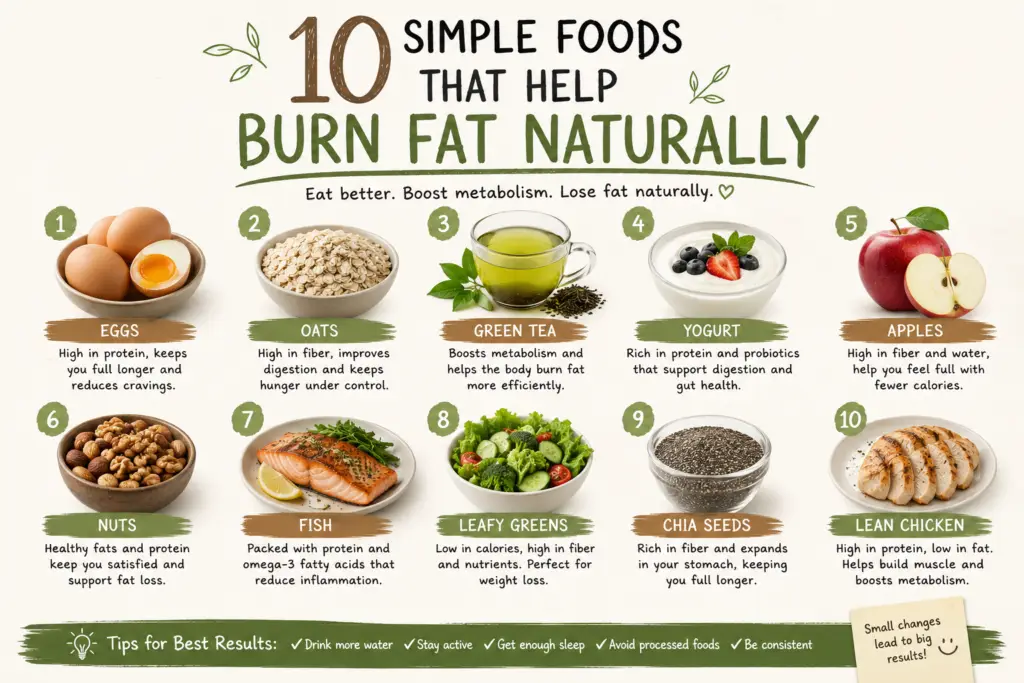
Three foods deserve a closer look because their numbers are the clearest. First, oats: one serving gives about 2 grams of soluble fiber in the form of beta-glucan, and NHLBI estimates that adding 5 to 10 grams of soluble fiber a day lowers LDL by about 3 to 5 percent. Second, beans: half a cup of cooked beans can give 2 to 3 grams of soluble fiber, plus protein that keeps you full. Third, fatty fish: the American Heart Association advises eating fatty fish at least twice a week.
Saturated fat is the number to watch on labels. The CDC advises limiting foods high in saturated fat and choosing foods low in saturated fat, trans fat, sodium and added sugars. The Dietary Guidelines for Americans advise limiting saturated fat to less than 10 percent of daily calories. That is about 22 grams a day on a 2,000 calorie diet. The American Heart Association advises a lower target, less than 6 percent of calories, for people who need to lower cholesterol.
Plant sterols and stanols are a useful extra, not a main meal. They are natural compounds in plants that block some cholesterol from being absorbed in the gut. The NHLBI recommends adding them as part of the TLC diet, at about 2 grams a day.
A sample day of cholesterol-friendly meals
This is a sample day, not a prescription. Adjust portions to your calorie needs. The pattern is the same each day: oats at breakfast, beans or lentils at lunch, vegetables at lunch and dinner, fatty fish twice a week.
Breakfast: porridge made with oats and low fat milk, topped with berries and a spoonful of ground flaxseed, plus a cup of unsweetened tea. This gives you soluble fiber from the oats and fruit for volume, with no butter or bacon to start the day with saturated fat.
Lunch: lentil soup with whole grain bread and a side salad of mixed leaves, tomato, and cucumber with olive oil and lemon dressing.
Snack: an apple with a small handful of unsalted walnuts, about 30 grams.
Dinner: grilled salmon with barley and broccoli, cooked with olive oil, garlic, and lemon. Salmon covers your fatty fish for the day, barley adds soluble fiber, and broccoli adds fiber and volume.
Three simple meal ideas you can repeat
You do not need new recipes every day. Three meals you can cook without thinking, repeated through the week with small swaps, will carry most of the change.
1. Berry porridge. You need half a cup of rolled oats, one cup of low fat milk or water, a handful of berries, and a spoonful of ground flaxseed. Cook the oats in the milk on low heat for about 5 minutes until thick, then stir in the berries and flaxseed. Swap the berries for a sliced banana or a chopped apple when berries are out of season.
2. Lentil soup. You need one cup of dried red lentils, one chopped onion, two chopped carrots, two cloves of garlic, a spoonful of olive oil, and a liter of water or low salt stock. Cook the onion, carrots, and garlic in the olive oil for 5 minutes, add the lentils and liquid, and simmer for about 25 minutes until soft. Serve with a slice of whole grain bread.
3. Salmon, barley, and broccoli dinner. You need a salmon fillet, half a cup of barley, a head of broccoli, olive oil, garlic, and lemon. Cook the barley in water for about 30 minutes until soft. Steam or roast the broccoli for 10 minutes. Grill or bake the salmon for 10 to 12 minutes with garlic and lemon. Put it together on one plate with a drizzle of olive oil.
Your daily routine: a cholesterol-friendly day
Food is only half the routine. Here is how a cholesterol-friendly day can look.
Morning: start with the porridge breakfast, then walk for 10 minutes after eating. A short walk after meals is easy to keep, and it adds up across the day. Weigh yourself once a week, at the same time of day, not every morning.
Midday: eat the lentil soup or a bean-based lunch, then walk briskly for 30 minutes on three days a week, building toward 150 minutes of moderate activity a week. The Physical Activity Guidelines for Americans, cited by the CDC, recommend 150 to 300 minutes of moderate physical activity each week, plus muscle strengthening activity on two or more days a week. Add strength work on two days, such as bodyweight squats, wall push-ups, and resistance bands at home.
Evening: cook the salmon dinner or its swap, eat slowly, and keep the kitchen closed after dinner. Aim for 7 to 9 hours of sleep at a regular time. If you smoke, ask your doctor about quit support. In the United States, the quitline 1-800-QUIT-NOW is a free starting point. If you do not smoke, do not start.
Weight, week by week: the CDC states that overweight and obesity raise LDL cholesterol. The NHLBI reports that losing about 3 to 5 percent of body weight may improve LDL and HDL in adults with overweight or obesity, and losing 5 to 10 percent can produce broader health benefits. For a man who weighs 200 pounds, 5 percent is 10 pounds, and 10 percent is 20 pounds. Aim for a slow, steady loss of 1 to 2 pounds a week, which the CDC and NHLBI describe as a healthy rate.
Your week at a glance
A week of this routine looks the same in shape and different in detail. Porridge or whole grain toast with fruit at breakfast most days. Beans or lentils at lunch on at least four days. Vegetables at lunch and dinner every day. Fatty fish twice a week. Nuts or fruit as a snack. Strength work on two days, brisk walking on five days, and one full rest day.
Build the change in four weeks, one layer at a time, so you do not try to change everything on day one. Recheck your cholesterol only as your doctor advises.
| Week | Focus | Do this |
|---|---|---|
| Week 1 | Saturated fat | Swap butter for olive oil, choose low fat dairy, cut processed meat to once a week or less. Walk 10 minutes after lunch and dinner. |
| Week 2 | Fiber | Add oats at breakfast and beans or lentils at lunch on most days. Walk briskly for 30 minutes on three days. |
| Week 3 | Fish, nuts and oils | Eat fatty fish twice this week, add a small handful of unsalted nuts a day. Add strength work on two days. |
| Week 4 | Weight, sleep and alcohol | Set a weight goal with your doctor if needed, keep alcohol to no more than two drinks a day or less, keep a regular sleep time. |
Mistakes that hold back progress
- Trying one food and expecting a big drop. One food, such as oats or nuts, helps a little. The full effect comes from the pattern: less saturated fat, more fiber, more fish and nuts, more activity and weight loss together.
- Eating low fat foods that are high in sugar. Some low fat foods replace fat with added sugar, which can raise triglycerides. Check the label for added sugar as well as fat.
- Adding nuts, oil and avocado without cutting anything else. Healthy fats are still high in calories. Add them by replacing butter, cheese and fatty meat, not on top of the same meals.
- Judging the result too early. Allow at least six weeks before a retest, because diet changes take time to show in a blood test.
When to talk to your doctor first
See your doctor first, or promptly, if any of these apply to you: you have heart disease, diabetes, high blood pressure, kidney disease or liver disease; you have a family history of early heart disease or very high cholesterol; your LDL is very high, or your total cholesterol is above 200 mg/dL; you have chest pain, breathlessness, dizziness or fainting, especially during activity; you take medicine for cholesterol, blood pressure or diabetes, and you plan to change your diet, activity or weight; you smoke and want help to quit, or you drink more than the CDC limit of two drinks a day for men. Do not delay care for chest pain or breathlessness.
Questions people ask
How long does it take to lower cholesterol naturally?
Most men need at least six weeks of steady changes before a retest shows a clear effect, which is why the NHLBI TLC program allows about six weeks between checkups. The full effect builds over months.
How can I lower my cholesterol without medicine?
You can lower your cholesterol without medicine by cutting saturated fat, adding soluble fiber, eating fatty fish and nuts, moving for at least 150 minutes a week, and losing weight slowly if you carry extra weight. The NHLBI estimates that the full TLC program can lower LDL by 20 to 30 percent, but most people see a smaller drop from diet alone.
What foods lower cholesterol the fastest?
No single food lowers cholesterol fast. Oats, beans, lentils, barley, apples, pears, nuts, fatty fish and foods with plant sterols all help, and they work best together.
Does exercise lower cholesterol?
Yes, but modestly for LDL. Meta-analyses of exercise trials show an average LDL drop of about 3 to 6 percent from aerobic exercise, and a 2025 meta-analysis found an average drop of about 7 mg/dL.
How much weight do I need to lose to help my cholesterol?
The NHLBI reports that losing about 3 to 5 percent of body weight may improve LDL and HDL in adults with overweight or obesity. For a man who weighs 200 pounds, that is 6 to 10 pounds.
Do I need to avoid all fat to lower my cholesterol?
No. You need to change the type of fat, not remove all fat. Swap butter, lard, and fatty meat for olive oil, nuts, avocado, and fatty fish.
Related guides
- How to lower LDL cholesterol – for detail on LDL, how it is measured and LDL specific steps.
- Best foods to help control blood sugar naturally – many of the same foods, oats, beans and whole grains, help blood sugar as well as cholesterol.
- Omega 3 benefits for heart and brain health – more detail on omega-3 fats from fish, flaxseed and walnuts.
- Best exercises for men over 40: build strength, energy, and mobility – strength and mobility moves that fit the activity plan in this guide.
- How much exercise per week for healthy aging after 40 – how the 150 minute weekly target fits into a week, with realistic schedules.
- 10 simple foods that help burn fat – foods that support weight loss, which also helps cholesterol when weight is part of the problem.