Learning how to exercise at home without equipment became something I started understanding more seriously after realizing how many people believe good health is only possible through intense workouts, heavy iron weights, or expensive fitness memberships.
For years, I also believed in the common myths that dominated the fitness space:
-
Gym equals real fitness
-
Exercise must be painful and intense to work
-
Health requires hours of complicated gym routines
But over time, especially after turning 40, I realized a fundamental truth: real health improvement does not come from temporary intensity; it comes from simple daily habits repeated consistently. You do not need expensive machines, dumbbells, or fancy gear to stay physically active and mentally sharp. Starting a simple, sustainable routine to exercise at home without equipment can completely transform your physical vitality and daily energy.
Personally, the biggest positive changes in my health did not come from a gym membership. They came from walking, practicing basic bodyweight movements, getting better sleep, managing daily stress, and eating nourishing foods.
This comprehensive guide shares practical, realistic, and sustainable ways to stay fit naturally using simple, effective strategies to exercise at home without equipment.
Why You Don’t Need a Gym to Stay Fit

Many people delay their fitness journey because they feel overwhelmed by gym environments, high membership costs, or a lack of personal workout gear. However, your own body weight provides more than enough resistance to build functional strength, burn calories, and protect your cardiovascular health.
When you choose to exercise at home without equipment, you eliminate the most common barriers to consistency:
-
Zero Travel Time: You save hours every week by avoiding commutes to a fitness center.
-
Maximum Flexibility: You can exercise in your living room, bedroom, or balcony whenever it fits your schedule.
-
No Financial Cost: Staying healthy should not be a luxury; bodyweight training is completely free.
-
Lower Injury Risk: Working out with your natural body weight places significantly less harmful stress on your joints compared to heavy weightlifting, which is especially important after 40.
Simple Bodyweight Exercises Anyone Can Do at Home
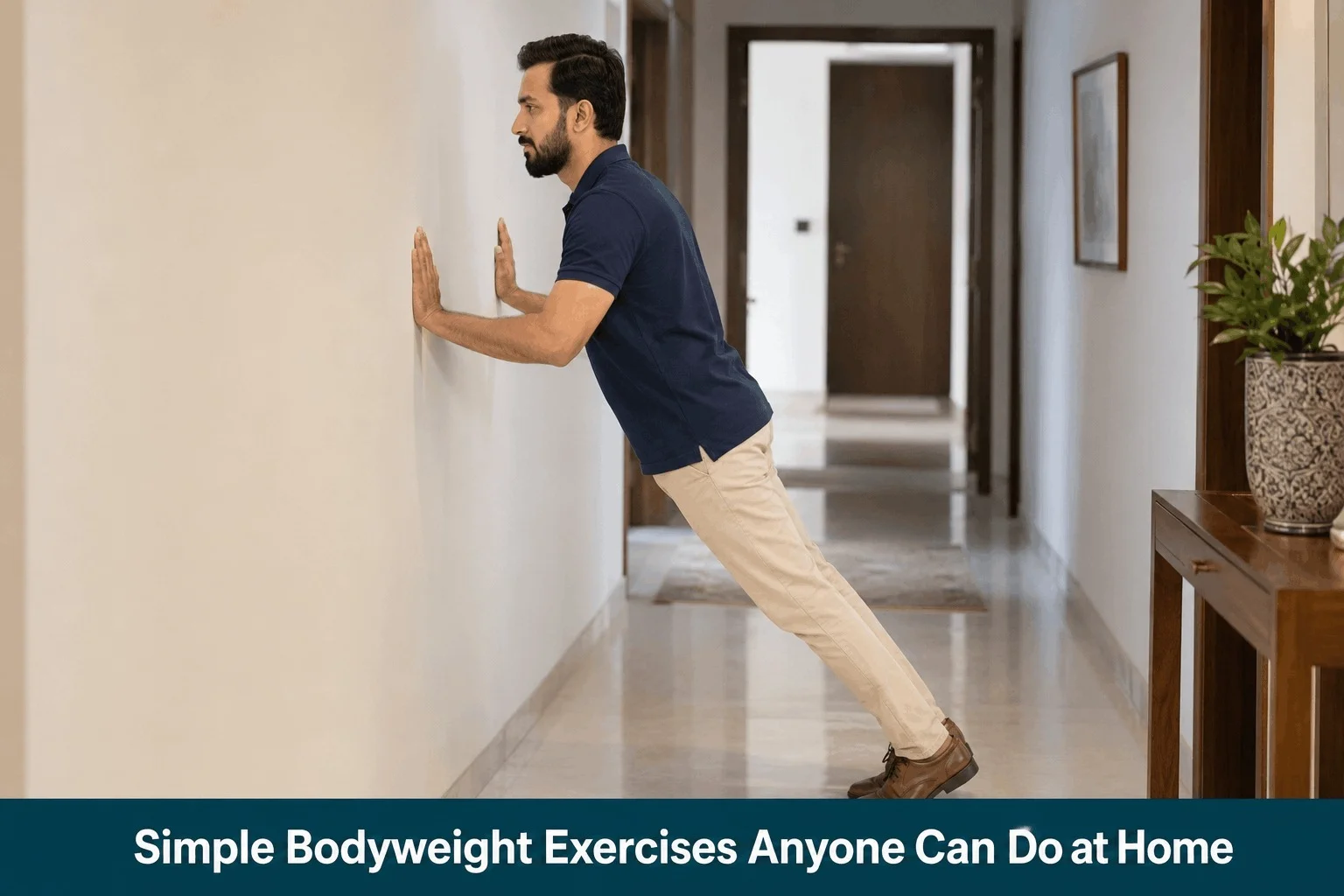
If you are wondering how to start a effective routine to exercise at home without equipment, the key is to focus on simple compound movements. These exercises engage multiple muscle groups simultaneously, giving you maximum health benefits in minimal time.
Here are the best low-impact bodyweight exercises to include in your daily routine:
1. Wall or Incline Push-Ups
Push-ups are the ultimate upper-body workout. If traditional floor push-ups feel too demanding on your wrists or shoulders, start by pushing off a sturdy wall or the edge of a kitchen counter.
-
Target Muscles: Chest, shoulders, triceps, and core.
-
How to Do It: Stand an arm’s length away from a wall, place your palms flat against it, lower your chest slowly, and push back up.
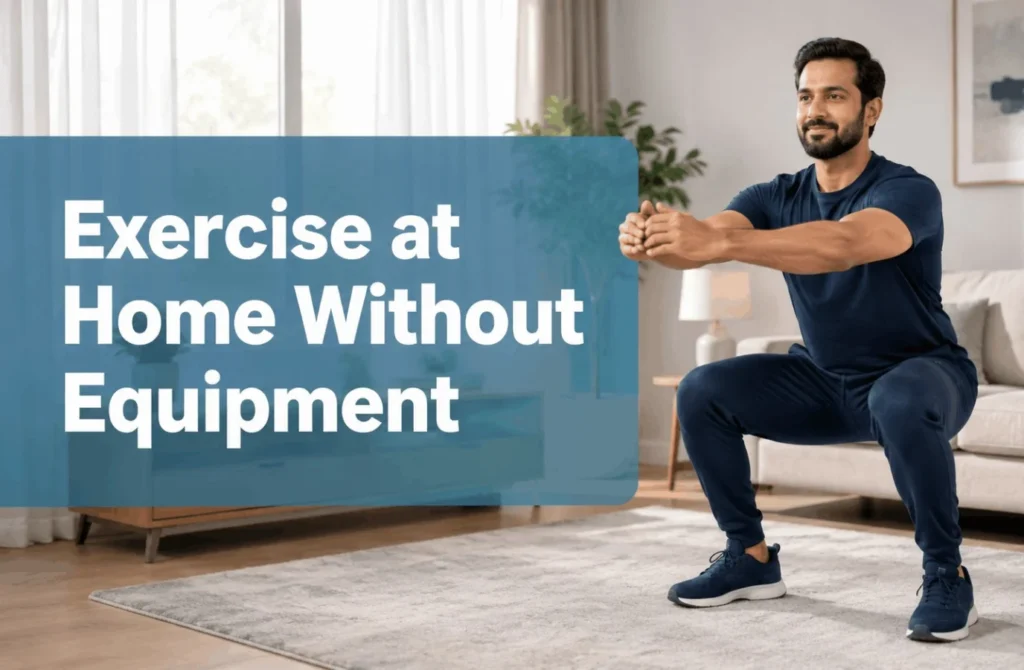
2. Bodyweight Squats (or Chair Squats)
Squats build leg strength and keep your hip joints mobile.
-
Target Muscles: Quadriceps, hamstrings, glutes, and lower back.
-
How to Do It: Stand with your feet shoulder-width apart. Sit back as if sitting down in a chair, keeping your chest upright, then stand back up. If balance is an issue, place a chair behind you and touch it lightly before standing.
3. Standing Knee Raises and Glute Bridges
Keeping your core and lower body strong is essential for maintaining balance and preventing lower back pain as you age.
-
Glute Bridges: Lie flat on your back with your knees bent and feet flat on the floor. Lift your hips toward the ceiling while squeezing your glutes, hold for two seconds, and lower slowly.
-
Standing Knee Raises: Stand tall and gently lift one knee toward your chest at a time to build core stability and balance.
4. Gentle Core Planks
Planks build deep abdominal strength without straining your spine like traditional crunches often do.
-
How to Do It: Rest on your knees and forearms (or full toes if comfortable), keeping your body in a straight line from head to knees. Hold for 15 to 30 seconds while breathing naturally.
Daily Walking: The Ultimate Home Workout Companion
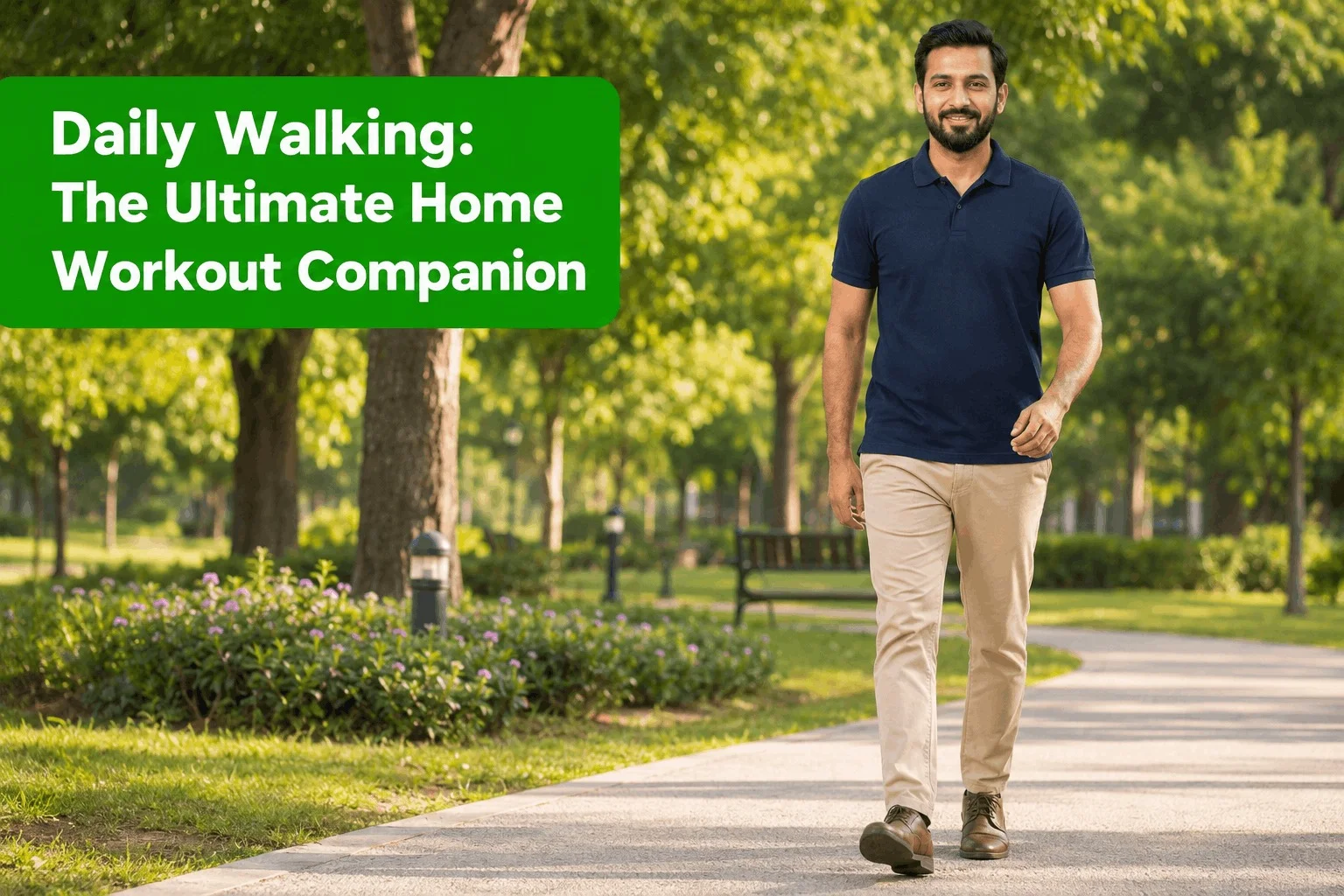
While structured bodyweight movements build strength, daily walking remains the most underrated form of movement in the world. Combining daily walking with your routine to exercise at home without equipment creates the ultimate foundation for longevity.
Personally, consistent walking improved:
-
Energy and Stamina: Replacing sluggish afternoon fatigue with clean, steady natural energy.
-
Mood and Mental Clarity: Walking acts as an active form of meditation that clears mental clutter.
-
Digestion: Taking a light 10-minute walk after meals helps regulate blood sugar levels and improves gut motility.
-
Joint Mobility: Walking lubricates knee and hip joints without causing impact damage.
Especially after 40, consistent movement matters far more than extreme exercise intensity. A simple 20-to-30-minute daily walk—whether outdoors, in your garden, or even pacing around your house—creates major long-term benefits for both your physical body and mental health.
Light Stretching and Mobility to Reduce Stiffness
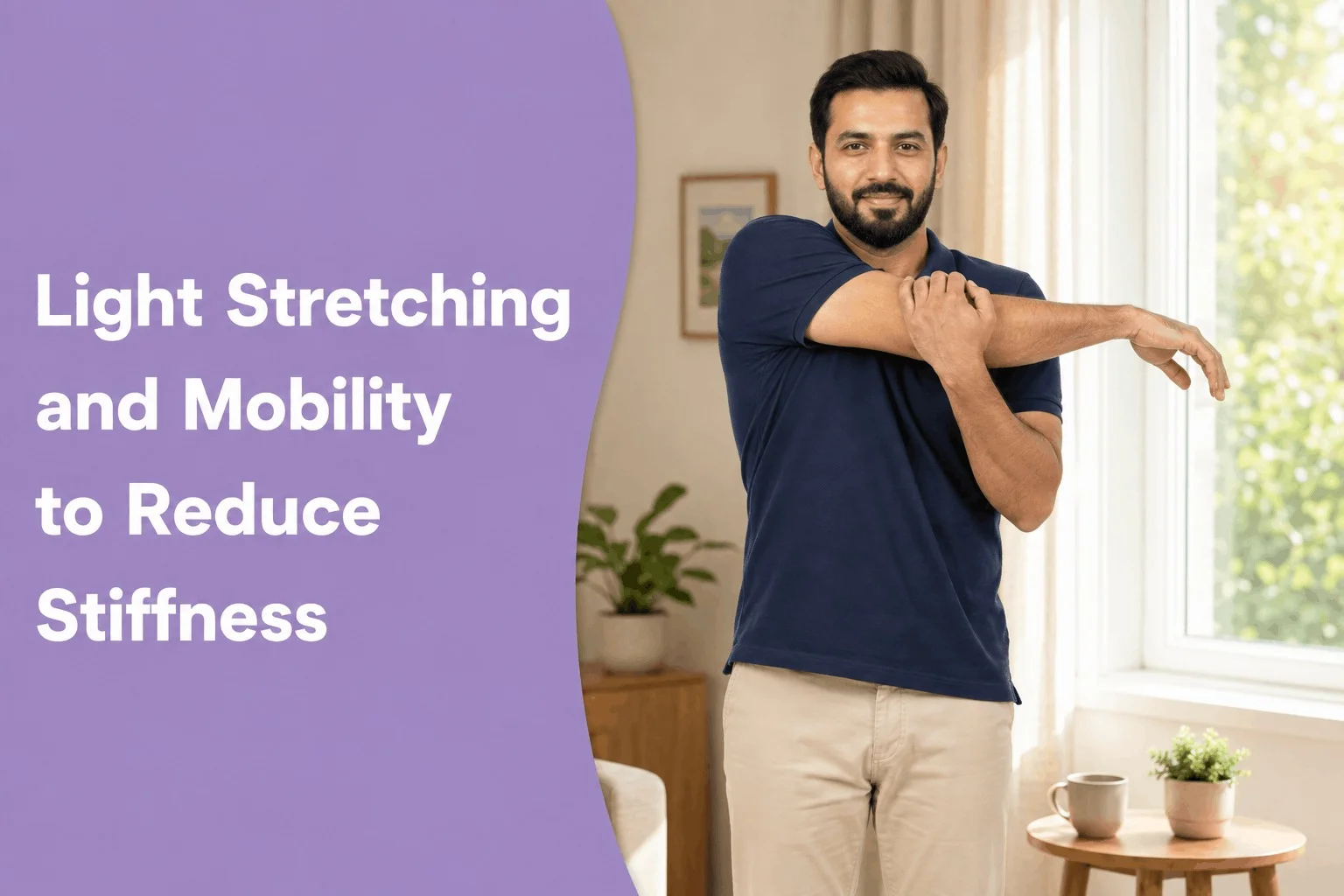
As we age, body stiffness becomes more noticeable, especially in the mornings or after long hours of sitting. Learning simple ways to exercise at home without equipment through basic mobility and stretching keeps your body feeling youthful and flexible.
Stretching does not need to be complicated or uncomfortable. Focus on gentle movement patterns that release tension in high-stress areas:
Morning Spine and Shoulder Rolls
Standing tall, roll your shoulders backward in smooth circles 10 times to release upper back tension caused by screen time. Gently twist your torso from left to right to wake up your spine.
Hamstring and Calf Stretches
Place one heel forward on the ground with your toes pointing up, gently bend your opposite knee, and lean forward from your hips until you feel a comfortable stretch in the back of your leg.
Integrating a quick 5-minute stretch routine into your morning or bedtime ritual ensures that your journey to exercise at home without equipment remains comfortable and pain-free.
The Role of Rest and Sleep in Home Fitness
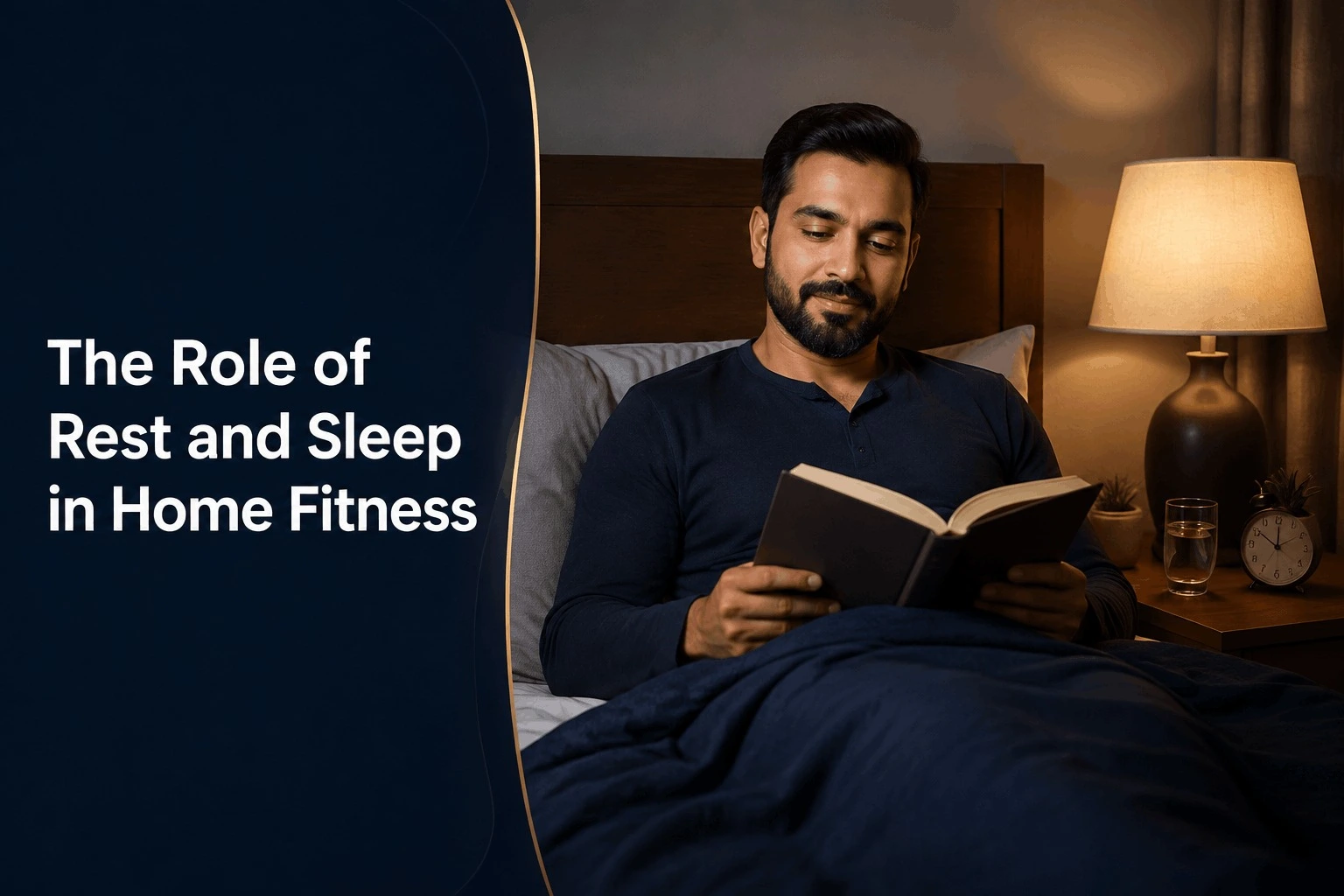
One thing I severely underestimated for years was the power of quality sleep. No matter how consistently you exercise at home without equipment, your body cannot transform, repair muscles, or burn fat efficiently if it stays chronically exhausted.
Personally, poor sleep negatively impacted:
-
Food Cravings: Lack of rest increases hunger hormones, leading to excessive sugar and carb cravings.
-
Emotional Balance and Patience: Fatigue reduces stress tolerance, making daily problems feel overwhelming.
-
Mental Focus: Sleep deprivation leads to brain fog and poor productivity.
After 40, bodily recovery becomes extremely important. Good quality sleep supports your metabolism, balances stress hormones like cortisol, improves mental freshness, and restores your muscle tissues after physical movement. Healthy living becomes nearly impossible when the body operates in a constant state of exhaustion.
How to Stay Active Throughout the Day (NEAT)
Did you know that structured exercise accounts for only about 5% of your total daily energy expenditure? The remaining physical energy you burn comes from everyday non-exercise movement, known in science as Non-Exercise Activity Thermogenesis (NEAT).
To maximize your results when you exercise at home without equipment, focus on reducing long sitting periods throughout your day:
| Simple Daily Swaps | Health Benefit |
| Take short standing breaks every hour | Prevents hip flexor tightness and boosts circulation |
| Take the stairs instead of the elevator | Builds lower body strength naturally |
| Pace around while talking on the phone | Adds 1,000+ extra steps to your daily count effortlessly |
| Do gentle stretches while watching TV | Keeps joints active during leisure time |
The body functions best when it avoids long inactive periods. Small movements throughout the day add up to massive health improvements over months and years.
Hydration: Boosting Natural Energy for Home Workouts
Proper hydration is just as vital to physical health as physical activity itself. Dehydration often disguises itself as fatigue, hunger, or low motivation to move.
Personally, making a conscious effort to drink more water improved:
-
Skin freshness and clarity
-
Digestive regularity
-
Natural energy levels without relying on extra coffee
Many people underestimate how even mild dehydration negatively impacts mood, triggers headaches, and reduces physical stamina. Drinking a glass of water first thing in the morning and keeping a water bottle nearby ensures your body has the cellular fluid required to exercise at home without equipment consistently and comfortably.
Healthy Eating Without Restrictive Dieting
Earlier in life, I believed that getting fit required strict, complicated diet plans, weighing every gram of food, or cutting out entire food groups. But over time, simpler and more sustainable improvements proved much more effective long term.
Focusing on sustainable eating habits works far better than restrictive dieting:
-
Eat Slower: Taking time to chew your food properly improves digestion and signals to your brain when you are genuinely full.
-
Control Portions Naturally: Use smaller plates and fill half your plate with fresh vegetables or whole foods before adding carbs or fats.
-
Reduce Added Sugars: Cutting down on sugary drinks and processed snacks eliminates energy crashes and reduces chronic inflammation.
-
Add Nutrient-Dense Foods: Instead of focusing on what to cut out, focus on adding healthier foods like lentils, eggs, lean proteins, nuts, and fresh fruits to your meals gradually.
After 40, sustainability matters far more than short-term perfection. Healthy eating should feel natural, nourishing, and realistic for the rest of your life.
Household Chores Also Count as Exercise
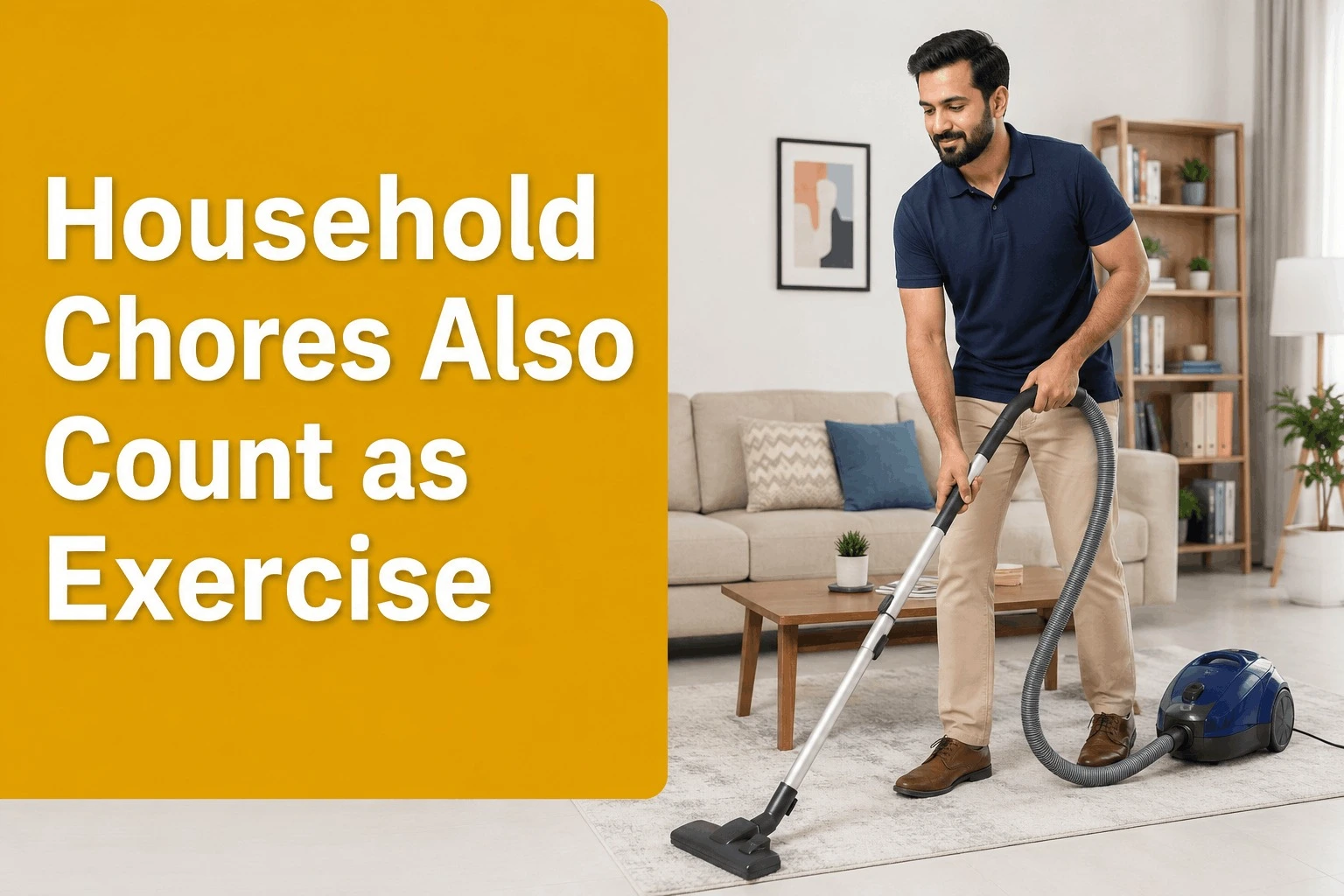
One major misconception in modern fitness culture is that physical activity only “counts” if you are wearing athletic clothes inside a gym. The truth is simple: movement is movement.
Daily household chores provide functional, real-world physical activity that keeps your body strong and active:
-
Deep House Cleaning & Vacuuming: Engages your core, shoulders, and legs while burning significant calories.
-
Gardening & Yard Work: Requires bending, lifting, and balancing, which improves joint mobility and functional strength.
-
Carrying Groceries: Acts as a real-world “farmer’s carry” exercise that builds grip strength and stabilizes your core.
-
Washing Dishes or Folding Laundry Standing Up: Keeps you on your feet and active instead of sitting passively.
Integrating your plan to exercise at home without equipment into your daily home routine makes staying fit feel effortless rather than like an extra chore.
Reducing Stress for Physical Health
One of the most important lessons I learned over the years is that mental stress directly impacts physical health. High mental stress floods your body with cortisol, which increases systemic inflammation, ruins sleep, and promotes weight gain around the abdomen.
Personally, excessive mental stress manifested as:
-
Physical fatigue despite sleeping
-
Emotional overeating and sugar cravings
-
Muscle tension in the neck and shoulders
Incorporating simple stress-reducing practices into your daily life works hand in hand with your plan to exercise at home without equipment:
-
Spending quiet time outdoors in the morning sunlight
-
Limiting news consumption and social media scrolling
-
Practicing deep breathing, prayer, or quiet reflection
-
Taking short walks in nature without your phone
Mental wellness and physical health are deeply interconnected. Caring for your mind is just as essential as moving your body.
The Power of Morning Sunlight
An underestimated healthy habit that costs nothing is getting direct morning sunlight exposure.
Natural sunlight exposure early in the day helps regulate your internal biological clock (circadian rhythm). When bright sunlight hits your eyes in the morning, it triggers the natural release of cortisol to wake you up and sets a timer for your brain to produce melatonin (the sleep hormone) late at night.
Spending just 10 to 15 minutes outdoors in the morning can:
-
Boost your daytime alertness and energy
-
Improve your overall mood and emotional resilience
-
Help you fall asleep faster and stay asleep longer at night
Reducing Screen Time and Protecting Your Mind
Modern life keeps us glued to smartphones, laptops, and televisions for hours every day. Excessive screen time not only leads to physical issues like neck strain and poor posture (often called “tech neck”), but it also causes mental exhaustion and sleep disruption.
Reducing unnecessary digital scrolling helped me:
-
Restore focus and mental clarity
-
Improve sleep quality by eliminating nighttime blue light exposure
-
Reclaim free time to focus on daily walking and basic home movement
Protecting your mind from constant digital overload is a crucial component of modern healthy living.
Overcoming Low Motivation with Simple Routines
One mindset shift changed my perspective on fitness completely: motivation is unreliable.
Motivation comes and goes based on your mood, stress levels, weather, and sleep. If you only exercise when you feel motivated, you will never build a lasting habit.
Instead of relying on motivation, build small, frictionless routines:
-
Lay out your comfortable clothes the night before.
-
Commit to doing just 5 minutes of basic bodyweight movements or walking. (Once you start, momentum usually takes over).
-
Anchor your workout to an existing habit (e.g., doing 10 wall push-ups right after making your morning coffee).
Small, simple habits repeated consistently create infinitely better health results than temporary bursts of extreme motivation.
Health Improvement After 40: A New Perspective
After turning 40, your health goals naturally evolve. Fitness is no longer about chasing unrealistic aesthetic standards, looking like a magazine model, or pushing your body to painful extremes.
Instead, healthy living after 40 becomes about:
-
Functional Mobility: Being able to move, bend, squat, and carry things without pain.
-
Sustained Energy: Having clean energy to enjoy your work, family, and hobbies all day long.
-
Fast Recovery: Protecting your joints and prioritizing rest so your body feels light and capable.
-
Mental Peace: Lowering anxiety, sleeping deeply, and enjoying emotional balance.
Learning how to exercise at home without equipment provides a safe, accessible, and life-long method to maintain your strength and independence without straining your body.
working out with your natural body weight places significantly less harmful stress on your joints. If you want a structured plan tailored for this age group, check out our guide on the exercise routine for men over 40 to build strength safely.”
Key Daily Habits for Fit Living Without the Gym
To summarize the most impactful ways to transform your health naturally without a gym, focus on these sustainable foundational daily steps:
-
Perform Basic Bodyweight Exercises: Commit to 15–20 minutes of simple squats, wall push-ups, and core bridges 3–4 times a week.
-
Walk Daily: Aim for regular daily walks after meals or during mornings to keep your heart and mind healthy.
-
Prioritize 7–8 Hours of Sleep: Treat sleep as your non-negotiable physical repair window.
-
Hydrate Consistently: Drink clean water throughout the day to support energy and digestion.
-
Get Outdoor Sunlight: Spend 15 minutes outside every morning to stabilize your mood and sleep cycle.
-
Move Frequently: Stand up, stretch, and avoid long uninterrupted hours of sitting.
-
Reduce Digital Overload: Turn off screens 1 hour before bed to relax your mind.
Frequently Asked Questions (FAQs)
Can you really get fit and healthy by exercising at home without equipment?
Yes, absolutely. Exercises using your own body weight—such as squats, lunges, incline push-ups, planks, and glute bridges—build real muscular endurance, strengthen your bones, and improve cardiovascular health without needing a single piece of gym gear.
How often should a beginner exercise at home without equipment?
For beginners or adults over 40, starting with 15 to 20 minutes of bodyweight movement 3 to 4 days a week is ideal. You can combine these exercise days with daily 20-minute walks for optimal health benefits.
Is walking enough exercise if I don’t like traditional workouts?
Yes, walking is one of the most effective, low-impact exercises available. Regular walking lowers blood pressure, manages blood sugar levels, reduces stress hormones, aids digestion, and protects your joint health long term.
How long does it take to see health results from home workouts?
With consistent daily movement, proper hydration, and improved sleep, most people notice positive changes in their energy levels, mood, and sleep quality within 1 to 2 weeks. Physical strength and mobility improvements typically become noticeable within 4 to 6 weeks.
Final Thoughts
Learning to exercise at home without equipment is often much simpler than modern fitness culture leads us to believe. The key to vibrant long-term health is not locked inside an expensive gym membership or hidden behind complicated training routines.
Real, lasting health improvement happens quietly through simple, realistic habits repeated consistently over time. By prioritizing daily movement, light bodyweight exercises, restorative sleep, simple nutrition, and stress management, you can build a resilient body and a peaceful mind at any age.
Start small today—take a short walk, do a few wall push-ups, drink a glass of water, and realize that your journey to better health begins right inside your own home.
Helpful Resources