After turning 40, one thing becomes very clear: time does not become easier to manage. Work gets heavier, family responsibilities increase, sleep becomes more important, and energy does not always feel the same as it did in your 20s or 30s.
Many men want to exercise, but the biggest problem is not always motivation. The real problem is time, consistency, and knowing what to do.
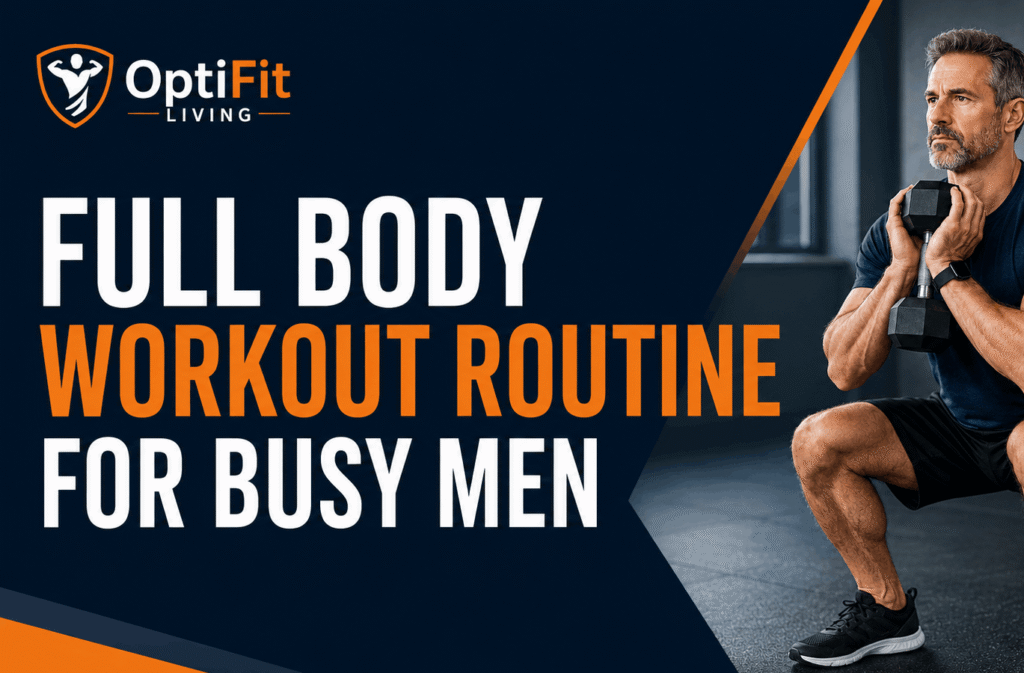
A structured exercise routine for men can solve this problem by training the major muscles of the body in fewer sessions. Instead of spending six days a week in the gym, a busy man can train properly in three focused workouts per week and still build strength, support fat loss, improve energy, and protect long-term health.
Why Busy Men Over 40 Struggle to Stay Fit
Many men over 40 are not lazy; they are simply overloaded. A normal day may include office work, business pressure, family duties, traffic, late meals, poor sleep, and mental stress. By the time the day ends, exercise feels like one more burden.
This is why many men start fitness programs but stop after a few weeks. Common barriers include:
- Lack of time & low energy after work
- Belly fat gain and reduced muscle strength
- Stiff joints and poor sleep quality
- Inconsistent workout habits due to confusing or overcomplicated fitness plans
A simple routine that can be repeated consistently is far more powerful than a “perfect” plan that you only follow for a week.
Why Full-Body Training is the Best Exercise Routine for Men
A full-body workout means you train the major muscles of your body in one session. Instead of training only chest one day and legs another day, you include movements for the upper body, lower body, core, and mobility in the same workout.
Target Muscle Groups
A balanced full-body routine covers:
- Upper Body: Chest, back, shoulders, arms
- Lower Body: Legs, glutes, hips, lower back
- Core: Abs and deep stabilizing muscles
For men over 40, this type of training is highly practical because it gives more results in less time. If you miss one workout, you are not completely behind because each session already covers the whole body.
Understanding Your Body After 40
After 40, the body naturally starts to change. These changes do not mean weakness is unavoidable, but they do mean you need to train smarter.
- Muscle Mass Slowly Declines: Men naturally lose muscle with age if they are inactive, making daily tasks feel harder.
- Belly Fat Increases: Lower activity, stress, poor sleep, and hormonal changes make it easier to gain weight around the midsection.
- Recovery Takes More Time: The body needs more rest between tough workouts compared to your 20s.
- Joints May Feel Stiffer: Knees, shoulders, hips, and the lower back require proper warm-ups and controlled movements.
The Simple Science Behind Effective Movement
An effective exercise routine for men uses basic human movement patterns rather than fancy equipment.
| Movement Pattern | What it Trains | Real-World Examples |
| 1. Squat | Thighs, hips, glutes | Bodyweight squat, Goblet squat, Chair squat |
| 2. Hip Hinge | Glutes, hamstrings, lower back | Romanian deadlift, Dumbbell deadlift, Hip bridge |
| 3. Push | Chest, shoulders, triceps | Push-ups, Dumbbell chest press, Shoulder press |
| 4. Pull | Upper back, biceps | Seated row, Lat pulldown, Dumbbell row |
| 5. Core Stability | Abs, lower back | Plank, Dead bug, Bird dog |
| 6. Carry | Grip strength, core, posture | Farmer’s carry, Suitcase carry |
Health Benefits Beyond Aesthetics
Switching to a structured full-body routine supports the areas of health that matter most as you age:
- Better Strength & Posture: Reverses the effects of long sitting hours by strengthening the back and core.
- Blood Sugar Support: Active muscles help the body use blood sugar more effectively, reducing prediabetes risks.
- Mental Wellness: Regular movement improves circulation, balances hormones, reduces stress, and boosts confidence.
Safety Note: If you experience chest pain, severe shortness of breath, dizziness, or have an underlying heart condition, always speak to a doctor before starting a new workout plan.
The Ultimate Weekly Workout Plan
This routine is designed for men who have limited time. You can do it at home or in the gym. Aim for three workout days per week (e.g., Monday, Wednesday, Friday), alternating between Workout A and Workout B.
The 5-Minute Warm-Up (Do Not Skip!)
Do each movement for 30–45 seconds to prepare your joints and muscles:
- March in place & Arm circles
- Hip circles & Bodyweight squats
- Cat-cow stretch & Wall push-ups
Full Body Workout A (Focus: Basic Strength)
- Chair Squat or Goblet Squat: 3 sets × 8–12 reps (Trains legs, hips, and core)
- Push-Up or Incline Push-Up: 3 sets × 8–12 reps (Trains chest, shoulders, and arms)
- Dumbbell Row or Resistance Band Row: 3 sets × 10–12 reps (Trains back and improves posture)
- Hip Bridge: 3 sets × 12–15 reps (Helps glutes and lower back)
- Dumbbell Shoulder Press: 2–3 sets × 8–10 reps (Builds shoulder strength)
- Plank: 2–3 sets × 20–40 seconds (Builds core stability)
- Farmer’s Carry: 2 sets × 30–45 seconds walk (Builds grip and real-life strength)
Full Body Workout B (Focus: Variety & Balance)
- Step-Ups: 3 sets × 8–10 reps per leg (Helps balance and daily movement)
- Dumbbell Chest Press: 3 sets × 8–12 reps (Trains chest and triceps)
- Lat Pulldown or Band Pulldown: 3 sets × 10–12 reps (Improves upper back strength)
- Romanian Deadlift: 3 sets × 8–10 reps (Trains hamstrings and lower back support)
- Dead Bug: 2–3 sets × 8–10 reps per side (Excellent for core control)
- Biceps Curl: 2 sets × 10–12 reps (Supports arm strength)
- Triceps Extension: 2 sets × 10–12 reps (Balances upper body strength)
Short on Time? The 25-Minute Quick Version
If you are having an exceptionally busy week, do just 2 sets of the following core movements:
$$\text{Squat} \rightarrow \text{Push-up} \rightarrow \text{Row} \rightarrow \text{Hip Bridge} \rightarrow \text{Plank}$$
Consistency matters more than perfection.
Advanced Strategies: Weight, Cardio, and Recovery
How Heavy Should You Lift?
Use a weight that feels difficult by the last 2–3 reps, but still allows good form.
- Too easy: You can do many extra reps without slowing down.
- Too heavy: Your form breaks or you feel sharp joint pain.
- Just right: The last few reps are challenging but controlled.
The Power of Walking
Walking is one of the best additions to an exercise routine for men. It supports heart health, blood sugar control, and recovery without putting excessive stress on the joints. Aim for a 20–30 minute walk on non-workout days or a 10-minute walk after heavy meals.
Recovery Habits That Matter
Muscles grow and repair when you rest, not when you lift.
- Get 7–8 hours of sleep.
- Stay hydrated and eat enough protein (eggs, chicken, fish, lentils).
- Control late-night heavy eating to improve sleep quality and reduce belly fat.
4-Week Action Plan for Beginners
- Week 1 (Start Easy): Perform 2 full-body workouts using light weights. Focus entirely on form.
- Week 2 (Build Consistency): Move up to 3 workouts a week (A, B, A). Add one post-dinner walk.
- Week 3 (Improve Strength): Add 1–2 reps to your exercises or slightly increase the weight if form is perfect.
- Week 4 (Make It a Lifestyle): Track your progress, notice your energy improvements, and plan for the next month.
Common Mistakes to Avoid
- Doing Too Much Too Soon: Starting with daily intense training leads to burnout and injury.
- Ignoring the Warm-Up & Recovery: Skipping warm-ups damages stiff joints, while skipping rest prevents muscle growth.
- Training Only Chest and Arms: An effective exercise routine for men must include the back, core, and legs to prevent muscle imbalances.
- Chasing Quick Fixes: Real progress comes from sustainable changes in training, food, and sleep over time.
Frequently Asked Questions (FAQ)
1. Is a full-body exercise routine for men good after 40?
Yes. It is the most practical option because it hits all major muscle groups in fewer weekly sessions, saving time while maximizing strength and metabolic health.
2. Can I build muscle with only three workouts per week?
Absolutely. You can build significant muscle with three focused sessions, provided you use progressive resistance (gradually lifting heavier or doing more reps) and eat enough protein.
3. Should I do cardio or strength training first?
If your main goal is building strength and losing fat, prioritize strength training first when your energy levels are high, and do light cardio (like walking) afterward or on separate days.
4. Will this routine help reduce belly fat?
Yes, but it requires teamwork. Strength training boosts your metabolism, but it must be paired with consistent walking, better nutrition, and quality sleep to effectively reduce belly fat.
Final Words
An exercise routine for men does not need to be complicated to be effective. In fact, the simpler it is, the more likely you are to stick with it. After 40, the goal is not to chase extreme fitness trends—it is to stay strong, mobile, confident, and healthy for the long run.
Choose your first workout day, keep it short, and take that first step today.