
Many men notice a frustrating change after 40. The same eating habits that once felt normal start creating weight gain. The waistline slowly increases, shirts feel tighter, energy feels lower, and the belly becomes harder to reduce.
This can feel confusing because many men say, “I am not eating much more than before, so why is my stomach growing?”
The truth is simple but important. After 40, the body changes. Metabolism may slow down, muscle mass may reduce, stress may increase, sleep may become weaker, and daily movement often becomes less. All of these factors can make belly fat easier to gain and harder to lose.
The good news is that belly fat after 40 is not permanent. You do not need an extreme gym routine, crash diet, or expensive supplement to start improving. One of the most practical ways to lose belly fat is walking regularly and combining it with better food, sleep, stress control, and strength habits.
Walking is simple, low impact, affordable, and realistic. For men over 40, that matters because the best routine is not always the hardest one. The best routine is the one you can repeat.
In this guide, we will discuss why belly fat increases after 40, how walking helps, how much walking men need, what to eat with a walking routine, what mistakes to avoid, and how to start safely.

Why Belly Fat Gets Worse After 40
Belly fat after 40 is common, but it does not happen for only one reason. It usually builds from several small changes happening together.
A man may become less active, sit longer at work, sleep poorly, eat late dinners, feel more stress, and lose some muscle. Each factor may look small alone, but together they can increase abdominal fat.
This is why the solution should also be balanced. Walking helps, but walking works best when combined with better daily habits.
Slower Metabolism
Metabolism is the way your body uses energy. As men age, the body may burn fewer calories at rest, especially when muscle mass drops.
This means the same food portions that were easy to manage in your 20s or 30s may now create weight gain.
Many men keep eating the same way but move less than before. Over time, this creates extra stored energy, and some of it appears around the stomach.
The correction is not starvation. The correction is better movement, better portions, more protein, and more consistency.
Loss of Muscle Mass
Muscle helps the body burn energy. When men lose muscle, metabolism becomes less active.
Muscle loss can happen slowly after 40, especially when a man does not do strength training or enough daily movement.
Walking alone will not build large muscles, but it helps keep the body active. When walking is combined with simple strength training, the results become much stronger.
This is why men over 40 should think about both fat loss and muscle maintenance.
Reduced Daily Movement
Modern life makes men sit too much. Office work, driving, meetings, mobile use, and television all reduce daily movement.
Even if a man exercises for 30 minutes, sitting for most of the day can slow progress.
This does not mean you need to stay active all day. It means small movement breaks matter.
Standing, stretching, walking during phone calls, taking stairs, and walking after meals can all support your goal to lose belly fat naturally.
Poor Sleep Habits
Sleep is one of the most ignored factors in weight gain.
Poor sleep can increase hunger, cravings, fatigue, and stress. It can also reduce motivation to exercise and make the body want quick energy from sugary foods.
Many men over 40 sleep poorly because of work stress, late-night screens, irregular routines, or heavy dinners.
If you want to reduce belly fat, sleep cannot be ignored. Better sleep supports appetite control, recovery, mood, and energy.
Stress and Cortisol
Stress affects the body more than many men realize. Long-term stress can affect sleep, eating habits, cravings, and fat storage.
Many men under pressure eat more at night, snack more often, skip exercise, and sleep late. This creates a cycle that increases belly fat.
Walking is useful because it helps reduce stress naturally. A daily walk gives the body movement and gives the mind a break.
Hormonal Changes
Hormones can change with age. Some men may notice lower energy, reduced muscle, more belly fat, and weaker motivation.
Healthy habits may support the body’s natural balance. Walking, strength training, better sleep, weight control, and stress management can all support better health after 40.
If symptoms are strong, sudden, or ongoing, medical advice is important.

Why Walking Helps Men Lose Belly Fat
Walking is often underestimated because it looks too simple. Many people think fat loss requires hard running, intense gym routines, or painful workouts.
But walking is powerful because it is easy to repeat.
Consistency is what changes the body. A workout that feels impressive but happens only twice a month will not beat a simple walk done most days of the week.
Walking Burns Calories Without Exhausting the Body
To lose fat, the body needs to use more energy than it receives from food over time. Walking helps increase daily calorie burning without putting too much stress on the body.
A steady walk may not burn as many calories as a hard run in a short time, but walking is easier to do regularly.
For men over 40, this is important. The goal is not only to burn calories today. The goal is to build a routine that can continue for months.
Walking Is Gentle on the Joints
Running, jumping, and intense workouts can be hard on the knees, ankles, hips, and lower back, especially if a man is overweight or has been inactive.
Walking is low impact. It is easier on the joints and safer for many beginners.
This makes walking a good starting point for men who want to lose belly fat without getting injured or discouraged.
Walking Supports Heart Health
After 40, heart health becomes more important. Walking supports circulation, stamina, blood pressure, and overall cardiovascular fitness.
A regular brisk walk can train the heart gently and steadily.
You do not need to push yourself to the point of exhaustion. A brisk walk that makes you breathe slightly heavier but still allows conversation is a useful level for many men.
Walking Helps Reduce Stress
Many men carry stress silently. Work, family, money, and health concerns can create constant pressure.
Walking helps release tension. It gives the mind a break and helps the body use stress energy in a healthy way.
For many men, walking becomes more than exercise. It becomes a daily reset.
Walking Is Not Spot Reduction
It is important to be honest: walking does not burn only belly fat.
The body does not allow you to choose one area for fat loss. You cannot walk and tell your body to burn only stomach fat.
However, walking helps reduce overall body fat when combined with better food choices and consistency. As total body fat decreases, waist size usually starts reducing too.
This is why walking is still useful for belly fat. It supports the full fat-loss process.
Belly Fat Takes Time
Belly fat often comes off slowly, especially after 40. Some men first notice better energy, better sleep, better stamina, and looser clothes before seeing a major change on the scale.
This is normal.
The goal is steady progress, not fast frustration.

Best Walking Routine to Lose Belly Fat After 40
The best walking routine is simple, progressive, and realistic. Do not start aggressively if you have not been active.
Your first goal is to build the habit. Then you can improve time, pace, and consistency.
Beginner Routine: Week 1 to Week 2
Start with 15 to 20 minutes of walking.
Plan:
- Walk 5 days per week
- Keep a comfortable pace
- Focus on building the habit
- Avoid worrying about speed
- Stop if you feel unusual discomfort
If 20 minutes feels too much, start with 10 minutes. Starting small is better than not starting at all.
Progress Routine: Week 3 to Week 4
After two weeks, increase your walking time.
Plan:
- Walk 25 to 30 minutes
- Walk 5 days per week
- Increase pace slightly
- Keep posture straight
- Swing arms naturally
At this stage, breathing should become slightly heavier, but you should still be able to talk.
Fat Loss Routine: Week 5 and Beyond
Once your stamina improves, increase to longer walks.
Plan:
- Walk 40 to 60 minutes
- Walk 5 to 6 days per week
- Keep a brisk but manageable pace
- Add short walks after meals
- Include one longer walk weekly
You do not need 60 minutes every day. A mix of shorter and longer walks works well.
Busy Man Routine
If you have a busy schedule, divide walking into small sessions.
Try:
- 10 minutes in the morning
- 10 minutes after lunch
- 10 minutes after dinner
This gives you 30 minutes daily without needing one long session.
For many working men, this is more realistic than waiting for perfect free time.
Best Time to Walk for Belly Fat Loss
The best time to walk is the time you can follow consistently. Morning, afternoon, and evening walking all have benefits.
Morning Walk
A morning walk helps create discipline and energy. It starts the day with movement before work and stress take over.
Morning walking may also improve mood and mental clarity.
If you walk before breakfast and feel weak, eat something light first. There is no need to force fasted walking.
After-Meal Walk
Walking after meals is one of the best habits for men over 40.
After eating, blood sugar rises. Walking helps muscles use glucose for energy. This can support better blood sugar control and reduce sleepiness after meals.
Even 10 to 15 minutes after lunch or dinner can be useful.
For more detail, you can read our guide on walking after meals to lower sugar.
Evening Walk
Evening walking is helpful for stress relief. It can also support digestion and reduce late-night snacking.
For men with busy jobs, evening walking may be the easiest routine.
Try not to walk too intensely very close to bedtime if it affects your sleep.

How Fast Should Men Over 40 Walk?
A useful walking pace is called brisk walking.
Brisk walking means:
- You breathe slightly heavier
- You feel warm
- Your heart rate rises
- You can still talk
- You cannot comfortably sing
You do not need to run. You do not need to compete.
If you are a beginner, start slowly. As your stamina improves, increase your speed gradually.
Good Walking Form
Good walking form makes your routine safer and more effective.
Keep your posture tall. Look forward, not down at your phone. Keep shoulders relaxed. Swing your arms naturally. Step smoothly.
Use comfortable shoes with good support.
If you have knee, foot, or back pain, do not ignore it. Adjust pace, surface, shoes, and distance.
What to Eat With a Walking Routine
Walking helps, but food still matters. Many men walk daily but do not see progress because calories from food remain too high.
You do not need extreme dieting. You need better food quality, better portions, and fewer liquid calories.
Eat More Protein
Protein supports muscle, fullness, and recovery.
Good options include:
- Eggs
- Chicken
- Fish
- Yogurt
- Lentils
- Beans
- Lean meat
- Cottage cheese
Try to include protein in breakfast and dinner. This can reduce cravings and help control hunger.
Reduce Sugary Drinks
Sugary drinks can quickly increase calorie intake.
Soft drinks, packaged juices, sweet tea, flavored drinks, and energy drinks can slow belly fat loss.
Choose water, unsweetened tea, black coffee, or lemon water without sugar.
Add More Fiber
Fiber supports digestion, fullness, and blood sugar balance.
Good fiber foods include:
- Vegetables
- Oats
- Apples
- Berries
- Lentils
- Beans
- Seeds
- Whole grains
Fiber helps you feel full and reduces unnecessary snacking.
Keep Dinner Lighter
Heavy late dinners can affect sleep, digestion, and weight control.
Try to keep dinner balanced and not too heavy. Avoid overeating close to bedtime.
A lighter dinner plus a short walk can support your goal to lose belly fat after 40.
Avoid the “I Walked, So I Can Eat Anything” Mistake
Walking burns calories, but not unlimited calories.
A long walk can be cancelled by a large sugary drink, fried snacks, or heavy dessert.
This does not mean you can never enjoy food. It means walking and eating habits must work together.
Walking and Blood Sugar After 40
Blood sugar problems often develop quietly. Many men do not know they have insulin resistance until a blood test shows high fasting sugar or HbA1c.
Common signs may include:
- Sleepiness after meals
- Sugar cravings
- Increased belly fat
- Low energy
- Brain fog
- Frequent hunger
- High fasting glucose
Walking helps because leg muscles use glucose during movement. This can support better blood sugar control.
Simple Blood Sugar Walking Rule
Try this:
- Walk 10 minutes after breakfast if possible
- Walk 10 to 15 minutes after lunch
- Walk 10 to 15 minutes after dinner
This routine may be easier than doing one long workout.
It also helps reduce long sitting after meals.
If sleep and sugar are connected in your case, this guide on how sleep affects diabetes and sugar levels may also help.
Strength Training Helps You Lose Belly Fat Better
Walking is excellent, but strength training adds another layer.
After 40, muscle maintenance becomes very important. More muscle supports better metabolism, posture, strength, and long-term weight control.
You do not need a heavy gym plan.
Start with simple exercises:
- Squats
- Wall push-ups
- Dumbbell rows
- Step-ups
- Resistance bands
- Planks
- Light deadlifts if trained properly
Two strength sessions per week can support your walking routine.
Why Muscle Matters
Muscle helps the body use energy better. It also improves shape, confidence, and daily strength.
Many men focus only on weight loss and forget muscle. This can lead to weakness and poor body composition.
The goal is not only to become lighter. The goal is to become healthier, stronger, and more active.
Common Mistakes People Make
Mistake 1: Walking Only Once or Twice a Week
Walking once or twice weekly is better than doing nothing, but it is not enough for strong results.
Why it matters: Belly fat loss needs repeated movement and consistent calorie burning.
Practical correction: Aim for at least 5 walking days per week, even if some walks are short.
Mistake 2: Walking Too Slowly All the Time
A relaxed walk is good, but some walks should be brisk if fat loss is the goal.
Why it matters: Brisk walking increases effort and supports better fitness.
Practical correction: Slowly increase pace until you breathe slightly heavier but can still talk.
Mistake 3: Ignoring Diet
Walking cannot fully overcome a poor diet.
Why it matters: Sugary drinks, fried foods, and large portions can cancel walking progress.
Practical correction: Improve protein, fiber, water, and portion control.
Mistake 4: Expecting Fast Results
Many men quit because belly fat does not disappear in two weeks.
Why it matters: Real fat loss takes time, especially after 40.
Practical correction: Track progress over 8 to 12 weeks, not only a few days.
Mistake 5: Sitting All Day
A daily walk is good, but sitting for 8 to 10 hours can still slow progress.
Why it matters: Low daily movement reduces total energy use.
Practical correction: Stand, stretch, or walk for 2 to 5 minutes every hour.
Mistake 6: Not Tracking Waist Size
Many men only check body weight.
Why it matters: Weight can change slowly, while waist size may improve first.
Practical correction: Track waist size, energy, stamina, sleep, and clothes fitting.
Mistake 7: Ignoring Sleep and Stress
Poor sleep and high stress can increase hunger, cravings, and low motivation.
Why it matters: Fat loss depends on recovery as well as movement.
Practical correction: Create a better sleep routine and use walking for stress relief.
Simple Action Plan to Start
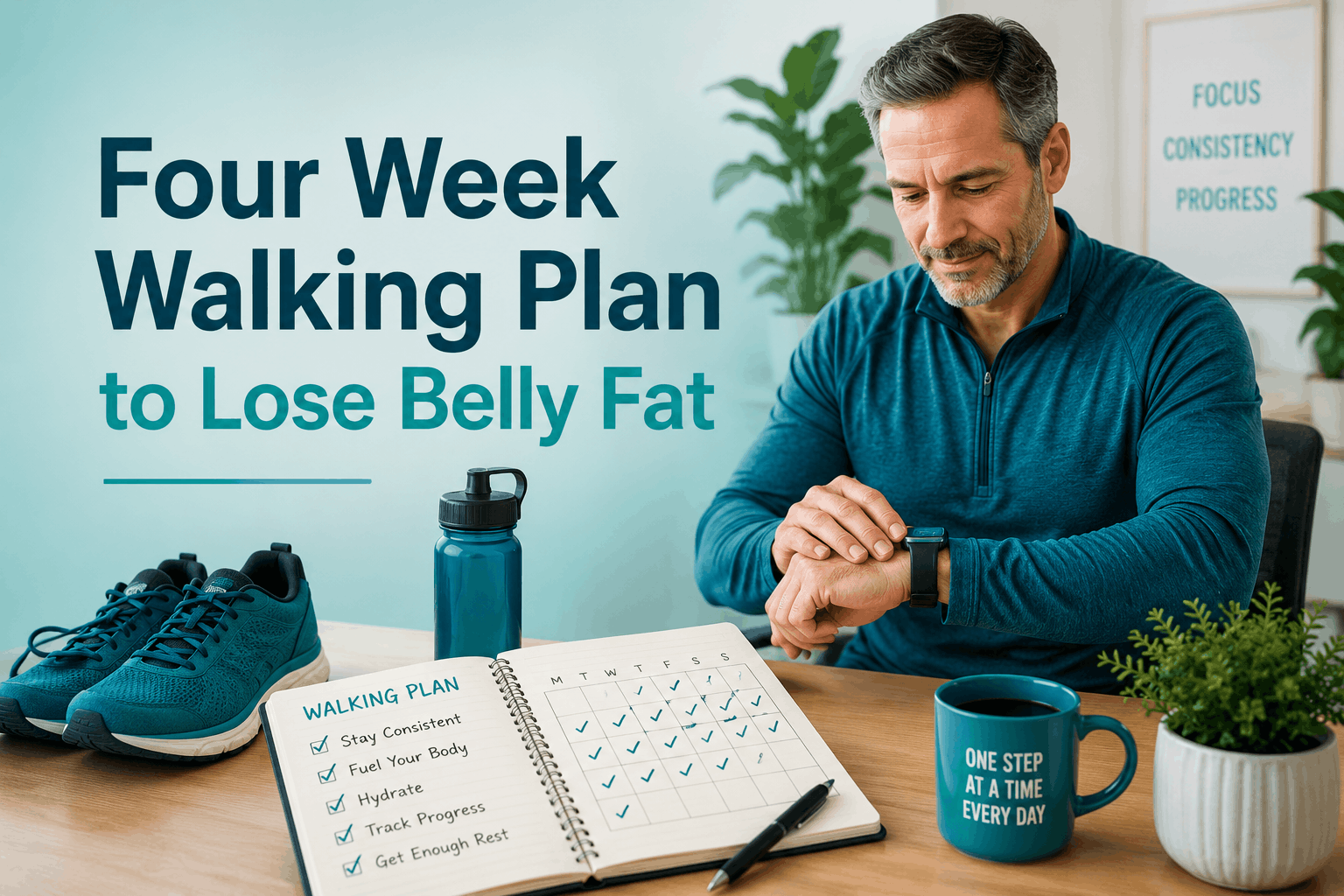
A realistic plan works better than an extreme plan. Use this four-week roadmap to start.
First 3 Days: Check Your Current Routine
Observe your habits.
Ask yourself:
- How many steps do I take daily?
- How often do I walk?
- How much sugar do I drink?
- Do I eat heavy dinners?
- How well do I sleep?
- How many hours do I sit?
- What is my waist size?
This gives you a clear starting point.
Week 1: Build the Walking Habit
Walk 15 to 20 minutes daily for 5 days.
Keep the pace comfortable. Focus on showing up.
Week 2: Add After-Meal Walking
Continue your main walk and add 10 minutes after one meal.
Dinner is a good option for many men.
Week 3: Improve Food Quality
Add protein to breakfast and reduce one sugary drink or snack.
Do not change everything at once. Choose one food habit and repeat it.
Week 4: Add Strength Training
Add two short strength sessions.
Start with basic exercises and keep the routine controlled.
After 4 Weeks: Review Progress
Review:
- Waist size
- Energy
- Walking stamina
- Sleep
- Digestion
- Cravings
- Clothes fitting
Then increase your walking time or pace slowly.

Safety Advice Before Starting
Walking is safe for most people, but men over 40 should still be careful, especially if they have medical conditions.
Speak to a qualified doctor before starting a new walking or exercise routine if you have:
- Chest pain
- Heart disease
- Uncontrolled blood pressure
- Severe diabetes complications
- Dizziness
- Severe knee, hip, or back pain
- Shortness of breath during light activity
- Recent surgery or injury
Start slowly and listen to your body.
If you feel chest pain, severe breathlessness, faintness, or unusual discomfort, stop and seek medical help.
How Long Does It Take to See Results?
Results depend on your starting weight, diet, sleep, stress, health condition, and consistency.
First Week
You may feel more active, lighter, and mentally fresh.
Sleep may improve if walking reduces stress.
After 2 to 4 Weeks
Walking feels easier. Stamina improves. You may feel less sleepy after meals.
Digestion and mood may also improve.
After 6 to 8 Weeks
Waist size may start reducing if walking is combined with better food choices.
Clothes may feel looser.
After 12 Weeks
Clearer results often appear after 12 weeks of consistency.
You may notice improved belly fat, stamina, blood sugar control, energy, and confidence.
FAQs
Can walking help men lose belly fat after 40?
Yes. Walking can help men lose belly fat by increasing daily calorie burning and supporting overall fat loss. It works best with better food choices, sleep, and consistency.
How long should I walk daily to lose belly fat?
A good target is 30 to 60 minutes most days. Beginners can start with 15 to 20 minutes and increase slowly.
Is walking after meals good for belly fat?
Walking after meals may help blood sugar control and reduce long sitting. It supports fat loss when combined with overall healthy habits.
Can I lose belly fat with walking only?
Walking can help, but food quality, portion control, sleep, stress, and strength training also matter. Walking alone may be slow if diet is poor.
What is the best walking pace for fat loss?
A brisk pace is best for many people. You should breathe slightly heavier but still be able to talk.
Should men over 40 walk every day?
Daily walking is useful if your body feels comfortable. One light rest day is also fine, especially if you feel tired or have joint pain.
How many steps should men over 40 aim for?
A practical target is 7,000 to 10,000 steps daily, but beginners can start lower and increase gradually.
Does walking improve blood sugar?
Yes. Walking helps muscles use glucose, especially after meals. This can support better blood sugar control over time.
Conclusion
One thing I have seen many times in men over 40 is that they often think they need a dramatic plan to change their body. But in real life, the simple habits usually work best.
Walking is one of the most realistic ways to lose belly fat because it is easy to start, gentle on the joints, and possible to repeat daily. When walking is combined with protein-rich meals, fewer sugary drinks, better sleep, stress control, and strength training, the results become stronger.
You do not need perfection. You need consistency.
Start with 15 to 20 minutes. Add after-meal walks. Improve one food habit. Sleep better. Keep going for weeks, not days.
Over time, these small steps can improve your waistline, energy, confidence, and long-term health after 40.
[IMAGE 7 PLACEHOLDER: Final takeaway / progress / motivation]
Alt Text: Lose belly fat naturally after 40 with walking and consistency