
One thing I often notice in men over 40 is that blood sugar becomes a concern only after a report, a random home test, or a doctor’s comment. Before that, many men may feel tired after meals, gain belly fat, sleep poorly, or feel low in energy, but they do not connect these signs with blood sugar.
A normal blood sugar level is not just a number on a report. It is a signal of how well your body is handling food, stress, sleep, movement, and daily routine. After 40, this becomes more important because the body may not manage glucose as easily as it did before.
Many men want one simple answer: “What should my blood sugar be?” The answer depends on when you test it, whether you have eaten, whether you have diabetes, whether you take medication, and what your doctor has advised. Still, there are general ranges that can help you understand where you stand.
In this guide, you will learn what a normal blood sugar level means after 40, how fasting and after-meal readings differ, why numbers change, what warning signs to watch for, and how to support better blood sugar with practical daily habits.
What Does Normal Blood Sugar Level Mean?
Blood sugar means the amount of glucose in your blood. Glucose is a main source of energy for the body. It comes mostly from the food you eat, especially carbohydrates such as rice, bread, fruit, potatoes, sweets, and sugary drinks.
Your body uses a hormone called insulin to help move glucose from the blood into the cells. When this process works well, blood sugar stays within a healthy range. When the body becomes less responsive to insulin, glucose can remain higher in the blood.
A normal blood sugar level means your body is managing glucose properly for that situation. A fasting reading has a different meaning from a reading taken after meals. This is why timing matters.
Normal Blood Sugar Is Not One Fixed Number
Blood sugar changes during the day. It can be lower before meals and higher after food. It can also change because of sleep, stress, illness, exercise, medication, hydration, and meal size.
So instead of focusing on one perfect number, look at the pattern.
A man over 40 should ask:
- Is fasting sugar regularly high?
- Does sugar rise too much after meals?
- Does sugar stay high for many hours?
- Are there symptoms like thirst, fatigue, or frequent urination?
- Is A1C normal, borderline, or high?
- Are lifestyle habits supporting or hurting blood sugar?
This practical view is more useful than worrying about one reading.
Common Blood Sugar Ranges to Understand
The following ranges are commonly used to understand blood sugar status. These numbers are general education only. Your personal target may be different if you already have diabetes, take medication, have heart disease, kidney problems, or other health concerns.
Fasting Blood Sugar
Fasting blood sugar is usually checked after not eating for at least 8 hours.
| Status | Range |
| Normal | Below 100 mg/dL |
| Prediabetes range | 100 to 125 mg/dL |
| Diabetes range | 126 mg/dL or higher on proper testing |
If your fasting sugar is slightly high one time, do not panic. A poor night’s sleep, late dinner, stress, illness, or testing error can affect it. But if it is repeatedly high, it should be taken seriously.
Blood Sugar After Meals

Blood sugar naturally rises after eating. The size and type of meal matter. A large meal with refined carbohydrates may raise sugar more than a balanced meal with protein, vegetables, and controlled carbohydrates.
For many people without diabetes, after-meal blood sugar usually returns toward normal within a few hours. For people with diabetes, doctors may give specific targets. If your after-meal reading stays high for a long time, it may suggest your body is struggling to handle the meal.
A1C
A1C is a blood test that gives an idea of average blood sugar over the past few months. It does not show every spike or low, but it gives a useful bigger picture.
- Normal: below 5.7%
- Prediabetes range: 5.7% to 6.4%
- Diabetes range: 6.5% or higher
For men over 40, A1C can be useful because blood sugar problems may develop slowly without strong symptoms.
Why Normal Blood Sugar Level Matters After 40
Blood sugar control becomes more important after 40 because several lifestyle and body changes often happen at the same time.
Belly Fat Becomes More Common
Belly fat is strongly connected with insulin resistance. In simple words, the body may need more effort to manage the same food that was easier to handle earlier in life. A man may say, “I eat almost the same as before, but now my belly is increasing.” That is common after 40 because activity, muscle, sleep, stress, and metabolism may have changed.
Muscle Mass May Decline
Muscle helps use glucose. When muscle mass decreases, the body has less active tissue helping to use blood sugar. This is why strength training matters after 40. It is not only for appearance. It supports glucose use, strength, posture, and healthy aging.
Sleep May Become Poorer
Late meals, screen time, stress, snoring, and irregular routines can disturb sleep. Poor sleep can affect hunger, cravings, energy, and blood sugar. A man who sleeps badly may crave more sugar or feel tired after meals. Over time, this can make blood sugar harder to control.
Stress Affects Daily Choices
Stress can affect blood sugar directly and indirectly. It can increase cravings, reduce exercise, disturb sleep, and make a man choose quick comfort foods. Many men over 40 are not lazy. They are overloaded. That is why a realistic plan must fit work, family, and daily pressure.
Why Blood Sugar May Become High After 40
High blood sugar does not usually happen because of one meal. It often develops from repeated daily habits:
- Late and Heavy Dinners: A large dinner late at night can affect fasting sugar the next morning. The body may still be handling the meal while you sleep. A better approach is to keep dinner balanced and lighter, especially if fasting sugar is high.
- Too Many Refined Carbohydrates: White bread, large rice portions, sweets, biscuits, sugary tea, desserts, and sweet drinks can raise blood sugar quickly when taken often. You do not always need to remove carbohydrates completely. But portion size and food quality matter.
- Long Sitting Hours: Sitting for many hours reduces glucose use by muscles. Office work, driving, screen time, and long evenings on the sofa can make blood sugar control harder. A short walk after meals can be a simple and powerful habit. For more detail, you can read our guide on walking after meals to lower sugar
- Poor Sleep: Poor sleep may make the body more stressed and increase cravings the next day. If sleep is poor again and again, blood sugar control may suffer.
- Low Activity: Exercise helps the body use glucose. Walking, strength training, cycling, swimming, and daily movement can all help. The best exercise is not the hardest one. It is the one you can repeat.
- Weight Gain Around the Waist: Extra waist fat can make insulin less effective. Even a modest reduction in waist size may support better blood sugar patterns.
- Illness, Pain, or Infection: Blood sugar can rise when the body is under physical stress. Infection, fever, pain, poor recovery, and some medicines can affect readings. If your blood sugar suddenly changes without a clear reason, do not ignore it.
Warning Signs of High Blood Sugar
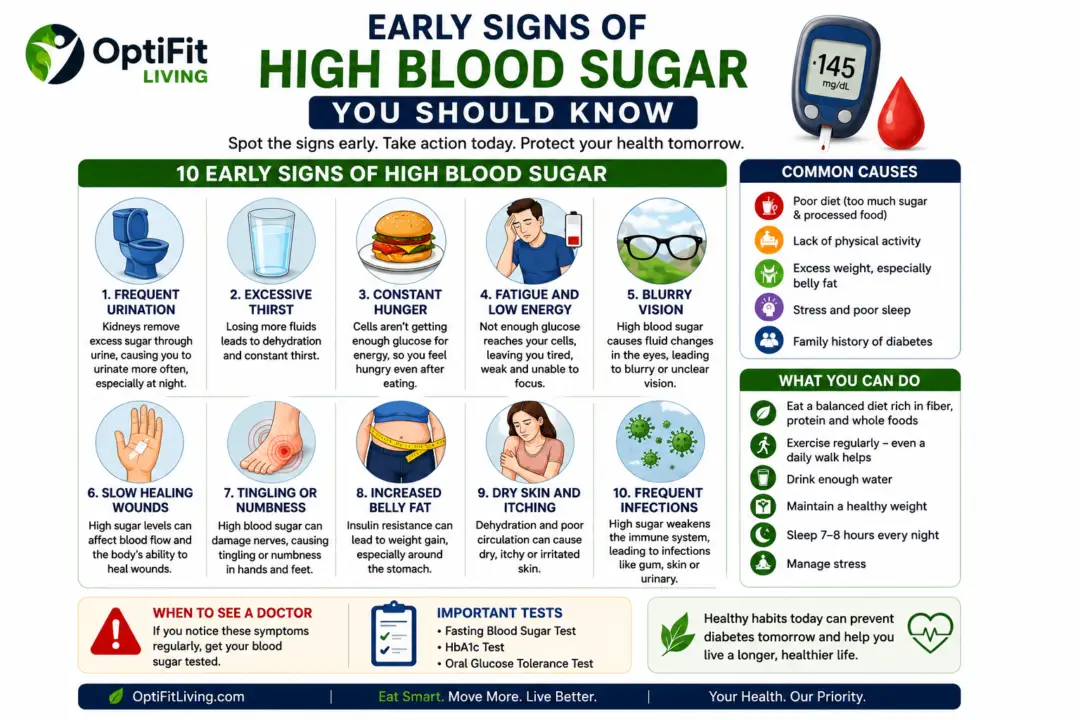
High blood sugar can sometimes be silent. But some signs may appear gradually. Watch for:
- Frequent thirst & frequent urination
- Tiredness or brain fog after meals
- Blurry vision
- Slow healing cuts
- Increased hunger & dry mouth
- Unexplained weight change
- Tingling or burning in feet
- More belly fat & low energy
- Poor sleep
These signs do not confirm diabetes by themselves. But if they appear with high readings, they should be reviewed by a qualified doctor.
Warning Signs of Low Blood Sugar
Low blood sugar can also happen, especially in people taking diabetes medicines or insulin. Possible signs include:
- Shaking & sweating
- Fast heartbeat
- Sudden hunger
- Dizziness & weakness
- Confusion & headache
- Irritability or feeling faint
Low blood sugar can be serious. If you take diabetes medication and experience these symptoms, discuss it with your doctor. Do not adjust medication on your own.
How to Check Blood Sugar Properly
Blood sugar testing is useful only when done correctly.
- Fasting Test: Check after 8 hours without food, usually in the morning. Avoid late-night snacks before a fasting test because they can affect the result.
- After-Meal Test: Some people check 1 to 2 hours after meals to see how food affects them. This can show whether a meal was too heavy or too high in refined carbohydrates.
- A1C Test: A1C is usually done through a lab test. It gives a wider view of average blood sugar over time.
- Home Glucose Meter: A home glucose meter can help track patterns. But technique matters. Wash hands, use proper strips, and follow device instructions.
- Continuous Glucose Monitoring: Some people use continuous glucose monitoring to see glucose patterns across the day and night. This can be useful for understanding morning sugar, meal response, and overnight changes.
What Can Affect a Blood Sugar Reading?
A single number can be affected by many things:
- Food Timing: A late meal or snack can raise fasting blood sugar.
- Meal Type: Rice, bread, sweets, sugary tea, desserts, and large portions can raise sugar more than balanced meals.
- Stress: Mental pressure can affect glucose patterns and daily eating behavior.
- Sleep: Poor sleep can affect appetite and glucose handling.
- Exercise: Exercise usually helps blood sugar, but intense exercise may temporarily affect readings in some people.
- Hydration: Dehydration may make readings look higher.
- Illness: Infection, fever, pain, and inflammation can raise blood sugar.
- Medication: Some medicines may affect glucose. Always discuss concerns with your doctor.
Practical Habits to Support Normal Blood Sugar Level
The goal is not to live in fear of food. The goal is to build a routine that supports steady energy and better control.
1. Start with Breakfast Quality
A breakfast full of refined carbohydrates can lead to energy crashes. Try to include protein and fiber. Better options may include:
- Eggs with vegetables
- Yogurt with nuts
- Oats with controlled fruit
- Lentils or beans with salad
- Whole-grain option with protein
- Leftover grilled chicken with vegetables
The key is to avoid a breakfast that is only sugar and starch.
2. Build Balanced Meals
Use a simple plate method:
- Half plate: Vegetables or salad
- One quarter: Protein
- One quarter: Controlled carbohydrates
- Small amount: Healthy fat
This helps reduce glucose spikes without extreme dieting.
3. Walk After Meals

A short walk after meals helps muscles use glucose. Even 10 minutes can be useful, especially after dinner. For men over 40 with belly fat, low energy, or high fasting sugar, this habit is practical and easy to repeat.
4. Strength Train Twice a Week

More muscle helps the body use glucose better. Strength training does not need to be complicated. Start slowly and safely with:
- Chair squats & wall push-ups
- Resistance band rows & step-ups
- Light dumbbell curls & planks
5. Sleep on Time
Better sleep supports better discipline, appetite control, and energy. Try to reduce late caffeine, avoid heavy dinners, keep your phone away before bed, sleep at a regular time, and keep the room comfortable. If sleep is part of your blood sugar concern, this guide may also help read How Sleep Affects Diabetes and Sugar Levels
6. Reduce Sugary Drinks
Sweet drinks are easy to consume but do not keep you full. Reduce sugar in tea, coffee, juices, soft drinks, and energy drinks. Start gradually if needed. Small reductions repeated daily can make a big difference.
7. Manage Stress Before It Controls Your Routine

Stress can make healthy habits harder. A simple evening routine can help: write down tomorrow’s tasks, walk after dinner, practice slow breathing, avoid late arguments, reduce screen time, and keep meals planned. Stress control is not only mental wellness; it supports the whole routine.
Common Mistakes People Make
- Looking for Quick Fixes: Many people look for one drink, supplement, or home remedy to fix blood sugar. This usually distracts from the real habits. (Correction: focus on meals, walking, sleep, strength, and tracking.)
- Doing Too Much Too Soon: Suddenly cutting all carbohydrates or doing intense workouts can be hard to maintain. (Correction: start with simple habits you can repeat.)
- Following Social Media Trends Blindly: Extreme fasting, miracle drinks, and dramatic diets may not suit every man, especially those taking medication. (Correction: use a realistic plan and speak to a qualified doctor when needed.)
- Ignoring Sleep and Recovery: Food is important, but sleep also affects cravings, energy, and control. (Correction: improve sleep timing and reduce late-night habits.)
- Being Inconsistent: Testing once, eating well for two days, and then stopping will not show real progress. (Correction: track patterns for at least two weeks.)
- Depending Only on Supplements: Supplements cannot replace poor diet, inactivity, and late nights. (Correction: fix the foundation first.)
- Ignoring Diet Quality: Eating less is not enough if meals are still mostly refined carbohydrates and sugar. (Correction: add protein, vegetables, fiber, and better portions.)
- Not Tracking Progress: Without tracking, you may not know what affects your readings. (Correction: record fasting sugar, meal timing, sleep, walking, and energy.)
- Giving Up Too Early: Blood sugar control improves with consistency. One bad reading should not make you quit. (Correction: look at weekly patterns, not emotional daily reactions.)
- Waiting Until the Problem Becomes Serious: Some men ignore borderline readings because they feel normal. (Correction: act early. Early habits are easier than late correction.)
Simple Action Plan to Start

First 3 Days (Start with awareness)
- Check fasting blood sugar if advised
- Write down dinner timing & notice sleep quality
- Walk 10 minutes after dinner
- Reduce sugar in tea or coffee & drink enough water
- Avoid late-night sweets
- Do not change everything at once.
Week 1 (Build the foundation)
- Eat balanced breakfast
- Walk after one main meal daily
- Reduce sugary drinks
- Sleep 20 minutes earlier
- Add vegetables to lunch or dinner
- Track fasting sugar if needed
Week 2 (Improve meal response)
- Keep dinner lighter
- Add protein to each main meal
- Avoid large refined carbohydrate portions at night
- Walk after dinner
- Track energy after meals & notice which foods raise cravings
Week 3 (Add strength)
- Do two short strength sessions
- Continue walking & improve sleep routine
- Reduce snacks after dinner
- Measure waist once
Week 4 (Review the pattern)
Ask yourself:
- Are fasting readings improving?
- Do I feel less tired after meals?
- Is my waist changing?
- Is sleep better?
- Am I walking more?
- Do I understand my food triggers?
This is how a man over 40 builds control without confusion.
Safety Advice
This article is for education and lifestyle guidance. It is not a diagnosis or personal treatment plan.
Speak with a qualified doctor if your blood sugar readings are repeatedly high, very low, or changing suddenly. Also get medical advice if you have diabetes, heart disease, kidney disease, high blood pressure, chest pain, dizziness, unusual weakness, severe thirst, frequent urination, unexplained weight loss, or if you take regular medication.
Do not stop or change diabetes medicine, insulin, blood pressure medicine, or any prescribed treatment without medical advice.
FAQs
1. What is a normal blood sugar level after 40?
A normal blood sugar level depends on when you test. Fasting blood sugar is generally considered normal below 100 mg/dL. A1C below 5.7% is commonly considered normal. Your personal target may differ if you have diabetes or other health conditions.
2. Is 110 fasting blood sugar normal after 40?
A fasting reading of 110 mg/dL is above the usual normal fasting range and may fall into the prediabetes range. One reading is not enough for diagnosis, but repeated readings should be discussed with a doctor.
3. What should blood sugar be 2 hours after eating?
For people without diabetes, blood sugar usually comes back down after meals. For many people managing diabetes, doctors often use after-meal targets. Your personal target should come from your healthcare provider.
4. Why is my fasting blood sugar high in the morning?
Morning blood sugar can be high because of late dinner, poor sleep, stress, insulin resistance, overnight glucose release, or medication timing. Tracking patterns is more useful than judging one reading.
5. Can walking lower blood sugar?
Walking can help muscles use glucose, especially after meals. A short 10-minute walk after eating is a simple habit many men over 40 can maintain.
6. Can stress raise blood sugar?
Stress can affect blood sugar directly and indirectly. It may disturb sleep, increase cravings, and reduce healthy choices. Stress management can support better glucose habits.
7. Should I avoid all carbs if my blood sugar is high?
Not always. Carbohydrate quality, portion size, and timing matter. Balanced meals with protein, vegetables, fiber, and controlled carbohydrates are more realistic for most men.
8. When should I see a doctor about blood sugar?
See a doctor if readings are repeatedly high or low, if symptoms appear, if you take medication, or if you are unsure how to interpret your results.
Conclusion
My practical observation is that men over 40 often do not need fear around blood sugar. They need clarity. Once you understand what a normal blood sugar level means, when to test, and what affects your readings, the confusion becomes easier to manage.
The strongest step is not panic. It is routine.
Eat balanced meals, walk after meals, build muscle, sleep better, reduce sugary drinks, and track your pattern calmly. If your readings are repeated outside the normal range, speak with a qualified doctor and take action early. Blood sugar control after 40 is not about perfection. It is about awareness, discipline, and daily habits that protect your energy, confidence, and long-term health.