
After turning 40, many men start noticing something strange after eating. You finish lunch, feel fine for a short while, and then suddenly feel sleepy, heavy, or mentally slow. After dinner, you may feel bloated, tired, or tempted to sit on the sofa for the rest of the night.Like many men over 40, you may wonder whether this is just normal tiredness or a sign that your body is struggling with metabolic changes. The question is simple: does a short stroll right after eating really work to protect your health?
The answer is a resounding yes. Adopting a consistent habit of walking after meals can significantly support better blood sugar control for many people. It is not a cure for diabetes, and it does not replace medicine, diet, or expert medical advice. However, it stands out as one of the simplest, most effective lifestyle habits that helps your muscles naturally clear glucose from your bloodstream.
For men over 40, this matters immensely because blood sugar, belly fat, energy levels, sleep quality, and long-term metabolic health are all deeply connected. A brief post-meal walk can reduce energy crashes, support weight control, improve digestion, and make you feel active instead of sluggish.
In this comprehensive guide, you will learn why blood sugar rises after eating, how light movement helps, who should take extra care, and how to build a realistic routine that sticks.
What Happens to Blood Sugar After Meals?
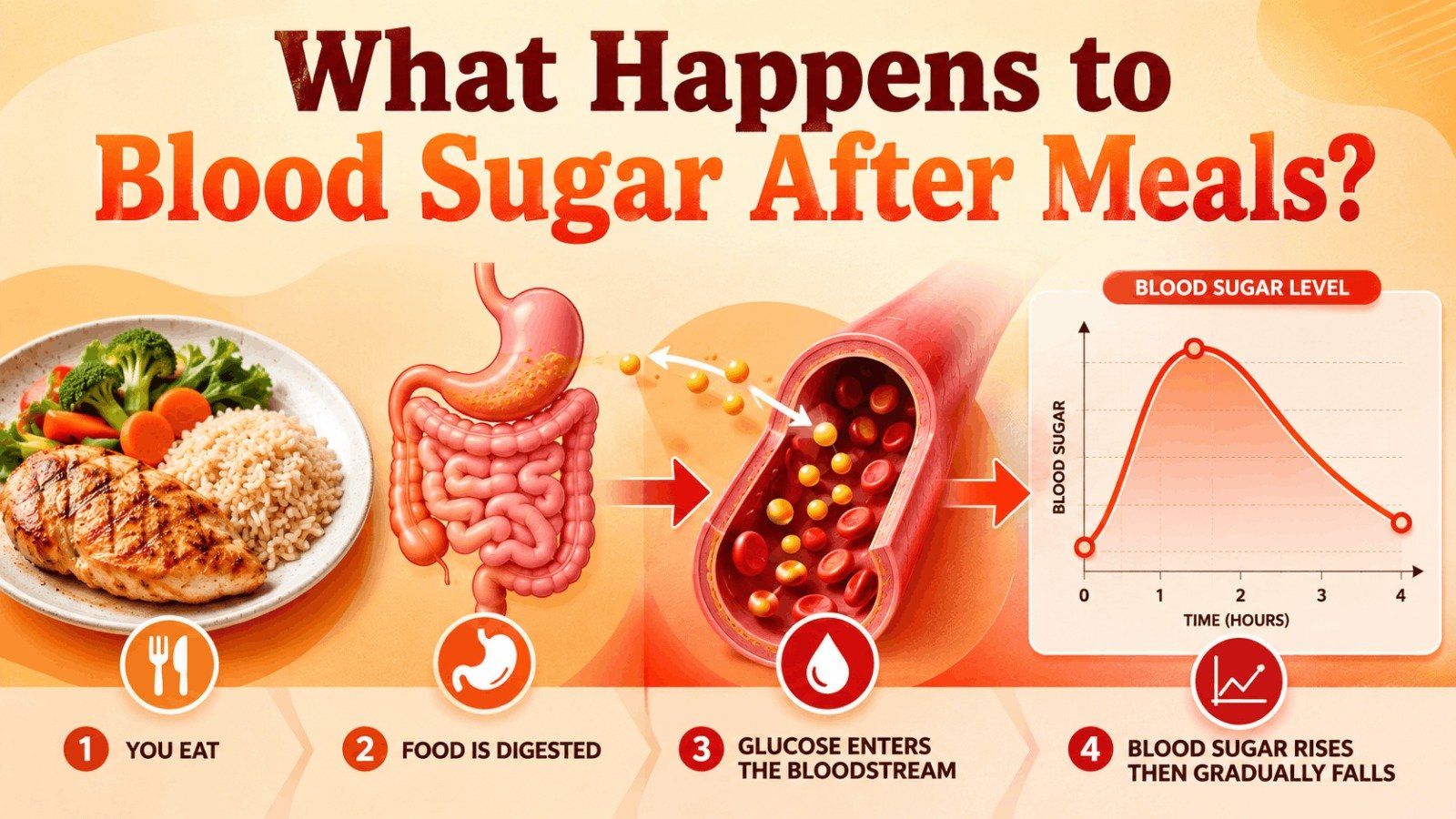
When you eat, your body breaks food down into smaller components. Carbohydrates are converted into glucose, which is a primary type of sugar your body relies on for daily energy.
Glucose enters your bloodstream, causing your blood sugar levels to rise naturally. In response, your body releases insulin—a hormone that acts like a key to let glucose out of the blood and into your cells to be used or stored.
In a healthy system, this process works smoothly. However, if your body is dealing with insulin resistance, prediabetes, type 2 diabetes, excess belly fat, poor sleep, or a sedentary lifestyle, that sugar can stay trapped in your blood for much longer.
Common Symptoms of Post-Meal Sugar Spikes
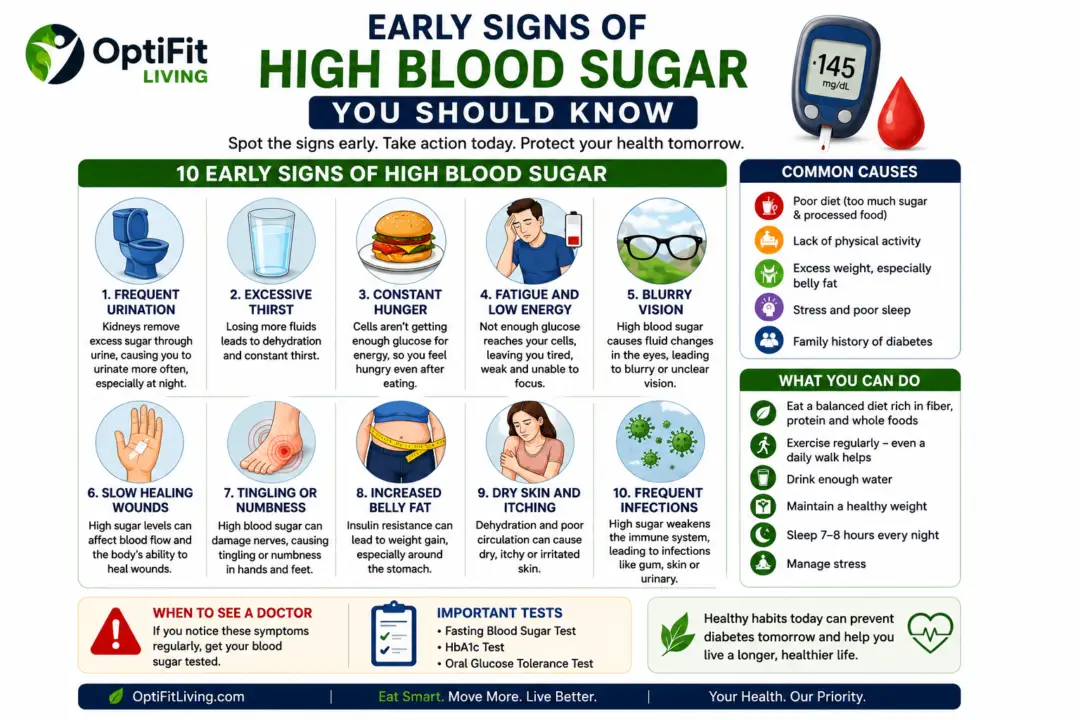
When your body struggles to clear glucose efficiently, you might experience:
- Extreme sleepiness or tiredness after lunch
- A heavy, bloated feeling right after eating
- Brain fog and low motivation
- Sudden sugar cravings shortly after a full meal
- Gradual belly fat accumulation over time
- Elevated readings on your blood glucose monitor
Important Note: Not everyone feels obvious symptoms when blood sugar rises. Some men may experience high post-meal sugar levels without feeling anything unusual. That is why regular clinical checkups and testing are crucial if you have underlying risk factors.
Why Blood Sugar Management Matters More After 40
Blood sugar control becomes a top priority after 40 because lifestyle shifts and age-related body changes often collide.
Many men find themselves becoming less active as career demands peak. Daily stress goes up, while sleep quality and duration frequently take a hit. Hormonal shifts make it easier to gain visceral belly fat. To make matters worse, dinner often becomes the heaviest, most carb-dense meal of the day, while strength training slips off the weekly calendar. All of these factors combined impair how your body processes energy.
According to data from the CDC (Centers for Disease Control and Prevention), managing blood sugar is the foundational key to living well and preventing long-term diabetic complications. Food choices, medications, and physical activity all act as levers that cause your glucose levels to shift throughout the day.
The Long-Term Benefits of Better Glucose Control
By prioritizing strategies like walking after meals, men over 40 can unlock several health advantages:
- Sustained Energy: No more debilitating afternoon slumps or brain fog.
- Easier Weight Management: Reduced insulin spikes make it easier to burn body fat and combat healthy aging hurdles.
- Improved Vitality: Better overall mood, fewer intense cravings, and enhanced workout performance.
- Disease Prevention: Lower risk of developing type 2 diabetes or heart issues, leading to higher confidence in your daily health.
The Science: How Light Movement Lowers Blood Sugar
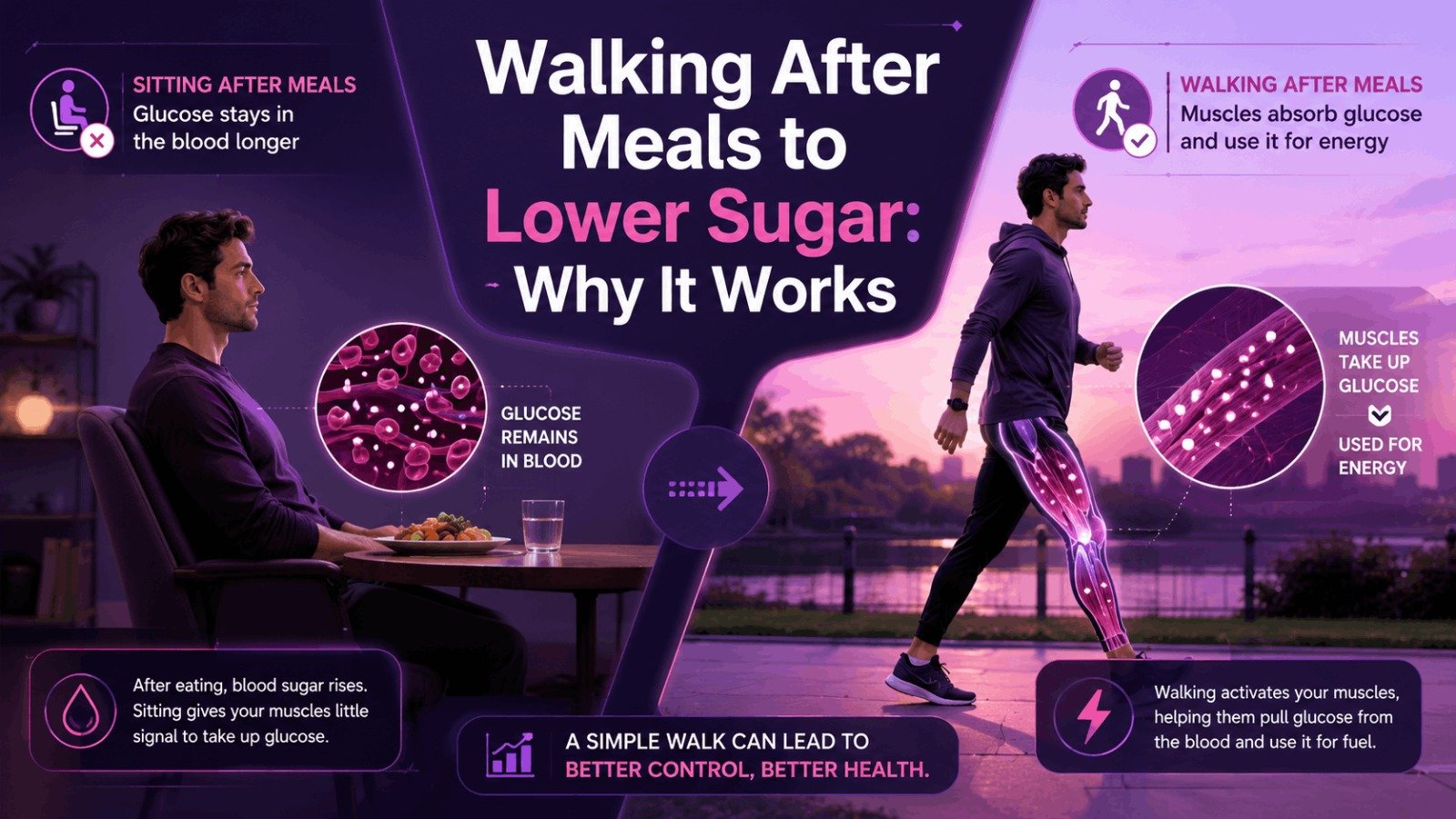
The primary reason why walking after meals works so well comes down to basic muscle mechanics. Your muscles require energy the moment you start moving.
When you sit down immediately after eating, your muscles remain completely inactive, meaning glucose stays circulating in your blood until insulin slowly clears it. But when you stand up and take a walk, your leg muscles contract and actively draw glucose straight out of your blood to use as fuel. This direct uptake helps flatten the post-meal glucose spike.
The CDC emphasizes that regular physical activity increases your body’s sensitivity to insulin. This means your cells can use the hormone much more effectively to manage blood sugar during and after movement. The agency explicitly encourages integrating light activity into daily life, such as taking a short walk during a lunch break or enjoying a stroll with family after dinner.
[ You Eat a Meal ] ➔ [ Blood Sugar Rises ] ➔ [ You Take a Light Walk ] ➔ [ Muscles Consume Glucose ] ➔ [ Blood Sugar Levels Smooth Out ]
Helping Your Body Handle Carbohydrates
This simple muscular uptake is incredibly beneficial after consuming carb-heavy meals that include foods like:
- Rice, bread, and naan
- Pasta, potatoes, and oats
- Fresh fruit, desserts, and sweetened beverages
The ultimate goal here is not to live in fear of carbohydrates; rather, the objective is to give your body the exact physical tools it needs to process those carbohydrates safely. Furthermore, moving after eating stimulates gastric motility, which aids digestion and breaks the dangerous cycle of prolonged sitting.
Mastering Your Post-Meal Walk: Timing, Duration, and Pace
To unlock the maximum post-meal walk benefits, you don’t need to put yourself through an intense, exhausting workout. Instead, focus on consistency, timing, and gentle execution.
How Long to Walk After Eating? (And When to Start)
For the best metabolic results, aim to start your walk within 10 to 30 minutes after finishing your meal. You don’t need to frantically rush away from the dinner table, but you shouldn’t wait until you’re completely settled into the couch either.
Depending on your fitness level and daily schedule, choose a realistic tier from this breakdown:
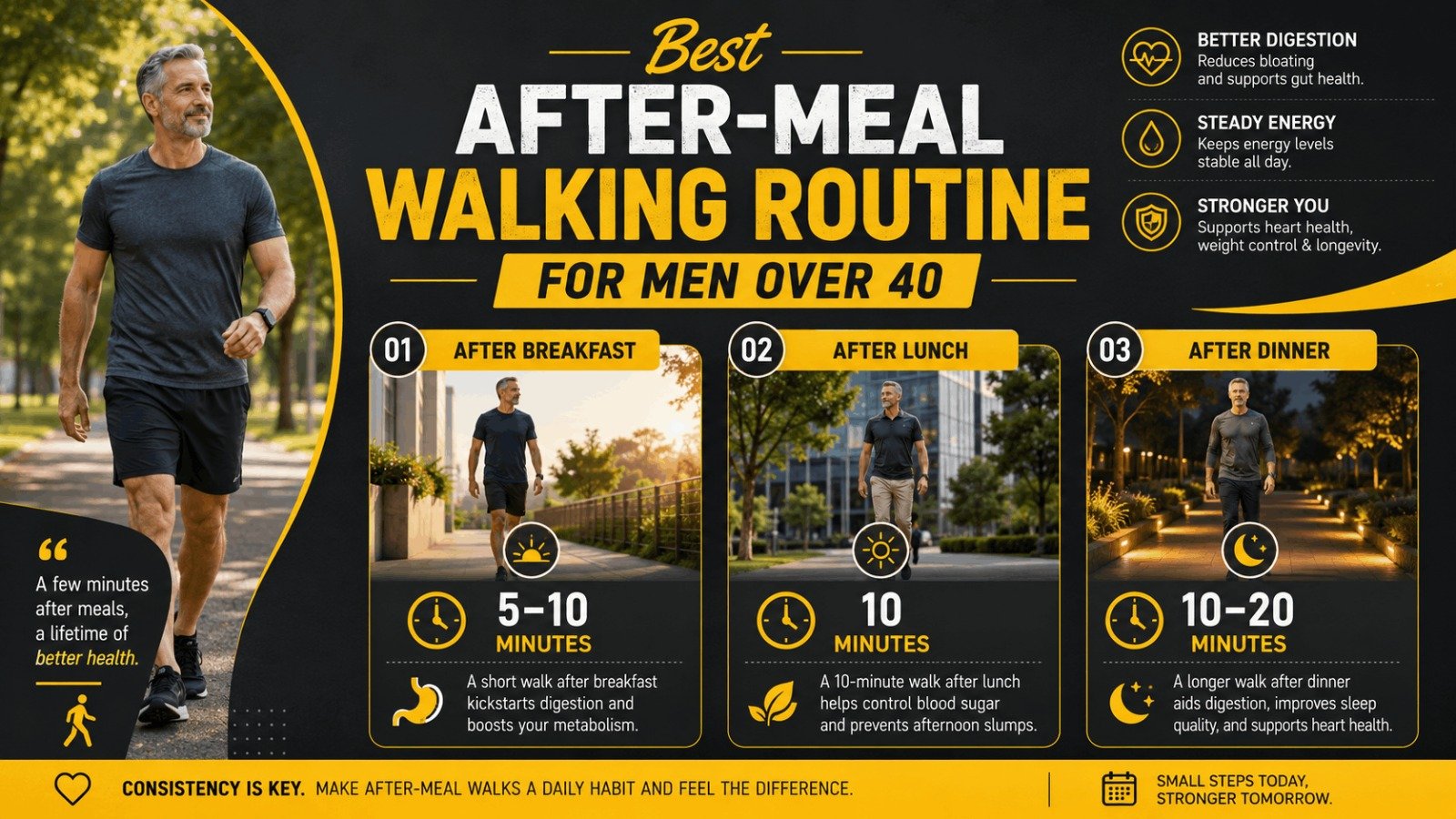
- The Beginner Tier: Walk for 5–10 minutes after your single heaviest meal of the day. This is ideal if you are currently sedentary, overweight, or recovering from an injury.
- The Intermediate Tier: Walk for 10–15 minutes after both lunch and dinner. This is highly realistic and highly protective for busy professionals.
- The Advanced Tier: Walk for 10 minutes after every single main meal (Breakfast, Lunch, and Dinner). This is exceptionally powerful for men actively managing prediabetes.
The CDC guidelines state that any amount of physical activity is better than none. Breaking your total weekly exercise target into smaller, bite-sized daily sessions is a proven way to build a sustainable habit.
Keeping the Right Pace
Keep your speed light, steady, and comfortable. You should easily be able to maintain a normal conversation without gasping for air. If you find yourself breathing too heavily, slow down. For metabolic health and blood sugar support, consistency and timing matter infinitely more than speed or intensity.
Lunch vs. Dinner: Which Walk Is More Critical?
While moving after any meal helps, a brief walk after dinner holds a special advantage for men over 40.
For many busy men, dinner is the largest, heaviest, and most relaxed meal of the day. It’s the time when large portions of rice, bread, heavy gravies, or evening treats are consumed. Historically, the immediate habit after a large dinner is to sit in front of the television or lie down. This direct transition into rest severely slows down your digestion, promotes visceral belly fat storage, and allows blood sugar to skyrocket right before bed.
A 10-to-20-minute evening walk breaks this exact cycle. By clearing out excess glucose before you go to sleep, you support better nighttime recovery and often wake up feeling much lighter and more energized the following morning.
Medical Safety: Who Benefits Most and Who Must Be Cautious?
Target Audience
An after-meal walking habit is highly advantageous for:
- Men over 40 dealing with stubborn midsection weight
- Individuals diagnosed with prediabetes, insulin resistance, or type 2 diabetes
- Desk-bound office workers who sit for hours at a time
- Anyone struggling with intense, unexplainable fatigue after eating
Signs to Exercise Caution
While walking is an incredibly safe form of low-impact exercise, certain health conditions require medical guidance. Consult your healthcare professional before changing your routine if you experience:
- Sudden chest pain or severe shortness of breath during movement
- Unexplained dizziness or inner-ear balance problems
- Recent cardiac events or underlying heart conditions
- Diabetic neuropathy, foot wounds, or loss of sensation in your toes
- Severe, painful chronic issues in your knees, hips, or lower back
- Frequent, unpredictable episodes of low blood sugar (hypoglycemia)
Additionally, if you rely on prescription insulin or specific diabetes medications that actively lower blood glucose, track your levels carefully and discuss proper activity timing with your doctor to avoid sudden crashes.
Real-World Case Studies for Busy Men
To see how easily this fits into a modern lifestyle, let’s look at four highly relatable examples of men over 40:
1. The Corporate Professional (Combating the 3 PM Slump)
- The Problem: He eats a heavy corporate lunch, returns straight to his desk, and sits. By 3:00 PM, his brain fog peaks, leaving him dependent on extra coffee or sugary snacks to survive the workday.
- The Solution: He switches to a balanced lunch, steps outside for a clean 10-minute walk around the office block immediately after eating, and hydrates with water. The Result: His afternoon energy stabilizes, and his focus improves dramatically.
2. The Evening Couch-Potato
- The Problem: He eats a late, heavy dinner, transitions straight to the living room sofa, and struggles with poor sleep and morning sluggishness.
- The Solution: He slightly scales back his dinner portion and commits to a mandatory 15-minute walk around his neighborhood before sitting down. The Result: His digestion feels lighter, his acid reflux disappears, and his sleep quality improves.
3. The Prediabetic Action-Taker
- The Problem: A 44-year-old man receives a warning from his doctor about elevated fasting blood sugar numbers and wants a practical lifestyle fix.
- The Solution: He implements a strict 10-minute walk after both lunch and dinner, cuts out sugary sodas, increases protein intake, and adds basic strength training twice a week. The Result: Safe, steady progress toward reversing insulin resistance.
4. The Time-Crunched Executive
- The Problem: He claims he has zero time to visit a commercial gym due to family and work obligations.
- The Solution: He takes business calls on his feet, walks for 10 minutes right after lunch, takes a brief post-dinner stroll with his spouse, and chooses the stairs. The Result: He easily accumulates 30 minutes of daily activity without ever stepping foot inside a gym.
Avoid These 8 Common Post-Meal Mistakes
To ensure your new habit delivers optimal health rewards, make sure you avoid these frequent pitfalls:
- Exercising Too Intensely: Forcing yourself into a fast jog or heavy workout after eating diverts blood away from your digestive tract, causing cramps and nausea. Keep it light.
- Treating Walking as a “Sugar Pass”: Walking does not magically erase the damage of unlimited desserts, oversized fast-food meals, or sugary sodas. Food quality still dictates your health.
- Falling into Inconsistency: Walking once or twice a week won’t yield long-term metabolic adaptations. The true magic lies in making it a daily ritual.
- Neglecting Food Composition: For optimal health, always pair your walks with meals rich in lean proteins, healthy fats, and high-fiber vegetables.
- Waiting Too Long to Start: If you wait an hour or two until you feel incredibly sleepy, you miss the peak glucose window and will likely skip the walk entirely.
- Compensating for All-Day Sitting: One short walk doesn’t entirely undo 8 hours of continuous desk sitting. Try to take quick standing or stretching breaks every hour.
- Modifying Medical Plans Alone: Never alter, reduce, or stop your prescribed diabetes medications based purely on your walking routine without explicit medical approval.
- Chasing Overnight Miracles: Lasting blood sugar stabilization, fat loss, and cellular health are built on months of repeated, quiet consistency—not quick fixes.
Your Step-by-Step 4-Week Habit Roadmap
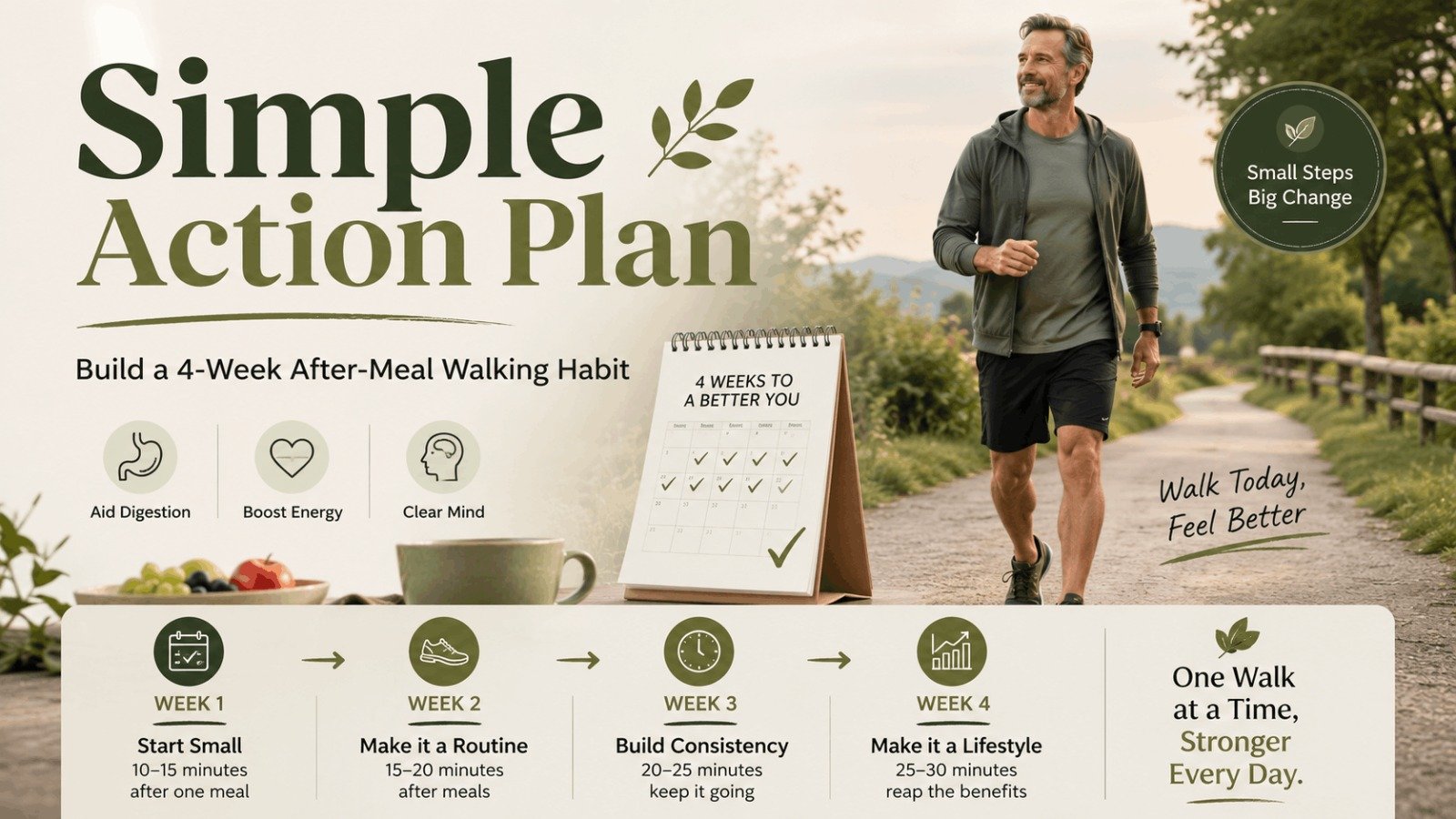
Transitioning to a healthier lifestyle doesn’t require an overnight overhaul. Follow this structured monthly roadmap to build a lasting habit:
Week 1: Master the Dinner Walk
- Goal: Establish baseline consistency.
- Action: Commit to a 10-minute gentle walk immediately after dinner. Focus on breathing fresh air, walking slowly, and staying upright. Replace any sweet late-night beverages with plain water.
Week 2: Introduce the Lunch Stroll
- Goal: Eradicate the afternoon productivity crash.
- Action: Maintain your dinner walks, but now add a mandatory 10-minute walk immediately following your midday lunch. Focus on including a clean source of lean protein in your lunch box.
Week 3: Optimize Plate Composition
- Goal: Combine clean movement with clean fuel.
- Action: Continue your lunch and dinner walks. Now, intentionally adjust your meals: fill half your plate with non-starchy vegetables, tightly control your portions of white rice or bread, and eliminate hidden liquid sugars.
Week 4: Solidify Your Lifestyle Routine
- Goal: Lock in long-term metabolic health.
- Action: Move for 10–15 minutes after at least two main meals daily. To supercharge your metabolism, introduce 2 days of basic strength training to build muscle mass, and protect your health by aiming for 7+ hours of quality sleep.
Frequently Asked Questions (FAQ)
1. Does walking after meals really lower sugar?
Yes, it is scientifically proven. Moving your body right after eating prompts your skeletal muscles to actively pull glucose directly out of your bloodstream to use as motion fuel, reducing the severity of post-meal blood sugar spikes.
2. How long and how soon should I walk after eating?
The sweet spot for metabolic health is a 10-to-15-minute walk, initiated within 10 to 30 minutes after you finish eating your meal.
3. Can walking replace my prescription diabetes medication?
Absolutely not. Walking after eating is an exceptional supportive lifestyle habit, but it should never be used as a replacement for a treatment plan prescribed by your doctor.
4. Can this habit help me lose stubborn belly fat?
Yes. While it won’t melt fat overnight, walking regularly increases insulin sensitivity and helps manage total daily calorie burn. When paired with a balanced diet and good sleep, it is a highly effective tool for midsection weight management.
Conclusion: The Power of Small Choices
After 40, your body stops forgiving prolonged neglect, but it responds beautifully to consistent, gentle care. Many men hold back because they believe reclaiming their health requires a massive, stressful transformation. In reality, some of the most profound health breakthroughs begin by simply standing up after a meal and walking for 10 minutes.
Walking after meals is not a trendy fad or a complicated medical miracle. It is a practical, free, and deeply natural way to work with your body instead of against it.
Start tonight. Eat a balanced dinner, give your body a few minutes to settle, step outside, and take a 10-minute walk. Your energy, your waistline, and your future health will thank you.