
Understanding peptides for men’s sexual health is becoming increasingly important as men age. Turning 40 often brings a shift in how men experience energy, vitality, and sexual performance. Changes in libido or stamina are frequently tied to subtle shifts in hormones, metabolism, stress levels, and blood vessel health that develop gradually over time.
In recent years, therapeutic peptides have gained significant interest as modern options for supporting vitality. Often discussed alongside traditional treatments like Testosterone Replacement Therapy (TRT) or prescription PDE5 inhibitors, peptides represent a distinct area of biochemical research. Understanding what peptides are, how specific compounds function, and where the current research stands allows men to make informed choices alongside medical professionals.
What Are Peptides?
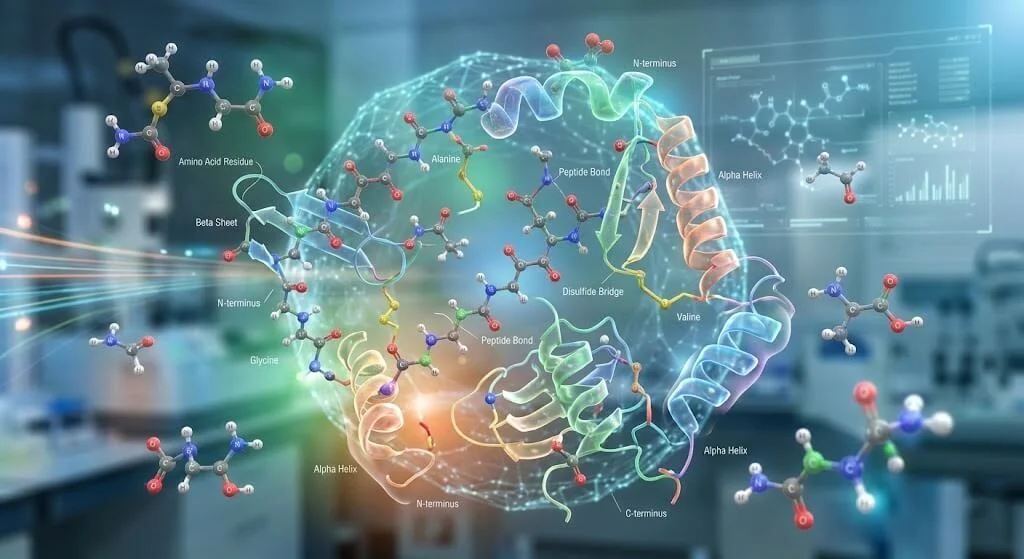
Exploring peptides for men’s sexual health helps clarify how these biological messengers operate at a cellular level.
Peptides are short chains of amino acids connected by peptide bonds. They function as biological messengers throughout the human body, signaling specific cells to release hormones, repair tissue, regulate immune responses, or manage metabolic functions.
Unlike proteins, which consist of long, complex chains of amino acids, peptides are much smaller. This structural simplicity allows the body to process and utilize them efficiently. Endogenous peptides occur naturally in human physiology, regulating critical systems such as sleep cycles, tissue restoration, and hormone balance.
Synthetically developed peptides mimic these natural signaling molecules, aiming to trigger targeted biological responses without replacing or suppressing the body’s natural hormone production pathways.
Why Sexual Health Can Change After 40?

Sexual health relies on an intricate balance between the cardiovascular system, nervous system, and endocrine system. As men age, changes across these systems can impact performance and desire, especially when considering how stress and poor sleep affect male sexual health.
Weight Gain and Belly Fat
Abdominal fat accumulation is more than an aesthetic concern; visceral fat is endocrinologically active. It produces the enzyme aromatase, which converts circulating testosterone into estrogen. Higher levels of body fat often correlate with lower bioavailable testosterone and increased systemic inflammation, both of which affect sexual function.
Poor Sleep
Testosterone synthesis peaks during deep sleep cycles, specifically REM and deep non-REM stages. Chronic sleep restriction or sleep disorders like obstructive sleep apnea significantly reduce natural daily hormone production, leading to persistent fatigue, mood changes, and lower libido.
Chronic Stress
Elevated levels of cortisol, the body’s primary stress hormone, exert a direct suppressive effect on the hypothalamic-pituitary-gonadal (HPG) axis. When cortisol remains elevated due to work or personal stress, the brain signaling that initiates testosterone production and sexual desire is dampened.
Cardiovascular Health
Erectile function is fundamentally a vascular process requiring healthy blood vessels and optimal endothelial function. Subtle arterial stiffness, mild hypertension, or reduced nitric oxide production can restrict blood flow long before broader cardiovascular symptoms appear.
Why Are Peptides for Men’s Sexual Health Gaining Attention?
Traditional medical interventions for male sexual health often focus either on direct hormone replacement or on local blood vessel dilation. While effective, these treatments do not suit every individual.
Peptides are being actively studied because they operate through targeted cell-signaling pathways rather than direct hormonal replacement. Researchers are evaluating whether peptide signaling can help:
- Stimulate endogenous hormone production rather than shutting down natural production loops.
- Target central nervous system pathways involved in arousal and desire.
- Support cellular repair, reduce oxidative stress, and aid vascular health.
This targeted approach has made peptide therapy an expanding area of study within regenerative and preventive medicine.
PT-141 and Male Sexual Health
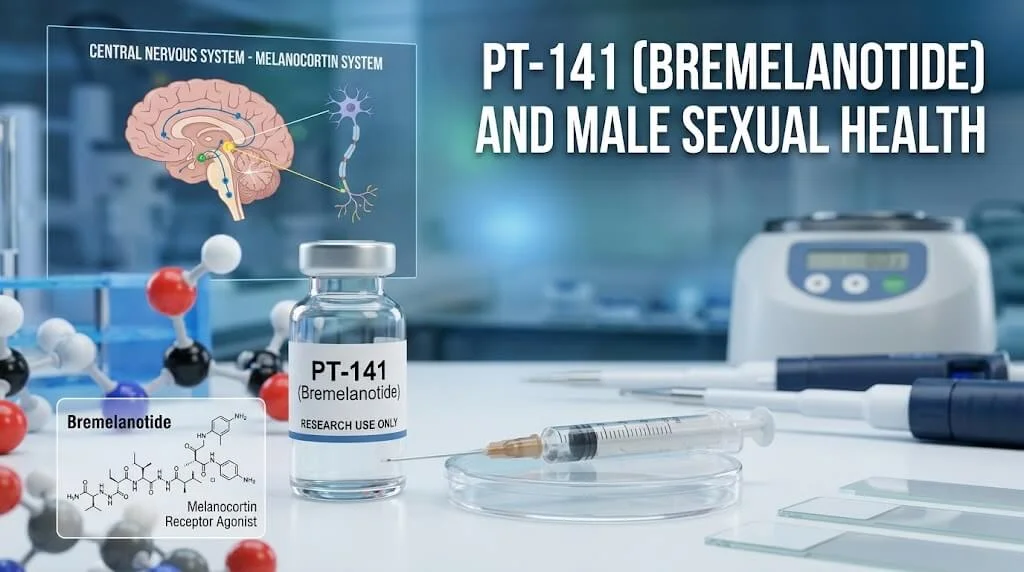
When discussing peptides for men’s sexual health, PT-141 (Bremelanotide) is one of the most widely researched options because it targets the central nervous system directly.
It acts as a synthetic agonist at melanocortin receptors (primarily MC3R and MC4R) in the brain. By stimulating these central receptors, PT-141 helps initiate neural pathways tied to sexual desire and arousal.
Because its mechanism of action bypasses the vascular system, PT-141 has been investigated for men who do not respond well to PDE5 inhibitors or who experience sexual dissatisfaction stemming from reduced libido rather than purely physical vascular limitations.
Kisspeptin and Male Libido Research
Kisspeptin is a naturally occurring neuropeptide that plays a key role in regulating the reproductive axis. It acts as an upstream driver of Gonadotropin-Releasing Hormone (GnRH), which subsequently triggers the pituitary gland to release Luteinizing Hormone (LH) and Follicle-Stimulating Hormone (FSH).
Research into peptides for men’s sexual health also highlights Kisspeptin for its role in stimulating natural reproductive hormones and supporting libido.
In clinical research settings, kisspeptin administration has demonstrated an ability to influence brain regions associated with sexual attraction, emotion, and romantic bonding. Rather than acting strictly as a physical intervention, kisspeptin research highlights the profound connection between neurobiology, emotional processing, and male sexual desire.
What About BPC-157?
Although not a direct libido booster, BPC-157 often comes up in discussions surrounding peptides for men’s sexual health due to its tissue-repair properties.
While BPC-157 is not a targeted sexual health or libido-enhancing peptide, it frequently appears in discussions around male wellness. Its proposed mechanism involves accelerating tissue repair, encouraging new blood vessel formation (angiogenesis), and supporting gut barrier integrity.
Some researchers hypothesize that BPC-157 may indirectly support overall recovery, tissue healing, and systemic vascular health, though evidence specifically linking BPC-157 to direct improvements in male sexual performance remains largely anecdotal and experimental.
Peptides vs. Traditional Sexual Health Treatments
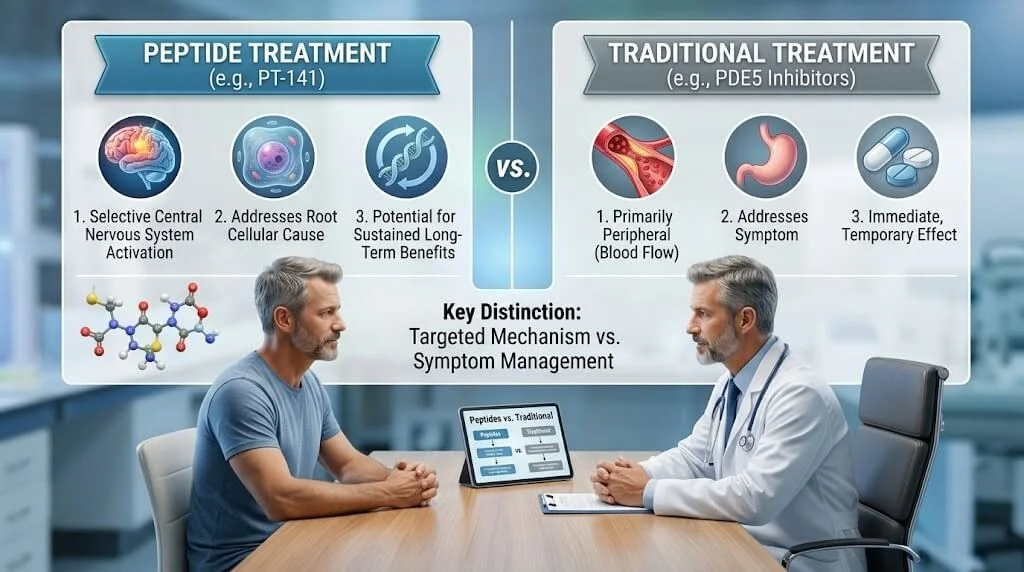
When considering options for sexual health support, it is helpful to compare how peptides differ from conventional medical approaches.
Comparing traditional options with peptides for men’s sexual health highlights key differences in mechanism and regulatory approval.
| Feature / Consideration | Therapeutic Peptides | Traditional PDE5 Inhibitors | Testosterone Replacement (TRT) |
| Primary Mechanism | Cellular signaling and central receptor activation | Selective enzymatic inhibition for localized blood flow | Direct exogenous hormone administration |
| Target Area | Central nervous system or specific signaling receptors | Smooth muscle and penile vasculature | Systemic hormone levels across the entire body |
| Impact on Natural Hormones | Designed to modulate or prompt natural signals | None | Can suppress endogenous testosterone and fertility |
| Regulatory Status | Varies by compound (some experimental, some approved) | FDA-approved and widely standardized | FDA-approved controlled treatment |
What Can Men Over 40 Do Naturally?

While medical therapies and peptide research continue to evolve, baseline lifestyle habits remain the foundation of long-term male sexual and reproductive health.
Improve Your Sleep
Prioritize 7 to 8 hours of uninterrupted sleep per night. Maintain a consistent sleep-wake schedule, minimize blue light exposure before bedtime, and address loud snoring or gasping, which may indicate sleep apnea.
Exercise Regularly
Incorporate a balanced mix of resistance training and cardiovascular exercise. Heavy compound movements like squats and deadlifts support metabolic health, while aerobic exercise promotes endothelial function and nitric oxide production essential for circulation.
Control Belly Fat
Reducing visceral adiposity directly lowers aromatase activity, helping preserve natural testosterone levels. Focus on nutrient-dense foods, adequate protein intake, and maintaining a moderate caloric balance.
Manage Stress
Incorporate daily stress-management techniques such as breathwork, structured outdoor exercise, or mindfulness practices. Lowering chronic stress helps normalize cortisol levels and restores balance to the reproductive axis.
Pay Attention to Blood Sugar
Insulin resistance damages microvascular blood vessels over time and impairs nerve signaling. Maintaining stable blood glucose through a balanced diet reduced in refined sugars directly supports nerve and vascular health.
Safety Matters More Than Marketing
The growing popularity of peptide therapy has led to widespread online marketing, much of which outpaces current scientific consensus. Caution is essential when evaluating peptide products.While interest in peptides for men’s sexual health continues to grow, safety and medical guidance must always take priority over online claims.
Many peptides sold online are labeled strictly as “research chemicals” and lack regulatory oversight, standardized quality control, or purity testing. Unregulated sourcing carries risks of contamination, incorrect dosing, or degradation of active compounds.
Furthermore, because long-term safety profiles for several experimental peptides are still being established, individuals should prioritize medical guidance over promotional claims.
When Should You Talk to a Doctor?
Noticeable changes in sexual function, libido, or energy levels should always prompt a discussion with a qualified healthcare provider. Changes in performance can sometimes be an early indicator of underlying health conditions, including:
- Early-stage cardiovascular disease
- Undiagnosed Type 2 diabetes or insulin resistance
- Clinical thyroid imbalances or hypogonadism
- Depression or elevated anxiety
A comprehensive medical evaluation—including full blood panels measuring total and free testosterone, estradiol, thyroid function, lipid profiles, and metabolic markers—is necessary to identify the root cause of symptoms before starting any therapy.
Common Mistakes Men Make
Navigating health changes after 40 requires a thoughtful approach. Men often encounter predictable pitfalls when addressing sexual health concerns.
Looking for a Quick Fix
Expecting a single compound or supplement to resolve complex sexual health issues without addressing fundamental lifestyle factors often leads to disappointing results.
Trusting Social Media Claims
Social media platforms frequently oversimplify or exaggerate peptide research, presenting early laboratory findings as guaranteed clinical remedies.
Ignoring Persistent Symptoms
Dismissing ongoing erectile changes or severe fatigue as an inevitable part of aging delays the identification of treatable metabolic or cardiovascular conditions.
Assuming Everything Is Testosterone
While hormone levels are important, sexual health relies equally on vascular health, psychological well-being, neurotransmitter balance, and sleep quality. Assuming testosterone is the sole factor can cause men to overlook other vital health areas.
Frequently Asked Questions
Here are answers to common questions regarding peptides for men’s sexual health and overall vitality.
Are peptides for men’s sexual health proven to work?
Certain peptides, such as Bremelanotide (PT-141), have undergone rigorous clinical testing and FDA evaluation for specific indications. However, many other peptides discussed in wellness circles remain in experimental or preclinical stages.
Is PT-141 approved for men?
PT-141 is FDA-approved under the brand name Vyleesi specifically for premenopausal women with hypoactive sexual desire disorder (HSDD). While healthcare providers sometimes prescribe it off-label for men based on clinical judgment, it is not formally FDA-indicated for male erectile dysfunction.
Is kisspeptin a treatment for low libido?
Kisspeptin is actively being researched for its effects on reproductive hormones and brain activity related to desire. While clinical trials show promising results regarding its influence on mood and sexual behavior, it is not currently a standard, widely approved prescription treatment for low libido.
Is BPC-157 safe?
BPC-157 has shown high tolerability in preclinical animal studies, but comprehensive human clinical trial data regarding its long-term safety, optimal dosing, and side effect profile remains limited.
Should every man over 40 use peptide therapy?
No. Peptide therapy is not a universal requirement or a baseline supplement. Many men maintain optimal health and sexual vitality through targeted lifestyle adjustments, stress management, and standard medical care without the need for peptide interventions.
Can lifestyle changes still help after 40?
Yes. Modifying diet, improving sleep architecture, engaging in strength training, and managing cardiovascular risk factors can lead to substantial improvements in hormone levels, energy, and sexual performance at any age.
Final Thoughts
In summary, exploring peptides for men’s sexual health offers valuable insights into modern wellness, but long-term results depend on a strong foundation of lifestyle habits and professional medical consultation.
Advancements in peptide research offer valuable insights into how signaling molecules influence neurobiology, hormone production, and vascular function. Compounds like PT-141, kisspeptin, and BPC-157 highlight the growing shift toward targeted cellular wellness.
However, peptide therapies are tools within a broader medical context—not standalone cures. For men over 40, protecting sexual health requires a balanced strategy that prioritizes comprehensive lab work, professional medical consultation, and a strong foundation of daily health habits.
I hope this structured, thoroughly researched guide meets your needs! Let me know if you would like to adjust any specific section, expand on a medical topic, or generate matching meta descriptions and social media posts.
Helpful Resources
-
Medical Research & Studies: Discover peer-reviewed clinical studies and preclinical trial data on therapeutic peptides via PubMed Central (NIH).
-
Urology & Male Health Guidelines: Read comprehensive medical overviews on erectile function, testosterone levels, and vascular health from the Mayo Clinic Men’s Health Center.
-
FDA Drug Approvals & Safety: Check official safety advisories and regulatory statuses for peptide compounds on the U.S. Food and Drug Administration (FDA) official portal.