

How long does it take to lower blood pressure
If you are asking how long does it take to lower blood pressure, most men see the first real change in 2 to 4 weeks of steady food and activity changes, with more over 4 to 12 weeks. A single calm reading can fall within minutes, but that is a measurement settling, not your blood pressure changing.
This article is general education, not medical advice. It does not replace advice from your doctor. If your reading is very high or you have symptoms, read the urgent care section first.
The timeline at a glance
| Time frame | What usually happens | What to expect |
|---|---|---|
| Minutes | Rest, correct measurement, slow breathing | A tense reading falls a few points; temporary only |
| Days 1 to 7 | Lower salt meals, daily walking, better sleep | Small dips after a walk or a calm evening; no new baseline yet |
| Weeks 2 to 4 | DASH style eating, steady activity, less sodium | The first real change, often a few points, on repeat readings |
| Weeks 5 to 8 | Habits bed in, weight starts to move | A clearer downward trend across several weeks |
| Weeks 9 to 12 | Full routine in place, doctor retest window | The best picture of what lifestyle alone can do |
| After 3 months | Routine holds or medicine is adjusted with your doctor | A stable lower reading or a plan change, decided with your doctor |

What counts as lower
Blood pressure moves all day. It rises when you climb stairs, talk, feel stressed or drink coffee, and it falls when you sit quietly. A reading taken after a rushed morning often falls by itself after five minutes of rest.
The American Heart Association notes that a normal reading is below 120/80 mmHg, and that high blood pressure is usually defined from 130/80 mmHg. A reading of 180/120 mmHg or higher needs prompt medical attention.
What counts as lower is a trend, not a single good number. Take two readings, a few minutes apart, after five minutes of rest, at the same times of day, over several weeks. If the average is falling, your blood pressure is falling.
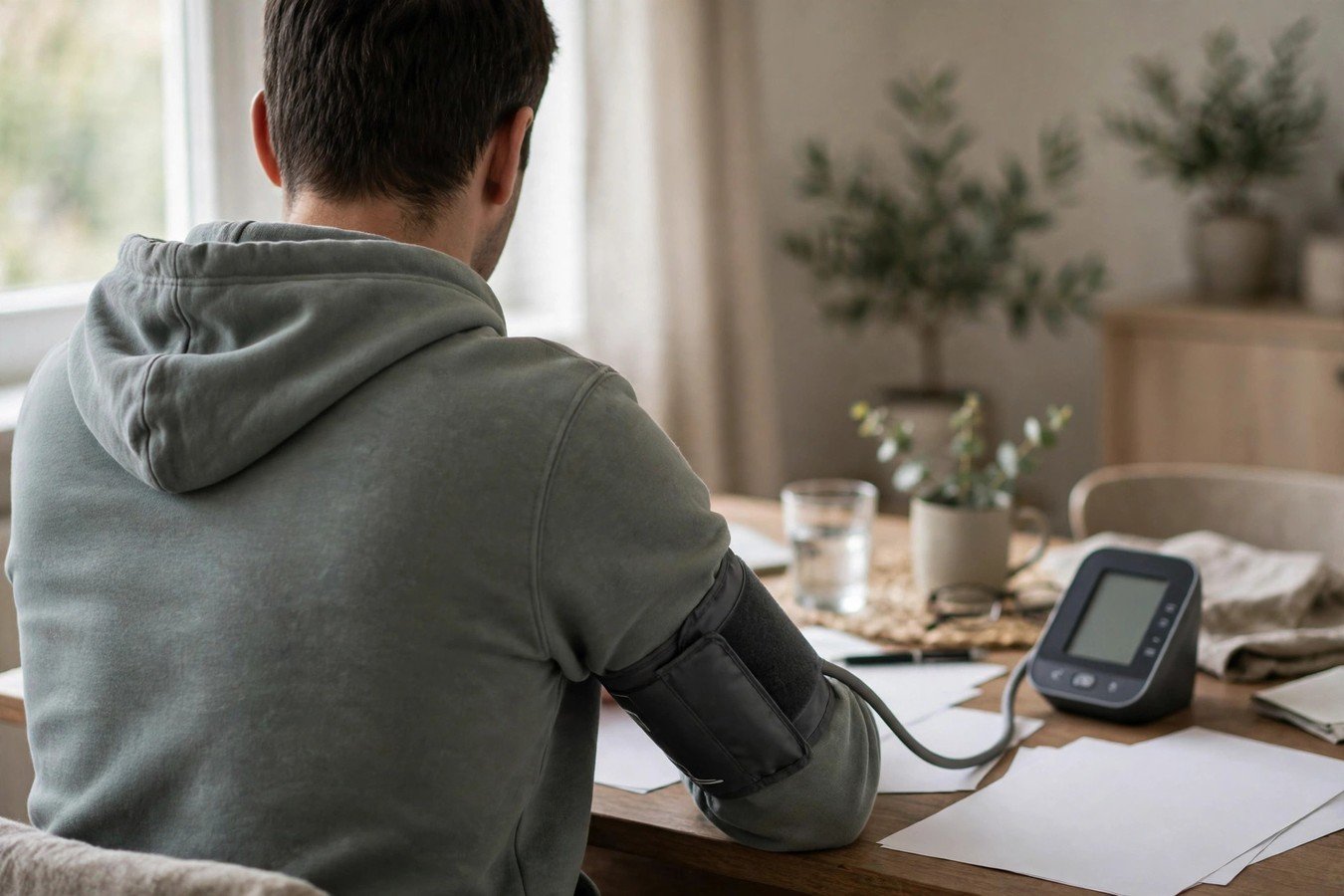
Measure the same way every time: back supported, both feet flat, arm on a table so the cuff sits at heart level, no talking, legs uncrossed. Sit quietly for five minutes, then write both numbers down with the date. That log is the record your doctor will want to see.
Weeks 1 to 2: the settling phase
In the first two weeks, most of what changes is measurement, not blood pressure. You learn to measure correctly, cut the saltiest meals, walk most days, and sleep a little better. A reading after a walk or after slow breathing can look a few points lower, and that is real, but it fades within hours.

The food change with the fastest evidence is DASH eating: plenty of vegetables, fruit, whole grains, beans, nuts, fish and low fat dairy, with little red meat, sweets and sugary drinks. The National Heart, Lung, and Blood Institute found DASH can lower systolic pressure by several points within about two weeks, with more over time.

Salt is the other early lever. The American Heart Association advises keeping sodium to no more than 2,300 mg a day, moving toward 1,500 mg a day. Most salt comes from processed food, bread, cheese, sauces and restaurant meals, not from the salt shaker.
Do not expect a new baseline in week one. If your average has not moved after seven days of good habits, nothing has gone wrong.
Weeks 3 to 4: the first real change
This is when most men see the first change they can trust. Two to four weeks of steady food and activity changes is the window where repeat readings start to sit a few points lower than the starting average.
Activity is doing more work by now. The American Heart Association recommends at least 150 minutes of moderate aerobic activity a week, and notes that regular aerobic activity can lower systolic pressure by about 5 to 8 mmHg on average. That builds over weeks, not hours, so a 30 minute brisk walk on five days a week is the pace to hold.
Sleep and alcohol matter here too. Short sleep and a heavy drinking evening both push readings up the next day. The CDC advises men to keep alcohol to two drinks or fewer a day, and less is better for blood pressure.
Weeks 5 to 8: the trend becomes clear
By five to eight weeks, weight loss starts to add its effect. Losing 5 to 10 percent of body weight, about 10 to 20 pounds for a 200 pound man, is the range where blood pressure, cholesterol and blood sugar usually improve together. A gradual loss of 1 to 2 pounds a week is the pace the CDC describes as sustainable.
If your readings have fallen a few points and are still falling slowly, you are on the usual path. If they fell in week three and then stopped moving, that is also common. Blood pressure falls in steps, holds, then falls again, and a flat fortnight is not a failure.
Weeks 9 to 12: the retest window
Four to twelve weeks after starting is the usual window for a doctor retest, and the honest answer to how long does it take to lower blood pressure for good. By week twelve, the food, activity, weight and sleep changes have had time to show what they can do.
Bring your home readings to that visit. Two readings a day, morning and evening, with dates, tells your doctor far more than one reading in the clinic. Your doctor can set a personal target and decide whether lifestyle alone is enough or whether medicine should start or change.
If medicine is part of your plan, the timeline is your prescriber’s to set. Many blood pressure medicines take weeks to show their full effect. Do not start, stop or change the dose of any medicine on the basis of an article.
How long does it take to lower blood pressure with each method
Different changes work on different clocks, and knowing which is which stops you from giving up on the slow ones too early.
Food and salt: 2 to 4 weeks for the first change. DASH eating can show several points within about two weeks, and cutting sodium keeps adding to that over the following weeks. The effect is bigger if your starting diet was very salty.
Activity: 4 to 8 weeks for the full effect. A single walk lowers pressure for hours, but the lasting fall of about 5 to 8 mmHg on average builds over a month or two.
Weight loss: 8 to 12 weeks and beyond. Weight falls slowly, and blood pressure follows it. The bigger change comes as the loss adds up over two to three months.
Less alcohol: days for the short term, weeks for the lasting change. A dry evening can show in the next morning reading, and cutting back steadily over weeks removes a steady upward push.
Medicine: weeks, set by your doctor. A new medicine or a dose change needs weeks before its full effect can be judged. A later article in this series covers losartan timing.
What affects how fast it falls
The same routine lowers one man’s pressure in three weeks and another man’s in ten. Your starting number: a man starting at 150/95 often sees a bigger early fall than a man starting at 135/85. Salt sensitivity: some men are more salt sensitive, and the effect is stronger in men who are older or already have high blood pressure. Weight: the more extra weight you carry, the more weight loss can contribute. How steady you are: five good days and two heavy drinking, salty, sleepless days each week will hide the trend. Age and other conditions: blood pressure gets harder to move with age, and diabetes and kidney disease change the target and the timeline. That is why the retest belongs with your doctor, not with a calendar.
What to do if nothing has changed by 12 weeks
First, check the measurement before you blame the routine. Are you resting five minutes, sitting correctly, using the right cuff size, and taking two readings? A cuff over a sleeve, an arm hanging down, or talking during the reading all push a reading up, and a wrong technique can hide a real improvement.
Second, check the routine honestly. Have the salt, the walking and the alcohol really changed most days, or only on good weeks?
Third, see your doctor. If twelve weeks of steady habits have not moved your average, your doctor may look for other causes, review your medicines, or start or adjust blood pressure medicine. That is not a failure. It is the point where the plan changes.
What does not speed it up
No shortcut makes the timeline shorter. Do not rely on a supplement, a detox tea, a garlic pill, a beetroot shot or a breathing gadget as a treatment. None of them replaces the food, activity and weight changes above, or medicine when it is needed. Ask your doctor first, because supplements can interact with blood pressure medicine. Cold showers, holding your breath and other internet tricks do not lower blood pressure in a reliable way. Do not skip the doctor because a home reading looked better after breathing practice. High blood pressure usually has no symptoms, so only repeat readings over weeks show it is under control.
When to get urgent care
Seek emergency care now if your reading is 180/120 mmHg or higher and you have chest pain, shortness of breath, back pain, numbness or weakness, change in vision, difficulty speaking, or severe headache. The American Heart Association describes this as a hypertensive crisis. If your reading is 180/120 mmHg or higher and you have no symptoms, wait 5 minutes, rest quietly and measure again. If the second reading is still that high, contact your doctor the same day.
When to see a doctor first
See your doctor before starting a blood pressure plan if you have heart disease, diabetes or kidney disease; have had a heart attack or stroke; take medicine for blood pressure, cholesterol or diabetes; or have a family history of early heart disease. Your doctor can set a personal target and a retest date that fits you.
Your 12 week check in plan
Weeks 1 to 2: measure at rest, twice a day, morning and evening, and write the numbers down with the date. Start DASH meals, cut the saltiest item in your usual week, and walk 30 minutes on five days. Weeks 3 to 4: compare the average of weeks three and four with week one. A fall of a few points is the expected first change. Add two short strength sessions. Weeks 5 to 8: weigh yourself once a week and note the trend. Keep alcohol small or none on most days, and sleep 7 to 8 hours where you can. Weeks 9 to 12: book the doctor visit, bring your home readings, and decide together whether lifestyle alone is enough.

Questions people ask
How long does it take to lower blood pressure without medicine?
For most men, the first real change from food and activity comes in 2 to 4 weeks, with more over 4 to 12 weeks. A single calm reading can fall within minutes, but that is measurement settling, not a lasting change.
How long does it take to lower blood pressure with medicine?
It takes weeks, and the exact timeline is set by your prescriber. Many blood pressure medicines need weeks to show their full effect, and a dose change needs its own retest window, usually 4 to 12 weeks.
Why did my blood pressure go down and then stop?
Blood pressure falls in steps, not in a straight line. It often falls a few points in the first month, holds for a fortnight, then falls again. A flat fortnight is normal. If the average has not moved at all after twelve weeks, see your doctor.
Can I lower my blood pressure in a week?
You can lower a single reading in minutes by resting, measuring correctly and breathing slowly, and a week of lower salt food, daily walking and no alcohol can start a downward trend. A lasting lower baseline takes 4 to 12 weeks.
How often should I check my blood pressure while it is coming down?
Twice a day, morning and evening, two readings a few minutes apart after five minutes of rest, is enough. Compare weekly averages, not single readings, and bring the log to your doctor visit.
Built from the American Heart Association, the National Heart, Lung, and Blood Institute, and the CDC. Where sources give a range, this guide shows the range. We did not test these methods or run trials for this guide. Last checked: 24 November 2026.
Related guides
- How to Lower Blood Pressure Quickly: Safe, Evidence-Based Ways
- How Long Does It Take to Lower Cholesterol?
- How to Lower Your Cholesterol Naturally in 7 Steps
- How to Lower LDL Cholesterol: What Actually Works
- Best Exercises for Men Over 40
This article is general education, not medical advice. It does not diagnose or treat any condition. Talk to your doctor before you change your diet, your activity level or any medicine, and seek urgent care for the symptoms listed above.