

How to lower blood pressure quickly
If you are asking how to instantly lower blood pressure, the honest answer is that nothing safe lowers it to normal in a few minutes and keeps it there. A few calm steps can bring a reading down by a few points within minutes, and a walk, less salt and a good night of sleep can help over a day or two. Lasting lowering, the kind that shows on test after test, takes weeks of steady food, activity and weight changes, and for many men it also needs medicine prescribed by a doctor.
This article is general education, not medical advice. It does not diagnose or treat any condition, and it does not replace advice from your doctor. If your reading is very high or you have symptoms, read the urgent care section first and do not wait for a lifestyle change to work.
What can help, and how fast
The table below is the short version of the whole article. The numbers are typical ranges from the sources used here. They describe what is common, not what will happen for you.
| Time frame | What can help | What to expect |
|---|---|---|
| In minutes | Sit and rest for 5 minutes, then measure correctly; slow breathing; relax your shoulders and stop talking | A reading a few points lower than a rushed, tense reading; the effect is modest and temporary |
| In hours | A brisk 30 minute walk; no alcohol or extra caffeine today; a lower salt meal; water instead of a sugary drink | A small dip that lasts hours, not a new baseline |
| In days | Steady lower salt eating, daily walking, 7 to 8 hours of sleep, no alcohol on most days | The start of a real downward trend, a few points over a week or two |
| In weeks | A DASH style food pattern, regular activity, weight loss of 5 to 10 percent, less alcohol, quitting smoking | The lasting change, usually several points, measured over 4 to 12 weeks |
What “instantly” really means
Blood pressure moves all day. It rises when you climb stairs, talk, feel stressed or drink coffee, and it falls when you sit quietly. A single high reading after a rushed morning often falls by itself after five minutes of rest. That is not a cure. It is your body settling, and it is also why doctors ask for repeat readings before they call a number high.
The American Heart Association notes that a normal reading is below 120/80 mmHg, that high blood pressure is usually defined from 130/80 mmHg, and that a reading of 180/120 mmHg or higher needs prompt medical attention. One reading in a pharmacy or at home, taken while you are tense, is not enough to judge your health. Two readings, taken a few minutes apart after rest, with a correct cuff, are a better guide.
So the useful question is not how to force a number down in one minute. It is what lowers the number a little right now, what keeps it lower tomorrow, and what brings it down for good over weeks. The rest of this article follows that order.
In minutes: rest, measure correctly, breathe slowly
Most of the fast drop people see comes from measuring properly. A rushed reading often comes out higher than a rested one, and the fix is free.
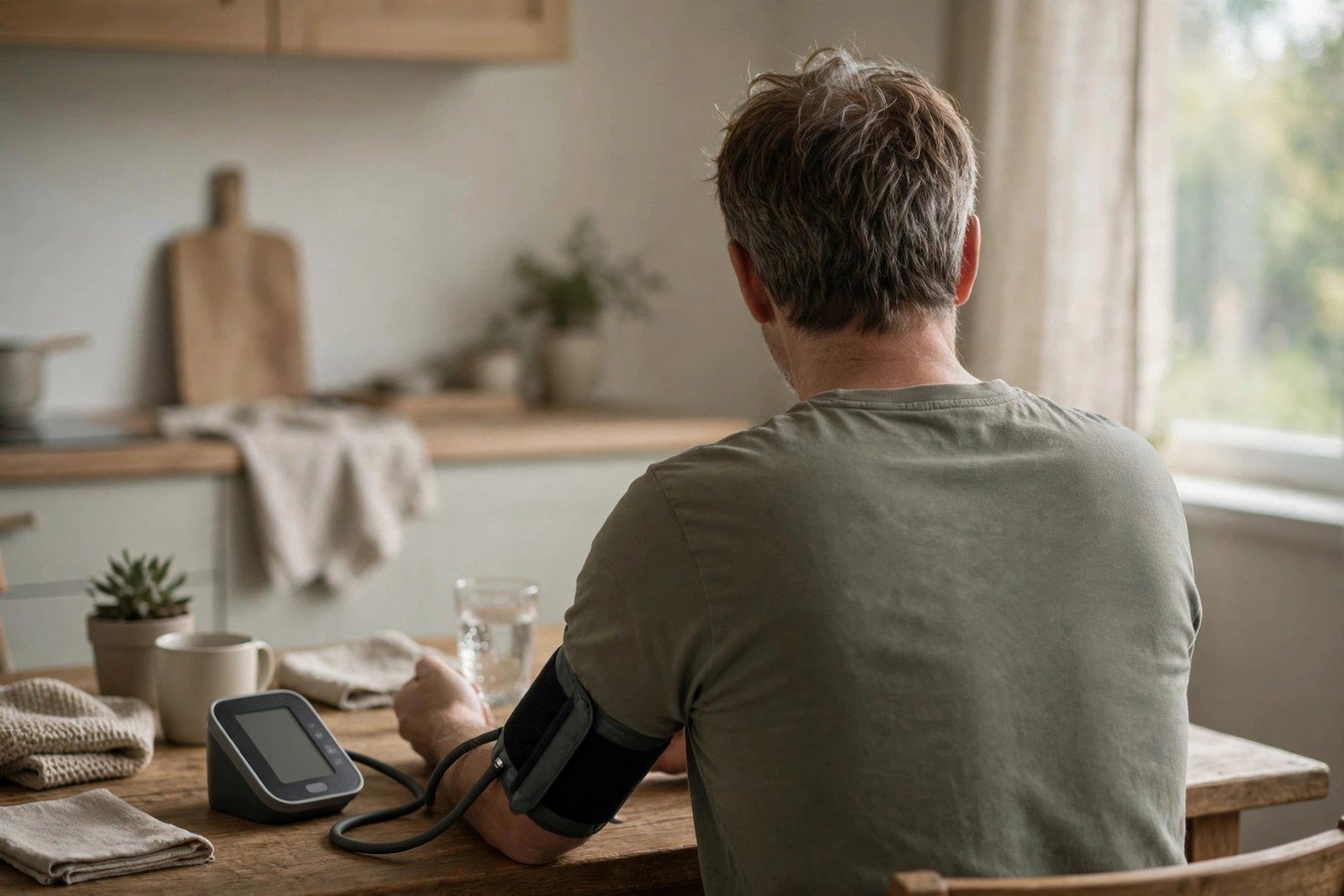
Sit in a chair with your back supported and both feet flat on the floor. Rest your arm on a table so the cuff sits at heart level. Do not talk, do not cross your legs, and empty your bladder first. Sit quietly for 5 minutes before you press start, then take a second reading a minute or two later and note both numbers.
Caffeine, a full bladder, a cuff over a sleeve, an arm hanging down, talking during the reading, and feet dangling off the floor all push a reading up. Fixing those does not lower your real blood pressure. It stops you measuring a number that was never your resting pressure.
How to lower blood pressure breathing
Slow breathing is the one short term step with real evidence behind it. It works by calming the stress response, and the effect is modest and short lived, not a substitute for treatment.
Sit comfortably and breathe in through your nose for about 5 seconds, then out slowly through your mouth for about 5 seconds. That is about 6 breaths a minute. Keep your shoulders down and your jaw relaxed. Do this for 5 to 10 minutes, then rest for a minute and measure again.
Studies of slow breathing have found small falls in systolic pressure, often a few points, during and just after the practice. The American Heart Association lists slow breathing among the approaches that can help, while noting it is not a replacement for medicine when medicine is needed. If slow breathing makes you feel light headed, stop and breathe normally.

In hours: a walk, less salt, no alcohol today
A single brisk walk can lower blood pressure for hours afterwards. The American Heart Association recommends at least 150 minutes of moderate aerobic activity a week, and a 30 minute walk counts toward that total. Walk at a pace where you can talk but not sing. If you have chest pain, breathlessness, or you have been inactive for a long time, talk to your doctor before you start vigorous activity.
Salt works in the other direction. A salty meal can push a reading up the same day, and the effect is stronger in men who are salt sensitive, older, or already have high blood pressure. You cannot undo a salty lunch in an hour, but you can choose a lower salt dinner, skip the soy sauce and processed snacks, and drink water instead of a salty soup or a sugary drink.
Alcohol raises blood pressure the same day and over time. The CDC advises men to keep alcohol to two drinks or fewer a day, and less is better for blood pressure. If your reading is high today, the simplest same day step is to have no alcohol at all today.

In days and weeks: what actually brings it down for good
The lasting change comes from the same habits that lower cholesterol and blood sugar, and the evidence for them is strong. The National Heart, Lung, and Blood Institute points to the DASH eating pattern, regular activity, weight loss, less sodium, less alcohol and quitting smoking as the main lifestyle treatments for high blood pressure.
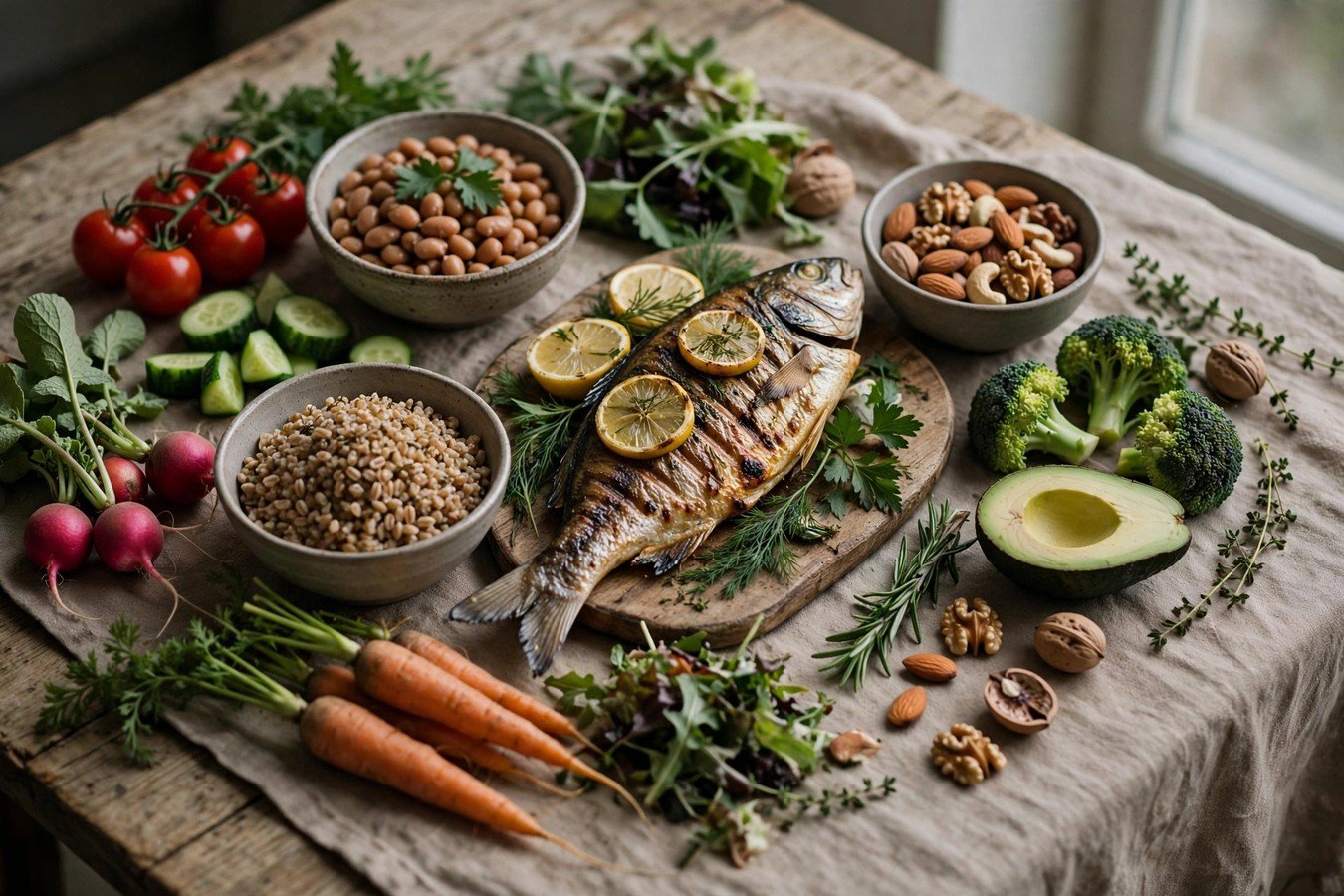
Eat the DASH way. DASH means plenty of vegetables, fruit, whole grains, beans, nuts, fish and low fat dairy, with little red meat, sweets and sugary drinks. The National Heart, Lung, and Blood Institute found that DASH can lower systolic pressure by several points within about two weeks, with more over time.
Cut salt steadily, not for one meal. The American Heart Association advises keeping sodium to no more than 2,300 mg a day, and moving toward 1,500 mg a day for most adults. Most salt comes from processed food, bread, cheese, sauces and restaurant meals, not from the salt shaker. Cut it in steps, so the food still tastes like food.
Move most days. The 150 minutes a week target can be 30 minutes of brisk walking on five days, plus strength work on two days. The American Heart Association notes that regular aerobic activity can lower systolic pressure by about 5 to 8 mmHg on average, and it builds over weeks, not hours.
Lose a little weight if you carry extra. Losing 5 to 10 percent of body weight, about 10 to 20 pounds for a 200 pound man, is the range where blood pressure, cholesterol and blood sugar usually improve together. A gradual loss of 1 to 2 pounds a week is the pace the CDC describes as sustainable. Crash diets do not hold the result.
Keep alcohol small, and quit smoking. Alcohol raises blood pressure in proportion to how much you drink, so cutting back is one of the fastest lasting steps. Smoking does not cause a lasting rise in the same direct way, but it damages blood vessels and raises the risk of heart disease and stroke, so quitting is still one of the most valuable steps a man with high blood pressure can take.
Sleep and stress, every day. Short sleep and chronic stress do not set blood pressure on their own, but they make every other change harder. A regular sleep time, a wind down hour without screens, and a daily walk outside help both.
What does not work, and what to avoid
Some shortcuts sound fast and are either useless or unsafe. Do not take an extra dose of blood pressure medicine to bring a reading down, and do not start, stop or change the dose of any medicine on the basis of an article. That decision belongs to your prescriber, and a sudden change can be dangerous.
Do not rely on a supplement, a detox tea, a garlic pill, a beetroot shot or a breathing gadget as a treatment. None of them replaces the food, activity and weight changes above, or medicine when it is needed. Ask your doctor first, because supplements can interact with blood pressure medicine.
Cold showers, holding your breath, pressing on a point on your wrist, and other internet tricks do not lower blood pressure in a reliable way, and some of them raise it briefly. A hot bath is not a treatment either. If a trick promises an instant drop to normal, it is promising something no safe method can deliver.
Do not skip the doctor because a home reading looked better after breathing practice. A lower reading after rest is useful information, not proof that the problem is gone. High blood pressure usually has no symptoms, so the only way to know it is under control is repeat readings over weeks, with your doctor involved.
When to get urgent care
Seek emergency care now if your reading is 180/120 mmHg or higher and you have chest pain, shortness of breath, back pain, numbness or weakness, change in vision, difficulty speaking, or severe headache. The American Heart Association describes this as a hypertensive crisis, and it needs emergency care, not a breathing exercise.
If your reading is 180/120 mmHg or higher and you have no symptoms, wait 5 minutes, rest quietly, and measure again. If the second reading is still that high, contact your doctor the same day. Do not take an extra dose of medicine unless your doctor has already told you to do that in this situation.
Seek urgent care for chest pain or pressure, pain spreading to your arm, jaw or back, sudden breathlessness, or sudden weakness or numbness on one side, whatever your blood pressure reading is. Those symptoms need emergency care on their own.
When to see a doctor first
See your doctor before starting a blood pressure plan if you have heart disease, diabetes or kidney disease; have had a heart attack or stroke; take medicine for blood pressure, cholesterol or diabetes; or have a family history of early heart disease. Your doctor can set a personal target, because the right number depends on your overall risk, and can set a retest date that fits you.
A 4-week starter plan
A way to start, not a prescription, built to be in full swing by the first retest window.
Week 1: Measure and breathe. Get a baseline by measuring at rest, twice a day, morning and evening, for a week. Write down the numbers with the date. Practise slow breathing for 5 to 10 minutes a day, and walk 30 minutes on five days.
Week 2: Cut salt and add DASH foods. Add vegetables at lunch and dinner and beans or lentils at one meal a day. Read labels and cut the saltiest item in your usual week. Keep walking, and add two short strength sessions.
Week 3: Check drink, smoke and sleep. Keep alcohol small or none on most days. If you smoke, set a quit date and ask your doctor about support. Sleep 7 to 8 hours where you can, with a regular bedtime.
Week 4: Lock the routine. By now the food swaps and the walking should feel ordinary. Weigh yourself once, note the trend, and book a doctor visit or retest for 4 to 12 weeks after you started, not next week. Bring your home readings to that visit.
Questions people ask
How can I lower my blood pressure in 5 minutes?
Sit with your back supported and both feet flat, rest for 5 minutes, do not talk, and breathe slowly at about 6 breaths a minute for 5 to 10 minutes. That can bring a tense reading down by a few points. It does not cure high blood pressure, and the effect fades.
Can breathing really lower blood pressure?
Yes, a little, and briefly. Slow breathing calms the stress response, and studies find small falls in systolic pressure during and just after the practice. It is a useful step before a reading, and a useful daily habit, but it is not a replacement for food, activity, weight changes or medicine when those are needed.
What is the fastest way to lower blood pressure at home?
Rest, measure correctly, breathe slowly, and go for a brisk walk. No home step lowers it to normal in minutes and keeps it there. The fastest lasting way is the combination in this article: less salt, a DASH pattern, daily walking, less alcohol, better sleep, and weight loss where it applies, over 4 to 12 weeks.
Should I take an extra blood pressure tablet if my reading is high?
No, not unless your doctor has already told you to do that in this exact situation. Do not start, stop or change the dose of blood pressure medicine on the basis of an article. If your reading is very high, follow the urgent care guidance above and contact your doctor the same day.
How long does it take to lower blood pressure for good?
Most men see the first real change in 2 to 4 weeks of steady food and activity changes, with more over 4 to 12 weeks. That is the subject of the Day 10 article in this series, which will cover the longer timeline in full.
Built from the American Heart Association, the National Heart, Lung, and Blood Institute, and the CDC. Where sources give a range, this guide shows the range. We did not test these methods or run trials for this guide. Last checked: 22 November 2026.
Related guides
- How to Lower LDL Cholesterol: What Actually Works
- How to Lower Your Cholesterol Naturally in 7 Steps
- How Long Does It Take to Lower Cholesterol?
- Omega-3 Benefits for Heart and Brain Health
- Best Exercises for Men Over 40
This article is general education, not medical advice. It does not diagnose or treat any condition. Talk to your doctor before you change your diet, your activity level or any medicine, and seek urgent care for the symptoms listed above.