
One thing I have observed in men over 40 is that many start thinking seriously about health only when small changes begin to show up. Energy feels lower. Recovery becomes slower. Sleep is not as deep. Belly fat becomes harder to control. Some men also become more concerned about heart health, memory, focus, and joint comfort.
This is where Omega 3 benefits often become a popular topic. Many men hear that omega-3 is good for the heart and brain, but they are not always clear about what it really does, which foods provide it, and whether supplements are necessary.
Omega-3 is not a magic solution. It is a healthy fat that supports important body functions. But like any nutrient, it works best when it is part of a better lifestyle, not when it is used to cover poor habits.
In this article, you will learn what omega-3 is, why it matters after 40, how it supports heart and brain health, which foods are best, when supplements may help, what mistakes to avoid, and how to build a realistic routine around it.

What Is Omega-3?
Omega-3 is a type of healthy fat that the body needs for normal function. It belongs to a group of fats called polyunsaturated fats. In simple words, these are fats that support the body instead of harming it when used in the right way.
The body needs omega-3 for many important functions, including heart health, brain function, cell health, eye health, and normal inflammatory response.
The important point is that your body does not make enough omega-3 on its own. That means you need to get it from food or, in some cases, supplements.
This is why omega-3 is often discussed in men’s health, especially for men over 40 who want better long-term wellness.
The Main Types of Omega-3
There are three main types of omega-3 that are commonly discussed.
EPA
EPA is mostly found in fatty fish and fish oil. It is often linked with heart support and healthy inflammatory balance.
DHA
DHA is also found in fatty fish and fish oil. It is especially important for the brain, eyes, and nervous system.
ALA
ALA is found in plant foods such as flax seeds, chia seeds, walnuts, and some plant oils. The body can convert a small amount of ALA into EPA and DHA, but this conversion is limited.
This is why fatty fish is usually considered a stronger omega-3 source than plant foods. Still, plant sources can be useful, especially for people who do not eat fish.
Why Omega-3 Matters More After 40
After 40, health becomes less forgiving. The habits that were easy to ignore in the 20s and 30s may start showing results.
Long working hours, sitting too much, late dinners, poor sleep, stress, weight gain, and low activity can slowly affect heart health, blood sugar, energy, and mental clarity.
This does not mean every man over 40 is unhealthy. It simply means the body needs better support and more consistent habits.
Omega-3 matters after 40 because it connects with several areas men often worry about:
- Heart health
- Brain function
- Mental focus
- Joint comfort
- Recovery
- Healthy aging
- Eye health
- General wellness
The real value of omega-3 is not that it fixes everything. Its value is that it supports systems that become more important as men age.
Omega 3 Benefits for Heart Health
Heart health is one of the biggest reasons men become interested in omega-3. This is understandable because heart-related concerns become more common with age, especially when lifestyle habits are not balanced.
Omega-3 may support heart health in several ways. It may help support healthy triglyceride levels, circulation, blood vessel function, and overall cardiovascular wellness.
However, it is important to stay realistic. Omega-3 should not be treated as a replacement for blood pressure control, cholesterol management, exercise, weight control, or prescribed medicine.
It is better to think of omega-3 as one supportive part of a heart-healthy lifestyle.
How Omega-3 Supports the Heart
Omega-3 fats are part of the structure of cell membranes. They also play a role in how the body manages inflammation and normal blood vessel function.
For men over 40, this matters because heart health is not only about one thing. It is affected by diet, activity, stress, sleep, blood pressure, blood sugar, body weight, smoking, and family history.
A man who eats fatty fish twice a week, walks daily, sleeps well, manages stress, and keeps weight under control is building a stronger foundation than someone who only takes a supplement and ignores everything else.
Omega-3 and Triglycerides
Triglycerides are a type of fat found in the blood. High levels can be linked with poor diet, excess weight, high sugar intake, low activity, and metabolic health problems.
Omega-3 is often discussed because it may help support healthier triglyceride levels, especially when combined with better eating habits and medical guidance where needed.
But this does not mean every man should self-treat high triglycerides with fish oil. If your blood test shows high triglycerides, you should speak with a qualified doctor and understand the full picture.

Omega 3 Benefits for Brain Health
The brain contains a large amount of fat, and DHA is one of the important omega-3 fats found in brain tissue. This is one reason omega-3 is often connected with memory, focus, and healthy brain aging.
Many men over 40 notice that mental energy is not only about sleep. It is also affected by stress, diet, blood sugar, screen time, work pressure, and physical activity.
Omega-3 may support brain health, but it cannot replace a healthy mental routine.
Brain Function and Mental Clarity
Good brain function depends on steady nutrition, proper sleep, hydration, movement, and stress management. Omega-3 supports the brain as part of this larger system.
Men often look for quick fixes when focus becomes weak. They may drink more tea or coffee, use energy drinks, or push through fatigue. But if the real problem is poor sleep, high stress, or poor diet, the brain will still struggle.
Omega-3 can be a useful nutrient, but the full routine matters more.
Omega-3 and Healthy Aging
Brain health becomes more important with age because memory, focus, decision-making, and mood affect daily quality of life.
A man who wants healthy aging after 40 should not only think about muscles and weight. He should also think about mental sharpness, emotional control, and long-term brain support.
Omega-3-rich foods can be part of that plan.
Omega-3 and Joint Comfort
Joint stiffness is common in many men over 40. It may happen because of aging, extra weight, low activity, old injuries, poor posture, or repetitive work.
Omega-3 is often used by people who want to support joint comfort and mobility. This is because omega-3 plays a role in the body’s normal inflammatory response.
But again, omega-3 is not a complete solution for joint pain. If a man has ongoing pain, swelling, injury, or difficulty walking, he should get proper medical advice.
Practical Joint Support After 40
For joint comfort, omega-3 works best with a practical routine:
- Maintain a healthy weight
- Walk regularly
- Do strength training
- Stretch gently
- Avoid long sitting
- Eat enough protein
- Sleep properly
- Manage inflammation through better food choices
A supplement alone cannot protect joints if the body is overloaded by inactivity, excess weight, and poor recovery.
Omega-3 and Recovery After Exercise
Recovery becomes more important after 40. Many men can still train hard, walk daily, lift weights, and stay strong, but the body may need more attention.
Omega-3 may support recovery by helping the body maintain a healthier internal balance. This can be useful for men who exercise regularly or want to stay active.
Still, recovery depends on many things.
If you are sleeping poorly, eating low protein, drinking little water, and training without rest, omega-3 will not solve the problem.
Recovery Habits That Matter
For better recovery after 40, focus on:
- Protein with meals
- Proper hydration
- Strength training with rest days
- Gentle walking
- Stretching and mobility
- Good sleep timing
- Lower sugar intake
- Stress control
For a practical movement routine, you can also read this guide on walking after meals to lower sugar.

Omega-3 and Eye Health
DHA is also important for eye health. The eyes, like the brain, need healthy fats for normal function.
Men who spend long hours on screens may notice eye strain, dryness, or tired eyes. Omega-3 may support eye comfort in some people, but screen habits, hydration, sleep, and eye checkups also matter.
A man who works on a computer all day should not expect omega-3 to fix poor screen habits. He should also take breaks, blink more often, adjust screen brightness, and get regular eye exams when needed.
Best Food Sources of Omega-3
The best way to get omega-3 is through food whenever possible. Whole foods provide more than one nutrient. They also give protein, minerals, antioxidants, and other health-supporting compounds.
Food should come before supplements whenever possible.
Fatty Fish
Fatty fish are among the best sources of EPA and DHA.
Good options include:
- Salmon
- Sardines
- Mackerel
- Trout
- Herring
- Tuna
For many men, eating fatty fish one to two times per week can be a realistic goal. It does not need to be complicated. Grilled fish, fish curry, baked fish, or sardines with a balanced meal can all work.
Plant-Based Sources
Plant foods provide ALA, a plant form of omega-3.
Good plant sources include:
- Chia seeds
- Flax seeds
- Walnuts
- Soybeans
- Canola oil
- Flaxseed oil
These foods are useful, but men should understand that plant omega-3 is not the same as fish-based EPA and DHA. The body converts only a small amount of ALA into EPA and DHA.
Still, adding chia seeds, flax seeds, and walnuts can improve overall diet quality.
Simple Food Ideas
Here are simple ways to add omega-3 foods:
- Add ground flaxseed to yogurt
- Sprinkle chia seeds into oats
- Eat walnuts as a snack
- Choose fish instead of fried fast food once or twice weekly
- Add sardines to a salad
- Use grilled fish with vegetables and rice
- Add seeds to smoothies
Small habits are easier to maintain than extreme diet changes.

Fish Oil Supplements: Are They Necessary?
Fish oil supplements are popular because they provide EPA and DHA in capsule or liquid form. They may be useful for people who do not eat enough fish or have specific needs.
But not every man needs fish oil.
A supplement should be considered after looking at your diet, health condition, medication use, and personal goals.
Who May Consider Omega-3 Supplements?
Omega-3 supplements may be considered by men who:
- Rarely eat fish
- Have low intake of healthy fats
- Do not get enough omega-3 from food
- Have specific nutrition goals
- Are advised by a doctor
- Prefer a structured supplement routine
But supplements should be chosen carefully. Quality can vary, and more is not always better.
How to Choose a Better Omega-3 Supplement
When choosing fish oil or omega-3 supplements, look for:
- Clear EPA and DHA amounts
- Good freshness standards
- No strong rancid smell
- Third-party testing where possible
- Simple ingredient list
- Trusted manufacturing quality
- Suitable dose for your needs
Avoid products that promise unrealistic results such as instant heart protection, fast brain improvement, or complete inflammation control.
Health does not work that way.
Omega-3 and Inflammation: What Men Should Understand
Inflammation is a word many people use, but not everyone understands it.
In simple language, inflammation is part of the body’s defense and repair system. Short-term inflammation can help the body heal. But long-term unhealthy inflammation may be linked with poor diet, excess weight, stress, lack of sleep, smoking, and inactivity.
Omega-3 supports the body’s normal inflammatory balance, but it cannot cancel a poor lifestyle.
Habits That May Worsen Inflammation
Some daily habits can make the body feel more stressed internally:
- Eating too much processed food
- High sugar intake
- Poor sleep
- Long sitting
- Smoking
- Heavy stress
- Excess belly fat
- Lack of exercise
- Too much fried food
For men over 40, these habits often build slowly. The problem does not appear in one day. It comes from years of repeated patterns.
Better Habits for Internal Balance
A better routine includes:
- More whole foods
- Fatty fish or healthy fats
- Regular walking
- Strength training
- Better sleep
- Stress control
- More fiber
- Less sugar
- Less processed food
If sleep is also affecting your energy and blood sugar, this guide on how sleep affects diabetes and sugar levels may also help.
Omega-3 and Men Over 40: Where It Fits in Real Life
For men over 40, omega-3 should be viewed as part of a complete health plan.
Most men are not struggling because of one missing nutrient only. They are struggling because of a mix of long work hours, poor sleep, low activity, late meals, stress, belly fat, and inconsistent routines.
Omega-3 can support health, but the bigger change comes from daily discipline.
Heart, Brain, and Energy Are Connected
Heart health, brain function, and energy are not separate. They influence each other.
Poor sleep can affect focus and appetite. Low activity can affect weight and blood sugar. High stress can affect blood pressure and cravings. Poor diet can affect both heart and brain health.
Omega-3 supports the body, but it works best when these basics are also improving.
Why Men Should Avoid the Shortcut Mindset
Many men want the quickest answer. They ask, “Which capsule should I take?” before asking, “What habit is damaging my health every day?”
This shortcut mindset is common, but it is not helpful.
The better question is:
“What small habit can I repeat daily that will improve my health over the next 6 months?”
That is where real progress starts.

Common Mistakes People Make
Mistake 1: Depending Only on Supplements
Some men take fish oil daily but continue eating processed food, sleeping late, and avoiding exercise.
This matters because supplements cannot replace the basics. Omega-3 may support health, but it cannot repair an unhealthy routine by itself.
The correction is simple: use supplements only as support, not as the main plan.
Mistake 2: Taking Too Much Omega-3
More is not always better. Taking high doses without guidance may increase the chance of side effects or interactions, especially if someone takes blood-thinning medicine or has a medical condition.
The correction is to follow the label, avoid combining multiple omega-3 products, and speak with a doctor if you are unsure.
Mistake 3: Ignoring Food Sources
Some men buy supplements but never improve their meals. This is a missed opportunity because omega-3-rich foods also provide other nutrients.
The correction is to add fatty fish, chia seeds, flax seeds, or walnuts into your weekly routine.
Mistake 4: Buying Cheap Low-Quality Supplements
Low-quality supplements may have poor freshness, unclear labeling, or weak quality control.
This matters because fish oil can become rancid if quality is poor.
The correction is to choose a product with clear EPA and DHA details, freshness standards, and third-party testing where possible.
Mistake 5: Expecting Instant Results
Omega-3 is not a painkiller, stimulant, or quick energy pill. It supports health over time.
The correction is to think in weeks and months, not days. Long-term consistency matters more than quick excitement.
Mistake 6: Ignoring Medical Symptoms
Some men try supplements for chest discomfort, severe weakness, dizziness, or ongoing pain instead of getting checked.
This is risky. Supplements should never delay medical care.
The correction is to seek medical advice for serious, sudden, or ongoing symptoms.
Mistake 7: Following Social Media Trends Blindly
Supplement trends often sound convincing. One person may say fish oil changed everything, while another may say nobody needs it.
The truth depends on diet, health condition, lifestyle, and personal needs.
The correction is to avoid extremes and make decisions based on your own health situation.
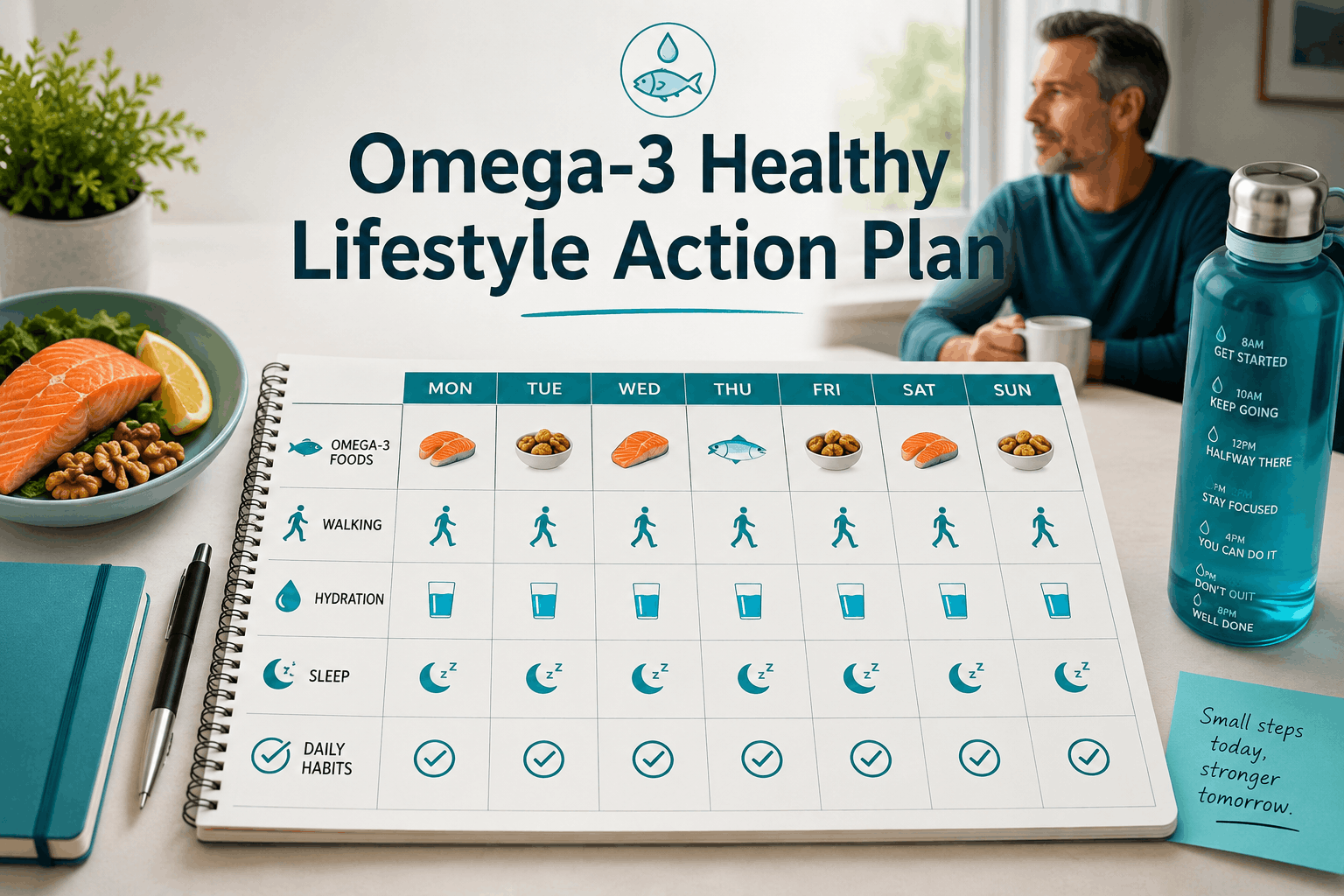
Simple Action Plan to Start
A realistic plan works better than an extreme plan. Men over 40 usually do better with small steps that fit real life.
First 3 Days: Review Your Current Diet
For the first 3 days, simply observe your food.
Ask yourself:
- How often do I eat fish?
- Do I eat nuts or seeds?
- Do I eat mostly processed foods?
- Do I skip meals?
- Do I rely on fried food?
- Do I drink enough water?
Do not judge yourself. Just understand your pattern.
Week 1: Add One Omega-3 Food
In week 1, add one omega-3 food to your routine.
Choose one:
- Fish once this week
- Walnuts as a snack
- Chia seeds in yogurt
- Ground flaxseed in oats
- Sardines with salad
Keep it simple.
Week 2: Improve Meal Quality
In week 2, focus on your plate.
Try to include:
- Protein
- Vegetables
- Healthy fats
- Fiber
- Water
This improves overall nutrition and makes omega-3 part of a better eating pattern.
Week 3: Add Movement
In week 3, add walking or light exercise.
Start with 10 to 20 minutes most days. You do not need a perfect gym routine. A consistent walk is better than an extreme plan you cannot maintain.
Week 4: Review Supplements Carefully
In week 4, decide whether you need a supplement.
Ask:
- Am I eating fish regularly?
- Do I tolerate fish?
- Do I take medication?
- Do I have a medical condition?
- Do I need professional advice?
- Is my supplement quality good?
If you choose a supplement, use it responsibly.
After 4 Weeks: Review Your Progress
After 4 weeks, review your energy, meals, sleep, movement, and consistency.
Do not only ask, “Did omega-3 work?”
Ask better questions:
- Am I eating better?
- Am I moving more?
- Am I sleeping better?
- Am I more consistent?
- Am I depending less on quick fixes?
That is the real progress.
Safety Advice Before Using Omega-3 Supplements
Omega-3 from food is generally a safe part of a balanced diet for most people. Supplements need more care.
Speak with a qualified doctor before starting omega-3 supplements if:
- You take blood-thinning medication
- You have a bleeding disorder
- You are scheduled for surgery
- You have heart disease
- You have uncontrolled blood pressure
- You have diabetes and take regular medication
- You have a fish or seafood allergy
- You take several supplements already
- You are unsure about the right dose
Also seek medical help if you have chest pain, severe weakness, dizziness, shortness of breath, sudden confusion, severe headache, or any serious ongoing symptom.
Do not stop or change prescribed medication because of omega-3 supplements. Supplements are not a replacement for medical treatment.
FAQs
What are Omega 3 benefits for men over 40?
Omega 3 benefits for men over 40 may include support for heart health, brain function, joint comfort, recovery, and healthy aging. The best results come when omega-3 is combined with better food, exercise, sleep, and stress control.
Is omega-3 good for heart health?
Omega-3 may support heart health as part of a healthy lifestyle. It may help support triglyceride balance and overall cardiovascular wellness, but it should not replace medical care, exercise, weight control, or prescribed medicine.
Can omega-3 improve brain function?
Omega-3, especially DHA, is important for brain health. It may support memory, focus, and healthy brain aging, but sleep, stress control, hydration, and blood sugar balance also matter.
What foods are highest in omega-3?
Fatty fish such as salmon, sardines, mackerel, trout, and herring are rich sources of EPA and DHA. Plant sources include chia seeds, flax seeds, walnuts, and some plant oils.
Should I take fish oil if I do not eat fish?
If you rarely eat fish, a fish oil or algae-based omega-3 supplement may be considered. However, the decision should depend on your diet, health condition, medication use, and professional guidance if needed.
Can omega-3 help joint pain?
Omega-3 may support joint comfort and normal inflammatory balance. However, ongoing joint pain, swelling, or movement difficulty should be checked by a qualified doctor.
Is more omega-3 always better?
No. Taking too much is not better and may increase the chance of side effects or interactions. A balanced intake is safer than high-dose self-supplementation.
Can omega-3 replace a healthy lifestyle?
No. Omega-3 can support wellness, but it cannot replace healthy eating, regular exercise, proper sleep, stress management, and medical care when needed.
Conclusion
One practical observation I have seen again and again is that men over 40 often search for one powerful solution, but real health usually improves through small habits repeated daily.
Omega-3 is valuable because it supports important areas such as heart health, brain function, joint comfort, recovery, and healthy aging. But the real power of Omega 3 benefits comes when this nutrient is part of a complete lifestyle.
Start with food first. Add fatty fish if you can. Use seeds and walnuts if they fit your routine. Consider supplements only when needed and choose them carefully. Most importantly, keep working on sleep, movement, stress, weight control, and balanced meals.
You do not need a perfect routine to improve your health after 40. You need a realistic routine that you can repeat.
Small steps, done consistently, can create strong long-term results.
Helpful Resources
NIH Office of Dietary Supplements — Omega-3 Fatty Acids Consumer Fact Sheet
MedlinePlus — Omega-3 Fats: Good for Your Heart
FDA — Information for Consumers on Using Dietary Supplements
CDC — Adult Physical Activity Guidelines
PubMed Central — Effects of Omega-3 Polyunsaturated Fatty Acids on Brain Functions