
For many men over 40, the first sign of weight gain is not a dramatic change on the scale. It may be a tighter belt, a shirt that feels uncomfortable after dinner, less energy in the afternoon, or a habit of sitting for most of the workday. These small changes can make the waist gradually larger even when daily life feels familiar.
The most useful answer to “how to reduce stomach fat after 40” is not a special tea, a high-repetition abdominal workout, or a strict diet that lasts for one week. It is a daily system that reduces excess energy, makes movement easier to repeat, protects useful muscle, and gives sleep and medical factors the attention they deserve.
This guide is designed for busy men who work, travel, manage family responsibilities, and still want to eat normal meals. It focuses on practical decisions at the times when plans commonly fail: during long meetings, between work and dinner, at social meals, during travel, and late at night.
How to Reduce Stomach Fat After 40: Daily Action Plan
A realistic plan has six parts:
-
Measure a baseline: Record waist size, body weight, sleep, movement, and one or two simple strength exercises.
-
Build meals before hunger becomes intense: Use protein, vegetables or fruit, high-fibre foods, and portions you can repeat.
-
Reduce liquid calories: Start with sweetened tea, soft drinks, juices, flavoured coffees, or energy drinks if they are regular habits.
-
Break up sitting: Add short walks and standing periods around work, meals, phone calls, and commuting.
-
Train for strength: Use two manageable full-body sessions each week, adapting the exercises to your fitness and health.
-
Protect recovery: Aim for suitable sleep, manage stress with a specific action, and ask a clinician about symptoms or medicines that affect weight.
Healthy weight management works through a pattern, not one isolated action.The CDC explains that healthy weight loss includes eating patterns, physical activity, sleep, and stress management
What “Stomach Fat” Really Means
Stomach fat usually refers to both subcutaneous fat beneath the skin and visceral fat stored deeper around the abdominal organs. You cannot accurately judge visceral fat by looking in a mirror. Waist size can be a useful tracking measure, but it is not a diagnosis by itself.
The body also cannot be instructed to remove fat from one selected area. Crunches, planks, and leg raises can strengthen the trunk, but they do not selectively burn fat from the stomach. Overall fat loss is influenced by average food intake, activity, sleep, health conditions, medicines, stress, genetics, and time.
For a broader explanation of why abdominal fat can increase after 40, link readers to Why Belly Fat Gets Harder to Lose After 40. This article should remain focused on daily implementation rather than repeating a full causes-and-risks explanation.
Step 1: Measure Your Starting Point Without Guessing

Before changing everything, record a simple baseline. This helps you identify progress that the scale may not show and prevents random changes based on one difficult day.
How to measure your waist
Use a flexible tape and measure under similar conditions once a week. Stand relaxed, place the tape around your middle just above the hip bones, breathe out normally, and record the result without pulling the tape tight.
The National Heart, Lung, and Blood Institute describes a similar waist-measurement method.
Waist-risk thresholds are not identical for every population. Ethnicity, sex, medical history, and the guideline used by a clinician can affect interpretation. Men of South Asian background may be assessed with lower risk cut-offs than some other groups. Use the measurement as a reason to discuss health, not as a universal internet diagnosis.
Track more than appearance
Record body weight once or twice a week under similar conditions. Also note:
-
Belt fit and how clothing feels
-
Walking time or distance that feels comfortable
-
One lower-body and one upper-body strength movement
-
Sleep duration and quality
-
Afternoon energy and hunger
-
Consistency with planned meals and movement
Review trends every four weeks
Daily weight can change because of salt, hydration, carbohydrate intake, bowel movements, and hard exercise. A four-week trend is more useful than reacting to a single number. The goal is to learn what is happening, not to punish yourself for normal fluctuations.
Step 2: Create a Daily Routine That Survives Work

The best routine is not the most impressive one. It is the one that still works on a day with meetings, traffic, family duties, bad weather, or low energy.
Morning: start with a normal first meal
You do not have to eat breakfast if you genuinely prefer another schedule. However, the first meal should not leave you very hungry and unprepared later. A practical option can include eggs, yogurt, beans, fish, chicken, oats, fruit, or another combination that provides protein and fibre.
Avoid turning morning drinks into a hidden source of added sugar. If tea or coffee is part of your routine, reduce sugar gradually or use an unsweetened option if suitable for you.
During work: interrupt long sitting
Place a short movement appointment after a meeting, during a phone call, before lunch, or when you refill water. Ten minutes of walking is enough to begin. Stand during part of a phone call, use the stairs when comfortable, or walk to speak with a colleague when the task does not require a message.
These actions are not a replacement for exercise. They are a way to make daily movement less dependent on finding a perfect one-hour training window.
Between work and dinner: plan the difficult transition
Many men eat reasonably during the day and then overeat after returning home tired. Prepare a suitable snack before the difficult hour arrives. Fruit with plain yogurt, a measured portion of nuts, a boiled egg, or another appropriate option may help you reach dinner without eating directly from a packet.
Add a short walk, shower, change of clothes, or conversation before entering the kitchen. This creates a boundary between work stress and eating rather than relying on willpower when energy is low.
Evening: finish with recovery in mind
Eat dinner at a table when possible, slow down for the first few minutes, and serve a portion before returning for more. A later meal is not automatically harmful, but eating quickly while exhausted can make portions harder to notice.
After dinner, use a planned walk, light household activity, or a relaxing routine. Avoid turning a missed workout or a large meal into a reason to abandon the entire week.
Step 3: Build Meals for Fullness and Repeatability

The food plan should support a modest calorie reduction without making you constantly hungry. You do not need to remove every carbohydrate or follow a rigid fasting schedule to reduce waist size.
use a simple plate structure
At most main meals, include:
-
A clear protein source such as eggs, fish, chicken, lean meat, beans, lentils, or unsweetened yogurt
-
A generous serving of vegetables or salad, with fruit added where suitable
-
A sensible portion of rice, roti, potatoes, oats, whole grains, or another preferred starch
-
A modest amount of oil, nuts, seeds, avocado, or another fat source
The correct portion depends on body size, activity, culture, health, and personal preference. People with kidney disease, diabetes, or another condition that affects diet should ask a qualified professional for individual advice.
For more detailed portion guidance, use the internal link How to Lose Weight With Portion Control. Keep this article focused on the daily routine around meals rather than repeating a complete portion-control guide.
Reduce liquid calories first
Sweetened tea, soft drinks, juices, flavoured coffees, and energy drinks can increase daily intake quickly. Choose one regular drink and reduce its sugar, portion, or frequency. Replace it with water or an unsweetened drink if that suits your health needs.
Do not assume that fruit juice has the same fullness as whole fruit. A piece of fruit usually takes longer to eat and provides more fibre than a drink made from fruit.
Keep protein and fibre visible
A meal is easier to manage when its protein and high-fibre foods are obvious. Keep eggs, yogurt, beans, lentils, fruit, vegetables, and other suitable staples available. Put healthier choices where they are easy to see and keep trigger foods less visible.
Protein can support fullness and muscle maintenance during weight loss, but a very high-protein diet is not automatically better. Individual needs vary, and people with kidney disease should obtain medical advice before making major protein changes.
Make social meals part of the plan
You do not need to avoid family meals or every restaurant. Eat normally earlier in the day, avoid arriving extremely hungry, choose a reasonable portion, and stop when comfortably satisfied. One social meal does not determine the result; the average pattern across several weeks matters more.
Step 4: Add Movement Without Waiting for a Perfect Schedule

Movement supports fitness, mood, daily energy use, and long-term health. The most suitable activity is one you can perform safely and repeat.
Use short walking appointments
Try a ten- to twenty-minute walk after a meal, before the evening shower, during a work break, or while speaking on the phone. If you are currently inactive, start with a duration that feels manageable and add time gradually.
Walking after meals can be a useful routine, but it does not selectively remove stomach fat. Food intake, strength work, sleep, and total weekly activity still matter.
Add two strength sessions each week
Use a manageable version of these movement patterns:
-
Sit-to-stand or squat
-
Hip hinge or supported hip movement
-
Wall push-up, machine press, or another push
-
Band row or another pull
-
Carry, brace, or controlled core exercise
Body weight, resistance bands, machines, and light dumbbells can all be reasonable starting tools. Begin at a level that allows controlled technique and recovery. Increase repetitions, sets, or resistance gradually instead of trying to prove fitness in the first session.
Strength training is not a punishment for the stomach. It helps maintain useful physical capacity while body weight changes.
Build toward the adult activity baseline
The CDC recommends at least 150 minutes of moderate aerobic activity each week and muscle-strengthening activity on at least two days. You can divide activity into shorter sessions. A slower starting point may be appropriate if you have pain, disability, heart disease, diabetes, or another condition.
Step 5: Protect Sleep and Manage Stress With Specific Actions

Sleep affects appetite, mood, recovery, and decision-making. The CDC states that adults aged 18 to 60 generally need at least seven hours of sleep. Try to keep your waking time fairly consistent, reduce screens close to bedtime, and keep the bedroom quiet, dark, and comfortable.
If loud snoring, gasping, breathing pauses, morning headaches, or heavy daytime sleepiness continue, speak with a healthcare professional.
The National Heart, Lung, and Blood Institute lists these as symptoms that may occur with sleep apnea.
Stress management should be concrete. Choose one action that can be used on a difficult day:
-
Walk around the block
-
Take slow breaths for two minutes
-
Write tomorrow’s first task
-
Pray or practise a quiet reflection
-
Speak with someone you trust
-
Prepare a planned snack or meal before hunger becomes intense
The purpose is not to remove all stress. It is to create a pause between stress and automatic eating.
Step 6: Know When Medicines or Health Conditions Matter
A larger waist can occur alongside high blood pressure, blood-sugar problems, cholesterol changes, sleep-related breathing problems, or other health concerns. These conditions may not produce clear early symptoms, so a routine health review can be more useful than guessing from appearance.
Some medicines and medical conditions can affect appetite, fluid retention, energy, or body weight. Do not stop or change prescribed treatment because of an online article. Ask the prescribing clinician whether your symptoms, weight change, or exercise plan require adjustment.
Hormones may be part of an individual medical assessment, but a larger waist alone does not prove low testosterone. Persistent low desire, erectile difficulty, marked fatigue, reduced strength, or mood changes deserve a proper clinical discussion rather than self-treatment with “boosters.”
The same caution applies to fat-burning supplements.The NIH Office of Dietary Supplements explains that evidence for many weight-loss supplements is limited and that some products may have safety concerns.
A Four-Week Implementation Plan
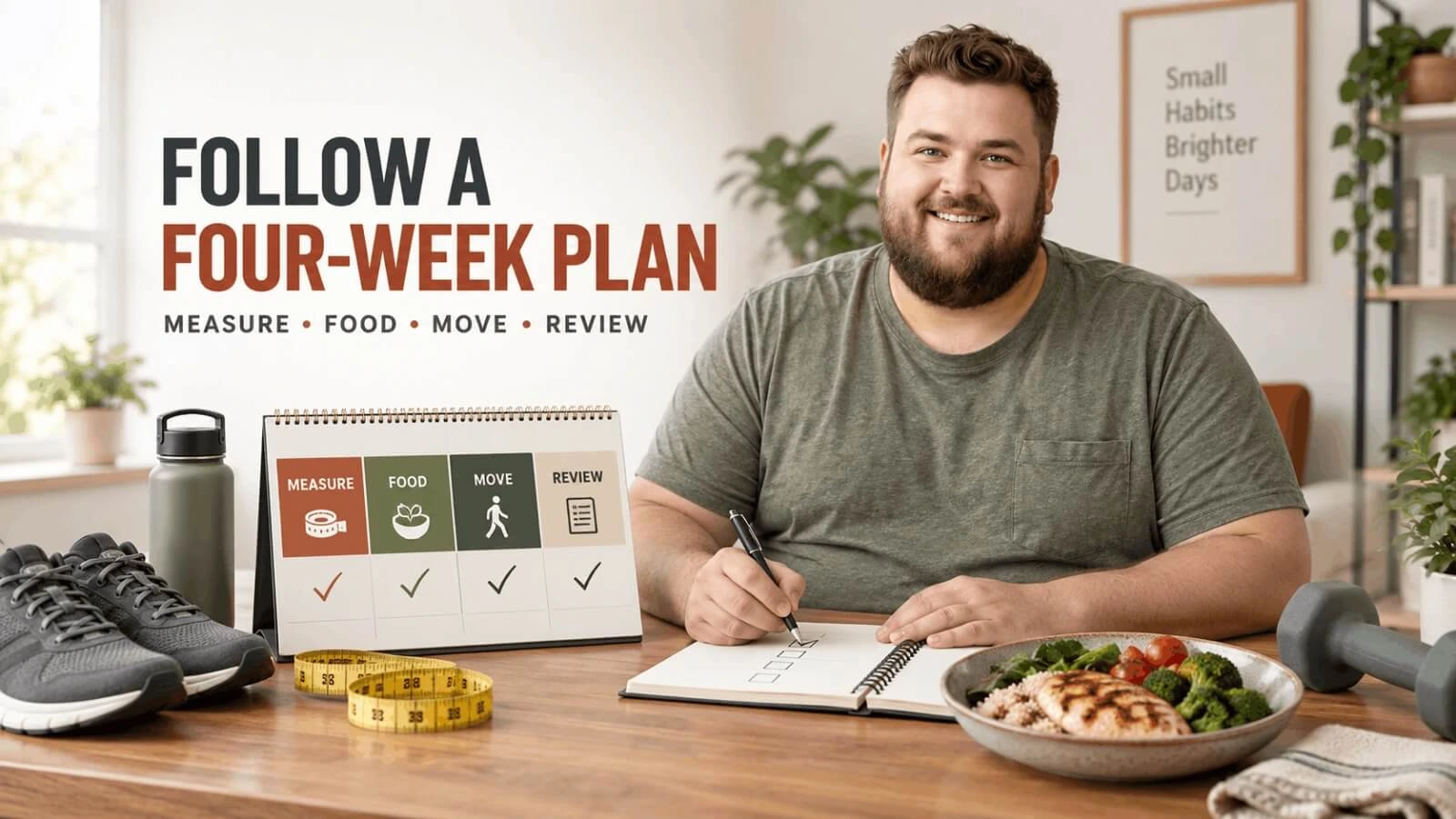
Use one main focus each week instead of changing every habit at once.
Week 1: Measure and observe
Measure your waist, record body weight, and note your normal meals, drinks, sleep, sitting time, steps, and exercise. Identify the two moments most likely to lead to overeating. Do not start with severe restriction.
Week 2: Repair one food pattern
Choose one regular source of excess energy, such as a sweet drink, oversized dinner portion, or desk snack. Change that one pattern while keeping meals satisfying. Add a planned snack for the time of day when you usually arrive home very hungry.
Week 3: Schedule movement
Add short walks on several days and complete two manageable strength sessions. Use the easiest time to protect: after lunch, after dinner, before a shower, or during a work break. If pain or unusual symptoms appear, reduce the effort and seek suitable advice.
Week 4: Review and adjust one lever
Compare waist, belt fit, sleep, energy, strength, and consistency with your starting notes. If there is no change, review portions, drinks, weekend meals, activity, sleep, and medicines before cutting more food. Adjust one factor only.
If this approach produces no progress despite honest consistency, or if symptoms are present, seek professional assessment rather than moving to an extreme diet.
What to Do During Common Difficult Situations
Office meetings and long sitting
Keep water nearby, stand during appropriate calls, take a short walk before or after lunch, and avoid eating directly from a large packet at your desk. A brief movement break is useful even when a full workout is not possible.
Family dinners
Serve a normal portion, include a protein source and vegetables, eat slowly at the start, and avoid treating one large meal as a reason to continue overeating for the rest of the day.
Travel days
Carry a suitable protein- or fibre-rich snack, drink water, and avoid arriving at the next meal extremely hungry. Walk safely at the airport, hotel, or destination when practical. Travel may require a maintenance routine rather than a fat-loss routine, and that is still a useful result.
A missed workout
Do not wait for the following Monday. Return to the next planned walk or meal. Consistency is measured across weeks, not by perfect completion of every session.
Safety Before Starting a Weight-Loss Routine
Speak with a qualified doctor before making major diet or exercise changes if you have diabetes, heart or kidney disease, uncontrolled blood pressure, significant joint problems, a history of an eating disorder, or regular prescription medicines. Ask whether your plan should be adjusted for your condition.
Stop exercise and seek urgent care for chest pressure, fainting, severe breathlessness, sudden weakness, or a new severe headache. Arrange a prompt medical review for severe or sudden abdominal pain, repeated vomiting, black or bloody stool, persistent abdominal swelling, or unexplained rapid weight change.
This article cannot diagnose the cause of a larger waist or prescribe treatment.
Frequently Asked Questions
Can men reduce stomach fat without joining a gym?
Yes. Walking, home-based strength exercises, sensible portions, and better sleep can support fat loss. A gym is a useful option, not a requirement.
What is the best daily habit for stomach fat after 40?
The best habit is the one you can repeat. For many men, a planned walk, fewer sugary drinks, a protein-and-fibre meal structure, or a consistent waking time is a practical place to start.
Does warm water reduce stomach fat?
Warm water can be a pleasant way to drink more fluids, but water temperature does not remove abdominal fat. Fat loss depends on the overall pattern of food intake, movement, sleep, health, and time.
Should men over 40 skip dinner to lose stomach fat?
Not necessarily. Skipping dinner may help some people manage total intake but can cause others to overeat later. A balanced, planned dinner is often easier to maintain.
How long does it take to reduce stomach fat after 40?
The timeline varies with starting size, food intake, activity, sleep, medicines, and consistency. Review progress over several weeks rather than expecting a dramatic change in a few days.
Can stomach fat be a sign of diabetes?
A larger waist can be associated with metabolic risk, but it cannot diagnose diabetes. Blood testing and a clinical review are needed, especially if unusual thirst, frequent urination, or persistent fatigue occurs.
Do stomach exercises remove stomach fat?
They can strengthen abdominal muscles and improve trunk control, but they do not selectively burn fat from the stomach. Combine core work with total-body activity and a suitable eating pattern.
How often should I measure my waist?
Once a week under similar conditions is enough for most people. Use the same tape position and posture, and review the trend over several weeks.
Final Thoughts
The most sustainable way to reduce stomach fat after 40 is to repair the ordinary moments that shape the day: the sweet drink at work, the long sitting period, the unplanned snack before dinner, the oversized social meal, and the late-night screen routine.
Start with one waist measurement and one daily habit that still works on a busy day. Add short walks, two manageable strength sessions, satisfying meals, and better recovery. Review the pattern after four weeks and change one lever at a time.
You do not need perfection to improve your waist and wider health. You need a practical routine that you can continue and professional advice when symptoms, medicines, or existing conditions make the situation more complex.
Helpful Resources
- Steps for Losing Weight — Centers for Disease Control and Prevention
- Physical Activity and Your Weight and Health — Centers for Disease Control and Prevention
- About Sleep — Centers for Disease Control and Prevention
- Aim for a Healthy Weight — National Heart, Lung, and Blood Institute
- Sleep Apnea Symptoms — National Heart, Lung, and Blood Institute
- Dietary Supplements for Weight Loss — NIH Office of Dietary Supplements