
sexual health can become more noticeable. While some changes are a normal part of aging, persistent symptoms may sometimes be linked to low testosterone.
Testosterone is an important hormone that supports muscle mass, bone health, red blood cell production, sexual function, and overall well-being. Testosterone levels naturally change with age, but lifestyle factors, certain medical conditions, medications, obesity, poor sleep, and chronic stress can also affect hormone levels.
The good news is that many habits that support healthy testosterone levels also improve overall health. Regular exercise, adequate sleep, a balanced diet, stress management, and maintaining a healthy weight can all play an important role.
Low Testosterone: Signs, Causes, and Natural Ways to Support Healthy Levels
Testosterone is the primary male hormone regulated by the hypothalamic-pituitary-gonadal (HPG) axis, playing a critical role in muscle strength, bone density, energy production, and cognitive focus. While natural biological functions depend on healthy hormone output, modern lifestyle stressors and aging often trigger a decline. Experiencing persistent fatigue, loss of lean mass, or mood shifts are common warning signs of hormonal imbalance. Identifying the root causes behind this decline allows men to implement effective, natural ways—such as targeted resistance training, optimized sleep, and nutrient-dense nutrition—to restore hormonal baseline and vitality.
What Causes Testosterone to Decline With Age?
Testosterone levels can gradually decrease as men age. However, the rate of change varies from person to person. Age is only one factor that can influence testosterone levels.
Several lifestyle and health-related factors may also contribute to lower testosterone.
1. Poor Sleep
Sleep plays an important role in hormone regulation. Regularly getting too little sleep or experiencing disrupted sleep may affect testosterone production.
Men who frequently have poor-quality sleep may also experience lower energy, reduced concentration, and difficulty recovering from exercise.
Aim for around 7 to 9 hours of quality sleep each night and maintain a consistent sleep schedule whenever possible.
2. Excess Body Fat
Having excess body fat, particularly around the abdomen, is associated with lower testosterone levels in men.
Fat tissue can influence hormone metabolism, and obesity is also associated with several health conditions that may affect testosterone production.
If you are overweight, gradual and sustainable weight loss can support better metabolic health and may help improve testosterone levels.
3. Chronic Stress
Long-term stress can affect sleep, appetite, physical activity, and several hormonal systems.
Stress itself does not mean that a man has low testosterone, but persistent stress combined with poor sleep and unhealthy habits may negatively affect overall hormonal health.
Regular physical activity, relaxation techniques, outdoor walks, social connection, and healthy boundaries can help manage everyday stress.
4. Lack of Physical Activity
A sedentary lifestyle can contribute to weight gain, reduced muscle mass, poor metabolic health, and other problems that may be associated with lower testosterone.
Resistance training and regular physical activity are useful for maintaining muscle, strength, cardiovascular health, and a healthy body composition.
10 Possible Signs of Low Testosterone
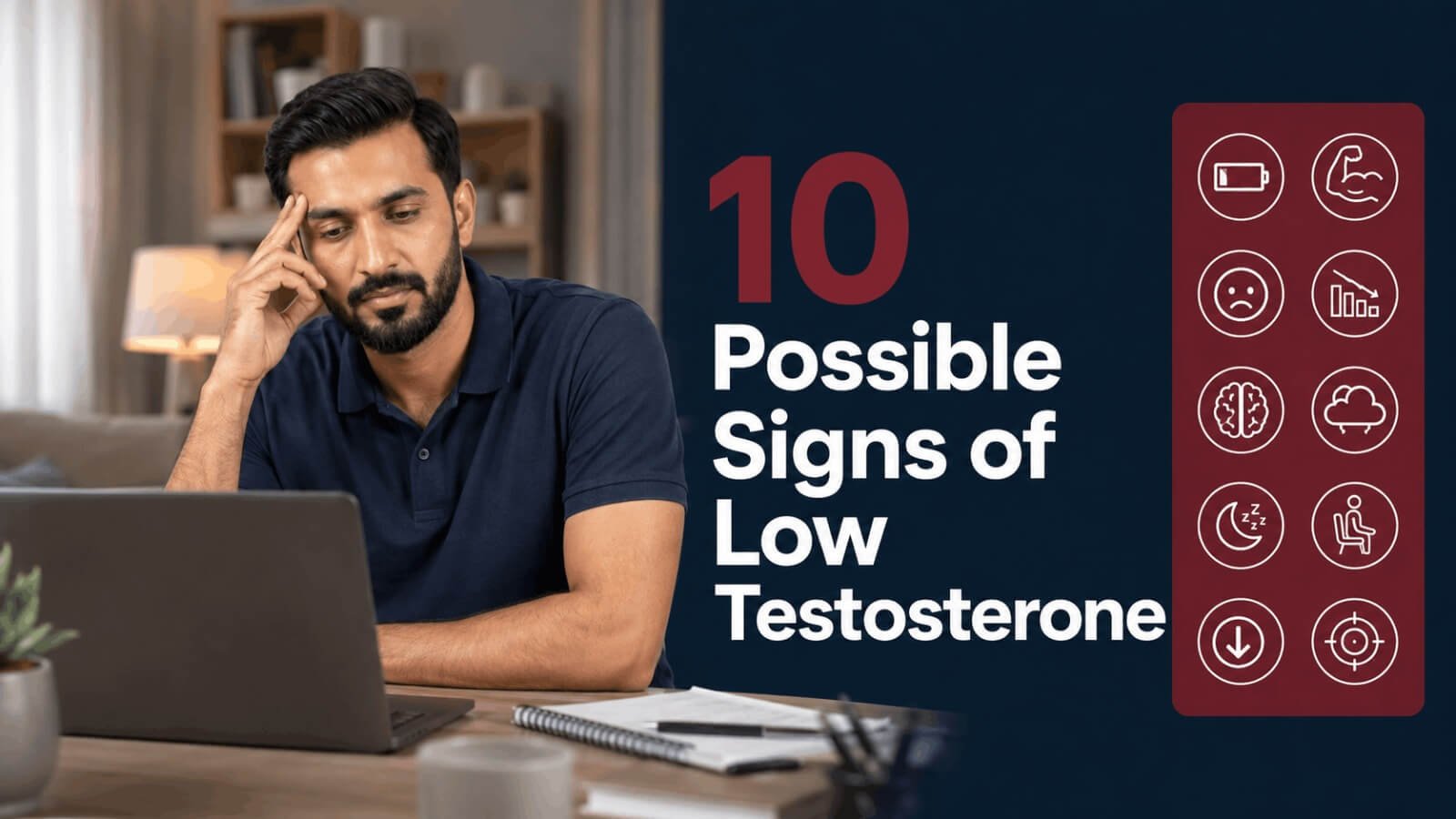
Low testosterone can cause different symptoms, and the symptoms can vary between individuals. Importantly, many of these signs can also have other causes.
If several symptoms persist, it is better to discuss them with a healthcare professional rather than assuming testosterone is the cause.
| Possible Sign | What You May Notice |
| 1. Low Energy | Persistent tiredness, reduced stamina, or difficulty getting through the day |
| 2. Reduced Muscle Mass | Difficulty maintaining muscle despite regular activity |
| 3. Increased Body Fat | Greater difficulty managing weight, especially around the abdomen |
| 4. Reduced Sexual Desire | Lower interest in sexual activity |
| 5. Erectile Difficulties | Changes in erectile function or sexual performance |
| 6. Mood Changes | Irritability, low mood, or reduced sense of well-being |
| 7. Difficulty Concentrating | Trouble staying focused or feeling mentally sharp |
| 8. Reduced Strength | Lower physical strength or exercise performance |
| 9. Poor Recovery | Taking longer to recover from physical activity |
| 10. Reduced Sense of Well-Being | Feeling less motivated, energetic, or physically capable |
These symptoms do not prove that testosterone is low. Proper testing and medical evaluation are needed to determine whether testosterone deficiency is actually present.
How Lifestyle Can Affect Testosterone Levels

Hormonal health is closely connected with overall health. Several everyday habits can support healthy testosterone levels and general well-being.
Get Enough Quality Sleep
Aim for approximately 7 to 9 hours of sleep each night. Try to maintain a consistent bedtime and wake-up schedule.
Keep your bedroom comfortable, quiet, dark, and cool enough for restful sleep. If you regularly snore loudly, wake up gasping, or feel extremely tired despite getting enough sleep, speak with a healthcare professional because sleep disorders can affect overall health. for more information Testosterone Levels
Exercise Regularly
A combination of resistance training and cardiovascular activity can support muscle strength, body composition, and metabolic health.
Strength exercises can include squats, rows, presses, lunges, and other movements that train major muscle groups.
You do not need to exercise every day. A consistent routine that fits your fitness level is more sustainable than an extreme workout program.
Maintain a Healthy Weight
Excess body fat is associated with lower testosterone levels in men.
If you need to lose weight, focus on gradual changes rather than extreme diets. Combining regular exercise with a balanced diet can help improve body composition and metabolic health.
Manage Stress
Constant stress can interfere with sleep, eating habits, physical activity, and overall well-being.
Simple stress-management strategies include walking outdoors, spending time with friends and family, practicing relaxation exercises, limiting unnecessary work stress, and taking regular breaks.
Eat a Balanced Diet
There is no single food that can dramatically increase testosterone levels. Instead, focus on an overall nutritious eating pattern.
Include a variety of:
- Eggs and other protein-rich foods
- Fish and seafood
- Lean meats or other protein sources
- Vegetables and fruits
- Whole grains
- Beans and legumes
- Nuts and seeds
- Healthy sources of unsaturated fats such as olive oil and avocado
Adequate nutrients are important for general health and normal hormone production. Unless a deficiency is present, taking large amounts of vitamins or minerals is unlikely to provide a simple testosterone-boosting solution.
Can Exercise Increase Testosterone Naturally?

Exercise is one of the most useful habits for supporting overall hormonal and metabolic health.
Resistance training can help maintain muscle mass and strength, while aerobic exercise supports cardiovascular fitness and weight management.
However, temporary changes in testosterone after exercise do not necessarily mean that exercise will permanently raise testosterone levels. The bigger benefit comes from improving overall fitness, maintaining a healthy weight, and supporting long-term health.
Avoid extreme training without adequate recovery. Too much exercise combined with insufficient food and sleep can negatively affect performance and well-being.
Can Losing Weight Help Low Testosterone?
For men with overweight or obesity, losing excess weight may help improve testosterone levels.
Weight management can also improve blood sugar control, cardiovascular health, physical fitness, and overall quality of life.
Rather than following crash diets, focus on sustainable habits such as eating nutritious foods, controlling portion sizes, increasing physical activity, and getting enough sleep.
If you have significant weight concerns or underlying health conditions, a healthcare professional can help you choose an appropriate approach.
When Should You See a Doctor About Low Testosterone?

Occasional tiredness or a temporary decrease in motivation does not necessarily mean you have low testosterone.
However, medical evaluation may be appropriate if symptoms are persistent, especially when several symptoms occur together.
Consider speaking with a healthcare professional if you experience:
- Persistent unexplained fatigue
- A significant decrease in sexual desire
- Erectile difficulties
- Noticeable loss of muscle or strength
- Persistent low mood
- Unexplained changes in body composition
- Ongoing problems with concentration or general well-being
Other conditions can cause similar symptoms, including sleep disorders, thyroid problems, depression, obesity, diabetes, certain medications, and other health conditions.
How Is Low Testosterone Diagnosed?

Low testosterone should not be diagnosed based on symptoms alone.
A healthcare professional will usually consider your symptoms, medical history, medications, physical health, and blood test results.
Testosterone levels can change throughout the day, which is why testing is commonly performed in the morning. If an initial result is low, repeat testing may be recommended to confirm the finding.
Depending on the situation, a doctor may also order additional tests to help identify the underlying cause.
Do not start testosterone replacement therapy or high-dose testosterone supplements without medical guidance. Treatment is appropriate for some men with confirmed testosterone deficiency, but it is not suitable for everyone.
Testosterone vs. Normal Aging: What’s the Difference?
Some changes are common as men age, but not every change should automatically be blamed on low testosterone.
For example, feeling slightly less energetic in your 50s does not necessarily mean you have testosterone deficiency. Poor sleep, lack of exercise, excess weight, stress, medications, and other health conditions can produce similar symptoms.
This is why testing and professional evaluation are important when symptoms are persistent or severe.
The goal should not be to achieve the highest possible testosterone level. The goal is to maintain healthy hormone levels while addressing the factors that may be affecting your overall health.
Frequently Asked Questions About Low Testosterone
What are the most common signs of low testosterone?
Common symptoms can include reduced sexual desire, erectile difficulties, lower muscle mass, reduced strength, fatigue, mood changes, and difficulty concentrating. These symptoms can have many other causes, so testing is important for diagnosis.
Can lifestyle changes improve testosterone?
Healthy habits such as regular exercise, adequate sleep, maintaining a healthy weight, eating a balanced diet, and managing stress can support overall health and may improve testosterone levels, particularly when obesity or unhealthy lifestyle factors are contributing to low levels.
Does lack of sleep lower testosterone?
Poor or insufficient sleep may negatively affect testosterone production and overall hormonal health. Consistently getting enough quality sleep is an important part of maintaining good health.
Does losing belly fat increase testosterone?
For men with overweight or obesity, reducing excess body fat may help improve testosterone levels. Weight loss can also provide broader benefits for metabolic and cardiovascular health.
What is the best time to test testosterone?
Testosterone testing is commonly performed in the morning because levels are generally higher earlier in the day. Your healthcare professional can recommend the appropriate timing and whether repeat testing is necessary.
Can food naturally increase testosterone?
No single food can reliably increase testosterone dramatically. A balanced diet that provides adequate protein, healthy fats, vitamins, and minerals supports overall health and normal hormone function.
Should every man over 40 test testosterone?
Not necessarily. Routine testing is not automatically required for every man simply because he reaches a certain age. Men with persistent symptoms that could indicate testosterone deficiency should discuss testing with a healthcare professional.
Final Thoughts
Low testosterone can affect different aspects of a man’s health, but symptoms such as fatigue, weight gain, reduced strength, mood changes, and poor concentration can have many possible causes.
Healthy lifestyle habits remain an important foundation for supporting normal hormone function. Getting enough sleep, exercising regularly, maintaining a healthy weight, eating a balanced diet, and managing stress can improve overall health and may support healthy testosterone levels.
If symptoms are persistent, severe, or affecting your quality of life, do not assume that aging is the only explanation. A healthcare professional can evaluate your symptoms and use appropriate blood testing to determine whether low testosterone or another health condition may be contributing.
This article is intended for general educational purposes and should not replace individualized medical advice, diagnosis, or treatment from a qualified healthcare professional.
Helpful Resources
- Endocrine Society: Hypogonadism in Men — symptoms, causes, testing and treatment information.
- American Urological Association: Testosterone Deficiency Guideline — explains that diagnosis requires symptoms together with consistently low testosterone.
- Endocrine Society: 2026 Testosterone Replacement Therapy Statement — recommends at least two early-morning fasting testosterone tests before diagnosis.
- CDC: Physical Activity Guidelines for Adults — recommends 150 minutes of moderate activity and two muscle-strengthening days weekly.
- CDC: Sleep Duration and Quality — explains adult sleep requirements and signs of poor-quality sleep.

Pingback: How Blood Sugar Affects Men’s Sexual Health After 40 - OptiFit Living – Smart Health & Fitness for Men Over 40