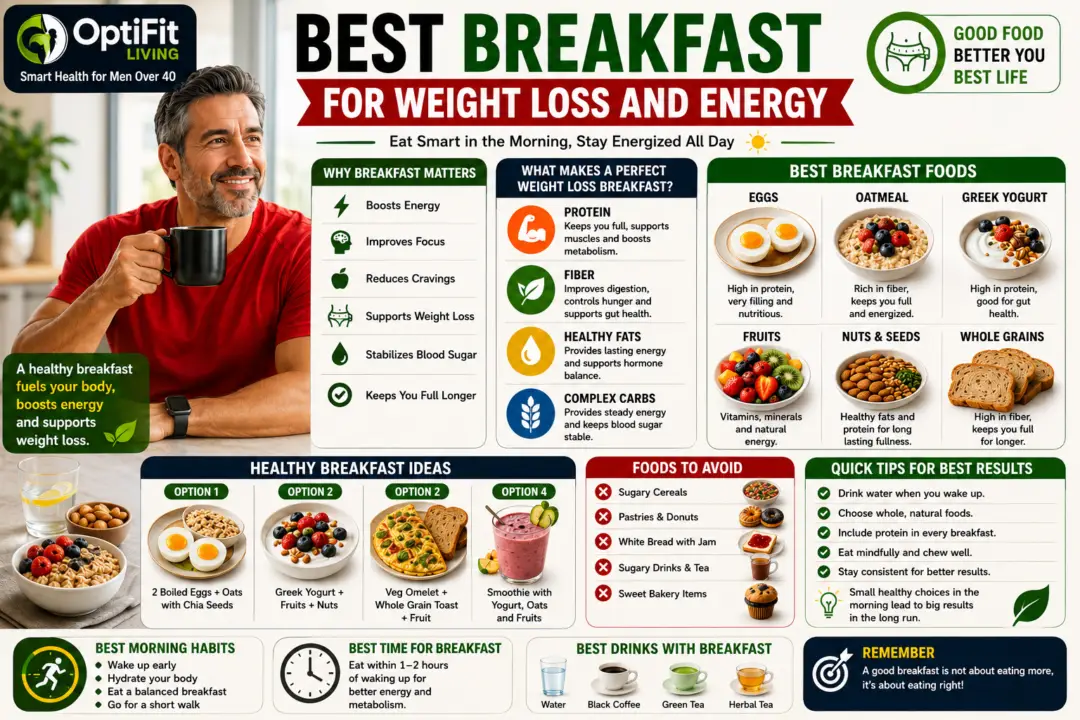
No single food will raise your testosterone if your levels are already normal. What food can do is fix a shortfall, help you reach a healthy weight, and keep your whole diet from dragging your hormones down. That is the real job of the foods to support testosterone in this guide.
I am not a doctor, and I did not test any of this on myself. Everything below comes from published reviews, guidelines and NIH-level sources, and each one is listed at the end. If you have symptoms of low testosterone, a blood test is the answer. A shopping list is not.
What research says about foods to support testosterone
An Australian men’s health clinic reviewed the evidence and reached a plain conclusion. If you already eat well, exercise and keep a healthy weight, changing what you eat is unlikely to boost your testosterone. It also found no good evidence that extra zinc, selenium, magnesium, vitamin D or folate raises testosterone in men who are not short of them. A 2023 review of testosterone booster supplements found that most failed to raise total testosterone.
That sounds like bad news, but diet still matters in three ways.
- It can fix a deficiency. If you are low on a nutrient your body needs to make hormones, food or a supplement can bring you back to normal.
- It can help you lose extra weight. A 2013 meta-analysis of 24 studies found that weight loss, by low-calorie diet or by bariatric surgery, raised total and free testosterone in men with obesity. The amount of weight lost was the best predictor of the rise.
- It can keep you away from very low-fat eating. A 2021 meta-analysis (6 studies, 206 men) found testosterone about 10 to 15 percent lower on low-fat diets, still inside the normal range. The biggest drop, about 26 percent, came from two old vegetarian-diet studies. The authors suggested low zinc as a reason. They also said the evidence is not strong enough for blanket advice.
Two more findings are links, not proof. Diets heavy in processed foods go with lower testosterone, and a 2018 study found low testosterone was more common in people who ate fewer dark green vegetables. Association does not show that one causes the other.
How low is low testosterone?
The American Urological Association (AUA) says a total testosterone below 300 ng/dL is a reasonable cutoff to support a diagnosis. It also says the diagnosis should rest on two early-morning blood tests taken on different days. Other groups and labs use slightly different cutoffs, so your doctor’s lab range is the one that counts.
This matters for food because tiredness, low drive and a flat mood have many causes. Poor sleep, stress and extra weight are common ones. Our guide to the signs of low testosterone explains the symptoms, and how sleep affects testosterone shows why a bad week of sleep can look like a hormone problem.
Best foods to support testosterone, ranked by evidence
This table shows what each food group gives you and how solid the testosterone link really is. Notice how few rows say “strong.”
| Food | Main nutrient | How strong is the link? |
|---|---|---|
| Oysters and shellfish | Zinc (NIH calls oysters very high) | Strong for zinc. No proof they raise testosterone if you are not low |
| Beef, poultry, eggs | Zinc, protein, a little vitamin D in eggs | Good zinc sources. Testosterone effect only if you were short |
| Fatty fish (salmon, trout, sardines) | Vitamin D, healthy fats | Good vitamin D source. Vitamin D itself has weak testosterone evidence |
| Fortified milk and yogurt | Vitamin D, zinc, protein | Easy way to meet daily needs. Not a booster |
| Beans, lentils, whole grains | Zinc, magnesium, fiber | Useful for overall diet. Plant zinc is absorbed less well |
| Nuts and seeds (pumpkin seeds) | Zinc, magnesium, unsaturated fat | Supports a diet that is not too low in fat |
| Dark leafy greens | Magnesium, folate | Linked to lower risk in one 2018 study. Association only |
| Olive oil and avocado | Unsaturated fat | Helps you avoid a very low-fat diet |
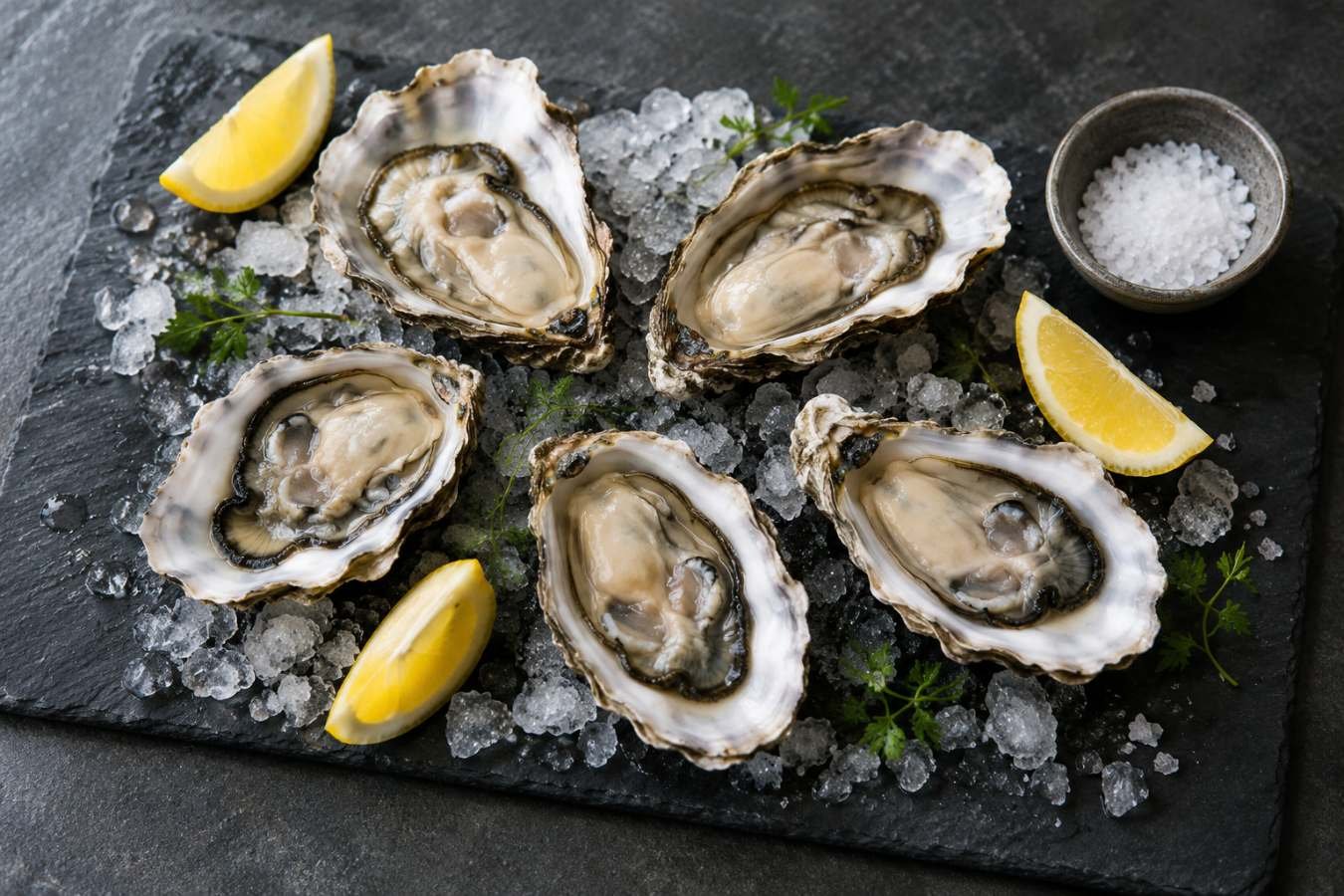
Oysters, beef and other zinc foods
Zinc is the nutrient with the clearest link to men’s hormones. The NIH sets the daily goal for adult men at 11 mg. Oysters sit at the top of the food list. Meat, poultry, seafood and fortified breakfast cereals are good sources, and beans, nuts, whole grains, eggs and dairy add some. Plain deficiency is rare in men who eat meat and dairy, so extra zinc will not help most of them.
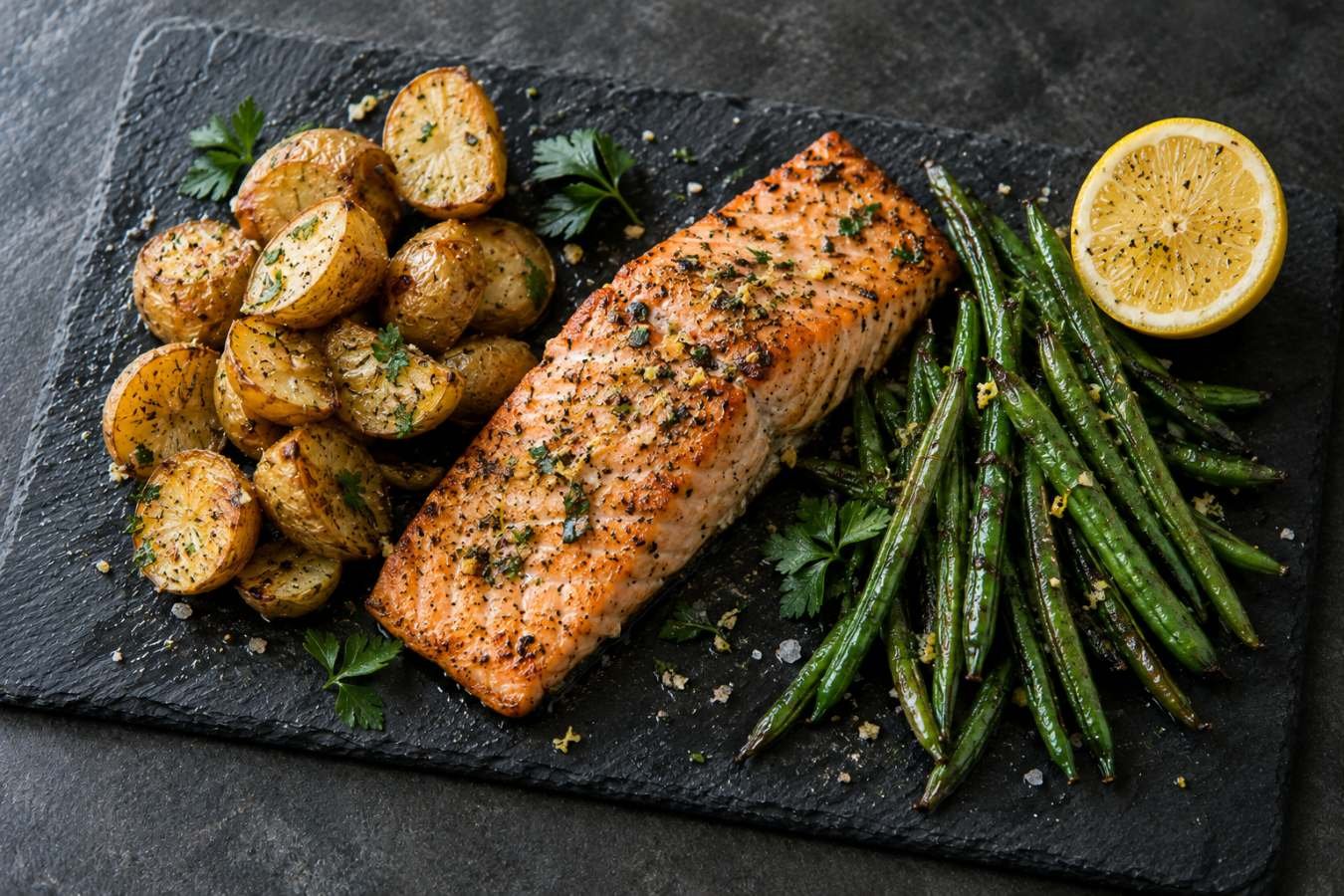
Salmon and other fatty fish
Fatty fish give you vitamin D and healthy fats in one meal. Sources disagree on how much. A 3-ounce serving of cooked sockeye salmon is listed at about 450 to 570 IU of vitamin D, depending on the source. For comparison, the adult goal is 600 IU a day. A large egg yolk adds about 44 IU, and a cup of fortified milk adds roughly 115 to 124 IU. Vitamin D testing is worth asking about if you work indoors and rarely eat fish.
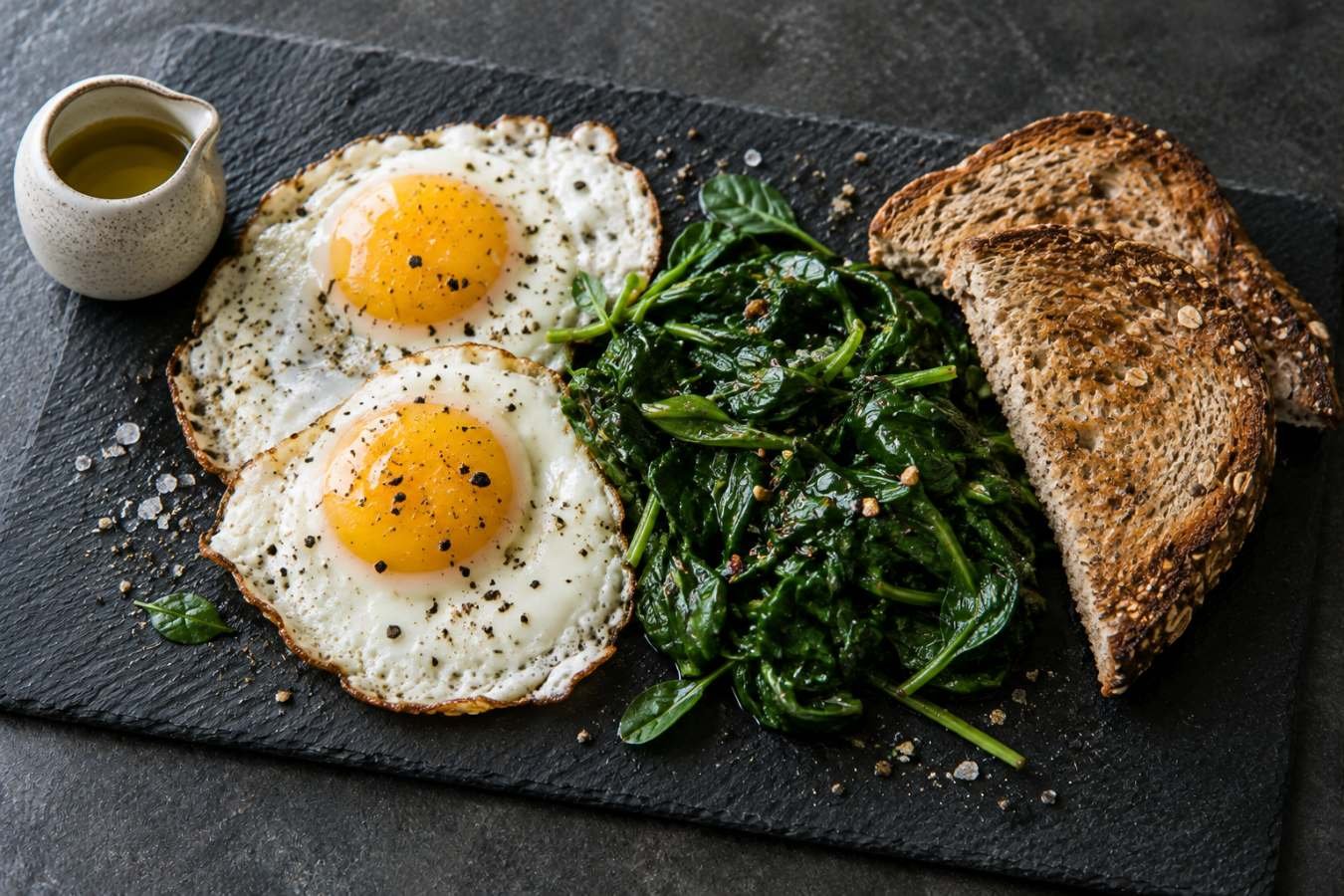
Eggs, greens and olive oil
This is the plate that fits the research best. Eggs give protein and a little vitamin D. Dark leafy greens give magnesium and folate. Olive oil keeps your fat intake from falling too low. None of these is a booster. Together they make the kind of ordinary diet that goes with normal hormone levels.
Nuts, seeds and beans
Pumpkin seeds, almonds, chickpeas and lentils give zinc and magnesium in small amounts, with fiber on top. They are good for a plant-heavy diet and cheap. Keep in mind that zinc from plants is absorbed less well than zinc from meat and shellfish. If you eat little meat, eat more of them.
Foods to support testosterone you can skip: the hype list
Popular lists of foods to support testosterone often include cocoa, pomegranate, ginger and fenugreek. The clinic review above found that the human evidence behind most of these lists is thin. Many of the studies were in animals or in tiny groups, or they measured something other than testosterone.
Fatty fish show up in both the hype lists and mine, but for a different reason. I include salmon because it is a good source of vitamin D and healthy fat, not because it boosts testosterone. Eat any of these foods if you like them. Just do not spend extra money on them for hormones.
A good test for any claim is simple. Ask whether the study was in men, whether the men were low on testosterone to begin with, and whether testosterone was actually measured. Most food claims fail at least one of those.
Foods and habits that work against you
- Crash diets. Very low-calorie or very low-fat plans can leave you short on zinc and fat, which is the pattern seen in the low-fat diet studies.
- Ultra-processed meals every day. They go with lower testosterone in observational studies. They also push weight up, and extra weight is linked to lower testosterone.
- Carrying extra weight. The 2013 weight-loss analysis is the strongest evidence in this guide. If you are overweight, steady weight loss is a better plan than any single food.
Our guide to staying strong after 40 and the beginner workout plan for men over 40 show the exercise side that works together with food.
A simple day of eating
This is an example, not a prescription. It shows how the foods to support testosterone fit into a normal day.
- Breakfast: two eggs cooked in olive oil with spinach, whole-grain toast and a glass of fortified milk.
- Lunch: a lentil and chickpea bowl with chopped greens, olive oil, lemon and a small portion of lean beef or chicken.
- Snack: plain yogurt with a handful of pumpkin seeds.
- Dinner: baked salmon, a baked potato and roasted vegetables.
Eat shellfish like oysters once in a while, since a few servings give plenty of zinc. If you do not eat fish or meat, ask a dietitian to check your zinc and vitamin D.
A weekly shopping list for foods to support testosterone
If planning a whole week sounds like too much, start with this short list. It covers the foods to support testosterone that the evidence backs, with room for your own taste.
- Protein: eggs, chicken or lean beef, and two servings of fish, one of them fatty fish like salmon.
- Shellfish: one serving of oysters, mussels or shrimp if you like them.
- Plants: lentils or chickpeas, a bag of spinach or kale, a few vegetables you enjoy, and whole-grain bread or oats.
- Fats: extra-virgin olive oil, a small bag of almonds, and pumpkin seeds.
- Dairy: plain yogurt and fortified milk, or a fortified plant milk if you avoid dairy.
Buy fewer packaged snacks and sugary drinks to make room. That one swap often does more for weight, which matters more than any single food on this page.
Daily nutrient targets for men
These are the standard daily amounts from the NIH. They apply to men in good health, so your doctor may set a different goal for you.
| Nutrient | Daily goal for adult men | Good food sources | Upper limit |
|---|---|---|---|
| Zinc | 11 mg | Oysters, beef, poultry, beans, nuts | 40 mg a day from all sources |
| Vitamin D | 600 IU (15 mcg) up to age 70, 800 IU after | Salmon, fortified milk, eggs, sun | 4,000 IU (100 mcg) |
| Magnesium | 400 mg at ages 19 to 30, 420 mg from 31 | Pumpkin seeds, spinach, beans, nuts | 350 mg, but only for supplements |
I could not open the NIH fact-sheet pages when I wrote this, so these amounts are the standard published values. Check them on the NIH Office of Dietary Supplements pages before you act on them.
Do you need supplements to support testosterone?
Usually not. Think of foods to support testosterone as the base and supplements as a distant second. The clinic review above found no evidence that extra zinc, magnesium, vitamin D, selenium or folate raises testosterone in men whose levels are normal. The 2023 supplement review found the same for most boosters.
Too much of a good thing can hurt. Long-term zinc above the upper limit can lead to low copper. If a blood test shows you are short on something, a supplement can make sense, and your doctor can set the dose. Our guides on testosterone boosters, magnesium and recovery supplements cover what is worth your money.
When to see a doctor
See a doctor if you have a lasting drop in energy, sex drive, erections or mood, especially with weight gain or poor sleep. Ask about a morning total testosterone test, and ask what else could explain the symptoms. Do not rely on foods to support testosterone alone for months if a medical problem could be behind your symptoms.
Check with your doctor before big diet changes if you have kidney disease, take blood thinners (leafy greens contain vitamin K), or already take supplements.
Why you can trust this guide
- I did not test any food or supplement on myself. This guide is a summary of published research, with sources listed below.
- Source order: NIH and the AUA guideline first, then peer-reviewed studies, then clinic reviews and fact sheets.
- Corrections to the old version: removed personal claims I cannot support, removed language that implied foods boost testosterone, and added what the evidence does not show.
- Limits: the NIH fact-sheet pages blocked my access, so zinc, vitamin D and magnesium numbers are standard published values. Vitamin D food amounts differ by source, so I show a range.
- This is general information, not medical advice.
- Last checked: 27 October 2026.
Questions people ask about foods to support testosterone
What foods support testosterone the most?
Zinc-rich foods like oysters, beef and beans, vitamin D foods like salmon and fortified milk, and a normal amount of healthy fat. They help most when you are short on something. They do not boost normal levels.
Can food really raise testosterone?
Food can fix a deficiency and help you lose extra weight, and both can raise low levels. For a healthy man with normal levels, the evidence says changing food will not boost them.
Do foods to support testosterone work for men over 40?
They help the basics, such as weight, energy and nutrient levels. The AUA’s 300 ng/dL cutoff was set mostly from studies of men over 45, so ask your doctor to read your result in context.
Should I eat a low-fat diet?
Very low-fat diets were linked to testosterone about 10 to 15 percent lower in one meta-analysis. Keep healthy fats like olive oil, nuts and fish in your diet.
Do zinc pills raise testosterone?
Not in men whose zinc is normal. Taking zinc above 40 mg a day over a long time can cause low copper, so ask a doctor first.
Main reference for this guide: Testosterone Deficiency guideline (2018).