

A man can spend years carrying groceries, lifting a child, moving boxes, and staying busy, then look at his arms or waist and wonder whether his strength is quietly slipping away. The question behind that concern is simple: Can You Gain Muscle? Yes. In fact, can you gain muscle after 40 is a question many men ask as they notice changes in strength, recovery, and body composition. Age can influence recovery and the pace of change, but it does not close the door on building muscle.
So, can you gain muscle after 40 with a realistic approach? Absolutely. A well-planned strength routine, enough food, sufficient protein, and repeatable habits can improve muscle size and strength well into later adulthood. The key is to focus on consistent progress rather than expecting overnight results.
Can You Gain Muscle? The most useful expectation is not to chase a younger version of yourself. Instead, aim to become stronger, healthier, and more capable than you are now. Men over 40 can still make meaningful improvements when training, nutrition, sleep, and recovery work together.
If you’re still asking, can you gain muscle while managing a busy schedule, the answer is yes. You don’t need to spend hours in the gym or follow an extreme diet. In this guide, we’ll look at what changes after 40, how training and nutrition support muscle growth, how to adapt your routine for a busy schedule, and how to begin without turning exercise into another all-or-nothing project.
Can You Gain Muscle? Yes—and the goal is to build a sustainable routine that fits your life while helping you become stronger over time.
Can You Gain Muscle? What Changes After 40

Muscle responds to a challenge at any adult age. When you lift a weight or push against resistance, your muscles receive a signal to adapt. With repeated training and enough recovery, the body can build muscle tissue and improve how well the nervous system recruits it. That can mean a heavier lift, easier stairs, or more confidence carrying awkward loads—not just a change in the mirror.
So, can you gain muscle after 40? Yes. The process may feel different from the way it did at 20, but the ability to adapt remains. Work, family, old injuries, less sleep, and long stretches of sitting can shape your starting point. Some men also notice they need more time between hard sessions. These are reasons to plan intelligently, not proof that progress is impossible.
Can You Gain Muscle? The answer depends on more than age. Muscle gain is influenced by training history, consistency, health, nutrition, recovery, and genetics. For men over 40, paying attention to these factors can make a major difference in how effectively the body responds to resistance training.
There is no single rate of progress that applies to every man. Someone returning after years away may regain strength quickly at first, while an experienced lifter may see slower, smaller changes. If you’re wondering can you gain muscle after a long break or with a busy lifestyle, focus on your own progress rather than comparing your body to a younger athlete or a social media transformation.
Track your strength, measurements, energy, and consistency over several months. Can You Gain Muscle? Absolutely—but meaningful results come from giving your body a consistent reason to adapt and enough time to do it.
Why Muscle Matters Beyond Appearance
Muscle is useful in ordinary life. It helps you stand from a low chair, climb stairs, lift luggage, play with children or grandchildren, and keep doing the tasks that make independence possible. Strength work also supports bone and joint function when it is appropriately selected and progressed. The goal is not to look a particular way; it is to build a body that is better prepared for the life you actually lead.
Muscle also affects body composition. If you are trying to reduce belly fat, resistance training can help you preserve or build lean tissue while you adjust eating habits. The scale may change slowly even as your waist, strength, or fit of your clothes changes. Muscle is denser than fat, so scale weight alone cannot tell the whole story. For a broader routine that balances strength with everyday movement, see our guide to building a sustainable fitness lifestyle.
Why Progress Can Feel Harder After 40
A few everyday patterns can get in the way more than age itself:
- Long gaps between sessions. Training hard for one week and then missing the next three gives the body little reason to adapt.
- A routine that is too ambitious. A demanding six-day plan may not fit a full calendar, and soreness can make it harder to return.
- Not enough food or protein. A calorie deficit may be useful for fat loss, but an aggressive one can make training and recovery harder. Meals with little protein may also leave you short of the building material muscles use.
- Poor recovery. Short sleep, high stress, and hard sessions stacked together can make normal training feel unusually draining.
- Unmanaged pain or health concerns. A sore muscle after training is not the same as persistent joint pain, chest symptoms, or unusual shortness of breath. Those need a more careful response.
Low energy, declining strength, or a smaller appetite can have many causes. Do not assume that every change is “just aging” or that low testosterone is automatically the explanation. If a change is persistent or worrying, discuss it with a qualified clinician rather than self-diagnosing or starting hormone products.
How to Train for Muscle Without Living in the Gym
A useful plan trains the major muscle groups regularly and gradually makes the work more challenging. For many beginners and returning lifters, two or three full-body sessions a week is a manageable starting point. Leave at least a day between harder sessions for the same muscles, especially during the first few weeks.
Build each session around a few movement patterns: a squat or sit-to-stand, a hip hinge, a push, a pull, and a carry or trunk exercise. The exact exercise can vary. Goblet squats, step-ups, dumbbell presses, rows, hip bridges, and loaded carries are examples. Machines, resistance bands, and body-weight movements can also work. Choose a version you can perform with control and without sharp pain.
Start with one or two sets of each movement and a weight you can lift through a comfortable range. Finish a set feeling that you could do a few more good repetitions. You do not need to strain to failure every time. As the movement becomes easier, add a repetition or two, then increase the load slightly and return to the lower end of your repetition range. This gradual progression gives your muscles a reason to adapt while limiting sudden jumps in workload.
Keep a simple log: exercise, resistance, repetitions, and how it felt. If you can do more repetitions with the same weight and steady form over several sessions, that is progress. If your form breaks down, the weight is too heavy for that set. Rest long enough between sets to regain control of your breathing and technique; rushing to finish is not a measure of effectiveness.
Walking and other aerobic activity can sit alongside strength work. General adult activity guidance includes muscle-strengthening work on at least two days each week, with aerobic activity accumulated through the week. You can build toward broad activity goals over time; you do not need to complete everything in your first week.
Eat to Support Strength and Muscle
Muscle building does not require an expensive meal plan. Start with regular meals that include a protein source, vegetables or fruit, and enough carbohydrate to support the activity you do. Protein foods might include eggs, yogurt, fish, chicken, beans, tofu, or lentils. Carbohydrates such as oats, potatoes, rice, fruit, and whole-grain bread can help fuel training and replenish energy.
Try to include protein at more than one meal instead of saving nearly all of it for dinner. A useful meal might be eggs with toast and fruit at breakfast, beans or chicken with rice and vegetables at lunch, then fish or tofu with potatoes and vegetables at dinner. Portion needs vary with body size, appetite, training, and health. A clinician or registered dietitian can help if you have kidney disease, major dietary restrictions, or specific nutrition concerns.
Research suggests that extra dietary protein can support resistance-training gains when intake is low, but more is not automatically better. Protein powder is a convenience, not a requirement; food can do the job. Supplements can also interact with medicines or contain ingredients that are unsuitable for some people. If you use one, check the label and ask a qualified professional if you have a medical condition or take medication. Our overview of workout recovery supplements can help you weigh convenience against the basics.
If you are also trying to lose fat, avoid crash dieting. A moderate, sustainable change in eating is easier to maintain and leaves more room for training. Men with a higher starting body fat may be able to gain strength while gradually losing weight, especially if they are new to resistance training, though outcomes differ. Keep the priority on steady training, adequate meals, and how you feel—not on forcing rapid scale changes.
Recovery Is Part of the Program

A workout creates a training stimulus; recovery is when you are ready to repeat it. Aim for a regular sleep schedule where possible, and make adjustments when work or family life disrupts it. One missed workout is not a crisis. Move the session, shorten it, or take a walk and return to your plan rather than trying to “make up” for lost time with a punishing double session.
Soreness can happen when you try unfamiliar movements, but it should not be treated as a scorecard. Sharp pain, swelling, pain that worsens as you train, or symptoms that interfere with daily activity are signs to stop that movement and seek appropriate advice. If soreness is repeatedly severe, lower the starting volume or load and build more gradually.
Common Mistakes People Make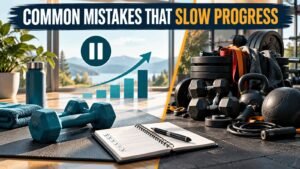
- Expecting fast transformation. Muscle gain is gradual, and early strength changes may come from improved coordination. Use month-to-month trends rather than expecting a dramatic weekly change.
- Doing too much too soon. Adding several hard sessions after years away raises the chance of excessive soreness and missed workouts. Begin with a dose you can repeat.
- Changing the program every week. Constantly switching exercises makes it difficult to tell whether you are progressing. Keep a small set of movements for several weeks, changing only when needed.
- Treating soreness as proof of a good session. A productive workout does not have to leave you unable to move normally. Judge the session by consistent effort and improving performance.
- Ignoring food and sleep. More training cannot reliably make up for chronically poor recovery or inadequate meals. Improve one supporting habit at a time.
- Depending on supplements. No powder can replace a sensible training plan, adequate meals, and patience. Review supplements with a professional if you take medication.
- Comparing yourself with edited images. Lighting, posing, genetics, and years of training shape what you see online. Compare your current capability with your own starting point.
- Giving up before the routine becomes a habit. A few weeks is enough to practice the pattern, but visible changes often take longer. Make attendance the first measure of success.
Simple Action Plan to Start
Week 1: Pick your schedule. Choose two nonconsecutive days and set aside 25–40 minutes. Put them in your calendar as appointments. If you have been inactive or have a medical concern, speak with a qualified clinician before starting a new routine.
Weeks 1–2: Practice basic movements. Do one or two comfortable sets of a squat or chair stand, hip hinge, push, and row. Use body weight, bands, machines, or light dumbbells. Move slowly enough to stay in control and stop if you feel sharp pain or concerning symptoms.
Weeks 3–4: Repeat and record. Keep the same schedule. Write down the exercise and repetitions. Add a repetition only when the current version feels controlled. Do not increase every variable at once.
After the first month: Progress in small steps. If you are recovering well and your form is consistent, add a little resistance or another set to selected exercises. If sleep, joint comfort, or energy is worsening, hold steady or reduce the workload. A plan that fits your life is more useful than a perfect plan you abandon.
Every week: Support the training. Include a protein food with regular meals, keep some daily movement in your routine, and protect sleep where practical. Review what worked on the weekend and make one small adjustment for the next week.
Safety: When to Get Advice First
Talk with a qualified doctor or other appropriate health professional before beginning or changing a strength program if you have a significant medical condition, recent surgery, recurring injury, or take medication that may affect exercise. Ask for individualized guidance if you have uncontrolled blood pressure, heart or lung disease, balance problems, or persistent joint pain. Stop exercising and seek urgent medical help for chest pain, fainting, severe breathlessness, or sudden weakness. This article offers general education and cannot assess your personal health or replace medical care.
Frequently Asked Questions
Can you gain muscle after 40 if you have never lifted weights?
Yes. A beginner can improve strength and build muscle with a gradual resistance routine. Start with movements you can do safely, repeat them consistently, and increase the challenge in small steps.
How many days a week should a man over 40 lift weights?
Two full-body sessions each week is a practical place to begin for many men. Some may later prefer three sessions or a split routine. The right schedule is the one that allows enough practice and recovery without crowding out the rest of life.
How long does it take to see muscle growth?
There is no reliable deadline for everyone. Strength or exercise control may improve before visible muscle changes. Use a training log and occasional photos or measurements under similar conditions to notice longer-term trends.
Can I build muscle and lose belly fat at the same time?
It may be possible, particularly for beginners and people returning after a break, but the amount and pace vary. Resistance training, adequate protein, and a moderate approach to eating can support the goal. Avoid judging success by scale weight alone.
Do I need supplements to gain muscle after 40?
No. Supplements are optional. Regular resistance training and adequate food matter more. A protein powder can be convenient if you struggle to get protein from meals, but check suitability if you have a health condition or take medication.
Does testosterone determine whether I can build muscle?
Hormones are one part of health, but they are not the only factor behind progress. Do not assume fatigue or slower gains mean you have low testosterone. Persistent symptoms deserve a medical conversation and appropriate evaluation rather than self-treatment.
Is it safe to lift weights with stiff joints?
It depends on the cause and severity. Some people can train with modified range, lighter resistance, or different exercises, but persistent or worsening pain should be assessed. A clinician or physical therapist can help tailor movements to your situation.
Is walking enough to build muscle?
Walking is valuable for cardiovascular fitness and daily activity, but it usually does not challenge all major muscle groups enough to maximize muscle growth. Add progressive resistance work if building strength and muscle is your goal.
Final Thoughts: Build From Where You Are
One practical truth stands out: men make better progress when strength training becomes a normal part of the week instead of a short burst of motivation. Can You Gain Muscle? Yes, even after 40—start with two manageable sessions, use movements you can control, and keep a simple record. Build patiently, adjust when life gets busy, and let better strength support the things you want to keep doing for years to come.
Helpful Resources
- National Institute on Aging: How Can Strength Training Build Healthier Bodies as We Age?
- Centers for Disease Control and Prevention: Adult Activity Guidelines
- PubMed: Resistance Training Prescription for Muscle Function, Hypertrophy, and Physical Performance in Healthy Adults (2026)
- PubMed: Protein Supplementation and Resistance Training Meta-analysis
- MedlinePlus: Exercise and Physical Fitness