Carrying a shopping bag, reaching into the back seat, or getting up from the floor can feel less steady than it once did. That does not mean you need hundreds of crunches or punishing workouts. The right core strength exercises for men over 40 can improve trunk control and make everyday movement and strength training feel more stable.
The core is more than the visible abdominal muscles. It includes the muscles around your abdomen, sides, back, pelvis, and hips. Together, they help you resist unwanted movement while you bend, lift, carry, turn, and walk. A practical core routine should therefore train several types of control—not just repeated bending at the waist.
This guide explains what core training does, how to brace and breathe, which beginner exercises to try, how to progress safely, and how to fit a short routine into a busy week. It is general education, not a diagnosis or personal treatment plan.
Core Strength Exercises for Men Over 40: Key Takeaways
- Start with three or four controlled movements rather than a long list of exercises.
- Train two or three times per week and leave recovery time between harder sessions.
- Use an incline plank, dead bug, bird dog, side plank from the knees, Pallof press, or farmer carry according to your ability.
- Stop a set when your breathing or body position becomes difficult to control.
- Core work supports full-body strength, walking, balance, and mobility; it does not replace them.
- Persistent, worsening, sharp, or radiating pain needs individual medical advice.
What Do Core Exercises Train?
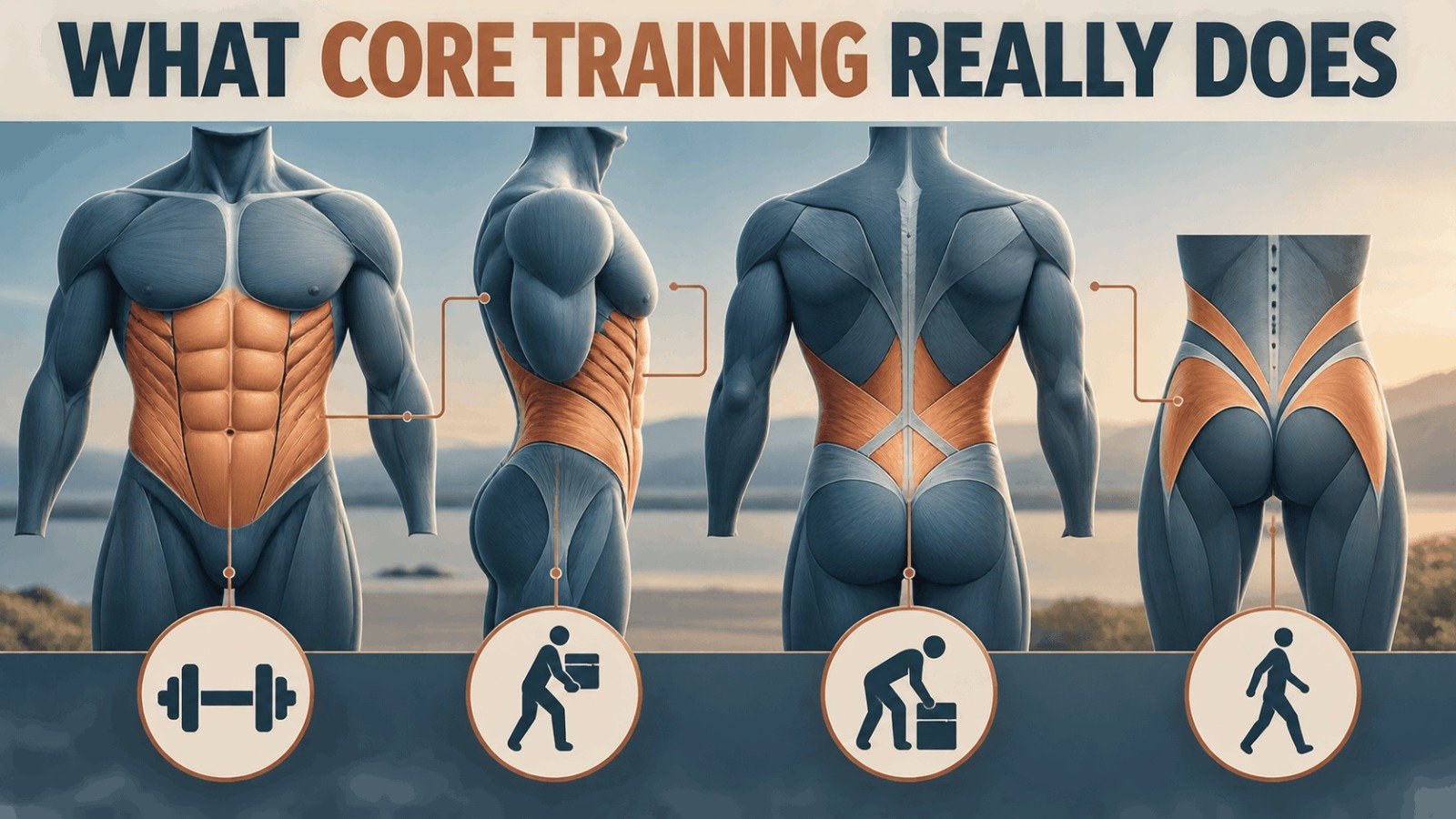
Your core helps transfer force between your upper and lower body while keeping your trunk controlled. When you lift a box, carry a suitcase, climb stairs, or stand from a chair, your arms and legs produce much of the movement, but your trunk helps you remain balanced and organized.
The abdominal muscles are part of this system, but they are not the whole system. Core stability also involves the muscles along your back, the deeper abdominal muscles, the diaphragm involved in breathing, and the muscles around your pelvis and hips. You do not need to memorize every muscle name to train effectively. Focus on three simple ideas: breathe, keep a steady trunk, and move your arms or legs without losing position.
Different exercises challenge different types of control:
- Anti-extension: resisting an excessive arch in the lower back, as in a plank.
- Anti-rotation: resisting a twist, as in a Pallof press.
- Anti-lateral flexion: resisting a sideways lean, as in a side plank or one-sided carry.
- Controlled movement: moving the limbs while the trunk stays organized, as in a dead bug or bird dog.
- Loaded movement: maintaining posture while walking with weight, as in a farmer carry.
This variety is more useful for daily movement than doing only one abdominal exercise.
Why Core Training Matters After 40
A stable trunk can help you control common tasks such as lifting a suitcase into a car, carrying groceries, moving garden supplies, or standing for a long period. It can also support full-body exercises such as squats, hip hinges, rows, and overhead presses because these movements require you to keep your torso steady while your limbs work.
Core training is only one part of physical fitness. Balance also depends on vision, foot sensation, leg strength, coordination, and the environment. For broader health and physical ability, combine core stability exercises with walking or other aerobic activity, lower-body strength work, and mobility practice. The National Institute on Aging explains the value of combining aerobic, muscle-strengthening, and balance activities.
Core exercise should not be advertised as a guaranteed cure for lower-back pain. Some trunk exercises may be included in a rehabilitation plan, but back pain has many possible causes. A movement that suits one person may worsen another person’s symptoms. If pain continues, becomes worse, or changes your normal activity, seek individual advice from a qualified health professional.
How to Brace and Breathe
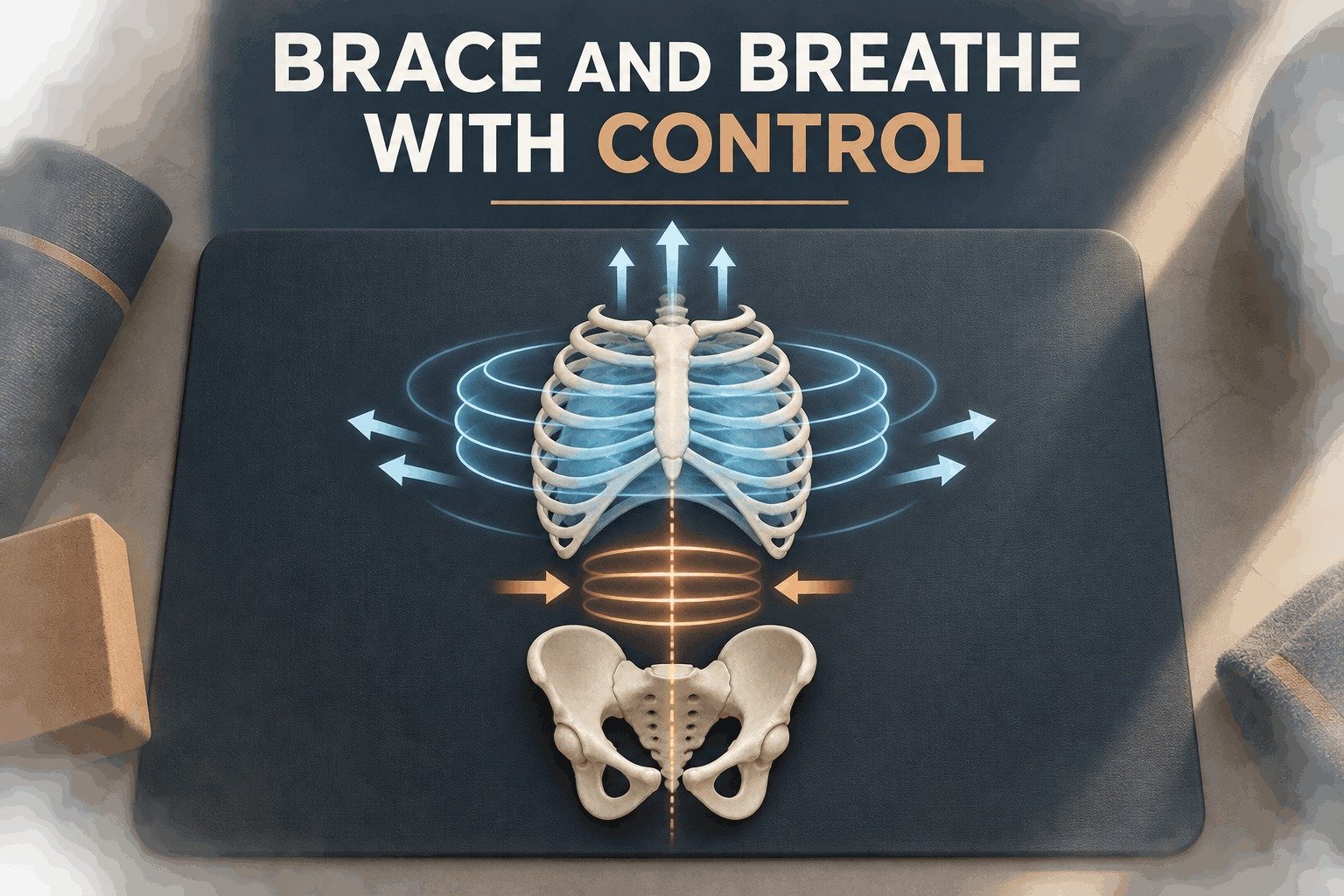
Before starting, practice a gentle brace. Stand or lie comfortably, breathe into your lower ribs and belly, and then tighten your middle as if preparing for a light nudge. Keep breathing and keep your shoulders relaxed. You should not pull your stomach in as hard as possible.
For most beginner exercises, breathe out during the harder part of the movement and breathe in as you return or reset. Do not treat breath-holding as proof that the exercise is effective. If your neck tightens, your lower back takes over, or you cannot breathe normally, make the exercise easier.
Quick form check
- Keep your ribs comfortably stacked over your pelvis.
- Move slowly enough to stop at any point.
- Keep a natural, comfortable curve in your lower back.
- Use support or a shorter range of motion when needed.
- End the set when your position breaks down, even if the timer has not finished.
Six Core Strength Exercises for Men Over 40
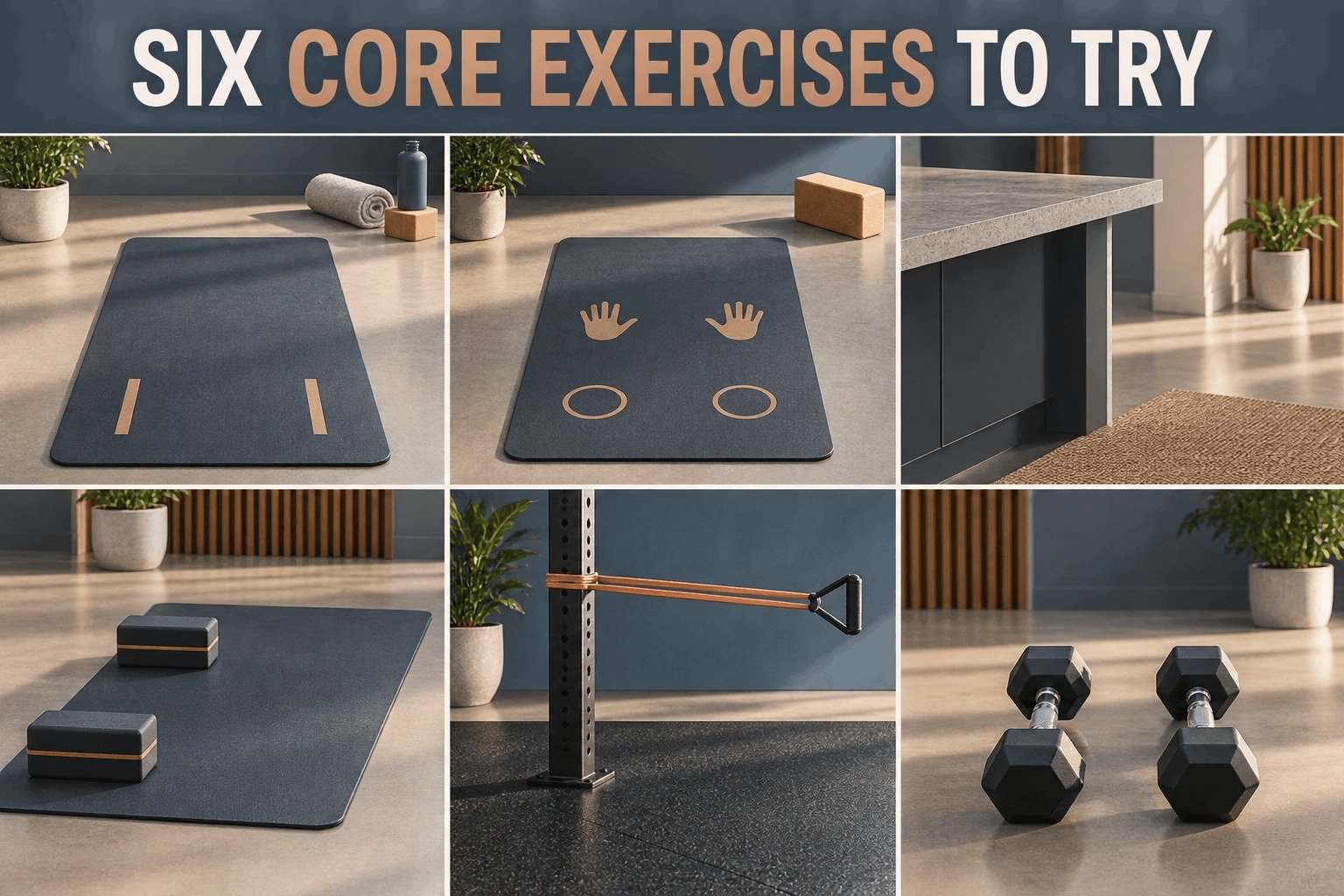
Choose three or four exercises to begin. Do one or two sets, two or three times per week. Rest as needed and use a version that lets you breathe normally. Quality and repeatability matter more than a difficult variation.
1. Dead Bug
Lie on your back with your knees bent and feet lifted so your hips and knees are near right angles. Reach your arms toward the ceiling and gently brace. Slowly lower one heel toward the floor while reaching the opposite arm overhead. Move only as far as you can without your back arching or your ribs lifting. Return to the start and change sides.
Start with five controlled repetitions per side. If the coordination is difficult, keep your arms still and lower one foot at a time. If your back arches, shorten the reach. The goal is steady trunk control, not getting your limbs as close to the floor as possible.
2. Bird Dog
Start on your hands and knees, with your hands under your shoulders and knees under your hips. Brace gently, then reach one leg behind you while extending the opposite arm forward. Keep your hips facing the floor and avoid twisting. Pause briefly, return slowly, and change sides.
Try five to eight repetitions per side. To reduce the challenge, move only one arm or one leg at a time. Place a folded towel under your knees if kneeling is uncomfortable. If your lower back dips, lift the leg less high.
3. Incline Plank
Place your hands or forearms on a sturdy counter or bench. Step back until your body forms a straight line from your head to your heels. Tighten your middle and glutes gently while continuing to breathe. Hold for 10 to 20 seconds, then step forward and rest.
Repeat two or three times. A higher surface makes the exercise easier. When you can hold the position without sagging or straining your shoulders, use a lower surface. A controlled incline plank is a better starting point than a floor plank that causes your back to arch.
4. Side Plank From the Knees
Lie on your side with your knees bent and your elbow under your shoulder. Lift your hips so your body forms a line from your shoulder to your knees. Keep your top shoulder over your bottom shoulder and breathe steadily. Lower with control and change sides.
Start with one or two holds of 10 to 15 seconds per side. If your shoulder feels uncomfortable, stop and choose another exercise. You can make the movement easier by lifting your hips only slightly or placing your top hand on the floor for support.
5. Pallof Press With a Resistance Band
Secure a resistance band at chest height to a stable anchor. Stand side-on to the anchor and hold the band at your chest with both hands. Step away until you feel light tension. Keeping your chest and hips facing forward, press your hands straight out and resist the band’s pull. Bring your hands back slowly, then turn around to train the other side.
Try six to ten presses per side with a light band. Step closer to the anchor if the band turns your body or makes your shoulders rise. Never attach the band to something that can tip, slide, or break.
6. Farmer Carry
Hold a light weight in each hand, stand tall, and walk slowly for 20 to 30 seconds. Keep your shoulders relaxed, look ahead, and take normal steps without leaning. Set the weights down carefully and rest before repeating.
If you do not have dumbbells, use two evenly filled bags with secure handles. Make the exercise easier by using lighter loads or walking a shorter distance. If you have only one weight, a one-sided carry can train your ability to resist leaning, but start very light and keep the walking path clear.
How to Choose the Right Starting Level
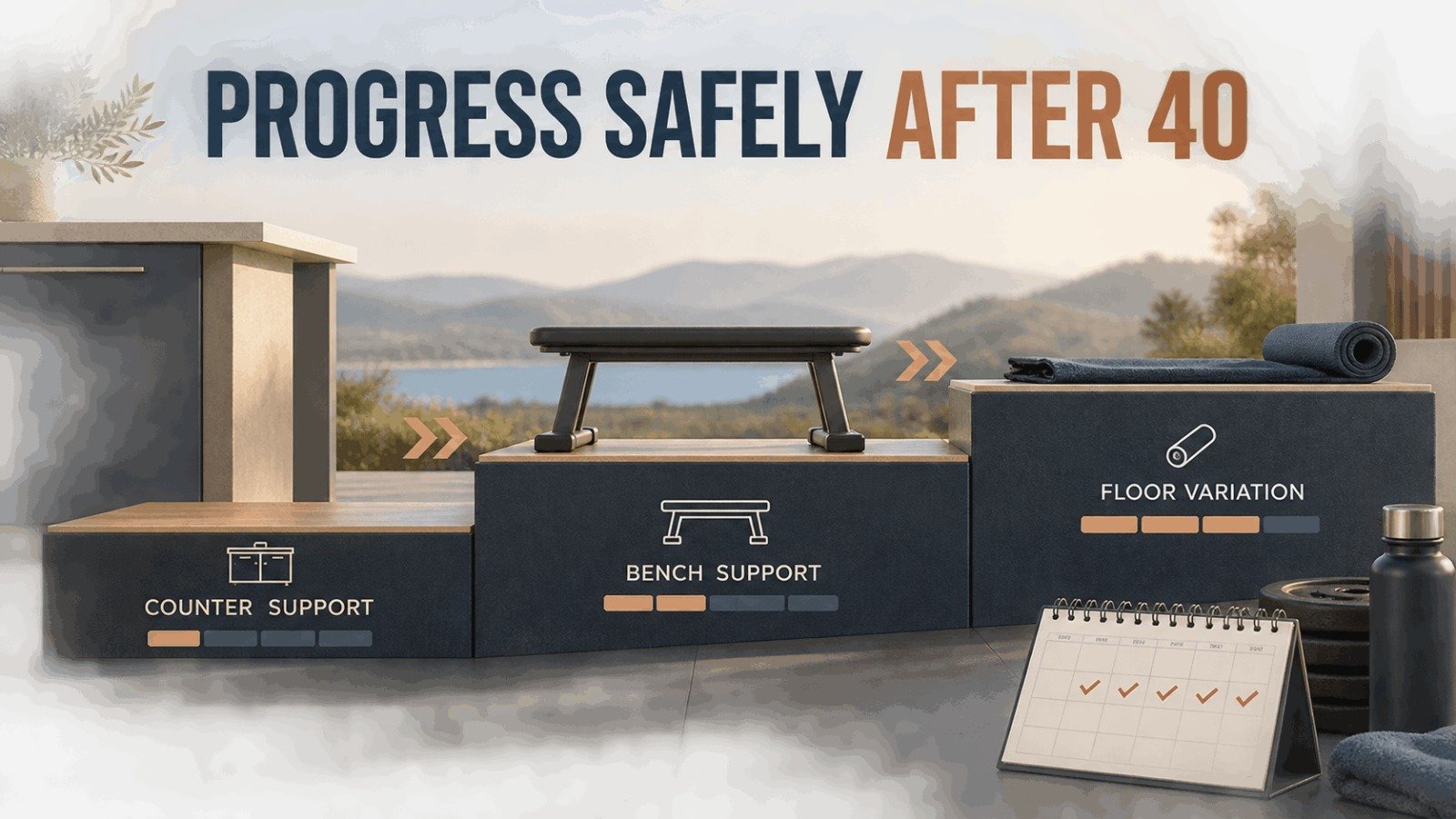
A suitable starting exercise should feel challenging but controlled. You should be able to breathe, maintain your position, and finish without sharp pain or excessive strain. If you are returning after a long break, feel unsteady getting down to the floor, or have limited mobility, begin with standing or counter-supported options such as a light carry and incline plank.
Progress one variable at a time. You might add five seconds to a hold, one repetition per side, a slightly longer walk, or a small amount of resistance. Keep the exercise unchanged long enough to learn it. If a variation causes discomfort, shorten the range, use more support, or choose another movement. An easier variation is not a failure; it is a practical way to train consistently.
Core training should sit alongside—not replace—full-body strength and aerobic movement. Chair squats, hip hinges, rows, presses, and walking build the legs, back, chest, and general capacity needed for daily life. Our guide to building a sustainable fitness lifestyle has additional ideas for making exercise repeatable.
Common Mistakes to Avoid
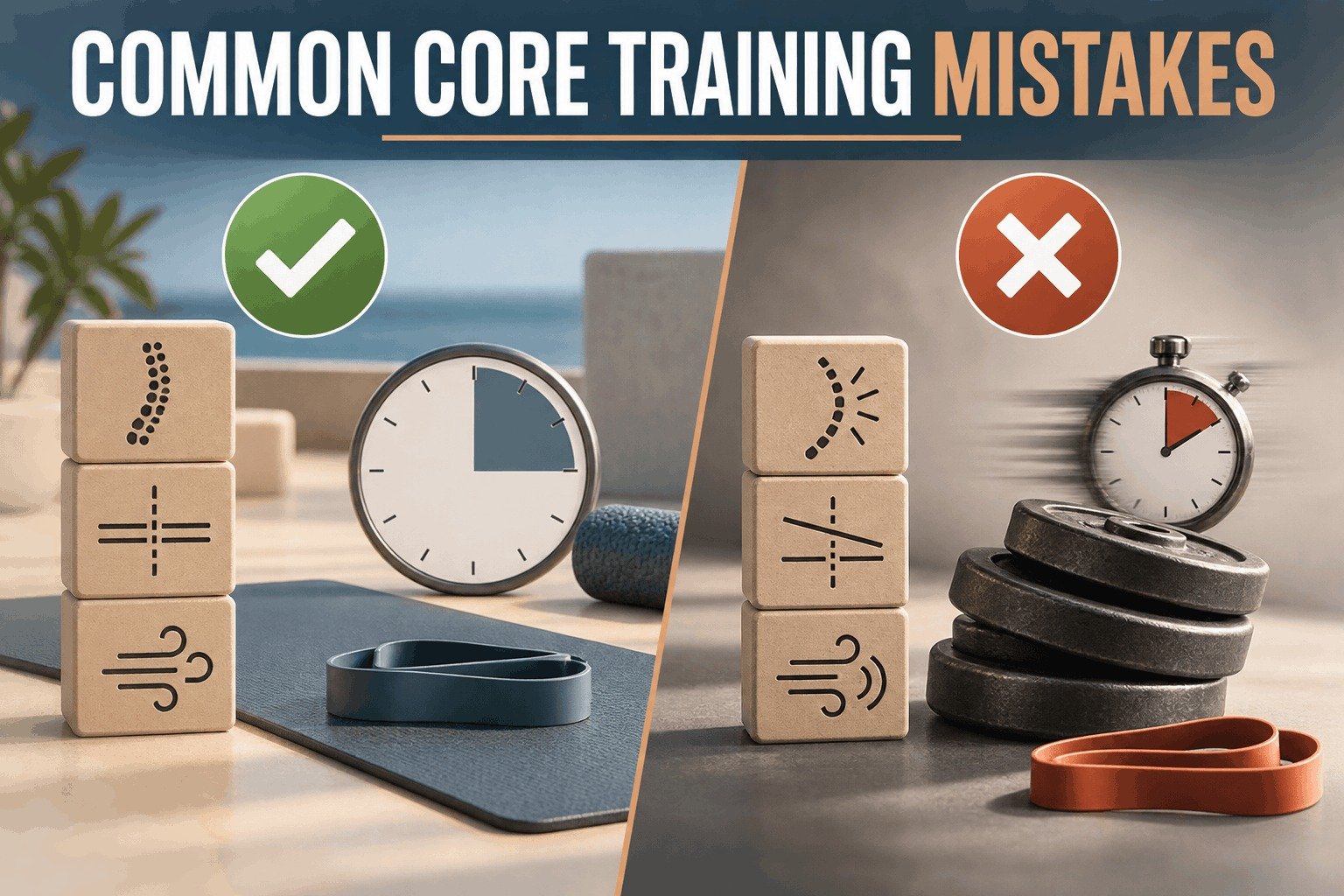
Doing endless crunches
Crunches train repeated bending at the waist, but they do not cover every type of trunk control. Include movements that challenge anti-rotation, side stability, carrying, and controlled limb movement.
Holding your breath
Breath-holding can make a beginner routine tense and difficult to repeat. Use a gentle brace and breathe through the effort. People with certain health conditions may need more specific advice before exercising.
Chasing a long plank too soon
Long holds often turn into sagging hips, shrugged shoulders, or lower-back strain. Start with an incline and stop while the position is still strong.
Moving too quickly
Fast repetitions can hide twisting or loss of control. Slow down enough to notice your breathing and body position.
Training only the front of the body
The sides and back of the trunk, hips, and legs also contribute to movement. Bird dogs, side planks, carries, and full-body strength exercises create a more balanced routine.
Expecting core exercises to remove belly fat
Core exercises strengthen the muscles in your trunk, but they cannot choose where body fat is lost. Changes in body fat depend on overall eating patterns, activity, sleep, health factors, and individual response.
Treating pain as a test of toughness
Muscle effort is different from sharp, radiating, worsening, or unusual pain. Stop and seek guidance when symptoms concern you.
A Simple Two-Week Core Workout Plan
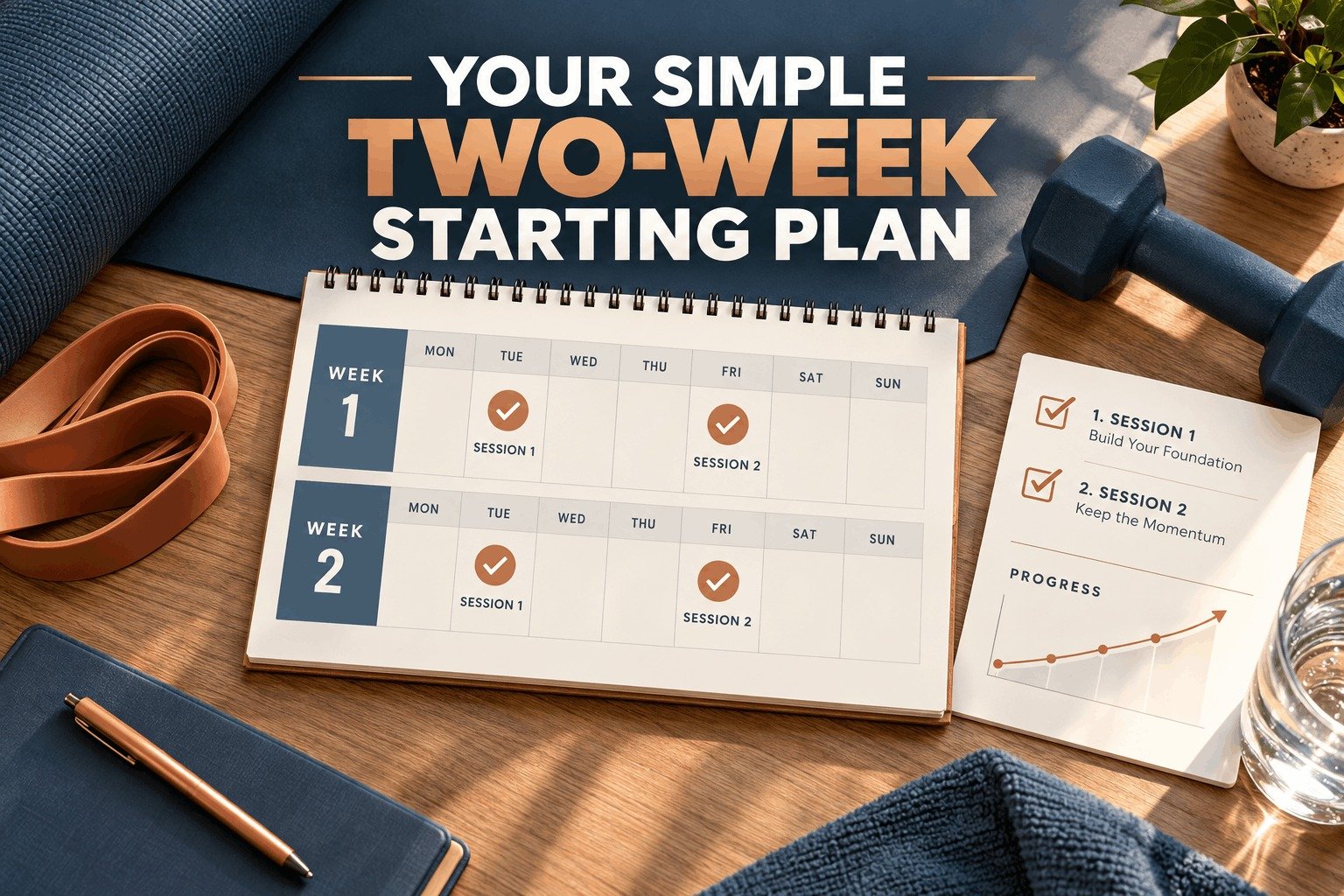
Session 1
Practice gentle bracing for five slow breaths. Then complete one set each of dead bugs, bird dogs, and incline planks. Use a variation that allows steady breathing.
Session 2
After at least one rest day, repeat the routine. Add one or two light farmer carries if you have a safe walking path and suitable weights. Keep the carry short and controlled.
For the next two weeks
Train twice per week. Begin with five repetitions per side for dead bugs and bird dogs, then hold the incline plank for 10 to 15 seconds. Add side planks from the knees or Pallof presses only if the first exercises feel comfortable.
After two weeks
If you can complete the movements with good control and no concerning symptoms, increase only one or two variables. Add a few repetitions, a little time, or a small amount of resistance—not everything at once. If you feel unusually sore or tired, repeat the same level or allow more recovery.
Make the routine easy to repeat
Attach the session to an existing habit, such as after a walk or before a shower. A 10-minute routine you repeat is more useful than a complicated program that fits only an ideal week. Record the variation used and how it felt so you can progress based on evidence rather than guesswork.
Safety: When to Modify or Get Help
Speak with a doctor or physical therapist before starting if you have a significant back or joint problem, recent surgery, a medical condition, balance concerns, or medication-related exercise restrictions. The National Institute on Aging advises people with chronic conditions to build activity gradually and discuss an appropriate plan with a doctor when needed.
Stop exercising and seek urgent medical help for chest pain, fainting, severe shortness of breath, sudden weakness, or loss of bladder or bowel control. For persistent or worsening pain, arrange an individual assessment rather than relying on a generic online routine.
Frequently Asked Questions
What are the best core exercises for men over 40?
There is no single best exercise for everyone. Dead bugs, bird dogs, incline planks, side planks from the knees, Pallof presses, and light carries are useful options because they can be scaled. The best choice is the one you can perform with controlled breathing and consistent form.
How often should men over 40 do core exercises?
Two or three short sessions per week is a reasonable starting point for many people. Leave enough recovery time to move normally and continue other activities. Your age, training history, health, and symptoms may change what is appropriate.
Do core exercises help lower-back pain?
They may be included in some care plans, but they are not a guaranteed fix. Lower-back pain has different causes. If symptoms persist, worsen, or limit normal activity, get individualized advice before following a general plan.
Can core exercises reduce belly fat?
They strengthen trunk muscles but cannot target fat loss in one chosen area. Body-fat changes depend on wider lifestyle and health factors.
Are planks safe with a weak back?
Safety depends on your symptoms and the variation. A high incline plank may be easier than a floor plank, but stop if symptoms increase or your form breaks down. Ask a qualified professional for guidance if you have a diagnosed back condition or recurring pain.
Do I need gym equipment?
No. Dead bugs, bird dogs, and modified planks use body weight. A resistance band or light weights can add options later, but safe setup and control matter more than owning equipment.
Should I do core exercises before or after weights?
Either can work. If core training is your main goal, do a few controlled exercises while fresh. If you are learning heavier lifts, keep the core work short so fatigue does not affect your lifting technique.
How do I know the routine is working?
Look for steadier movement, better control while carrying or lifting, improved breathing, or the ability to use a slightly harder variation without losing form. Sore abdominal muscles are not required for progress.
Final Thoughts
The most effective core strength exercises for men over 40 are not necessarily the most dramatic. They are the movements you can perform safely, breathe through, and repeat over time. Start with three or four exercises, train twice a week, and make small changes only after you have learned the movement.
Core work is one part of a healthy routine. Pair it with walking, full-body strength training, balance practice, and mobility work. If pain or a health condition affects your choices, ask a qualified professional for individual advice.
Helpful Resources
- National Institute on Aging: Three Types of Exercise Can Improve Your Health and Physical Ability
- National Institute on Aging: Exercising With Chronic Conditions
- Centers for Disease Control and Prevention: Physical Activity Guidelines for Older Adults
- MedlinePlus: Exercise for Older Adults
- PubMed: Systematic Review of Core Stability Exercises for Non-Specific Low Back Pain