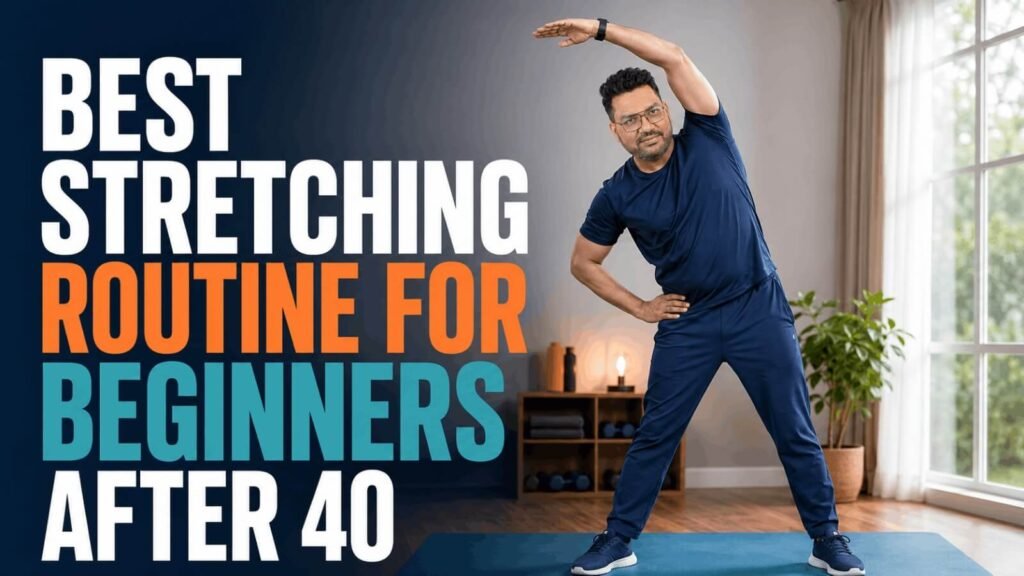
A few years ago, I started noticing something that caught me by surprise. My strength was still there. I could walk, work, and handle my daily physical responsibilities without any major issue. But my body simply didn’t move as freely as it once did.
Getting out of bed in the morning felt a little stiffer. Bending down to tie my shoes required noticeably more effort. After sitting at a desk for long periods, my hips, lower back, and hamstrings felt uncomfortably tight and rigid.
At first, I assumed this physical change was simply an inevitable part of getting older. But as I researched human movement and functional fitness, I realized the core problem wasn’t age alone—it was a persistent lack of targeted mobility and dynamic flexibility work.
Like many adults, I spent years focusing on daily work duties, general chores, and traditional workouts while completely ignoring basic flexibility. What surprised me most was how dramatically better my body felt after adding just a few strategic movements into my weekly routine.
If you are looking to restore your natural movement using the best full body stretching exercises, the good news is that you don’t need expensive equipment, a gym membership, complex tools, or advanced athletic knowledge to get started.
This comprehensive guide will walk you through everything you need to know about setting up a complete beginner-friendly routine, avoiding common form mistakes, and unlocking long-term joint health.
Why Full Body Stretching Exercises Are Essential for Modern Life
Flexibility and joint mobility naturally decline over time if we do not actively work to maintain them. In modern daily life, most people spend the majority of their hours in static positions—sitting at desks, driving vehicles, or looking down at mobile screens.
When your body stays in a single position for hours at a time, your muscles shorten, adapt to that restricted range of motion, and gradually lose their elasticity.
Modern Daily Habits That Cause Chronic Tightness
Prolonged Sitting: Sedentary work schedules cause the hip flexors and hamstrings to remain in a shortened position for hours, pulling directly on the pelvis and lower spine.
Forward Head Posture: Looking down at computers, tablets, and phones causes severe tightness in the neck muscles and upper chest while weakening the upper back.
Lack of Multi-Planar Movement: Everyday walking occurs in a straight line, leaving lateral (side-to-side) and rotational mobility completely neglected.
Post-Workout Stiffness: Exercising without proper recovery or post-workout lengthening causes muscle fibers to repair in tight, constricted arrangements.
Physical & Mental Stress: Stress causes subtle, constant muscle contraction, particularly around the shoulders, neck, and upper spine.
Over time, these combined factors negatively impact your posture, walking stride, balance, athletic capacity, and everyday comfort. Performing effective full body stretching exercises regularly is not just a luxury for elite athletes—it is a fundamental necessity for anyone who wants to live without preventable aches and maintain long-term physical independence.
Subtle Signs Your Body Is Asking for Mobility Work
Many beginners don’t realize that their everyday physical discomforts are actually direct warning signals from tight muscular structures. Your body often gives clear indicators long before severe pain develops.
Common Indicators of Muscle & Joint Tightness:
- Persistent hamstring stiffness when leaning forward
- Dull lower back aching after short periods of sitting
- Frequent neck tension and shoulder tightness near the end of the day
- Difficulty touching your toes without heavily bending your knees
- Rounded shoulders and slouched standing posture
- Reduced range of motion during routine exercises like squats or lunges
If several of these indicators sound familiar, introducing structured full body stretching exercises into your regular schedule will create rapid, noticeable physical relief.
Major Science-Backed Benefits of a Full Body Routine
Committing to a complete body lengthening program delivers physical, mental, and functional advantages that extend far beyond basic flexibility tests.
1. Superior Daily Mobility & Joint Range
Joints are designed to move through complex dynamic ranges. When you stretch your major muscle groups regularly, you preserve the synovial fluid inside joint capsules. This lubricates the joints, allowing your body to bend, reach, twist, and squat easily without feeling stiff or restricted.
2. Reduced Muscle Tightness & Chronic Discomfort
Tight muscles pull on bones and joints, creating imbalance throughout the kinetic chain. For instance, tight calves and hamstrings pull directly on your pelvic girdle, which subsequently strain your lower lumbar spine. Lengthening tight tissues neutralizes these pulling forces, offering profound relief for chronic tightness.
3. Posture Correction & Structural Alignment
Desk work and screen time promote a collapsed chest and forward-slouched shoulders. Targeted stretching reopens tight pectorals and hip flexors, allowing your spine to return to a neutral, upright position effortlessly. Better posture not only prevents back strain but also opens up your thoracic cavity for fuller, healthier lung breathing.
4. Enhanced Workout Performance & Strength
Flexible muscles act like rubber bands—they store and release elastic energy efficiently during movement. By clearing out joint restrictions with full body stretching exercises, you can perform squats deeper, run with a smoother stride, and lift weights through complete functional ranges without structural compensation.
5. Lower Risk of Strains & Tissue Injuries
When a muscle is tight and suddenly subjected to unexpected force—such as slipping on a step, reaching quickly for an object, or sprinting—it is far more prone to tearing or straining. Pliable, well-stretched muscle tissue absorbs sudden tension without pulling away from the tendon attachments.
Essential Safety Rules & Best Practices for Beginners
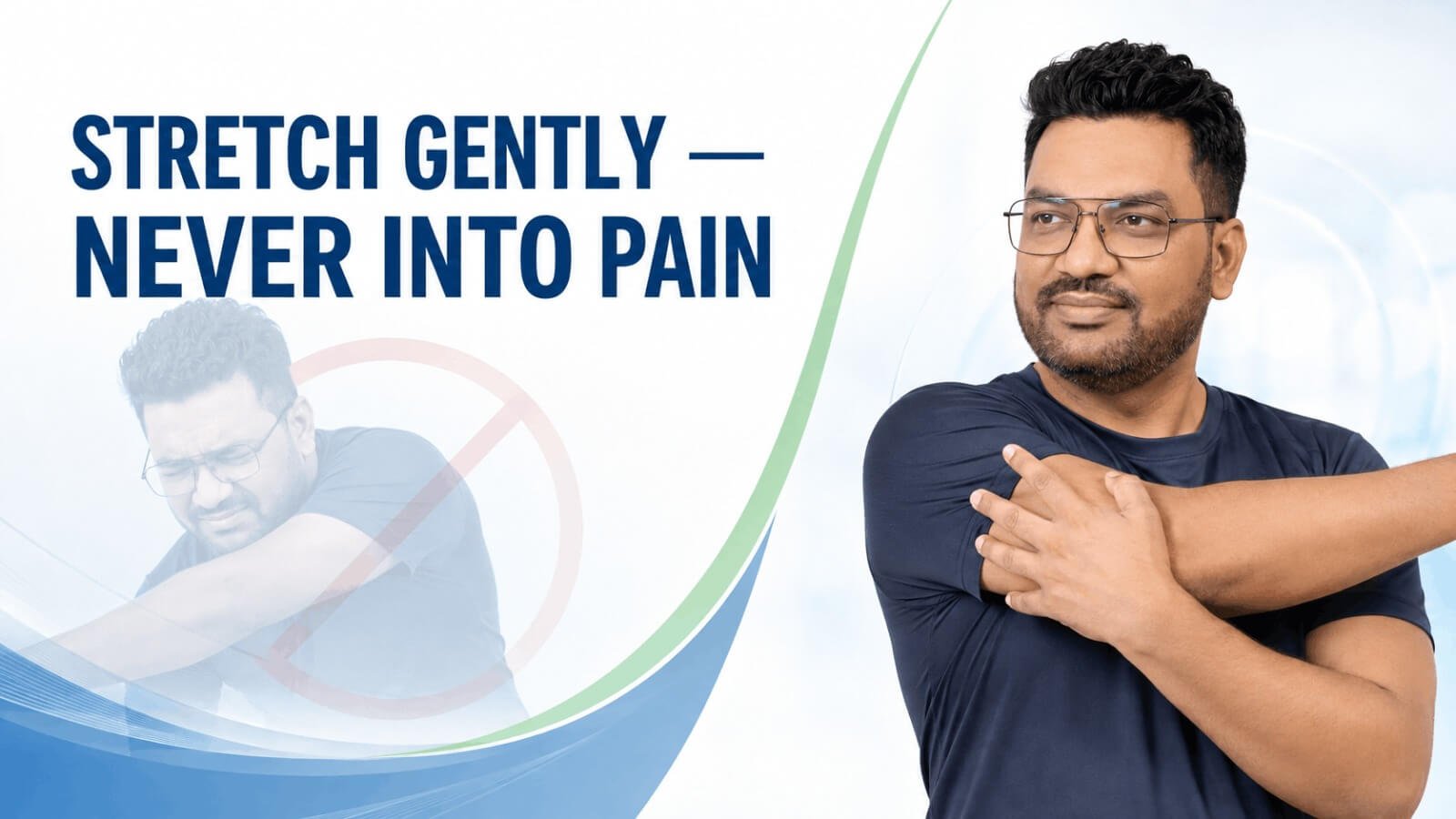
Before jumping into the routine, it is crucial to understand the golden rules of safe stretching. Incorrect form or aggressive forcing can trigger protective muscle reflexes that make your tissues tighter rather than longer.
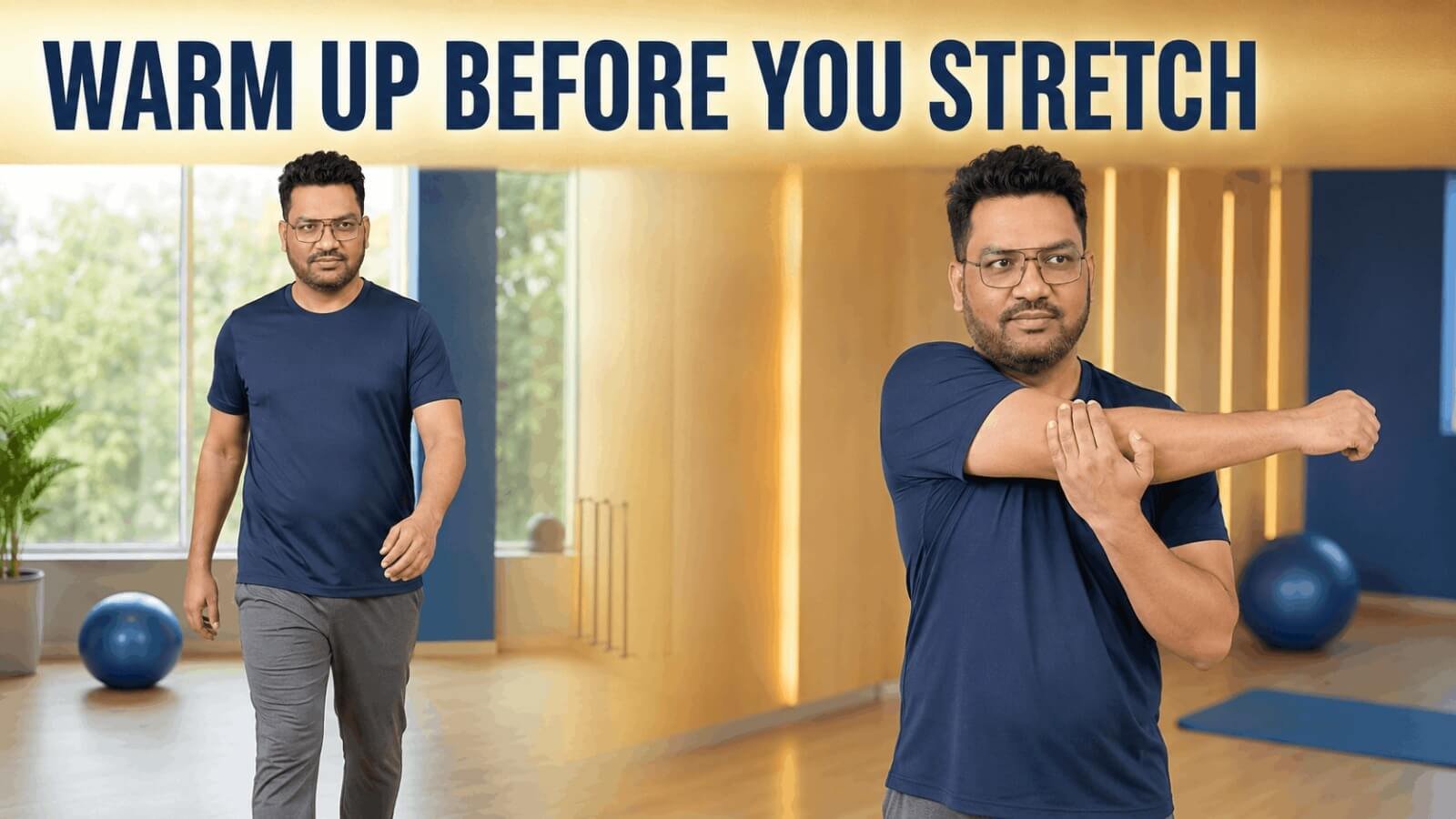
The 10 Best Full Body Stretching Exercises for Beginners
This complete routine targets every major muscle group in the human body—from the base of the skull down to your calves. Perform these exercises in sequence for a complete full-body rejuvenation.
Full-Body Coverage Blueprint:

[Upper Body]  --> Neck, Shoulders, Chest, Upper Back

[Mid Section] --> Thoracic Spine, Hip Flexors, Glutes

[Lower Body]  --> Hamstrings, Quadriceps, Calves
1. The Gentle Neck Release
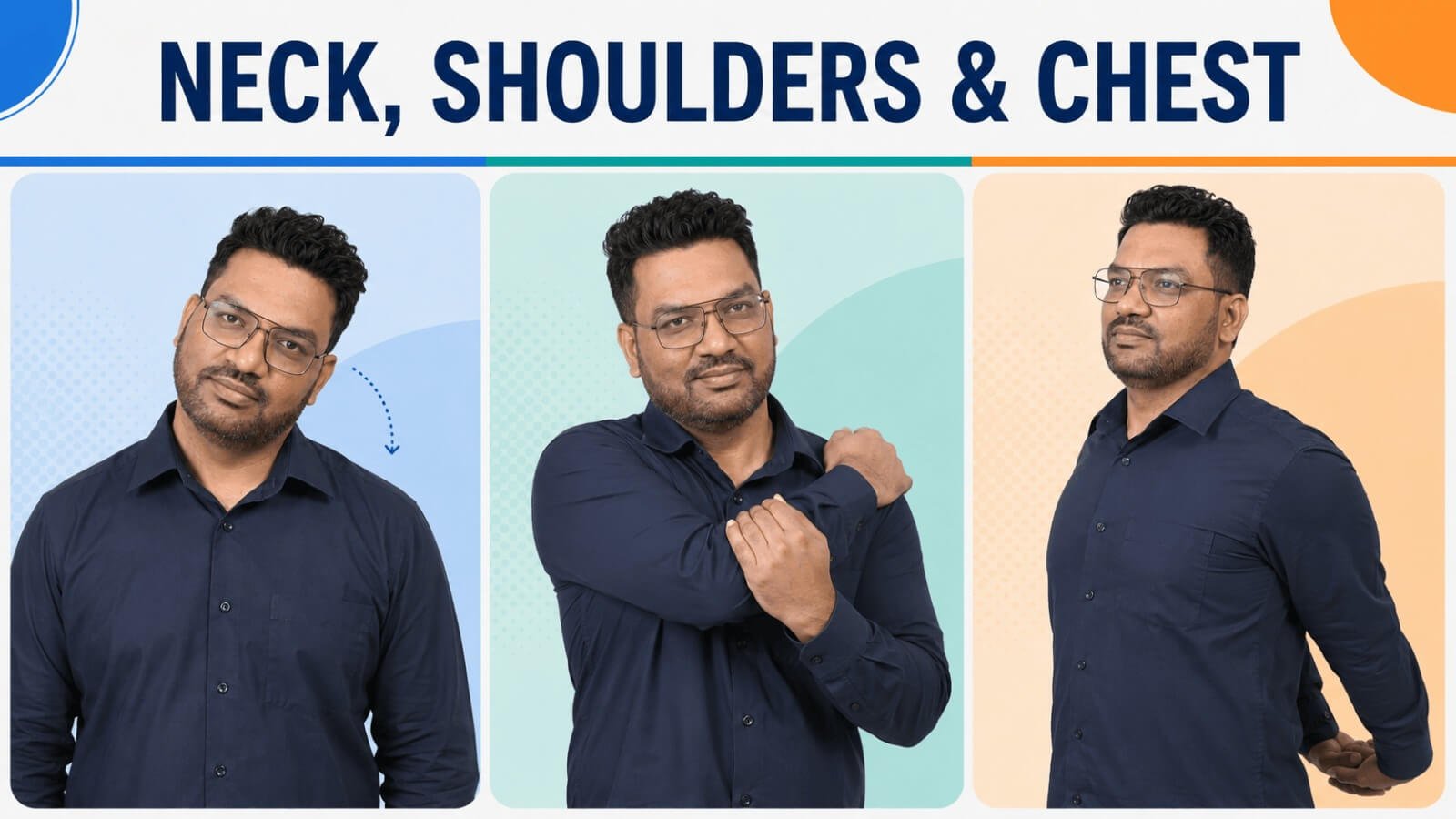
Modern screen viewing places tremendous stress on the cervical spine. Releasing the neck muscles relieves tension headaches, neck stiffness, and upper shoulder pressure.
Target Muscles: Upper Trapezius, Sternocleidomastoid, Levator Scapulae.
Step-by-Step Instructions:
Sit upright on a chair or stand comfortably with your shoulders relaxed.
Gently drop your right ear toward your right shoulder without lifting the shoulder.
For a slightly deeper stretch, place your right hand gently on the left side of your head—do not pull, just allow the weight of your hand to rest there naturally.
Hold for 20–30 seconds while breathing deeply.
Return to center slowly and repeat on the left side.
Form Tips & Pitfalls: Avoid hunching your shoulders up toward your ears. Keep your shoulder blades pressed down and back throughout the movement. for more information how much exercise per week
2. Dynamic Cross-Body Shoulder Stretch
Long periods of typing or driving cause tightness in the rear Deltoids and upper back structure. This movement opens up the back of the shoulder capsule.
Target Muscles: Posterior Deltoid, Infraspinatus, Rhomboids.
Step-by-Step Instructions:
Stand or sit tall with your spine extended.
Bring your right arm across your chest at shoulder height.
Use your left hand or forearm to pull your right arm closer to your chest until you feel a gentle stretch in the back of your shoulder.
Hold the position for 20–30 seconds.
Switch arms and repeat.
Form Tips & Pitfalls: Keep your shoulders down away from your neck. Do not twist your torso to follow the arm; keep your hips and chest facing straight forward.
3. Chest-Opening Doorway Stretch
Sitting naturally pulls your shoulders forward into a rounded position. Opening up the pectoral muscles is the single most effective way to restore upright posture.
Target Muscles: Pectoralis Major, Pectoralis Minor, Anterior Deltoids.
Step-by-Step Instructions:
Stand in an open doorway.
Raise your arms to shoulder height and bend your elbows at a 90-degree angle, resting your forearms flat against the doorframe.
Gently step one foot forward through the doorway until you feel a comfortable stretch across your chest and front shoulders.
Keep your head upright and spine long. Hold for 20–30 seconds.
Step back, switch lead feet, and repeat.
Form Tips & Pitfalls: Avoid arching your lower back excessively to get further forward. Keep your core lightly braced so the stretch stays isolated in your upper chest.
4. Overhead Lat & Side-Body Stretch
The Latissimus Dorsi (Lats) are large muscles running down your back that connect to your lower spine and pelvis. Tight Lats pull down on the shoulders and restrict overhead movement.
Target Muscles: Latissimus Dorsi, Intercostals, Obliques.
Step-by-Step Instructions:
Stand tall with feet hip-width apart.
Reach both arms straight up overhead and interlock your fingers.
Keeping your feet firmly rooted, gently bend your upper body to the right side.
Hold for 20–30 seconds as you breathe into the left side of your ribcage.
Return to center and lean to the left side.
Form Tips & Pitfalls: Avoid leaning forward or backward. Imagine standing between two narrow sheets of glass—move purely to the side.
5. Seated Chair Hamstring Stretch
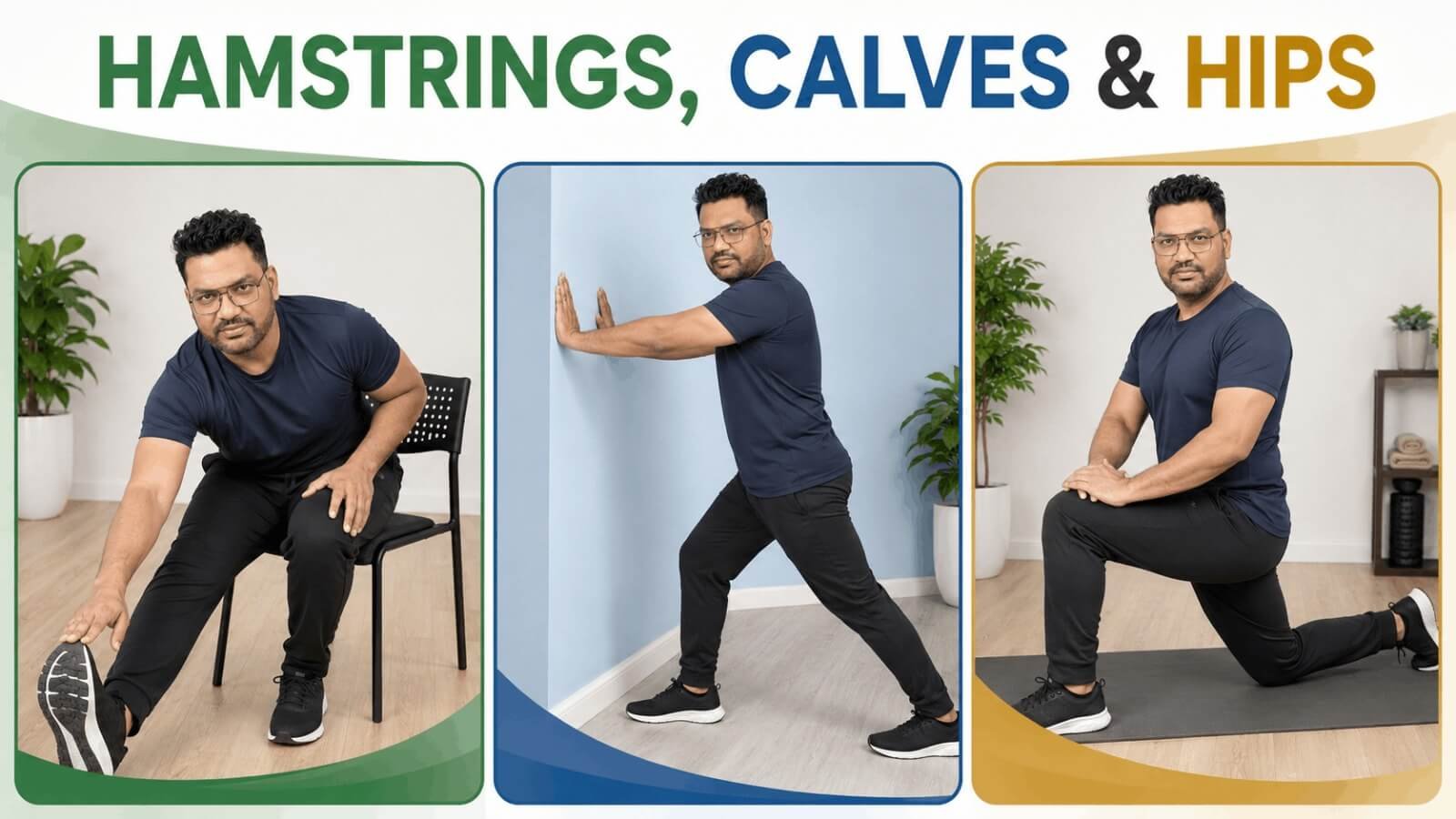
Tight hamstrings draw down on the pelvis, creating severe strain on the lower back. Utilizing a chair keeps the spine supported while targeting the back of the leg safely.
Target Muscles: Biceps Femoris, Semitendinosus, Semimembranosus.
Step-by-Step Instructions:
Sit on the front edge of a sturdy, flat chair.
Extend your right leg straight out in front of you with your heel resting on the floor and your toes pointed upward.
Keep your back completely straight and hands resting on your hips or left knee.
Hinge forward from your hips (not your lower back) until you feel a stretch along the back of your right thigh.
Hold for 20–30 seconds, then switch to the left leg.
Form Tips & Pitfalls: Do not round your upper back to touch your foot. Keep your chest up and push your hips backward to isolate the hamstring tissue.
6. Kneeling Hip Flexor Stretch
Sedentary living causes the hip flexors to freeze in a shortened state. This exercise unlocks the hips, protecting the lower spine and improving your walking stride.
Target Muscles: Psoas Major, Iliacus, Rectus Femoris.
Step-by-Step Instructions:
Kneel down on a soft mat or folded towel.
Step your right foot forward so your right knee is bent at a 90-degree angle directly over your ankle. Your left knee stays on the mat behind you.
Keep your torso completely vertical. Gently shift your weight forward into your right hip until you feel a stretch in the front of your left hip and thigh.
Squeeze your left glute muscle lightly to deepen the stretch.
Hold for 20–30 seconds, then switch legs.
Form Tips & Pitfalls: Avoid leaning your torso forward over your front thigh. Keep your shoulders directly over your hips throughout the stretch.
7. Standing Wall Calf Stretch
Tight calves limit ankle mobility, which leads to plantar fasciitis, altered walking mechanics, and knee strain.
Target Muscles: Gastrocnemius, Soleus, Achilles Tendon.
Step-by-Step Instructions:
Stand about an arm’s length away from a solid wall and place both hands flat against it at shoulder height.
Step your right leg backward, keeping the leg straight and pressing your right heel firmly into the floor.
Bend your front left knee slightly and lean your body weight toward the wall until you feel a deep stretch in your back right calf.
Hold for 20–30 seconds.
Switch feet and repeat on the left leg.
Form Tips & Pitfalls: Ensure your back foot is pointing straight ahead, not angled outward to the side.
8. Lying Knee-to-Chest Lumbar Release
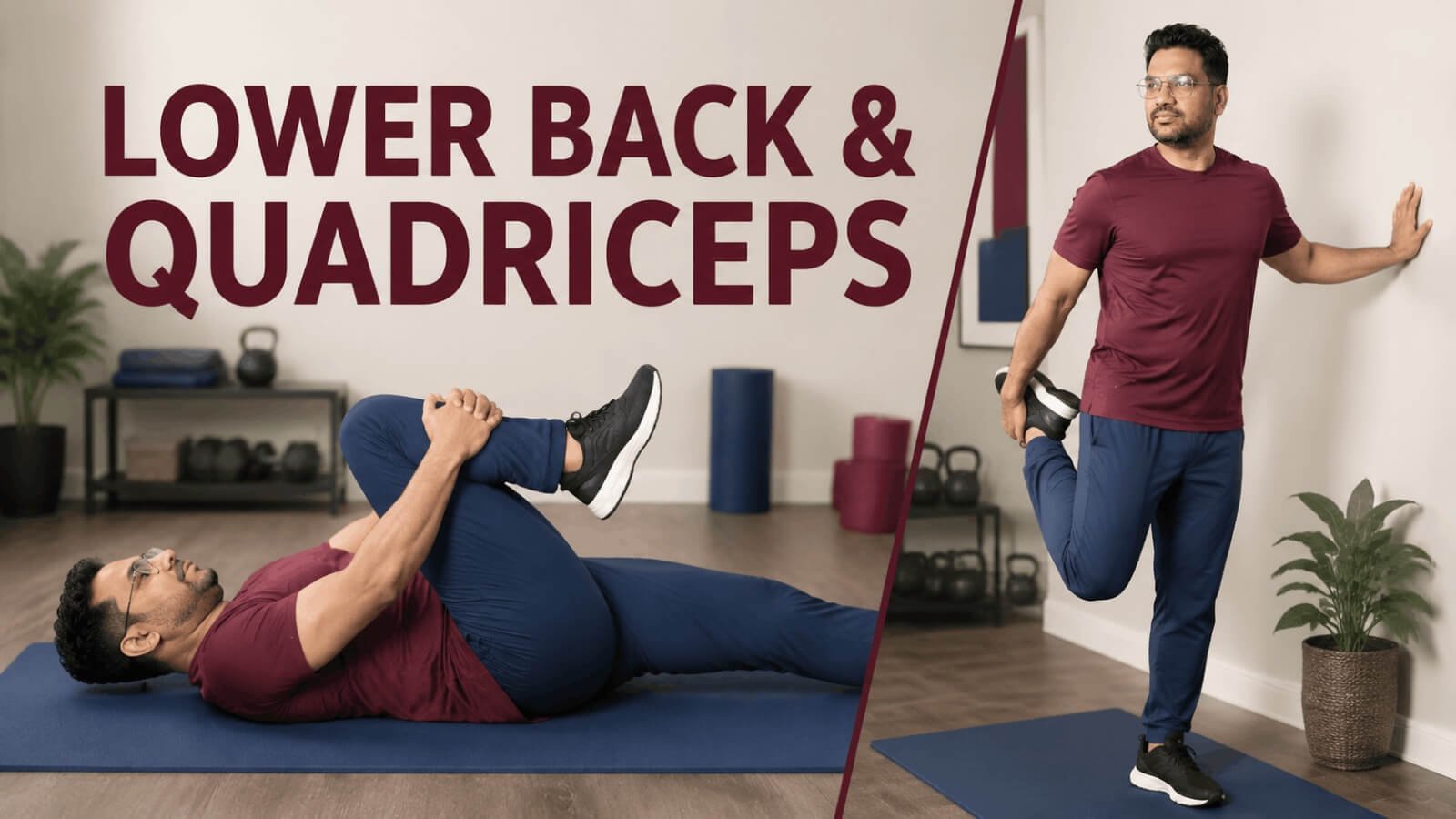
This classic, restorative floor exercise relieves pressure along the lower lumbar spine, sacrum, and gluteal complex.
Target Muscles: Erector Spinae, Gluteus Maximus, Lower Back Fascia.
Step-by-Step Instructions:
Lie flat on your back on a comfortable exercise mat with both legs extended long.
Bend your right knee and lift it toward your chest.
Clasp your hands around your shin or the back of your right thigh and gently pull the knee closer to your torso.
Keep your head, neck, and shoulders relaxed on the mat.
Hold for 20–30 seconds, then release slowly and repeat on the left side.
Form Tips & Pitfalls: Avoid pulling so hard that your hips lift off the floor. Keep your back flat against the mat.
9. Standing Quadriceps Stretch
The quadriceps (front thigh muscles) work constantly during walking, standing, and stair climbing. Keeping them long protects your kneecaps from tracking improperly.
Target Muscles: Rectus Femoris, Vastus Lateralis, Vastus Medialis.
Step-by-Step Instructions:
Stand upright near a wall or sturdy chair for balance support.
Bend your right knee backward, bringing your right heel up toward your buttock.
Reach back with your right hand and grasp your right ankle gently.
Keep your knees close together and standing tall—do not let your right knee flare out to the side.
Gently pull your ankle until you feel a stretch along the front of your thigh.
Hold for 20–30 seconds, then switch legs.
Form Tips & Pitfalls: Avoid arching your lower spine backward as you pull your leg. Keep your abs tucked in to protect your low back.
10. The Reclined Figure-Four Glute Stretch
Tight glutes restrict rotation in the hip joint, causing compensatory stress in the lower back and knees. The figure-four stretch is a gentle, highly effective way to open up the hips.
Target Muscles: Gluteus Medius, Gluteus Minimus, Piriformis.
Step-by-Step Instructions:
Lie on your back with your knees bent and feet flat on the floor.
Cross your right ankle over your left knee, creating a “figure 4” shape with your legs.
Reach through your legs and clasp your hands behind your left hamstring.
Gently pull your left thigh toward your chest until you feel a stretch deep inside your right hip and glute.
Keep your upper body relaxed flat on the floor. Hold for 20–30 seconds.
Release smoothly and switch sides.
Form Tips & Pitfalls: If your hands cannot reach behind your hamstring without lifting your head, loop a small towel or strap around your thigh to extend your reach.
Sample Routine Schedules & Workflows
To make flexibility work a seamless habit, you don’t need to spend hours stretching every day. Choose a routine template below that fits your current life schedule.
Option A: The Quick 10-Minute Daily Reset
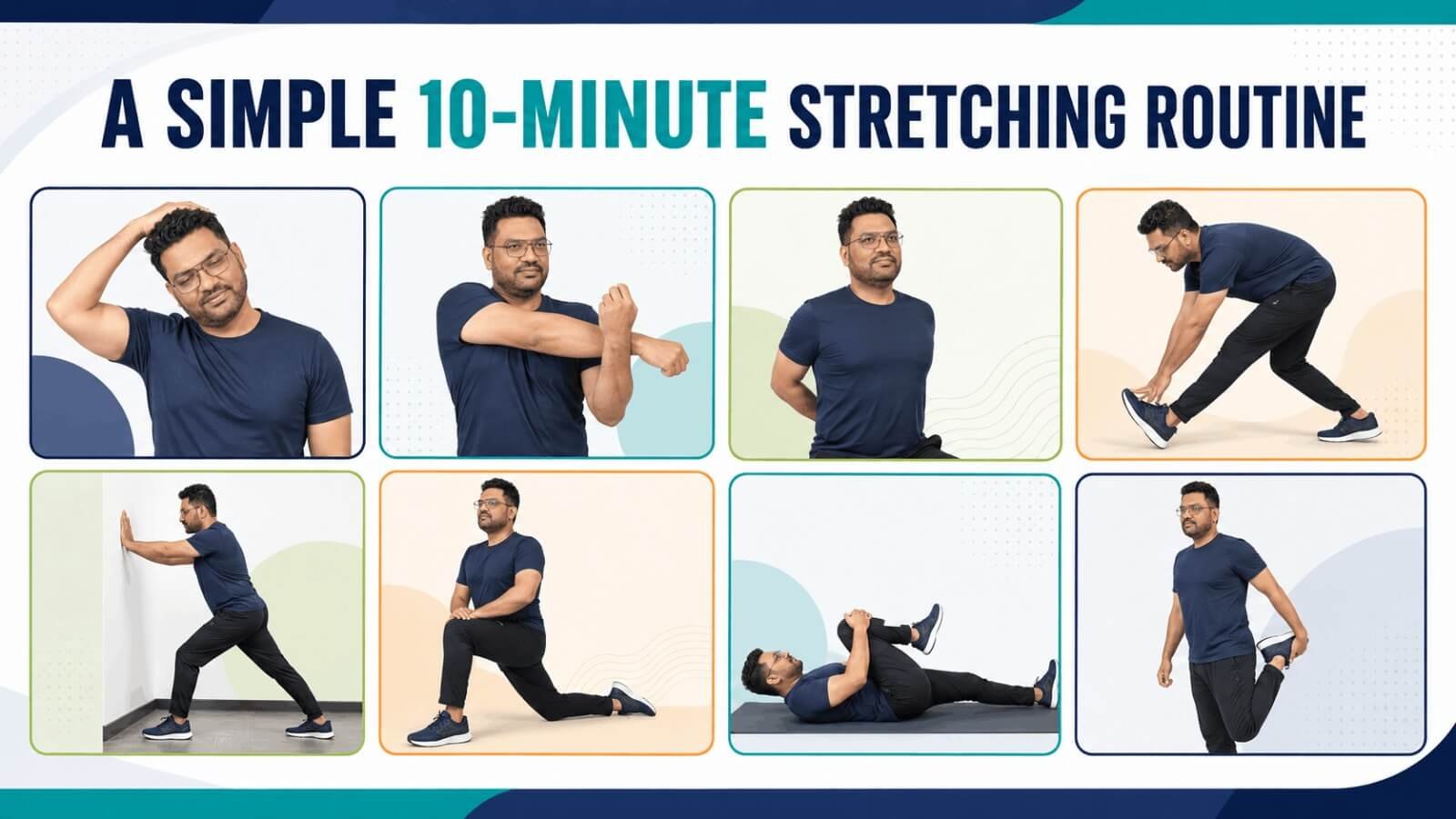
Best for busy professionals who want to clear out work desk stiffness. Hold each stretch for 20 seconds back-to-back:
Neck Release Stretch (Both sides)
Chest-Opening Doorway Stretch
Seated Chair Hamstring Stretch (Both sides)
Kneeling Hip Flexor Stretch (Both sides)
Lying Knee-to-Chest Lumbar Release (Both sides)
Option B: The Full 20-Minute Deep Mobility Session
Best performed 3 times per week (e.g., Monday, Wednesday, Friday) or directly after light cardio/workouts. Hold each of the 10 stretches listed in this guide for 30 full seconds, resting 10 seconds between movements, and repeat for 2 complete rounds.
Frequently Asked Questions(FAQ)
What are the best full body stretching exercises for absolute beginners?
The most effective full body stretching exercises for beginners include simple, low-impact movements such as the neck release, doorway chest stretch, seated hamstring stretch, kneeling hip flexor stretch, standing calf stretch, and lying knee-to-chest release. These cover all major muscle groups safely without putting excessive stress on vulnerable joints.
How long should beginners hold static stretches?
Beginners should hold static stretches for 20 to 30 seconds per position. Holding for less than 15 seconds does not give the neurological system enough time to allow muscle fibers to relax, while holding for longer than 60 seconds is generally unnecessary for basic mobility goals.
Is it safe to perform full body stretching exercises every day?
Yes, gentle light stretching performed daily is completely safe and highly beneficial for healthy adults. Daily stretching helps counteract hours of sitting, improves blood circulation, reduces mental stress, and prevents baseline stiffness from returning.
Should stretching ever feel painful?
No, stretching should never cause sharp, pinching, or intense pain. You should only feel a mild, comfortable sensation of tension (roughly a 4 to 6 on a scale of 10) in the belly of the muscle tissue. If you feel sudden pain inside a joint capsule or sharp nerve shooting sensations, back off immediately.
Can full body stretching exercises help reduce lower back pain?
Yes, targeted full body stretching exercises can significantly reduce non-specific lower back pain. Many back issues are directly caused by tight hamstrings, tight hip flexors, and rigid gluteal muscles pulling the pelvic bone out of alignment. Lengthening these surrounding muscle groups releases pulling tension on the lower spine.
Final Thoughts: Building Consistency for Lifelong Mobility
The single most effective routine is not the most complex or intense one—it is the one you will actually do consistently week after week.
What many people realize over time is that baseline physical flexibility is far easier to maintain through quick daily habits than it is to rebuild after years of total neglect. Integrating these best full body stretching exercises into your regular daily routine will keep your joints mobile, reduce persistent muscle tightness, improve overall postural alignment, and allow your body to move with complete freedom as you grow older.
You don’t need to transform into a high-level gymnast or devote hours to complicated regimens. You simply need to give your body a few targeted minutes of intentional movement every day. Take 10 to 15 minutes today, step into your first stretch, and give your physical health the care it deserves.
Helpful Resources
- Stretching safely and effectively — Mayo Clinic
- Illustrated guide to basic stretches — Mayo Clinic
- Flexibility exercises for beginners — NHS
- How to stretch after exercising — NHS
- Exercise and flexibility during healthy aging — National Institute on Aging
- Three important types of exercise — National Institute on Aging