
A familiar scene: a man finishes a long workday, looks at the weights in the corner, and wonders whether he should train like he did years ago—or whether it is safer to leave them alone. Weight lifting at 40 for men is not automatically risky, and it does not require an athlete’s schedule. For many men, a steady and sensible strength routine can help maintain muscle, improve strength, and make everyday tasks feel more manageable.
The key is to start from your current ability rather than your memory of past performance. A desk job, old injury, family commitments, poor sleep, or years away from exercise can all change what a good first week looks like. This guide explains how to begin, how to choose weights and exercises, how to progress without rushing, and when to seek individual advice.
Weight Lifting at 40 for Men: Quick Takeaways
- Begin with two nonconsecutive full-body sessions per week.
- Choose a load that lets you use a comfortable range of motion and controlled repetitions.
- Train the major movement patterns: squat, hinge, push, pull, carry, and trunk control.
- Add repetitions or a small amount of weight only after your form is steady.
- Walking, sleep, balanced meals, and recovery are part of a sustainable strength plan.
- Stop for sharp, worsening, or unusual symptoms and seek individual advice when needed.
What Changes When You Start Weight Lifting at 40?

Your muscles still respond to resistance training after 40. The basic process is familiar: you challenge the muscles with a manageable load, recover, and repeat. Over time, the body can adapt by becoming stronger and, with suitable training and nutrition, by building or maintaining muscle. Age alone does not make weight training pointless. What can change is the context. Many men have less free time, more sitting, a longer history of aches, or health conditions that affect exercise choices. Recovery may also feel different if sleep is inconsistent or the training load jumps suddenly.
These differences call for a thoughtful plan, not a ban on lifting. It helps to separate getting stronger from trying to set personal records. A man returning to exercise may first notice that a set of stairs feels easier or that he can carry groceries without tiring as quickly. Those gains count. Visible muscle changes often take longer and depend on training history, nutrition, health, and genetics. Progress is individual; avoid promises of a specific result by a specific date. That is why weight lifting at 40 for men works best when it stays simple.
Why Strength Training Matters for Men Over 40
Strength is useful outside the gym. It supports tasks such as lifting luggage, getting up from the floor, carrying a child, doing yardwork, and maintaining independence as the years pass. Resistance training can also complement walking and other aerobic activities. A well-rounded routine works the major muscle groups instead of focusing only on the arms or chest. Muscle is also relevant when managing weight and belly fat. If you are reducing calories, strength training gives your body a reason to retain muscle while body weight changes. It does not selectively burn fat from the waist, and it does not replace sound nutrition or medical care.
But maintaining strength can make weight-management efforts more functional and sustainable. For a broad routine that balances exercise with daily life, see our guide to building a sustainable fitness lifestyle. If your week is crowded with work and family responsibilities, our practical ideas for staying active with a busy schedule may help you protect time for movement. Keep this in mind as you plan weight lifting at 40 for men.
Before You Pick Up the Weights
You do not need a fitness test or a perfect plan to take the first step. You do need an honest look at your starting point. Can you walk comfortably for ten minutes? Can you sit down and stand up from a chair without sharp pain? Do you have a past injury that changes how you move? These questions help you choose a safe variation, not judge your fitness. If you have been inactive, begin with a few minutes of easy movement to warm up: walking, gentle arm circles, or repeated sit-to-stands from a chair. A warm-up should raise your temperature gradually and give you a chance to notice how your body feels.
It should not tire you out before the main work begins. Choose a place where you can put weights down safely. Wear shoes that feel stable, clear trip hazards, and check that adjustable dumbbells or bands are secure. If you train at home, a backpack filled with a small, stable load or water bottles can be an option, but make sure the contents cannot shift or spill. Good habits make weight lifting at 40 for men safer and easier to sustain.
How to Choose a Starting Weight
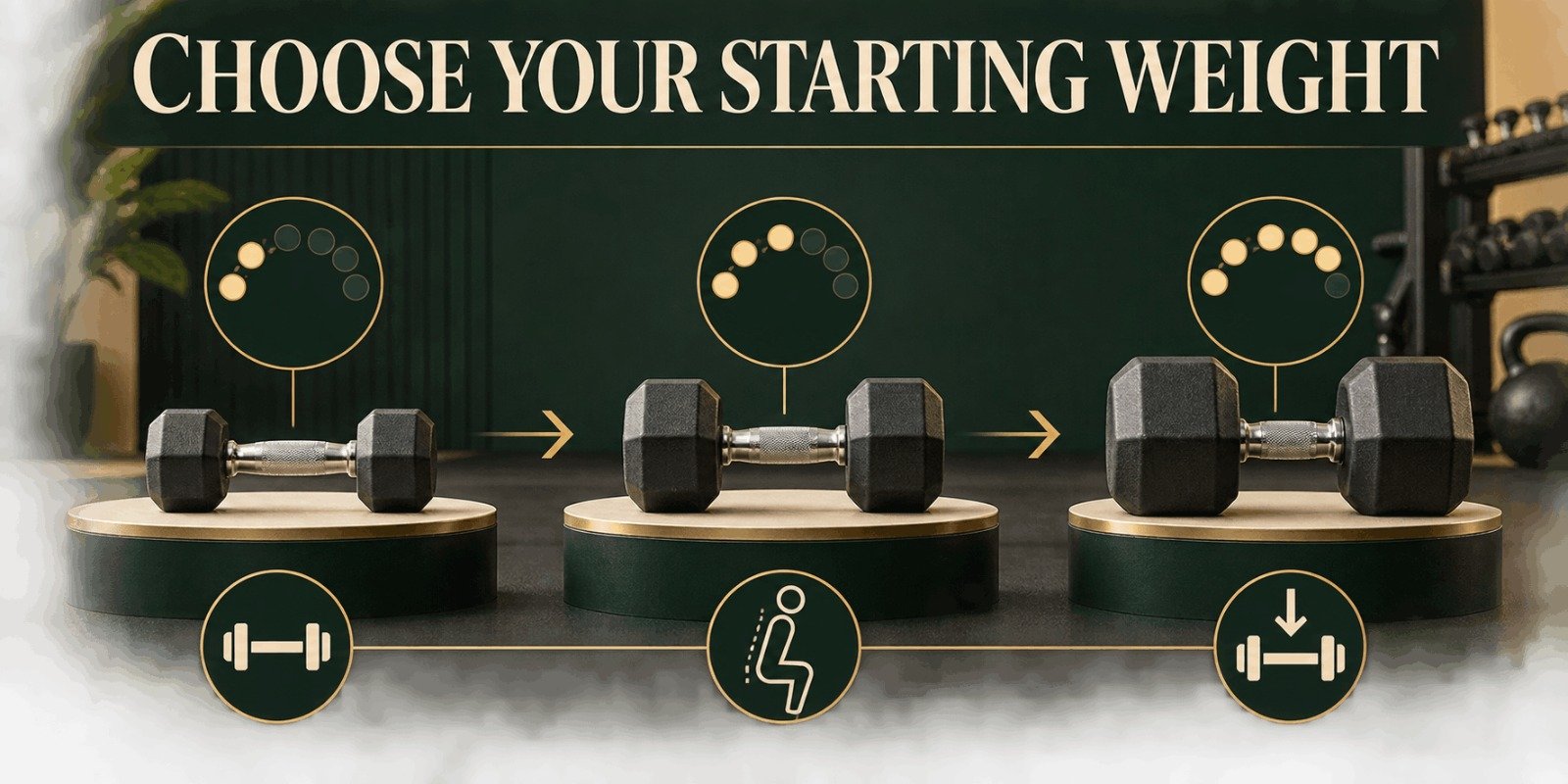
The best first weight is one you can move smoothly through a comfortable range while keeping control. Try a light load for eight repetitions. The last few should feel like work, but you should still be able to speak a short sentence and keep your form. If you could easily do many more repetitions, the weight may be too light; if you need to swing, hold your breath, or shorten the movement sharply, it is too heavy. You do not need to lift to failure—the point where you cannot complete another repetition. Especially when learning a movement, stop with a few good repetitions left.
This helps you practice technique and reduces the temptation to turn each set into a test. Rest for roughly one to two minutes between sets, or longer if you still feel rushed or out of breath. Start with one set per exercise. After a couple of weeks, if you are recovering well and your technique is steady, add a second set to some movements. Add repetitions before making a large jump in weight. Small, gradual changes are easier to assess than changing the load, sets, and training days all at once. This is a core principle of weight lifting at 40 for men.
A Simple Full-Body Routine
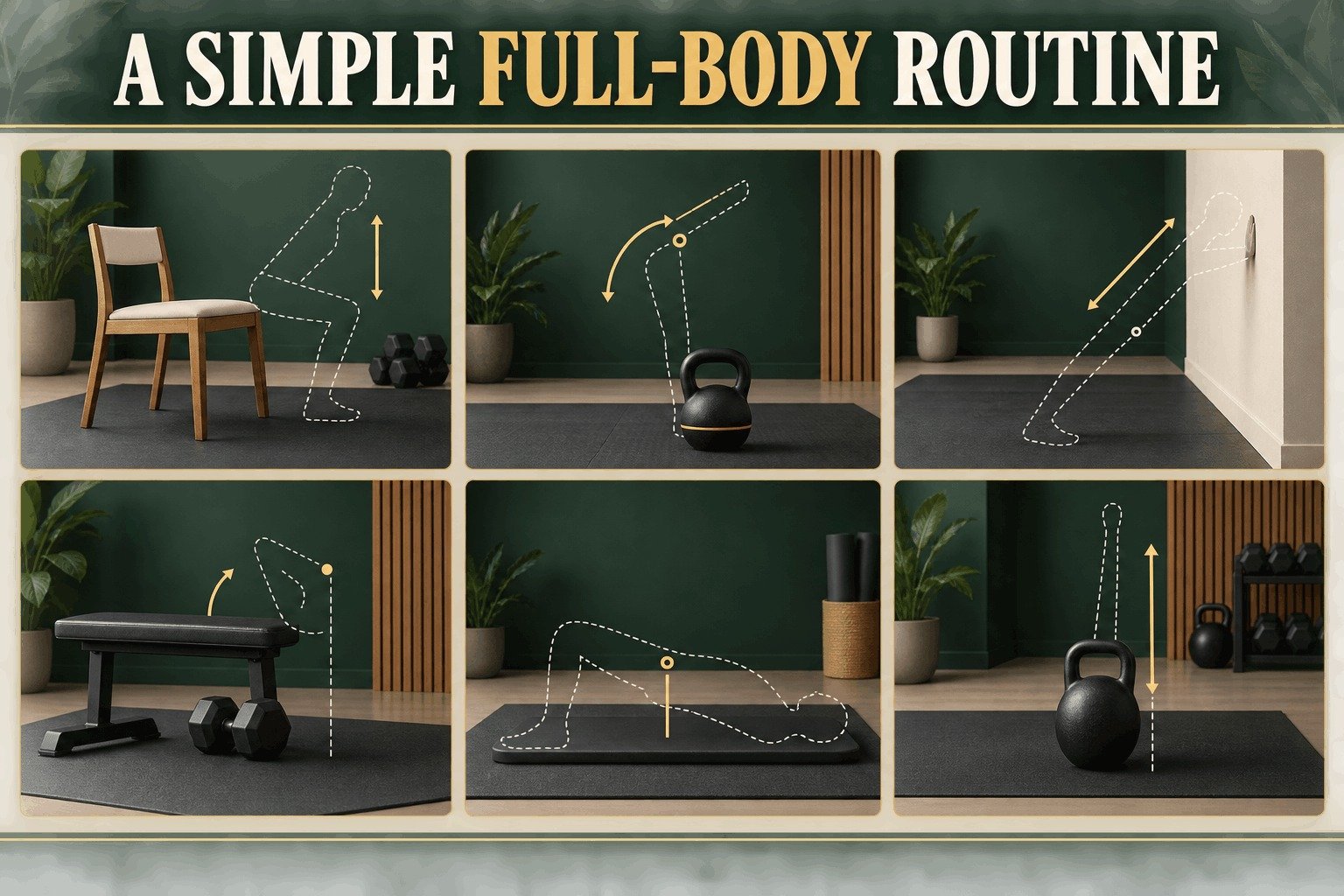
A practical beginner plan includes a movement for the legs, hips, push, pull, and trunk. It can be done at home or in a gym. Try it on two nonconsecutive days each week, leaving at least a day between sessions. This is a starting template, not a personal prescription; adjust for comfort and health needs. Many beginners find that weight lifting at 40 for men feels manageable once the basics are clear.
1. Chair squat or goblet squat
Stand in front of a stable chair with feet about shoulder-width apart. Reach your hips back and lower until you lightly touch the chair, then stand tall. Keep your knees moving in the same direction as your toes. Start with body weight; later, hold a light dumbbell close to your chest if the movement feels controlled. Try 8 to 10 repetitions. If standing is difficult, use a higher chair or push gently from the armrests. If your knees hurt, reduce the depth and consider getting professional advice before progressing. It is a practical point for anyone starting weight lifting at 40 for men.
2. Hip hinge
Stand with feet hip-width apart and soften your knees. Push your hips backward as if closing a drawer with them, keeping your back comfortably neutral. Then stand by bringing your hips forward. Practice with no weight or with a light dumbbell held close to your thighs. This movement helps you learn to bend from the hips when picking things up. Do not force your hands toward the floor. The range should suit your hamstring flexibility and back comfort. Consistency matters more than intensity in weight lifting at 40 for men.
3. Wall push-up or dumbbell press
For a wall push-up, put your hands on a wall at chest height and step back. Bend your elbows to bring your chest toward the wall, then press away. The farther your feet are from the wall, the harder the exercise feels. If you use dumbbells, lie on a stable bench or floor and press the weights upward without bouncing or locking your elbows hard. Choose 8 to 12 controlled repetitions. Keep shoulders comfortable and stop if you feel sharp pain or pressure in your chest. Use this idea to keep weight lifting at 40 for men realistic.
4. One-arm supported row
Place one hand on a sturdy bench or chair and hinge forward slightly. Hold a light dumbbell in the other hand. Pull the weight toward your lower ribs, pause, and lower it slowly. Keep your body still rather than twisting to lift more weight. Do 8 to 12 repetitions per side. A resistance band row is another option: secure a band to a stable anchor, sit or stand tall, and pull the handles toward your ribs. Check the anchor before each use. That balance is central to weight lifting at 40 for men.
5. Glute bridge or supported calf raise
For a glute bridge, lie on your back with knees bent and feet flat. Gently tighten your abdomen and lift your hips until your trunk and thighs form a comfortable line. Lower slowly. Try 8 to 12 repetitions. If getting down to the floor is difficult, use a supported calf raise while holding a counter: rise onto the balls of your feet, pause, and lower. Remember it whenever weight lifting at 40 for men starts to feel overwhelming.
6. Suitcase carry
Hold a light weight in one hand and walk slowly for 20 to 30 seconds without leaning. Set it down, switch hands, and repeat. A carry trains grip and trunk control while you practice walking with a load. Use a clear path and a weight that does not pull you sideways. At first, one set of each movement may take around 20 to 30 minutes, including rest. If that still feels like too much, choose four exercises and keep the habit. The CDC recommends muscle-strengthening activity on at least two days per week, but you can build toward that routine gradually. This detail shapes how weight lifting at 40 for men fits into a busy week.
How to Progress Without Overdoing It

Write down the exercise, weight, and repetitions. This simple record helps you spot gradual improvements and prevents you from guessing. When you can complete the top of your repetition range in every set with steady form for two sessions, add the smallest available amount of weight. If the next weight jump feels too large, add one repetition or slow the lowering phase instead. Expect normal muscle fatigue or mild soreness when you try something new. Soreness is not required for a good session, and severe soreness is not a sign of extra success. If discomfort changes your walking, sleep, or normal activities, reduce the next session’s volume and allow more recovery.
Stop an exercise that causes sharp or worsening pain. Keep at least one easier day between hard sessions for the same muscles. Sleep, food, stress, and total activity affect how ready you feel. A late night or demanding workday may be a reason to shorten the session, use lighter weights, or take a walk instead. Consistency means returning to the plan, not forcing every workout to be identical. Small, repeatable steps make weight lifting at 40 for men sustainable.
Weight Lifting and Common Concerns After 40
“Will lifting make my joints worse?” Not necessarily. Many people can strength train with appropriate exercises and loads, but joint pain has different causes. Use a comfortable range and stop if pain worsens. A physiotherapist or qualified clinician can help modify movements if you have recurring symptoms. “Do I need a gym?” No. Body-weight exercises, resistance bands, and a few adjustable weights can work. A gym may provide machines and coaching, but equipment is only useful if you can access it regularly and use it safely. “Does weight lifting raise testosterone?” Exercise can support general health, but no particular lifting routine guarantees a lasting testosterone increase or treats a hormone condition.
Persistent low energy, reduced sexual interest, or other concerns should be discussed with a clinician rather than treated with unverified boosters. “Can I lift while trying to lose weight?” Often, yes, but an aggressive diet can make training feel harder and make it more difficult to preserve muscle. Focus on gradual weight change, regular meals with protein, and strength work you can recover from. If you have diabetes or use medication that affects blood sugar, ask your healthcare professional how exercise fits your care plan. Treat this as a guide, not a rule, when weight lifting at 40 for men.
Common Mistakes People Make
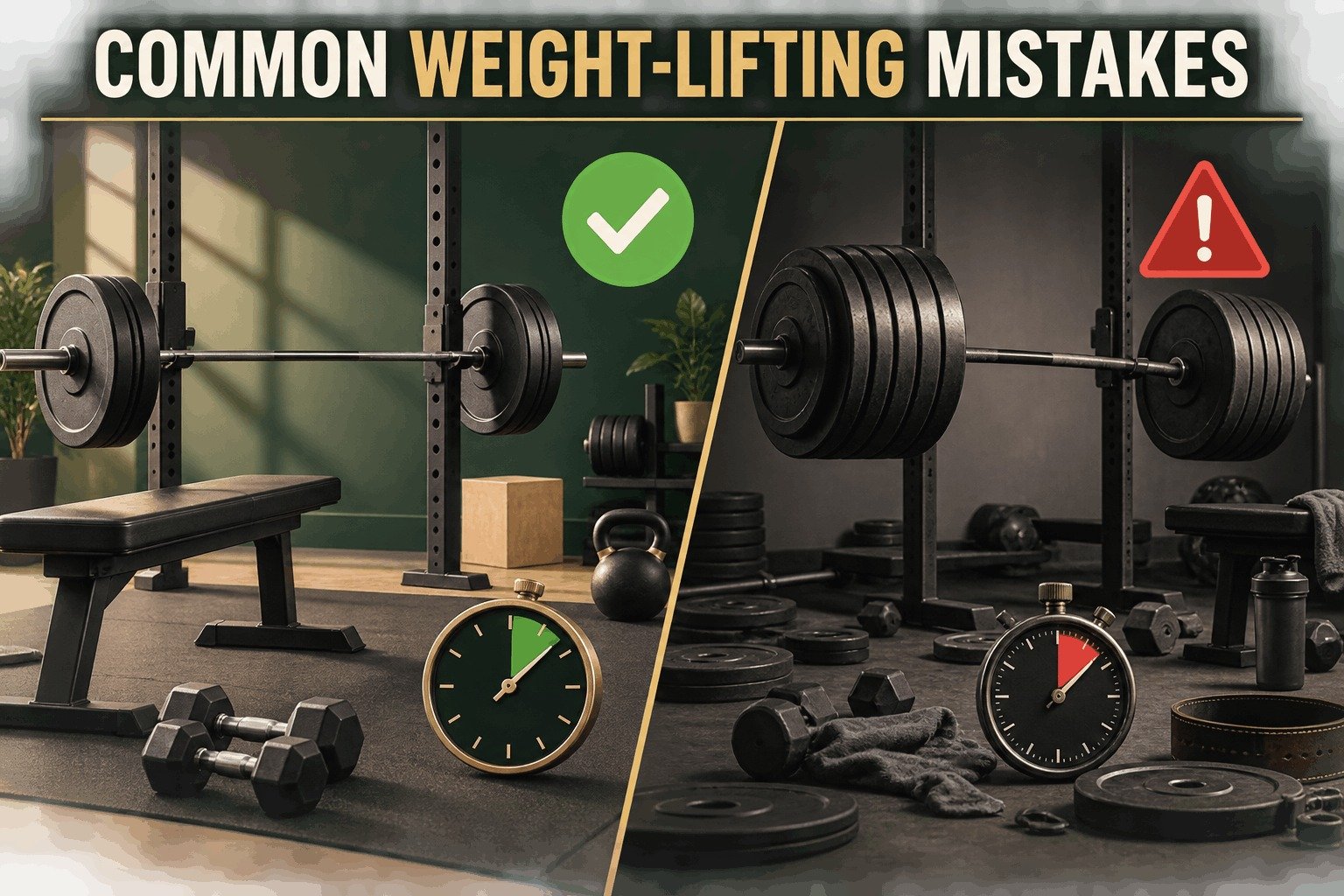
- Starting with the weights you used years ago. Your current ability matters more than your old numbers. Begin lighter and let a few sessions establish your baseline.
- Copying an advanced program. High training volume may not fit your schedule or recovery. Choose a simple routine you can repeat twice a week.
- Adding weight every workout. Progress is not always linear. Repeat a load until you can control it; add resistance only when your form is steady.
- Skipping legs and back. Training only the mirror muscles leaves large muscle groups out. Include squatting, hinging, pushing, and pulling patterns.
- Ignoring pain signals. Pushing through sharp or worsening pain can prolong a problem. Stop the movement and seek advice if symptoms persist.
- Holding your breath during every repetition. Breathe naturally; many lifters find it helpful to exhale during the hardest part. Avoid straining or breath-holding, especially if you have blood-pressure or heart concerns.
- Treating supplements as the foundation. Most beginners do not need a supplement to begin lifting. Build the training habit and eating routine first; check with a professional before using products if you have a condition or take medication.
- Expecting the scale to prove progress. Strength may improve while body weight stays similar. Track repetitions, how movements feel, and other goals that matter to you.
- Quitting after a missed week. Travel, illness, and family needs interrupt routines. Resume with a lighter session instead of trying to make up every missed workout.
Simple Action Plan to Start
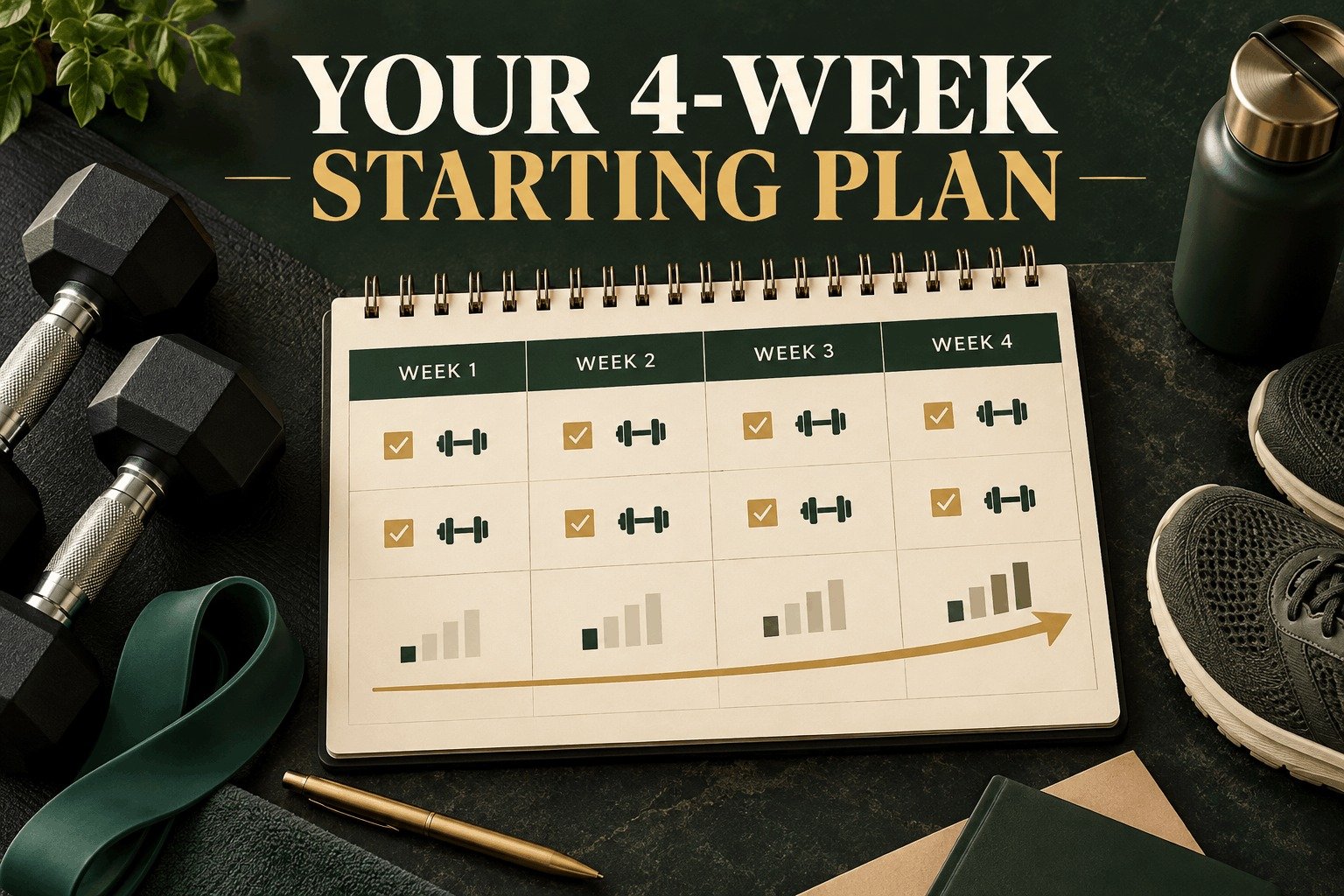
This week: Choose two 25-minute time slots. Walk or move gently for five minutes, then practice chair squats, wall push-ups, supported rows, and a light carry. Do one set of each and finish while you still feel you could do a little more. Weeks 2–3: Repeat the same two sessions. If you recover comfortably, add a second set to two exercises. Record the weight and repetitions, and keep movements slow enough to control. Week 4 and beyond: Add one small challenge, such as one or two more repetitions or a little resistance. Do not add several new exercises at the same time.
If work gets hectic, keep a shorter version ready: one set of squats, push-ups, and rows is still a way to maintain the habit. Every month: Review what is improving and what is uncomfortable. Keep useful exercises, modify what causes trouble, and consider a session with a qualified trainer or physiotherapist if you need help with form or movement choices. Make room for walking, sleep, and balanced meals alongside your lifting days. It helps explain why weight lifting at 40 for men does not need to be extreme.
Safety: When to Get Individual Advice
Talk with a qualified doctor or other appropriate health professional before beginning or changing a strength program if you have a significant medical condition, recent surgery, a serious injury, uncontrolled blood pressure, or symptoms that have not been assessed. If you take medication that affects heart rate, blood pressure, balance, or blood sugar, ask how it may affect your exercise plan. Stop and seek urgent medical care for chest pain, fainting, severe breathlessness, or sudden weakness. This guide is general education, not a personal medical assessment. Apply the same thinking to every session of weight lifting at 40 for men.
Frequently Asked Questions
Is weight lifting safe for men over 40?
For many adults, appropriately chosen strength training can be part of a healthy routine. Start with manageable loads, learn control, and adapt for health conditions or injuries. Age alone does not tell you which exercises are right for you.
How many days a week should I lift weights at 40?
Two nonconsecutive full-body sessions a week is a practical starting point for many beginners. Experienced lifters may choose a different schedule, but the plan should allow recovery and fit the rest of your life.
Should I lift heavy or use light weights after 40?
Neither label determines safety by itself. Use a load that challenges you while allowing smooth repetitions and good form. Beginners should start light enough to learn the movement before increasing resistance.
Can I start weight training at 40 if I am overweight?
Many people can begin with adjusted exercises and lighter loads. Start with supported movements and short sessions if needed. If weight, mobility, pain, or a medical condition affects your ability to exercise, get tailored advice.
Is soreness normal after lifting weights?
Mild soreness can occur after unfamiliar exercise, but it is not required for progress. Severe or persistent pain, swelling, or pain that limits daily activity deserves attention and may mean the routine needs to change.
Can I build muscle with home weights?
Yes, a gym is not essential. Dumbbells, bands, and body-weight movements can provide resistance. As you get stronger, you may need ways to increase the challenge safely.
Should I do cardio or weight lifting first?
It depends on your main goal and schedule. If strength is the priority, do strength work while fresh, then walk or cycle if time allows. If you are building a general routine, the best order is often the one you can maintain.
Do men over 40 need supplements for weight lifting?
No supplement is required to start. A balanced diet and consistent training are more important. Ask a qualified professional before using supplements if you have a health condition or take medication.
Final Thoughts: Start With the Weight You Can Control
The most sustainable lifting plan is usually less impressive on paper than the one that survives a busy month. A man who starts with light weights, learns the movements, and returns twice a week is building a stronger base than someone who trains hard once and disappears for weeks. If weight lifting at 40 is new—or new again—begin with a short full-body session, record what you do, and increase the challenge slowly. Your next step is simply to put two manageable sessions on the calendar and show up for the first one. This is where weight lifting at 40 for men becomes a long-term habit.
Helpful Resources
- National Institute on Aging: How Can Strength Training Build Healthier Bodies as We Age?
- Centers for Disease Control and Prevention: Adult Activity Guidelines
- National Institute on Aging: Three Types of Exercise Can Improve Your Health and Physical Ability
- American College of Sports Medicine Position Stand on Resistance Training (PubMed)
- PubMed: Protein Supplementation and Resistance Training Meta-analysis