

After turning 40, one thing many men notice is that mornings start to feel different. You may sleep for several hours but still wake up heavy. You may need two cups of coffee before your mind feels active. You may feel fine for the first hour, then suddenly lose energy before lunch.Like many men over 40, you may think this is just age. But in many cases, morning tiredness is not only about age. It is often connected to sleep quality, stress, late-night eating, low movement, poor hydration, irregular routines, and how you start the first hour of your day.
While many men look for what vitamin gives you energy, establishing the right morning habits alongside proper nutrition can make a real difference. You do not need a perfect lifestyle. You do not need a complicated routine. Small habits done regularly can help your body wake up better, your mind feel clearer, and your energy stay more stable throughout the day.
In this article, you will learn why morning energy drops after 40, what happens inside the body, which habits help most, what mistakes to avoid, and how to follow a simple action plan that fits a busy professional lifestyle.
Why Morning Energy Levels Drop After 40

Low morning energy is common among men over 40, but it should not be ignored. Your morning energy often reflects what happened the night before and how your body is functioning overall.
Many men wake up tired because they are not truly recovering during sleep. They may be sleeping late, eating heavy dinners, using screens at night, carrying stress into bed, or waking during the night without realizing it.
Morning tiredness may also be linked to:
- Long sitting during the day
- Low physical activity
- Belly fat gain
- Poor food choices at night
- Dehydration
- Blood sugar ups and downs
- Stress and overthinking
- Low sunlight exposure
- Irregular sleep schedule
- Too much caffeine late in the day
One thing that becomes clear after 40 is that energy is not random. It is built through daily habits. If your evenings are stressful and your mornings are rushed, your body may never get a proper chance to reset.
Why Morning Habits Matter More for Men Over 40
When you are younger, the body often forgives poor habits. You can sleep late, eat heavily, skip exercise, and still manage the next day. After 40, that flexibility reduces.
This does not mean you are weak. It means your body needs better support.
Morning habits matter because they set the tone for your hormones, digestion, movement, blood sugar, stress response, and mental focus. A poor morning can make the whole day feel heavier. A better morning can help you feel more in control.
For men over 40, morning habits can support:
- Better energy levels
- Improved focus at work
- Better blood sugar control
- Less belly fat gain
- Improved mood
- Better digestion
- More stable appetite
- Better workout consistency
- Healthier aging
- More confidence
Busy men often think they need more time. In reality, they often need a better system. Even 20–30 minutes of structured morning habits can improve the way the day begins.
The Simple Science Behind Morning Energy
Your body follows a natural 24-hour rhythm called the circadian rhythm. In simple words, this is your internal body clock. It helps control when you feel awake and when you feel sleepy.
Morning light, movement, food timing, caffeine, and sleep patterns all affect this internal clock.
Morning Light Wakes Up the Body
Light is one of the strongest signals for your body clock. Morning sunlight tells your brain that the day has started. This can support alertness during the day and better sleep at night.
When you stay indoors in low light for most of the morning, your body may feel slower and less alert.
Movement Improves Blood Flow
After sleeping for several hours, your body can feel stiff. Gentle movement increases blood flow and helps your muscles and joints wake up. This is why even a short walk or light stretching can make you feel more alive.
Hydration Supports Mental Clarity
During sleep, you go several hours without water. If you start the day dehydrated, you may feel dull, tired, or headachy. Drinking water in the morning is simple, but many men skip it and go directly to tea or coffee.
Breakfast Affects Energy Stability
A very sugary breakfast can give quick energy but may lead to a crash later. A balanced breakfast with protein, fiber, and healthy fats can help energy stay more stable.
Stress Can Drain Energy Early
Checking emails, messages, or news immediately after waking can put your mind into stress mode. This can make you feel rushed before the day even begins. A calmer morning helps protect mental energy.
Warning Signs Your Morning Routine Needs Improvement
Your morning routine may need attention if you regularly notice:
- Waking up tired
- Needing coffee before feeling normal
- Feeling irritable early in the day
- Skipping breakfast but overeating later
- Feeling sleepy after breakfast
- No motivation to move
- Stiff back, neck, or legs
- Poor focus at work
- Craving sugar before lunch
- Feeling rushed every morning
- Belly fat increasing
- Poor sleep at night
These signs do not mean you need a complete life change overnight. They simply mean your body is asking for better daily support.
Best Morning Habits: What Vitamin Gives You Energy?

The best morning habits are simple, repeatable, and realistic. You do not need to follow every habit perfectly. Start with a few and build slowly.
1. Wake Up at a Consistent Time
A consistent wake-up time is one of the most underrated morning habits. Your body likes rhythm. When you wake up at very different times every day, your internal clock can become confused. This may affect sleep quality, hunger, mood, and energy.
- How to Start: Choose a wake-up time that works for your real life. Try to keep it similar on most days, even on weekends. You do not need to wake up at 5 a.m. The goal is consistency, not extreme discipline.
- Why It Helps Men Over 40: After 40, irregular sleep can affect recovery, appetite, stress, and mental focus. A fixed wake-up time helps your body understand when the day begins.
2. Drink Water Before Coffee
Many men start the morning with tea or coffee. Coffee is not the problem. The problem is skipping water completely. After a night of sleep, your body needs hydration. Even mild dehydration can make you feel tired or mentally slow.
- Simple Habit: Drink one or two glasses of water after waking. You can add lemon if you like, but plain water is enough.
- Why It Helps: Water supports digestion, blood flow, body temperature, and mental clarity. It is one of the easiest ways to start the day better.
- Practical Tip: Keep a glass or bottle of water near your bed or in the kitchen so you see it before coffee.
3. Get Morning Sunlight
Morning sunlight is a powerful natural energy signal. When light enters your eyes in the morning, it helps tell your body that it is time to be awake. It can also support better sleep later at night by helping regulate your sleep-wake rhythm.
- How to Do It: Try to get 10–20 minutes of outdoor light in the morning. You can walk outside, sit near sunlight, stand on a balcony, or spend a few minutes in your garden. Even on cloudy days, outdoor light is usually stronger than indoor light.
- Safety Tip: Do not stare directly at the sun. Just be outside in natural light.
4. Do 5 Minutes of Mobility
Morning stiffness is common after 40. The neck, back, hips, knees, and shoulders may feel tight, especially if you sit long hours or sleep in one position. A short mobility routine can help your body wake up.
Simple 5-Minute Mobility Routine (Do each movement slowly):
- Neck rotations: 30 seconds
- Shoulder rolls: 30 seconds
- Arm circles: 30 seconds
- Cat-cow stretch: 60 seconds
- Hip circles: 60 seconds
- Bodyweight squats: 60 seconds
- Ankle circles: 30 seconds
5. Take a Short Morning Walk

When considering what vitamin gives you energy, remember that behavioral habits are just as vital. Walking is a powerful morning habit that jumpstarts your metabolism. It combines movement, sunlight, fresh air, and mental clarity.
- How Long Should You Walk? Start with 10 minutes. If you have time, aim for 20–30 minutes.
- Why It Helps: Morning walking can improve blood flow, support heart health, reduce stress, improve mood, and help with belly fat management.
If running feels too hard or uncomfortable, walking is enough to start.
This connects well with: Walking vs Running – Which Is Better.
6. Eat a Protein and Vitamin-Rich Breakfast
Breakfast is an excellent time to get nutrients into your system. If you are wondering what vitamin gives you energy, look no further than B vitamins (like B12) and Vitamin D, which you can get from a wholesome breakfast.
- Good Breakfast Options: Eggs (rich in B vitamins), Greek yogurt with nuts, oats with fruit, or lean meat with whole grain bread.
- Why Protein & Vitamins Matter: Protein supports muscle repair and fullness, while essential vitamins convert food into actual cellular energy. This is crucial after 40 for maintaining stamina.
7. Delay Coffee Slightly
Coffee can be part of a healthy routine, but drinking it immediately after waking may not be ideal. Some men feel better when they drink water first, move a little, and then have coffee after 30–60 minutes to allow their natural energy hormones to wake them up first.
8. Avoid Checking Your Phone Immediately
This is one of the most important habits for mental energy. When you check your phone immediately, your brain is hit with stress and notifications before your day starts. Mental stress can drain physical energy rapidly. Give yourself the first 15–30 minutes without phone scrolling.
9. Plan the Day in 3 Priorities
A busy mind wastes energy. Instead of thinking about 20 tasks at once, write down the top 3 priorities for the day. A clear plan reduces decision fatigue, helping you feel more organized and less reactive.
10. Do a Short Strength Routine
A short morning strength routine can activate the body and improve vitality.
- Simple 8-Minute Strength Routine (2 rounds): 10 bodyweight squats, 8 incline push-ups, 10 resistance band rows, 12 glute bridges, 20-second plank.
This connects naturally with: How Often Should You Exercise Weekly.
11. Practice 3 Minutes of Deep Breathing
Morning breathing helps calm the nervous system and reduce stress. Inhale through the nose for 4 seconds, hold for 2, and exhale slowly for 6 seconds. It gives your mind a clean, focused start.
12. Avoid Heavy Sugary Breakfasts
A breakfast full of sugar (like sweet cereals, pastries, or white bread with jam) causes blood sugar to rise quickly and then crash, leaving you tired and hungry before lunch.
13. Prepare the Night Before
Morning energy often depends on evening preparation. Preparing your clothes, water bottle, and layout the night before ensures a smoother, stress-free morning.
Real-World Examples
- Example 1: The Busy Office Worker: Wakes up at 7:00 a.m., checks his phone, rushes breakfast, and drives to work stressed. By 11:00 a.m., he feels tired. Better routine: Water, 5 mins mobility, 10 mins sunlight walk, protein breakfast, and no phone for the first 20 minutes.
- Example 2: The Man With Belly Fat and Low Energy: Wakes up tired, skips movement, drinks sweet tea, and eats a heavy breakfast. Better routine: Water first, short walk, a protein-and-vitamin-dense breakfast, and less sugar.
- Example 3: The Business Owner With No Fixed Schedule: Sleeps late, wakes at different times, and starts work immediately. Better routine: Fixed wake-up window, 10 minutes morning light, and a clear 3-priority list.
- Example 4: The Man Who Feels Mentally Drained: Wakes up and checks messages immediately. Better routine: No phone for the first 20 minutes, a breathing exercise, and writing down tasks calmly.
Common Mistakes People Make

- Trying to Change Everything Overnight: Start with just two habits instead of rewriting your whole lifestyle.
- Checking the Phone Immediately: This creates stress before your body and mind are ready.
- Skipping Water: Starting with coffee only may leave you dehydrated. Drink water first.
- Eating Too Much Sugar: Sugary breakfasts cause major midday energy crashes.
- Ignoring Sleep: Morning energy begins at night. Habits cannot fully replace missing rest.
- Looking Only for Quick Fixes: If you solely search for what vitamin gives you energy without fixing your hydration, sleep, and movement habits, you won’t see lasting results.
- Simple Action Plan
- Week 1: Build the Base: Consistent wake-up time, drink water before coffee, get 10 minutes of light, and avoid the phone early on.
- Week 2: Add Movement: Add 5 minutes of mobility and a 10-minute morning walk.
- Week 3: Improve Food and Focus: Focus on a protein-rich breakfast, minimize sugar, and delay coffee slightly.
- Week 4: Make It a Lifestyle: Extend walks to 20 minutes, incorporate light strength training, and prepare the night before.
Simple Morning Routine for Busy Men (30 Minutes)
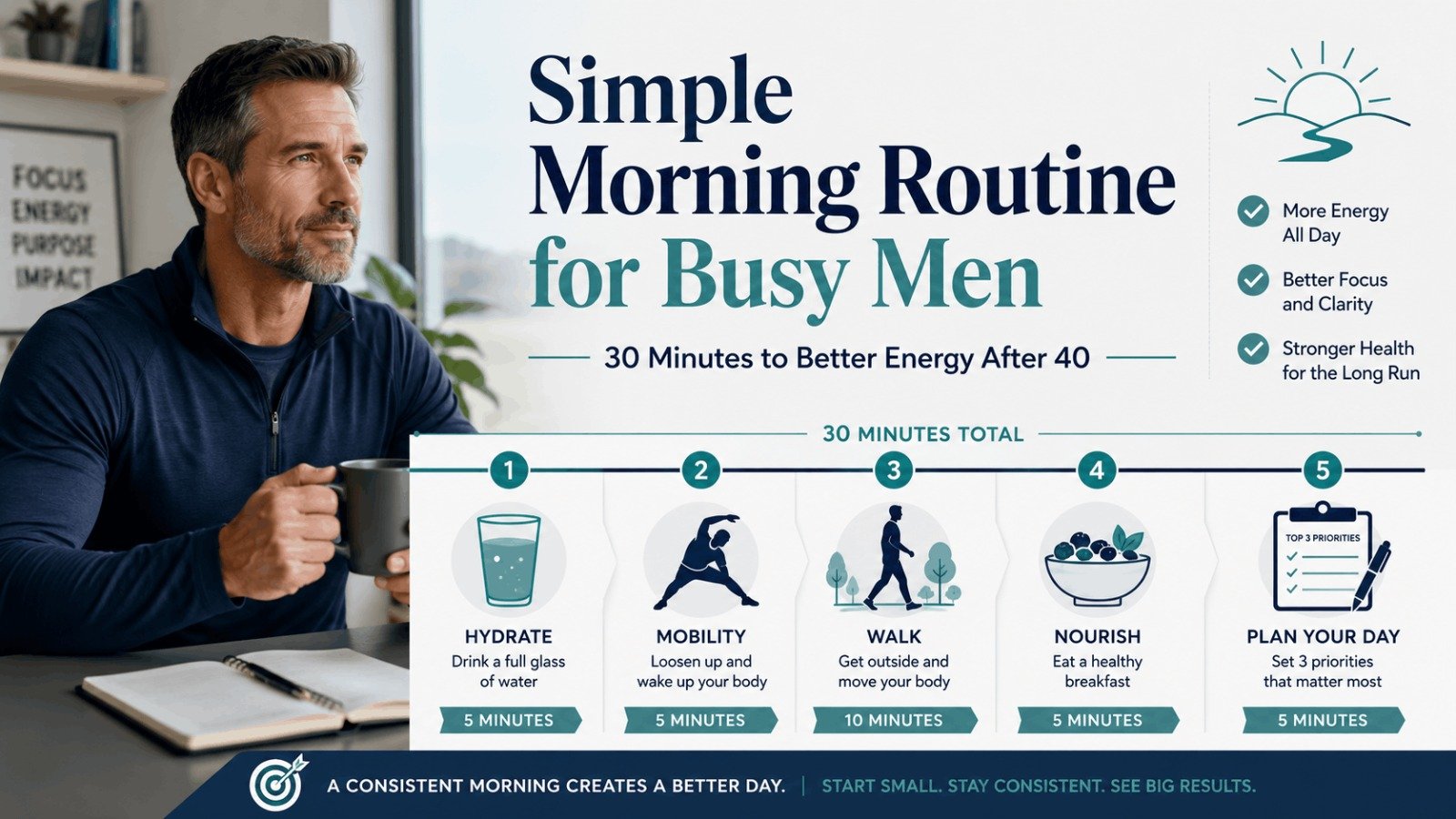
- First 5 Minutes: Wake up, drink water, wash face, avoid phone.
- Next 5 Minutes: Light mobility (shoulder rolls, squats).
- Next 10 Minutes: Walk outside, get sunlight, breathe deeply.
- Next 5 Minutes: Prepare a nutritious breakfast; enjoy coffee or tea.
- Final 5 Minutes: Write top 3 priorities and start the day calmly.
Benefits vs. Risks
| Benefits of Better Habits | Risks of Ignoring Energy Problems |
| More stable, natural daily energy | More heavy caffeine dependence |
| Better focus and improved mood | Decreased physical activity & focus |
| Reduced physical stiffness | Increased belly fat over time |
| Better sleep rhythm & less stress | Poor food choices & low motivation |
FAQ: What Vitamin Gives You Energy & Morning Routines
1. What vitamin gives you energy if you feel tired in the morning?
B vitamins (especially Vitamin B12) and Vitamin D are crucial. B vitamins help your body convert food into cellular energy, while a deficiency in Vitamin D often causes chronic fatigue, especially in men over 40.
2. Why do men over 40 feel tired in the morning?
Men over 40 may feel tired because of poor sleep quality, high stress, building belly fat, low daily activity, late-night heavy eating, and mild dehydration.
3. Is coffee bad in the morning?
Coffee is fine when used wisely, but it shouldn’t replace water. It is better to hydrate first and avoid relying on caffeine as your only source of morning alertness.
4. How long should a morning routine be?
A useful morning routine can be as short as 10 minutes. A good target for busy professionals is 20–30 minutes, but consistency matters more than length.
5. Does morning walking improve energy?
Yes. Morning walking improves blood circulation, boosts your mood, reduces joint stiffness, and exposes your eyes to natural light, which signals your brain to wake up.
6. Can morning habits help reduce belly fat?
Morning habits alone will not remove belly fat, but they support better movement choices, steady blood sugar control, improved sleep, and consistency, which altogether assist with weight management.
Conclusion
After 40, energy is not something you simply wake up with every day—it is something you create through small choices. Beyond asking what vitamin gives you energy, a better morning comes down to being more intentional with your time.
Start with water. Get sunlight. Move your body. Eat better. Protect your mind from early stress.
The most practical next step is simple: tomorrow morning, drink water before coffee, step outside for 10 minutes, and move your body for 5 minutes. Small mornings create stronger days.