How much hibiscus tea to lower blood pressure: the trial-based answer
If you are asking how much hibiscus tea to lower blood pressure, the trial-based answer is three cups a day, about 240 ml each, for at least six weeks. That is the dose used in the best known trial, and it lowered the top number by about 7 mmHg on average. One cup a day has not been tested as a blood pressure treatment, and more than three cups has not been shown to add benefit. Hibiscus tea is a small helper, not a replacement for blood pressure medicine, and it works best alongside the steps that move readings most: less salt, a DASH style food pattern, daily activity, weight loss where it applies and better sleep.
This article is general education, not medical advice. It does not replace advice from your doctor. It gives no dosage advice for blood pressure medicine, and it never tells you to stop, start or change a dose. If your reading is very high or you have symptoms, read the urgent care section first.
The short version
| Question | Short answer |
|---|---|
| How much hibiscus tea to lower blood pressure? | Three cups a day, about 240 ml each, brewed from about 2 to 3 g of dried calyces per cup, for at least six weeks |
| How much does it lower blood pressure? | About 7 mmHg in the top number and about 3 to 4 mmHg in the bottom number, on average across the trials |
| How long before it works? | Four to six weeks of daily drinking before judging it, measured as a weekly average |
| Is it a replacement for medicine? | No. It has never been shown to prevent heart attacks or strokes, and it was not better than blood pressure drugs in direct comparisons |
| Who should skip it or ask first? | Anyone pregnant or breastfeeding, anyone on blood pressure or diabetes medicine, and anyone with low blood pressure |
| What is the catch? | The trials were short, small and mostly in people with mild high blood pressure who were not on medicine |
What hibiscus tea is
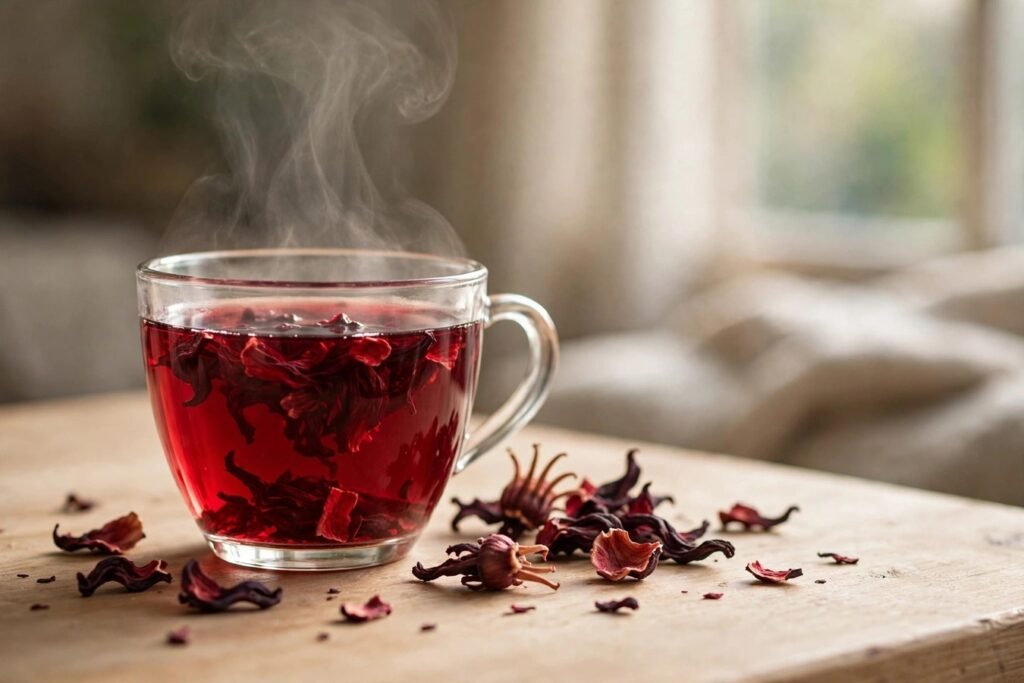
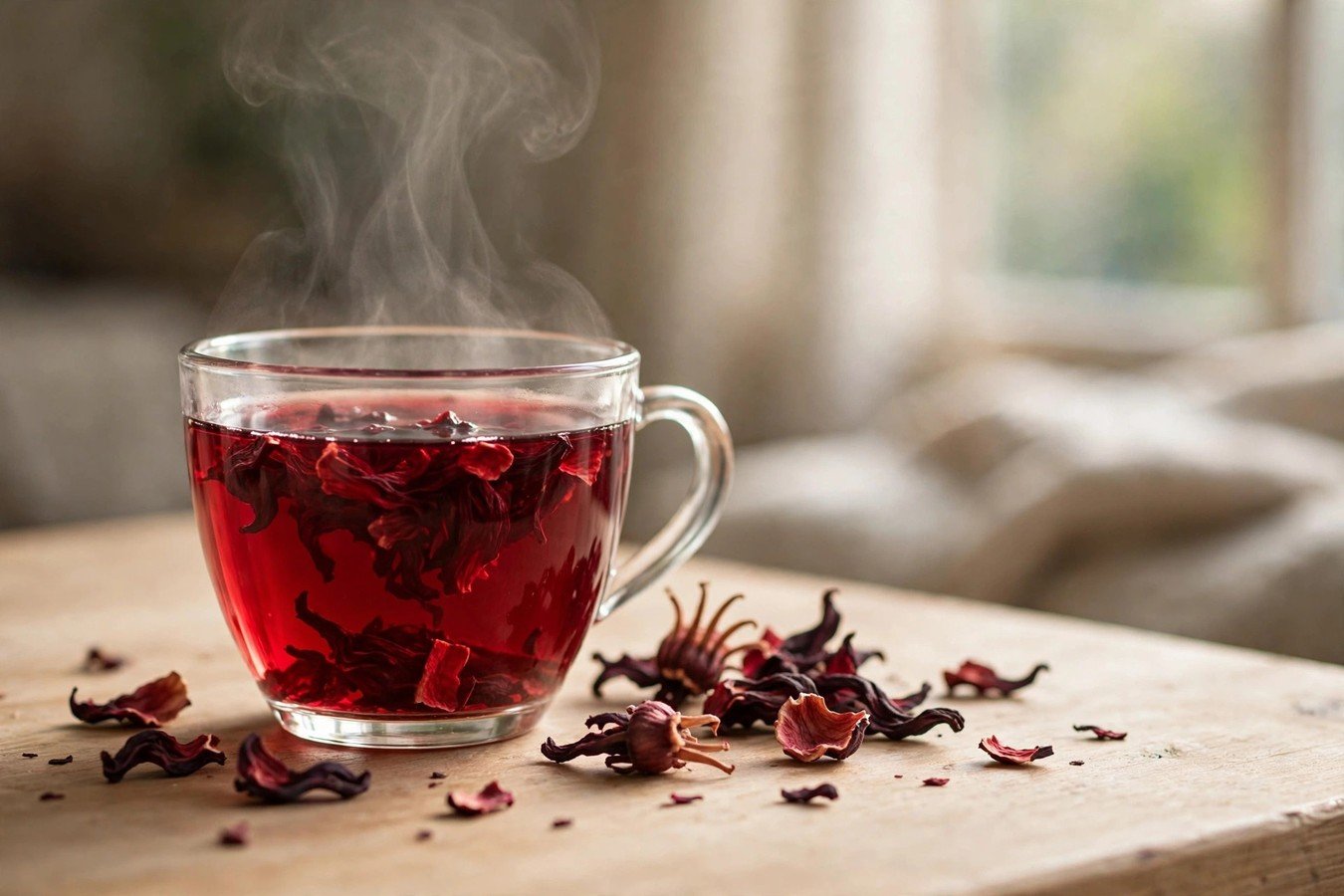
Hibiscus tea is not made from true tea leaves. It is an infusion of the dried calyces, the deep red flower cups, of Hibiscus sabdariffa, also called roselle. The drink is tart and cranberry like, naturally caffeine free, and usually served unsweetened, hot or iced. It is a common drink in Egypt, where it is called karkade, and across West Africa, the Caribbean and Latin America, where it is known as bissap, sorrel or agua de jamaica.
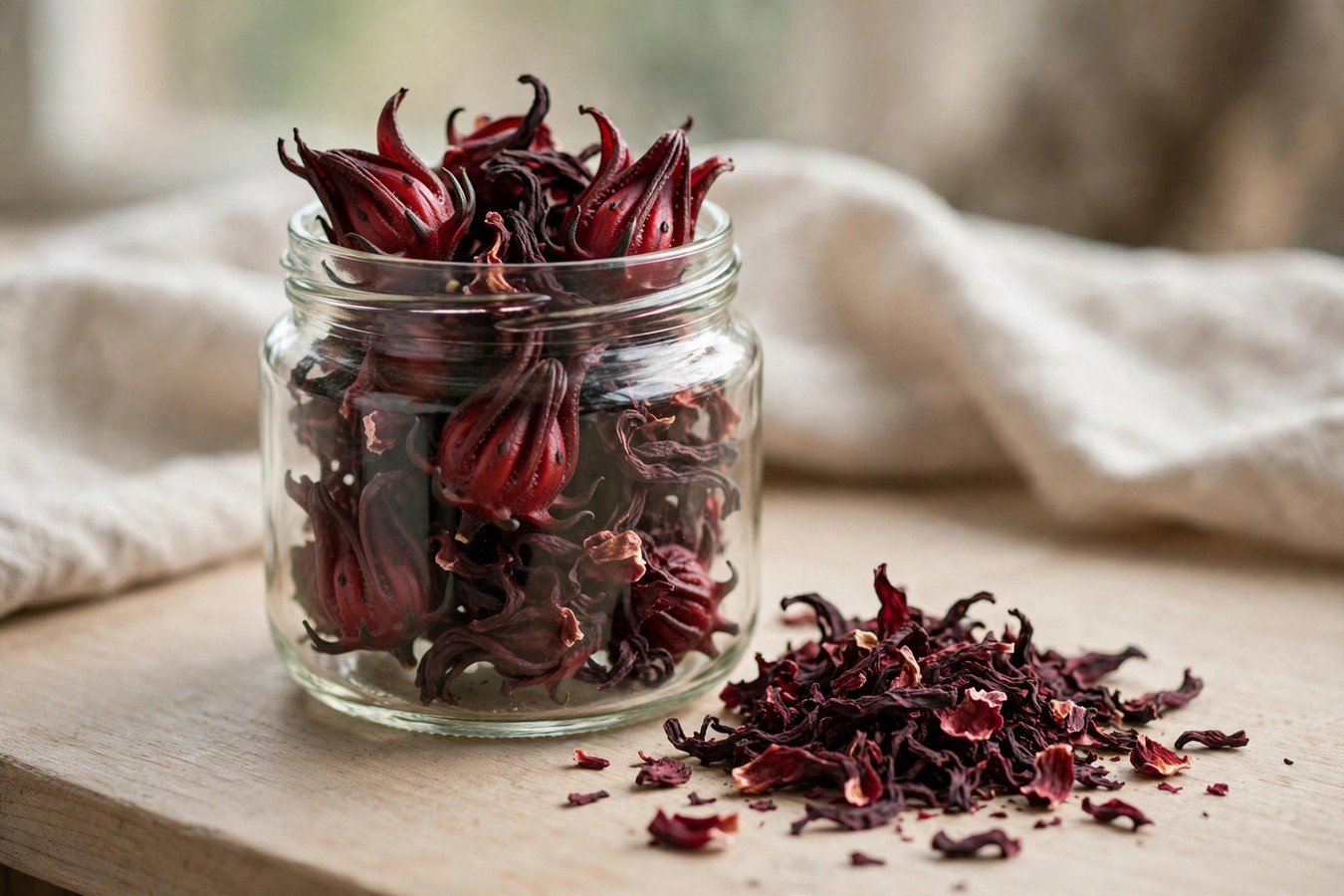
The blood pressure interest comes from its anthocyanins, the red pigments also found in berries, and other polyphenols. Laboratory studies suggest these compounds may relax blood vessels, support nitric oxide production and mildly inhibit the enzyme that tightens blood vessels and retains sodium, the same pathway some blood pressure drugs target, though far more weakly. Hibiscus also has a mild diuretic effect in some studies, increasing urine output a little. None of this is settled as the mechanism in people. What matters for this article is what the human trials measured, and the dose they used.
Buy the right plant. Only Hibiscus sabdariffa has the blood pressure evidence. Ornamental hibiscus flowers and hibiscus blends with added flavors are not the same thing, and a sweetened bottled hibiscus drink is not the tested product either. Look for dried hibiscus calyces or tea bags labelled Hibiscus sabdariffa, with hibiscus as the only ingredient.
What the trials actually found
Four pieces of evidence matter, and they agree with each other within about 1.5 mmHg.
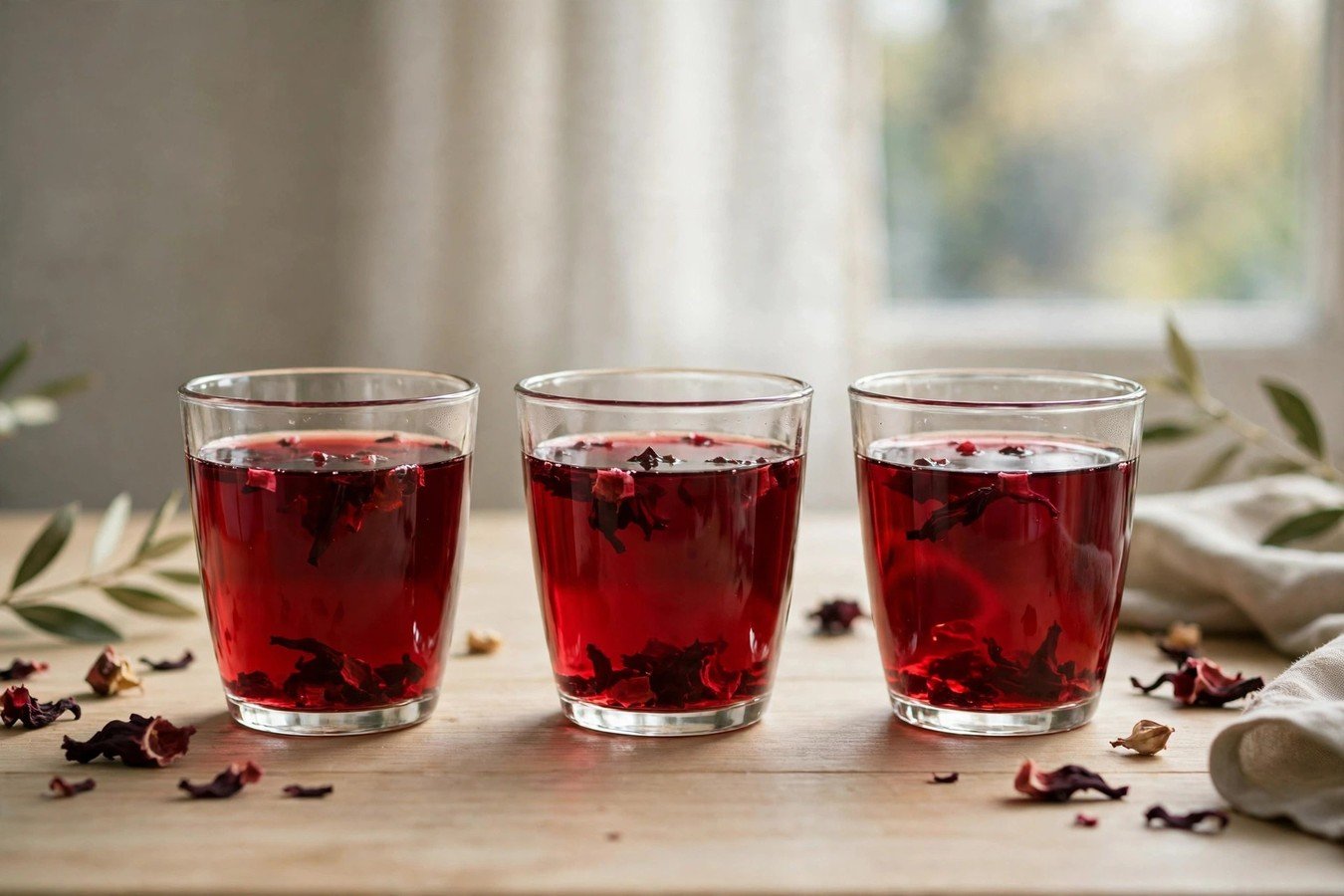
The most cited single trial was run at Tufts University and published in the Journal of Nutrition in 2010. Sixty five adults aged 30 to 70 with prehypertension or mild hypertension, none of them taking blood pressure medicine, were randomized to three 240 ml cups of hibiscus tea a day or a placebo drink, for six weeks. The top number fell by 7.2 mmHg on hibiscus against 1.3 mmHg on placebo. The people who started highest moved most: those starting at 129 mmHg or higher fell by 13.2 mmHg. Two honest limits from the same trial: the bottom number fell but did not beat placebo by a statistically significant margin, and the trial lasted only six weeks.
A 2015 meta-analysis in the Journal of Hypertension pooled five randomized trials with 390 people and found an average fall of 7.58 mmHg in the top number and 3.53 mmHg in the bottom number. The effect was larger in people who started with higher readings, and it held up when the authors re-ran the analysis leaving each trial out in turn. The authors still called for better designed trials, and the five trials used different preparations and doses.
A larger 2022 meta-analysis in the Journal of Cardiovascular Pharmacology pooled 13 randomized trials with 1,205 people with mild to moderate hypertension and found a fall of 6.67 mmHg in the top number and 4.35 mmHg in the bottom number against placebo. This team also compared hibiscus against active controls. Against real blood pressure drugs, the difference was not statistically significant, so hibiscus was not better than medicine. It was also not effective in the subgroup of people who also had metabolic syndrome.
The newest and largest analysis, Norouzzadeh 2025 (Complementary Therapies in Medicine), a dose response meta-analysis of 26 randomized trials with 1,797 participants, found a fall of 6.16 mmHg in the top number and 3.79 mmHg in the bottom number against placebo, at moderate certainty, with a clear dose response relationship. The same analysis found the most commonly reported side effects were digestive discomfort and abdominal pain, usually mild and temporary, with significant side effects reported in only 5 of the 26 trials.
Put together, the fair summary is this: hibiscus tea lowers blood pressure by a small amount, roughly 7 mmHg in the top number and 3 to 4 mmHg in the bottom number, in people with mild high blood pressure who drink it daily for weeks. That is a real effect, about the same size as some single lifestyle changes, and smaller than what blood pressure medicine typically achieves. Nobody has shown that hibiscus prevents heart attacks or strokes, which is the outcome that actually counts, and the National Center for Complementary and Integrative Health characterizes the evidence as preliminary.
How much hibiscus tea to lower blood pressure: the dose used in trials
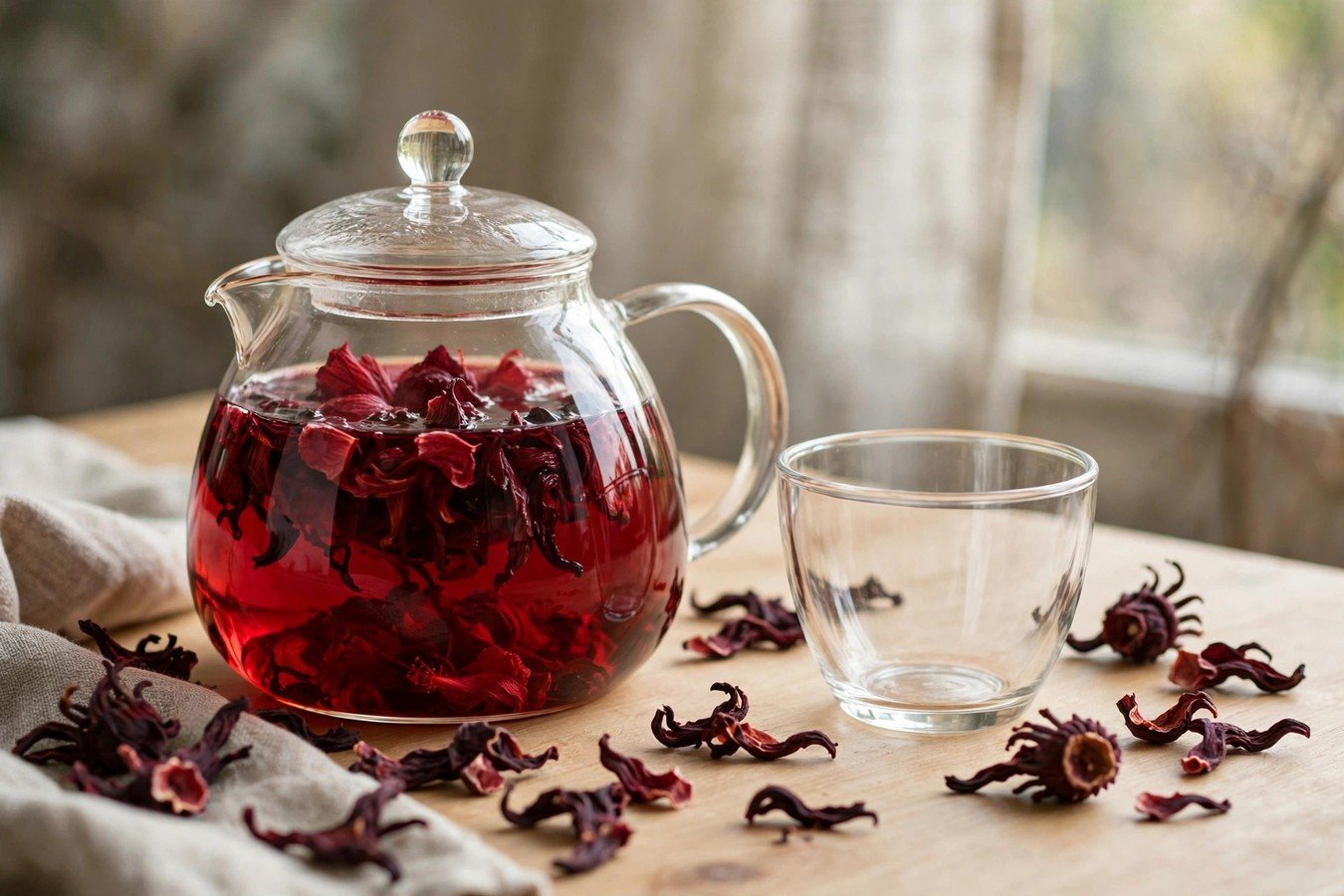
The dose with the best evidence is three cups a day, each about 240 ml, brewed from about 2 to 3 g of dried hibiscus calyces, steeped in near boiling water for 5 to 10 minutes, unsweetened, for at least six weeks. That is the McKay 2010 protocol, and it is the dose the meta-analyses are mostly built on. Spread the three cups across the day rather than drinking them all at once, since the trial split the dose into three servings.
One cup a day is a start, not the tested protocol. No trial has shown that a single daily cup lowers blood pressure, and the dose response analysis suggests more hibiscus lowers pressure more, up to the tested range. More than three cups a day has not been shown to add benefit, and the trials went up to about 10.5 g of dried calyx a day without significant side effects, which is several cups worth. There is no reason to push past three cups to chase a bigger fall.
Brew it properly and keep it simple. Use about one heaped tablespoon, roughly 3 g, of dried calyces per 240 ml cup, or one tea bag per cup if you use bags. Pour on near boiling water, cover and steep for 5 to 10 minutes, then strain. Drink it hot or iced. Skip the sugar and honey, since sweetening adds calories and works against the weight and blood sugar goals that also help blood pressure. A squeeze of lemon is fine if you like the taste. Do not boil the calyces for a long time to make it stronger. Longer steeping makes it more tart and more acidic, not more effective.
Extracts and capsules are a different product. Some trials used standardized hibiscus extract, around 240 to 320 mg of polyphenols a day, or 500 to 1,000 mg of extract a day, and got similar falls. Extracts are harder to compare across brands, and the dose on the label may not match the dose in the trials. Tea is the simpler choice: the dose is visible, the cost is low, and it is the form with the clearest trial protocol. If you use an extract, tell your doctor, and do not combine tea and extract to stack the dose.
How long it takes, and how to judge it
Do not judge hibiscus tea after a week. The trials that found an effect ran for four to twelve weeks, and the clearest result came at six weeks. Give it six weeks of daily drinking before deciding whether it is doing anything for you, and judge it on weekly averages, not single readings.
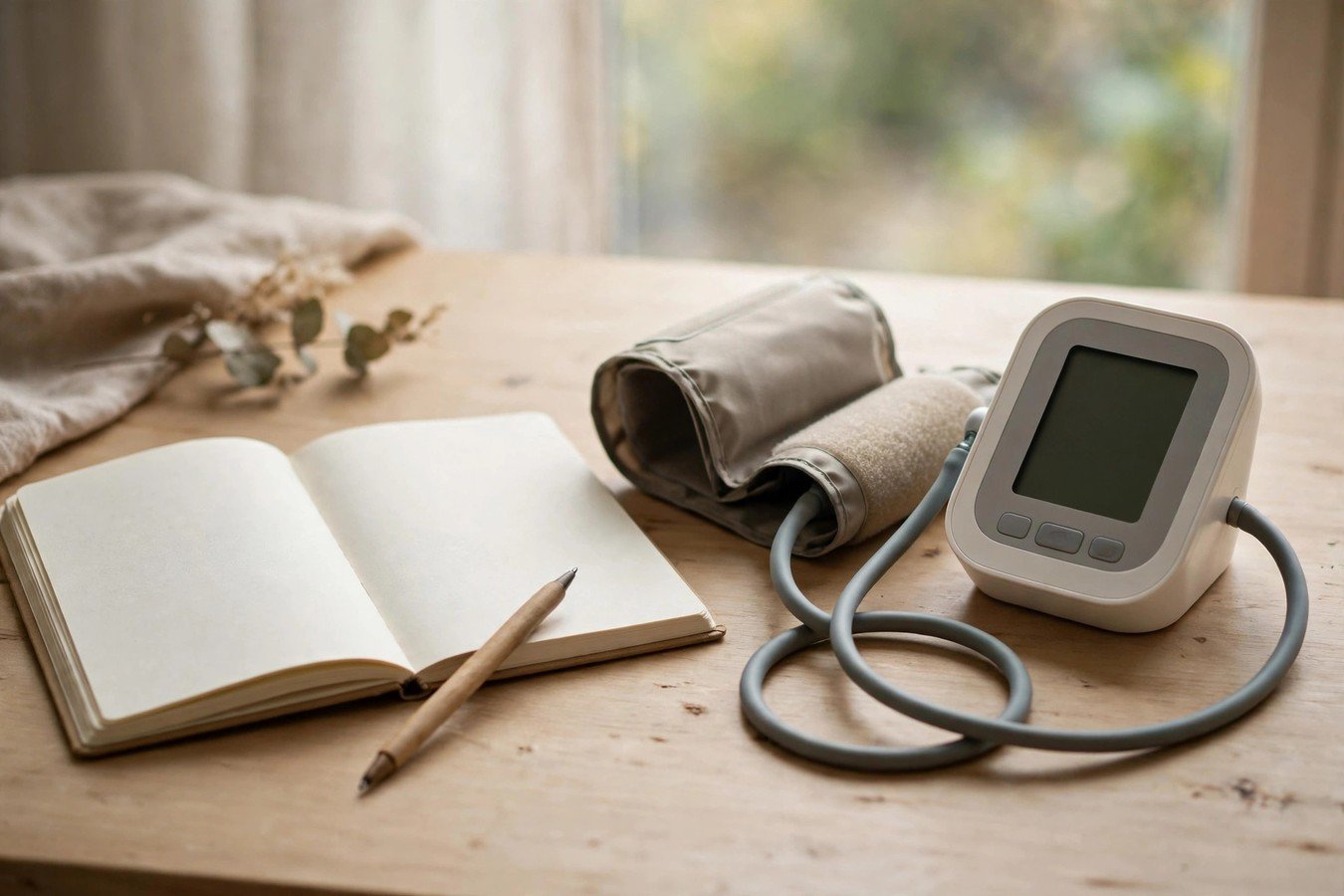
Measure the way the trials did, and the way your doctor can use. Sit with your back supported and both feet flat on the floor, arm on a table so the cuff sits at heart level. Do not talk, do not cross your legs, and empty your bladder first. Sit quietly for 5 minutes, then take a second reading a minute or two later and note both numbers with the date. Take morning and evening readings for a week before you start the tea, to get a baseline, then the same pattern in week six. Compare the two weekly averages. A single reading after a stressful day tells you nothing about the tea.
A realistic expectation is a fall of several points in the top number, not a return to normal from a very high reading. If your top number is 150 mmHg, hibiscus alone will not bring it to 120 mmHg. If it is 132 mmHg, a fall of 7 mmHg is the difference between stage 1 hypertension and the elevated range. That is worth having, and it is also why hibiscus belongs alongside salt, food, activity, weight and sleep, not instead of them. The DASH food pattern, for comparison, can lower the top number by several points within about two weeks, and losing weight and cutting salt add further falls.
Who should avoid it, and who should ask first
Hibiscus tea is possibly safe in food amounts, and MedlinePlus notes the tea has been used safely in amounts of up to 720 ml daily for up to six weeks, which is exactly the three cup dose. Side effects are uncommon, and the most common are stomach upset, gas and constipation. That safety record covers healthy adults drinking tea strength hibiscus for weeks, not everyone, and not every dose.
Avoid hibiscus tea during pregnancy. MedlinePlus lists it as possibly unsafe in pregnancy because it might stimulate a menstrual cycle, and the standard guidance is to avoid medicinal strength hibiscus while pregnant. Animal studies report developmental effects, and hibiscus has a traditional reputation as an emmenagogue, a substance that encourages menstruation. No study has measured the risk directly in pregnant women, so this is caution rather than a measured finding, but the guidance across sources is consistent: do not use it. The same caution applies while breastfeeding, where safety data are missing.
Talk to your doctor first if you take blood pressure medicine. Hibiscus lowers blood pressure, so taking it with medicine that also lowers blood pressure might push readings too low. MedlinePlus lists this as a moderate interaction, and notes hibiscus may increase the levels of losartan in the body. The same applies to diabetes medicine, since hibiscus might lower blood sugar, and to diuretics. Tell your doctor or pharmacist that you drink hibiscus tea daily, the same way you would mention any supplement. Do not stop or reduce your medicine because a home reading looked good after a few weeks of tea. Blood pressure medicine works over weeks, and stopping it suddenly can make readings rebound.
Skip it, or ask first, if your blood pressure already runs low, if you have low blood pressure symptoms such as dizziness on standing, or if you are scheduled for surgery. Hibiscus might affect blood sugar control during and after surgery, and MedlinePlus advises stopping it at least two weeks before a scheduled operation. Other listed interactions include chloroquine, whose absorption hibiscus tea might reduce, diclofenac, whose levels it might alter, and simvastatin, which it might clear from the body more quickly. If you take any of these, ask your pharmacist before making hibiscus a daily habit.
Two smaller cautions for daily drinkers. The tea is quite acidic, so frequent sipping can wear tooth enamel. Drink it with a meal rather than sipping it all day, and rinse your mouth with water afterwards. The acidity can also aggravate reflux in sensitive people. If hibiscus gives you stomach upset, try a shorter steep, a weaker brew or one cup a day, and stop if the discomfort continues.
What hibiscus tea does not do
Hibiscus tea does not detox anything. Your liver and kidneys handle that without botanical help. It does not melt fat, fix cholesterol on its own, or replace a healthy food pattern. The evidence for hibiscus and cholesterol, blood sugar and weight is weaker and mixed, and this article makes no claim about any of them.
It does not replace the steps with the strongest evidence. Less salt, a DASH style food pattern, 150 minutes of activity a week, weight loss where it applies, less alcohol, better sleep and no smoking move blood pressure more, and for more people, than any tea. Our guides to lowering blood pressure quickly and to how long it takes to lower blood pressure cover those steps in full, and the hibiscus habit fits inside them, not in place of them.
It is not a rescue treatment. If your reading is 180/120 mmHg or higher and you have chest pain, shortness of breath, back pain, numbness or weakness, change in vision, difficulty speaking or a severe headache, get emergency care now. If the reading is that high and you have no symptoms, recheck after 5 minutes of quiet rest, and if it is still that high, call your doctor the same day or go for urgent care. No tea changes that advice.
A 6 week starter plan
| Week | Focus | What to do |
|---|---|---|
| 1 | Baseline | Morning and evening readings for a week, same arm and cuff, written down with dates. Buy dried Hibiscus sabdariffa calyces or tea bags |
| 2 | Start | Three cups a day, about 240 ml each, steeped 5 to 10 minutes, unsweetened, spread across the day |
| 3 | Food | Keep the tea going and cut the saltiest item in your usual week, with one DASH style dinner a day |
| 4 | Move | Build to 150 minutes of brisk walking a week, split into 10 minute walks if needed |
| 5 | Review | Compare this week’s average with week 1. Tell your doctor you drink hibiscus daily if you take blood pressure or diabetes medicine |
| 6 | Decide | Compare the week 6 average with the baseline. Keep the habit if it helped and you enjoy it, and keep the food and walking habits either way |
Questions people ask
How much hibiscus tea to lower blood pressure?
Three cups a day, about 240 ml each, brewed from about 2 to 3 g of dried calyces per cup, for at least six weeks. That dose lowered the top number by about 7 mmHg in the best known trial, and by a similar amount across the meta-analyses. One cup a day has not been tested, and more than three cups has not been shown to add benefit.
How long does hibiscus tea take to lower blood pressure?
Four to six weeks of daily drinking. The clearest trial result came at six weeks, and the meta-analyses cover trials of four to twelve weeks. Judge it on a weekly average of morning and evening readings, not on a single reading, and compare week six with a baseline week taken before you started.
Can I stop my blood pressure medicine if hibiscus tea works?
No. Hibiscus tea has never been shown to replace prescribed treatment, and it was not better than blood pressure drugs in direct comparisons. If your readings fall, that is a result to share with your doctor, who may adjust your treatment. Do not stop or reduce medicine on your own, since stopping suddenly can make readings rebound.
Is hibiscus tea better than green tea for blood pressure?
Hibiscus has the stronger direct evidence for blood pressure. Green tea has some evidence too, but the hibiscus trials are more consistent, with several meta-analyses landing near a 7 mmHg fall in the top number. Green tea contains caffeine, which raises a reading for a few hours, while hibiscus is caffeine free. Either can sit inside a healthy food pattern, but only hibiscus has a tested three cup protocol for blood pressure.
Can I drink hibiscus tea iced, or does it have to be hot?
Iced is fine. The trials used brewed tea, and the benefit comes from the compounds in the infusion, not the temperature. Brew it hot, let it cool and serve it over ice, unsweetened. Sweetened iced hibiscus, the kind sold bottled or in cafes, is a different drink, and the added sugar works against the goals that help blood pressure.
Who should not drink hibiscus tea?
Avoid it during pregnancy and while breastfeeding. Talk to your doctor first if you take blood pressure medicine, diabetes medicine, losartan, chloroquine or simvastatin, if your blood pressure already runs low, or if you have surgery planned in the next two weeks. Stop and ask your doctor if it gives you stomach upset that does not settle.
Built from the McKay 2010 randomized trial (Journal of Nutrition), the Serban 2015 meta-analysis (Journal of Hypertension), the Abdelmonem 2022 meta-analysis (Journal of Cardiovascular Pharmacology), the Norouzzadeh 2025 dose response meta-analysis of 26 trials (Complementary Therapies in Medicine), MedlinePlus on Hibiscus sabdariffa safety, and the National Center for Complementary and Integrative Health. We did not test these methods or run trials for this guide. Last checked: 28 November 2026.
Related guides
- How to Lower Blood Pressure Quickly: Safe, Evidence-Based Ways
- How Long Does It Take to Lower Blood Pressure?
- How to Lower the Bottom Number of Your Blood Pressure (Diastolic)
- How to Lower Blood Pressure While on Testosterone
This article is general education, not medical advice. It does not diagnose or treat any condition. Talk to your doctor before you change your diet, your activity level or any medicine, and seek urgent care for the symptoms listed above.