


How to lower blood pressure while on testosterone
If you are asking how to lower blood pressure while on testosterone, start with the honest answer: testosterone therapy can raise blood pressure, and the steps that bring it down are mostly the same ones that work for any man. Less salt, a DASH style food pattern, daily walking, weight loss where it applies, less alcohol and better sleep move the numbers. What is different on testosterone is the monitoring. You need a baseline reading from before you started, regular checks while you are on it, and a conversation with your prescriber before you change anything about the treatment itself.
This article is general education, not medical advice. It does not replace advice from your doctor or your prescriber. It gives no dosage advice for testosterone or for blood pressure medicine, and it never tells you to stop, start or change a dose. If your reading is very high or you have symptoms, read the urgent care section first.
The short version
| Question | Short answer |
|---|---|
| Does testosterone raise blood pressure? | Yes, it can. In February 2025 the FDA added a warning to every testosterone product after 24 hour monitoring studies confirmed a rise across the whole class |
| How much does it rise? | On average a few points, about 2 to 5 mmHg in the top number over 12 to 16 weeks. Some men needed new or changed blood pressure medicine |
| What moves it down? | Less salt, a DASH style food pattern, 150 minutes of activity a week, weight loss where it applies, less alcohol, better sleep and no smoking |
| How fast does it fall? | A tense reading can fall a few points within minutes by resting and measuring correctly; a lasting fall takes 2 to 4 weeks for the first change and 4 to 12 weeks for the fuller effect |
| What is different on testosterone? | Check your pressure before starting, then regularly while on it, and tell your prescriber about the trend. Do not adjust the dose yourself |
| When is it urgent? | A reading of 180/120 mmHg or higher with symptoms needs emergency care now |
Why testosterone can raise blood pressure
Testosterone replacement therapy, often called TRT, is prescribed for men with low testosterone confirmed by blood tests and symptoms. It can help energy, mood, muscle and sex drive, and it is the most on audience topic in this plan for men over 40. The blood pressure effect is real, and it is now on the label.
In February 2025 the FDA reviewed 24 hour ambulatory blood pressure studies, readings taken automatically by a cuff worn for a full day and night, and said they confirmed an increase in blood pressure with use of all testosterone products, class wide. The agency required an increased blood pressure warning on every testosterone product label that did not already have one. The same action removed the boxed warning language about a higher risk of heart attack and stroke, based on the TRAVERSE trial.

The rise is small on average and varies by product. The label studies reported these average changes from each man’s own starting reading: gel 1.62%, up 1.9 / 1.3 mmHg over 16 weeks; weekly injection under the skin (enanthate), up 3.9 / 1.5 mmHg over 12 weeks; long acting injection (undecanoate), up 3.1 / 2.0 mmHg over 16 weeks; oral capsules (undecanoate), up 4.9 / 2.5 mmHg over about 4 months. These are averages from separate studies with different men, so they are not a ranking of products and they do not predict your own change. In the one year study of the weekly injection, 10% of men started blood pressure medicine or changed their regimen, and in the oral capsule study the figure was 7.2%. The labels also say testosterone is not recommended for men with uncontrolled high blood pressure, and that blood pressure should be monitored periodically, especially in men who already have hypertension.
Why the pressure rises is not fully settled. Two factors are discussed most often: testosterone raises red blood cell production, so hematocrit can climb, and the biggest pressure rises tracked with rising hematocrit; and testosterone can cause the body to hold more fluid. That is why your prescriber checks both blood pressure and hematocrit, and why a high hematocrit reading is a reason to call the clinic rather than wait for the next routine visit.
The TRAVERSE trial gives the wider heart context. It was a randomized, placebo controlled trial of 5,246 men aged 45 to 80 with low testosterone, symptoms, and existing heart disease or a high risk of it, published in 2023. Heart attack, stroke or cardiovascular death occurred in 7.0% of the testosterone group and 7.3% of the placebo group, so testosterone was not worse than placebo on that measure. The picture is a small average pressure rise, worth monitoring and managing, not a reason to panic, and never a reason to change treatment on your own.
What counts as high, and when to see a doctor first
The American Heart Association categories for adults are simple: normal is below 120/80 mmHg, elevated is a top number of 120 to 129 with a bottom number below 80, stage 1 hypertension is 130 to 139 or 80 to 89, and stage 2 is 140 or higher or 90 or higher. High blood pressure is usually defined from 130/80 mmHg. Your personal target depends on your age and overall risk, so ask your doctor what number to aim for.
See your doctor or prescriber first, before the lifestyle plan, if your blood pressure was already high before you started testosterone or is uncontrolled now, if your readings have climbed steadily since starting, if you have diabetes, kidney disease, heart disease, sleep apnea or a history of stroke, if you take blood pressure medicine and your readings are changing, or if your hematocrit has risen. Headaches, flushing, ankle swelling or unusual shortness of breath are also reasons to call, as is any thought of stopping, lowering or raising your testosterone dose because of a reading.
Do not stop testosterone suddenly to fix a reading, and do not raise the dose to chase a symptom. A sudden stop can bring back low testosterone symptoms and does not lower pressure in a predictable way. Dose changes, product changes and extra blood tests are decisions for your prescriber, with your readings in front of them.
Get urgent care now if your reading is 180/120 mmHg or higher and you have chest pain, shortness of breath, back pain, numbness or weakness, change in vision, difficulty speaking, or a severe headache. If the reading is that high and you have no symptoms, recheck after 5 minutes of quiet rest, and if it is still that high, call your doctor the same day or go for urgent care.
Measure blood pressure correctly on testosterone
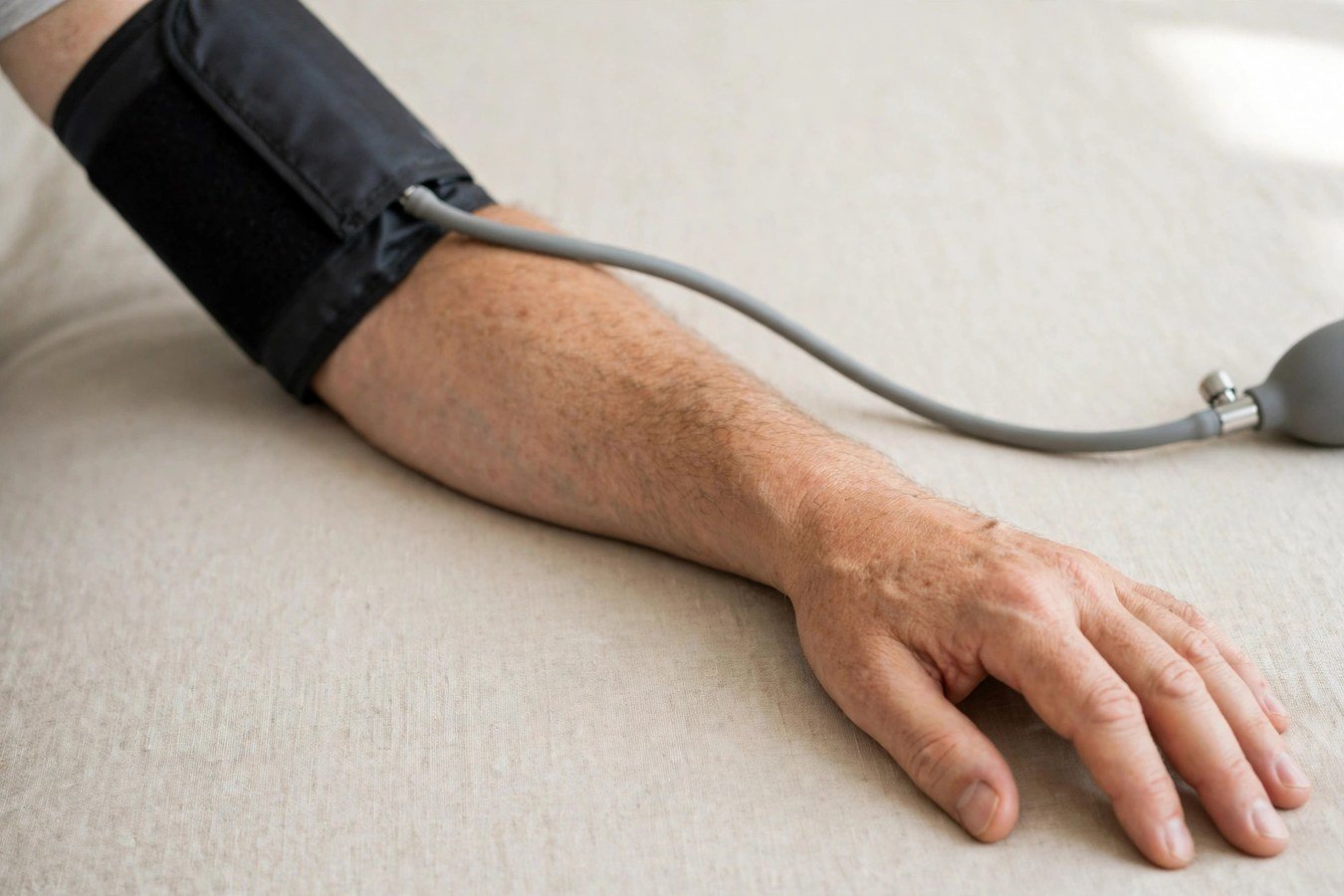
Before you try to lower blood pressure while on testosterone, make sure you are measuring it right. A rushed reading can be several points higher than a rested one, and the fix is free. It also matters more on testosterone, because your prescriber will judge the treatment partly on the trend of your readings.

Sit with your back supported and both feet flat on the floor, arm on a table so the cuff sits at heart level. Do not talk, do not cross your legs, and empty your bladder first. Sit quietly for 5 minutes, then take a second reading a minute or two later and note both numbers with the date. Caffeine, a full bladder, a cuff over a sleeve, an arm hanging down, talking, and feet dangling all push a reading up. Use the same arm, cuff size and times of day, morning and evening, for at least a week, and compare weekly averages, not single readings. A cuff that is too small reads high, and a wrist monitor is less reliable than an upper arm cuff.
Measure on a schedule your prescriber can use: a baseline set before starting, morning and evening readings for a week after any dose change, then a few readings a week once things are stable. Write the numbers down with the date and time, and bring the log to each visit. A short note of the pattern, such as mornings higher than evenings, is more useful than one number remembered from last month. Ask your prescriber how often they want blood tests while you are on testosterone. The usual checks include testosterone level and hematocrit, and blood pressure is part of the same review.
How to lower blood pressure while on testosterone with food
Food is the change with the fastest evidence, and it is where most men should start when they ask how to lower blood pressure while on testosterone.
Eat the DASH way. DASH means plenty of vegetables, fruit, whole grains, beans, nuts, fish and low fat dairy, with little red meat, sweets and sugary drinks. The National Heart, Lung, and Blood Institute points to DASH as one of the main lifestyle treatments for high blood pressure, and found it can lower the top number by several points within about two weeks. The bottom number follows the same pattern, more slowly.

Cut salt steadily. Cut it in steps, so the food still tastes like food. The American Heart Association advises keeping sodium to no more than 2,300 mg a day, moving toward 1,500 mg a day. Most salt comes from processed food, bread, cheese, sauces and restaurant meals, so read labels and cut the saltiest item in your usual week first. Cook with herbs, garlic, lemon and pepper instead of extra salt. Vegetables, fruit, beans, lentils, nuts and low fat dairy are rich in potassium, which helps the body balance sodium. Do not take potassium supplements or salt substitutes without asking your doctor first, especially if you take blood pressure medicine or have kidney problems.
Watch the extras. Alcohol raises blood pressure the same day and over time, and the CDC advises men to keep it to two drinks or fewer a day. Caffeine raises a reading for a few hours, so skip it for 30 minutes before you measure. Some over the counter cold remedies and painkillers can raise blood pressure too, so tell your doctor or pharmacist what you take, including supplements, and ask whether any of them affect your readings. Do not assume a supplement marketed for testosterone or for blood pressure is safe with your treatment.
One DASH dinner does not move a reading that has been high for months. Two to four weeks of steady eating is the window where repeat readings start to sit lower.
Activity, weight and sleep
Activity lowers blood pressure more slowly than it lowers a tense single reading, and that is normal. A single brisk walk can lower blood pressure for hours afterwards, but the lasting fall builds over a month or two of regular movement. That is also why activity is worth keeping up on testosterone, where the pressure rise is small and steady rather than sudden.
Walk at a pace where you can talk but not sing. Thirty minutes of brisk walking on five days a week reaches the 150 minutes a week target, and it counts even split into three 10 minute walks a day. Add strength work on two days a week. Strength training supports muscle, which is one of the reasons many men start testosterone in the first place, and it helps weight control. If you have chest pain, breathlessness, or you have been inactive for a long time, talk to your doctor before vigorous activity.

Weight matters twice over here. Extra weight raises blood pressure, and extra belly fat is linked with lower testosterone, which is why weight loss is often called the best natural testosterone booster for men who are overweight. Losing even a few pounds can help the reading, and the effect grows as weight falls. Our guide to weight loss as a testosterone booster explains the link in detail. Eat for a slow, steady loss, about a pound a week, rather than a crash diet.
Sleep is the third lever, and it connects directly to testosterone. Testosterone rises after sleep onset and falls during waking hours, so short or broken sleep can leave both your energy and your readings worse the next day. Adults generally need 7 to 9 hours. Loud snoring, waking up gasping and daytime sleepiness are signs of sleep apnea, a common and often missed cause of high blood pressure, and worth telling your doctor about. Our guide to how sleep affects testosterone levels covers the link in full. Smoking damages blood vessels and raises blood pressure with every cigarette, so stopping is one of the strongest steps available.
What about the testosterone itself
The one step that does not belong to you alone is changing the testosterone. If your readings are climbing, take your log to your prescriber and ask three questions: is this rise expected for my product and dose, how often should I check, and at what reading should I call sooner. They may keep the dose and watch, adjust the dose or the interval, switch the product, or add or adjust blood pressure medicine. Any of those is a normal outcome, and none of them is a failure of the treatment.
Do not buy extra testosterone, raise the dose, or add another product to fix a symptom or a reading. Higher doses do not lower blood pressure, and they raise the chance of side effects, including a higher hematocrit. Do not use a supplement sold as a testosterone booster to replace prescribed treatment. Most over the counter boosters have no good evidence that they raise testosterone. Our review of foods to support testosterone explains what food can and cannot do for your levels. If your prescriber does change the product, expect the blood pressure pattern to change too, so measure for a week after the change and report the trend at the next visit.
What does not work, and what to avoid
A single supplement, a special tea, or a detox will not undo weeks of high readings. Beetroot juice and hibiscus tea have some evidence for small falls, and our hibiscus tea guide covers the dose evidence, but neither replaces salt, activity, weight and sleep, and neither is a reason to skip a doctor visit.
Avoid the common traps. Do not measure once after a stressful day and declare the treatment is failing. Do not compare your readings with another man’s dose or product. Do not take someone else’s blood pressure medicine, and do not stop your own blood pressure medicine because a home reading looked good one morning. Blood pressure medicine works over weeks, and stopping it suddenly can make readings rebound. Non steroidal anti inflammatory drugs and some cold remedies can raise blood pressure too, so if you use them often, ask your doctor or pharmacist for the lowest risk option for you.
An 8 week starter plan
| Week | Focus | What to do |
|---|---|---|
| 1 | Measure | Morning and evening readings for a week, same arm and cuff, written down with dates. Note your product, dose and start date |
| 2 | Food | Cut the saltiest item in your usual week, cook one DASH style dinner a day, keep alcohol to two drinks or fewer |
| 3 | Move | Build to 150 minutes of brisk walking a week, split into 10 minute walks if needed, and add one strength session |
| 4 | Review | Compare weekly averages with week 1. Share the log with your prescriber and ask about the check schedule |
| 5 | Weight | Set a slow weight goal if it applies, about a pound a week, and keep the food and walking habits in place |
| 6 | Sleep | Fix a regular bedtime, 7 to 9 hours, and tell your doctor about loud snoring or gasping |
| 7 | Refine | Keep what worked, drop what did not, and check any supplements or painkillers with your doctor or pharmacist |
| 8 | Decide | Bring the 8 week log to your visit. Ask whether the dose, product or monitoring plan should change, based on the trend |
Questions people ask
How much does testosterone raise blood pressure?
On average a few points. The label studies measured rises of about 2 to 5 mmHg in the top number over 12 to 16 weeks, and about 1 to 2.5 mmHg in the bottom number. Some men rose more and some less, and about 7 to 10% of men in the longer studies started blood pressure medicine or changed their regimen.
How to lower blood pressure while on testosterone without stopping treatment?
Use the same steps that work for any man: less salt, a DASH style food pattern, 150 minutes of activity a week, weight loss where it applies, less alcohol, better sleep and no smoking. Measure regularly, keep a log, and let your prescriber decide about the dose or product. Do not stop treatment to fix a reading.
Should I stop testosterone if my blood pressure goes up?
No, not on your own. A small rise is expected and often managed with lifestyle steps and monitoring, sometimes with blood pressure medicine. Stopping suddenly can bring back low testosterone symptoms and does not lower pressure in a predictable way. Talk to your prescriber, with your readings in front of them, before any change.
Does the type of testosterone matter for blood pressure?
The label rises differ a little by product, with gels at the low end and oral capsules at the high end in the studies, but the studies had different men and designs, so they cannot rank the products. Your own readings on your product are the number that matters.
How often should I check my blood pressure on testosterone?
Check before starting, then regularly while on it. A practical pattern is morning and evening readings for a week after any dose change, then a few readings a week once things are stable. Ask your prescriber how often they want to see the log and how often they want blood tests for testosterone and hematocrit.
Built from the American Heart Association, the National Heart, Lung, and Blood Institute, the CDC, and the FDA testosterone labelling changes of February 2025. We did not test these methods or run trials for this guide. Last checked: 26 November 2026.
Related guides
- How to Lower Blood Pressure Quickly: Safe, Evidence-Based Ways
- How Long Does It Take to Lower Blood Pressure?
- How to Lower the Bottom Number of Your Blood Pressure (Diastolic)
- The Best Testosterone Booster for Men Over 40: Why Weight Loss Beats Pills
- How Sleep Affects Testosterone Levels: Helpful 2026 Guide
This article is general education, not medical advice. It does not diagnose or treat any condition. Talk to your doctor before you change your diet, your activity level or any medicine, and seek urgent care for the symptoms listed above.